
On This Page
Editorial Standards
Reviewed by the BJJ Sportswear Editorial Team for technical accuracy and kept current.
Taping Fingers for BJJ: The Complete Guide
BJJ is uniquely brutal on fingers — nearly every grip fight runs through small joints that were never built for it. Taping is the simplest habit that keeps them working.
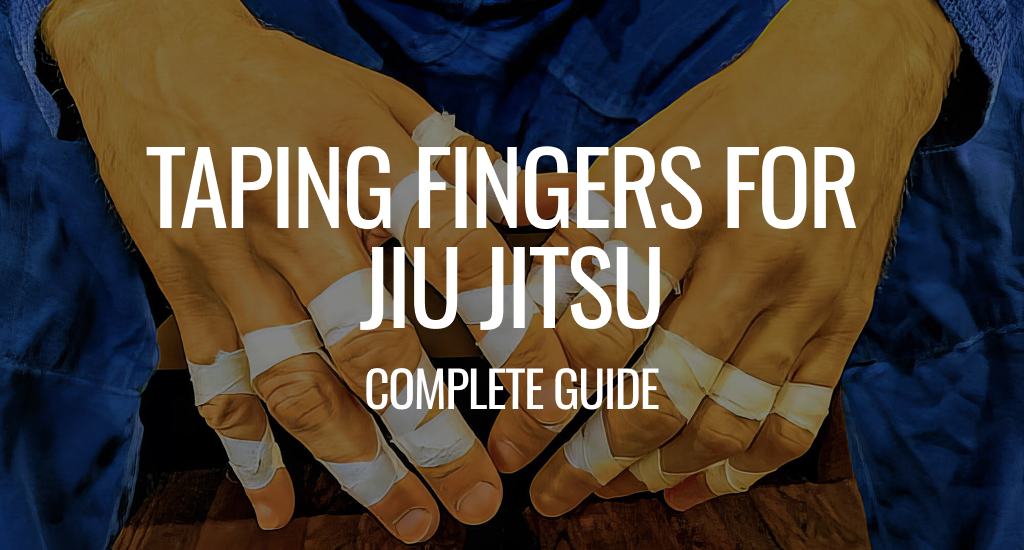
If you've trained Brazilian Jiu-Jitsu for even a month, your fingers already know the deal. They ache after long rolls, swell up overnight, and sometimes bend in directions that don't feel natural. It's one of the most common complaints in the sport — and it's almost entirely preventable with one simple habit: taping your fingers before you train.
This guide covers why BJJ is so hard on fingers, the three main taping methods, exactly how to apply them, and when you actually need to bother.
Why BJJ Is So Hard on Your Fingers
Most martial arts stress the body broadly. BJJ is uniquely brutal on one specific area. In gi training especially, almost every technique runs through your grip — grabbing collars, pinching sleeves, pulling pant legs, wrist-fighting through scrambles, all while your opponent actively tries to strip your grip. That repeated stress on small joints and tendons adds up fast.
The result is what the community calls "BJJ fingers" — joints that swell, stiffen, and slowly change shape over years of training. One of the more common finger injuries in the sport is a wear-and-tear condition affecting the joints and ligaments of the thumb and fingers, and it tends to build from ignoring small injuries rather than one dramatic moment.
That's the real danger. A slightly swollen middle knuckle gets waved off as "just part of training" — until six months later it's a chronic problem that never fully resolves. Small injuries compound. Taping is your first line of defense against that pattern, and you don't need to already be hurt to start — most experienced grapplers tape proactively, before any pain shows up, because prevention is far easier than recovery.
What Finger Taping Actually Does
It stabilizes your joints. Tape creates external support around the joint, limiting how far it can bend sideways or hyperextend. In a fast scramble or grip fight, that stability is often the difference between a minor strain and a real sprain.
It improves grip endurance. This surprises a lot of newer practitioners. Supported joints shift some of the mechanical load toward your stronger wrist and forearm muscles instead of leaving it all on smaller finger tendons — useful in long gi rounds where grip fighting can drag on for the whole roll.
It lets you train through minor injuries. A properly taped, mildly sprained middle knuckle can limit the movement that causes pain without sidelining you completely. This isn't about pushing through real damage — it's about staying on the mat through the kind of minor issue that would otherwise cost you weeks off.
It protects cuts and abrasions. A strip of tape keeps a small cut clean during training. Always put a proper bandage on first — taping straight over an open wound makes removal painful and risks reopening it.
The Three Main Taping Methods
There's no single correct way to tape fingers for BJJ. The right method depends on whether you're protecting a healthy finger, managing an existing injury, or maintaining grip through a specific problem area.
Buddy Taping
Buddy taping secures one finger to its neighbor so they move as a unit, limiting sideways movement on the injured finger and splitting the load across two digits instead of one. It's the go-to method for sprains, minor dislocations, or a jammed finger. Place a thin strip of gauze or folded tape between the two fingers to prevent skin irritation, then wrap tape above and below the affected joint — never directly over it.
X-Taping (Cross Taping)
The X-method is widely considered the most effective technique for active training. Instead of wrapping straight around the finger, you apply tape diagonally across the joint, crossing both sides to form an X over the knuckle. This targets the flexor tendon pulleys directly — the same A2/A4 structures most commonly injured in BJJ grip training. The crossing pattern gives stronger structural support than a simple loop, with only a small reduction in mobility, which is why most experienced practitioners default to this method for general pre-training protection on healthy fingers.
Ring Taping (Circumferential Loops)
Ring taping is the quickest option — simple loops around each segment of the finger. It's lower-profile than X-taping and restricts mobility the least, making it popular for no-gi training or whenever you want light support without bulky tape. Even if only one finger is hurt, taping the fingers on either side too helps spread the load across the whole hand for a more stable grip overall.
Step-by-Step: How to Tape Your Fingers
- Start with clean, dry hands. Tape adhesive fails fast on oily or sweaty skin — wipe down and let your hands dry fully first.
- Cut tape to length. Most fingers need a 10–12 cm strip per joint. Pre-cut strips made for BJJ or MMA save time between rounds.
- Wrap the base of the finger firmly but not tightly. Press your fingernail and check the color returns within two seconds — if it doesn't, the wrap is too tight.
- Move up to the PIP joint (the middle knuckle) — the most frequently injured joint in BJJ. Give it two to three clean wraps and smooth the edges down so they don't peel mid-roll.
- For X-taping: take a second strip, angle it from one side across the top of the joint, press firmly, then repeat from the opposite angle to complete the X.
- For buddy taping: fold a small piece of gauze between the two fingers, then wrap tape around both above and below the injured joint, not over it.
- Finish with a mobility check. Make a fist, open your hand, and grip a railing or your own gi collar. It should feel supportive — not painful, not numb, and not loose enough to slide.
Pro tip: tape every finger on the hand consistently, not just the injured one. It keeps your grip feeling balanced and stops you from unconsciously overloading the untaped fingers to compensate.
Choosing the Right Tape
The tape matters more than most beginners expect. Standard drugstore athletic tape often loses grip the moment you start sweating — which in BJJ means it can fail within the first five minutes of rolling. Look for:
- Strong adhesive that holds under sweat. Cotton or rayon-blend tape with medical-grade adhesive is the standard; zinc oxide tape holds up especially well for competition.
- The right width. Around 1.25 cm (½ inch) suits most fingers without bunching. Some practitioners prefer 2.5 cm (1 inch) tape torn lengthwise instead.
- Breathable but firm. Enough rigidity for real support, without being so stiff it kills mobility during live rolling.
- Hypoallergenic. Some adhesives irritate skin with repeated daily use — worth checking if you plan to tape before every session.
- Easy to remove. Tape that bonds too aggressively damages skin on removal. A good finger tape peels off cleanly after training.
Popular options among BJJ practitioners include Mueller, SpiderTech, Fuji, and Hayabusa. Skip cheap generic tape from non-sports retailers — it bunches, slides, and adds unnecessary friction to your pre-training routine.
Common Mistakes to Avoid
Wrapping too tightly. The most common mistake, especially among newer practitioners who assume tighter equals safer. Cutting off blood supply causes numbness and tingling — always run the fingernail press test after taping.
Taping directly over an open cut. Adhesive bonds to the wound bed and tears the skin on removal. Bandage first, then tape over the bandage.
Using tape as a substitute for rest. Tape can get you through mild discomfort, but it doesn't speed healing. Pushing through a real injury week after week can turn a two-week recovery into a six-month chronic problem. Know when to actually take time off — or at minimum, shift toward guards that reduce grip demand, like butterfly or De La Riva, while a finger heals.
Who Should Tape, and When
Not everyone needs to tape every session. If you're a beginner with no history of finger issues, light preventive taping on the joints that take the most grip stress is a reasonable habit to build early. If you're actively managing a sprain or a jammed finger, buddy or X-taping around the affected joint helps you keep training within a safe range of motion. And if you're deep in competition prep with high grip-fighting volume, taping every session is standard practice among experienced competitors — the marginal cost is a few minutes, and the downside of skipping it compounds over a career, not a single class.
Final Thoughts
Taping fingers isn't about toughing out real injuries — it's a cheap, fast habit that prevents the small, ignorable strains from becoming the kind of chronic joint problem that shows up years into training. A few minutes before class, done consistently, goes a long way toward keeping your hands working for the long haul.
Tagged with:#injury prevention#gear#grip
Frequently Asked Questions
What is the best way to tape fingers for BJJ?
X-taping is generally considered the most effective method for general pre-training protection on healthy fingers, since it targets the flexor tendon pulleys directly with strong support and minimal mobility loss. Buddy taping is better for an existing sprain or jammed finger.
Should I tape my fingers before every BJJ class?
Not necessarily. Beginners with no finger issues can tape lightly on high-stress joints as a preventive habit, while anyone managing a sprain or in heavy competition prep typically benefits from taping every session. Prevention is easier than recovery either way.
Is it bad to tape a finger too tightly?
Yes. Wrapping too tightly is the most common taping mistake and can cut off circulation, causing numbness and tingling. After taping, press your fingernail and confirm the color returns within two seconds — if it does not, loosen the wrap.
What kind of tape should I use for BJJ fingers?
Cotton or rayon-blend athletic tape with medical-grade adhesive that holds under sweat — zinc oxide tape is a common, durable choice for competition. Avoid cheap generic tape from non-sports retailers, which bunches and slides during live rolling.
How long can you leave finger tape on during BJJ training?
For the length of a single training session — remove it afterward rather than leaving it on for days. Tape left on too long traps moisture against the skin and can irritate it, and it loses its grip and support well before then anyway.
Sources & Further Reading
About the Author
Mohsin AyubBJJ practitioner, 6 years — Gracie Barra
Founder & Editor, BJJ Sportswear
Mohsin has trained Brazilian Jiu-Jitsu for six years at Gracie Barra and has competed at IBJJF-affiliated tournaments. He writes about competition, gear, and athlete careers, and founded BJJ Sportswear to help grapplers find equipment and information they can trust.
- Six years training Brazilian Jiu-Jitsu at Gracie Barra
- Competed at IBJJF-affiliated tournaments
- Writes on BJJ competition, gear testing, and athlete careers
This article was last reviewed and updated on 2026-08-18.