

How to Choose the Perfect BJJ Gi: Complete Guide (2026)
By BJJ Sportswear Editorial Team
Reviewed by gi manufacturers, competition organizers, and experienced practitioners | Last Updated: January 15, 2026
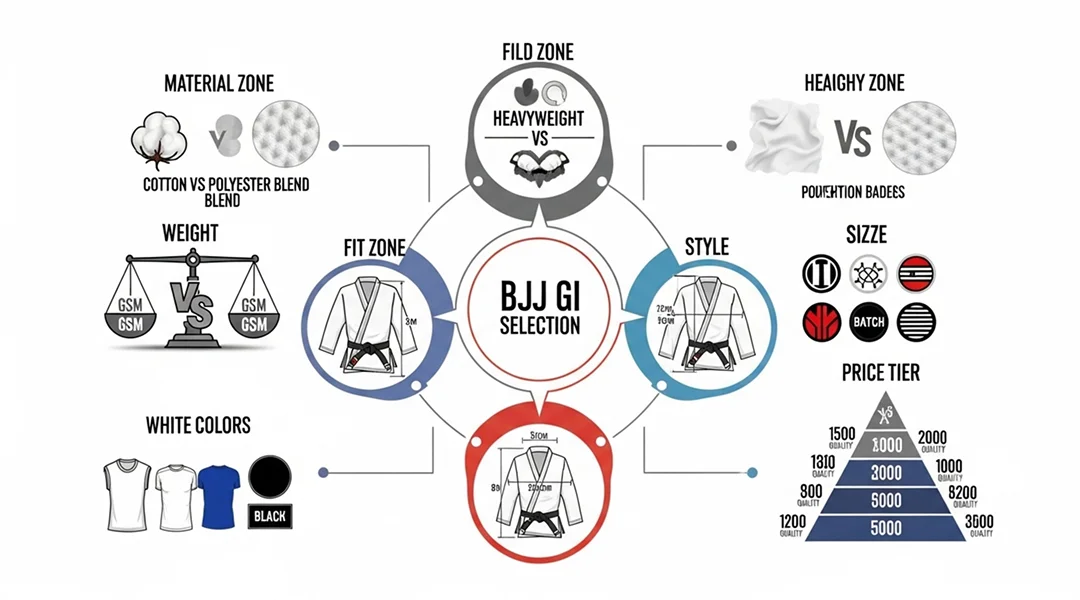
Choosing the perfect BJJ gi requires understanding three critical factors: weave type (pearl weave being the most popular at 450 GSM offering durability with lightweight comfort for training and IBJJF competition, while gold weave is heavier at 550 GSM providing maximum grip resistance preferred by competitors, and single weave at 350-400 GSM suits hot climates but wears faster), proper sizing based on height and weight using manufacturer charts with consideration for 3-5% shrinkage even in pre-shrunk gis, and intended use determining budget allocation (beginners should invest $60-100 in entry-level options like Fuji All Around until committed after 10+ classes, while serious competitors justify $150-250 premium gis with reinforced stitching and competition cuts).
Fuji Sports comprehensive guide: “The weave of the fabric and the weight of the BJJ Gi affect its durability and comfort—common weaves include single weave (lightweight and breathable), pearl weave (balanced durability and weight), gold weave (heavier and more durable), and double weave (maximum durability but heavy and hot), with sizing being crucial for both comfort and IBJJF compliance as BJJ Gis are typically available in sizes A0, A1, A2, etc.”.
JiuJitsu.com on gi selection philosophy: “The quest for the best jiu jitsu gi is a personal one—your perfect gi depends on your body type, training goals, and budget, and remember the best gi is the one that makes you feel comfortable and confident on the mats, whether you choose a lightweight pearl weave or a robust double weave the most important thing is to train as the best gi won’t make you a better grappler, only consistent mat time can”.
Understanding gi specifications prevents costly mistakes including buying wrong size requiring expensive replacement (measure height and weight against manufacturer charts, not generic A1/A2/A3 assumptions as brands vary 2-3 inches), purchasing inappropriate weave for climate and training frequency (heavyweight double weave in Florida summer = miserable experience leading to reduced training), violating IBJJF competition rules with non-compliant colors or patches (only white, blue, black allowed with specific patch placement requirements), and choosing ultra-budget gis under $50 that fall apart within 2-3 months wasting money versus investing $80-120 in quality options lasting 2-3 years with proper care.
This definitive 2026 guide breaks down gi weave types with GSM analysis and climate recommendations, explains proper sizing methodology with shrinkage calculations, compares slim-fit versus traditional-fit styles for different body types, provides budget-appropriate recommendations from beginner ($60-100) through elite competitor ($200-300), addresses color regulations and academy requirements, and offers care instructions to maximize gi lifespan connecting to how to wash BJJ gi best practices for practitioners at all levels from first class beginners to black belt competitors.
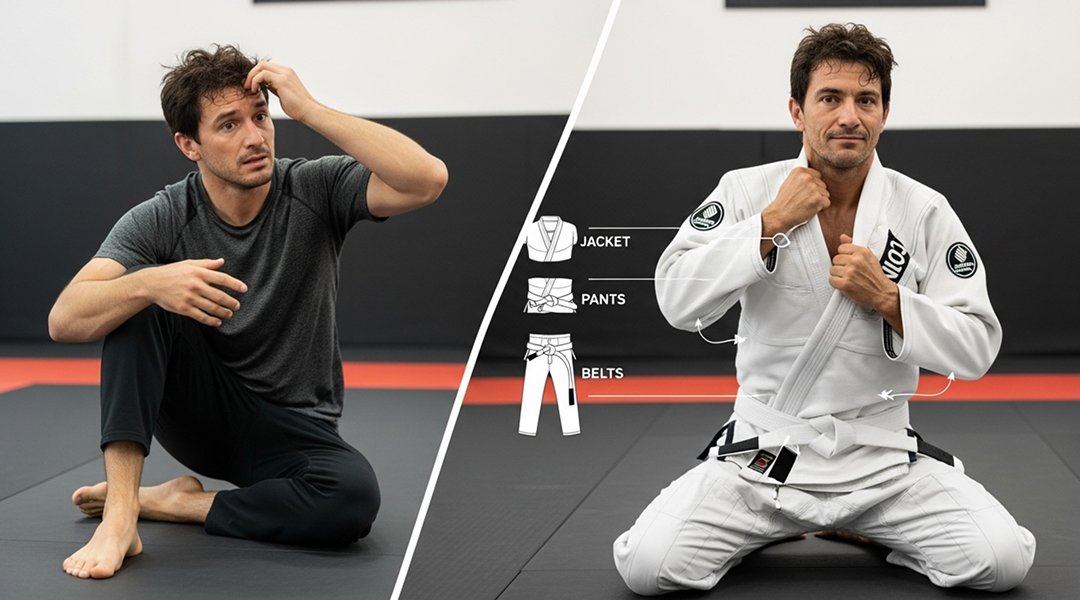
Table of Contents
Understanding Gi Weave Types and Weight
Pearl Weave (Most Popular – 450 GSM)
Hayabusa on pearl weave: “Pearl Weave is one of the most popular gi weaves today—lightweight yet durable and IBJJF-approved, making it ideal for both training and competition”.
Pearl weave characteristics:
- Structure: Tight small dots resembling pearls
- Weight: 450 GSM (grams per square meter) typical
- Durability: High (2-3 years with proper care)
- Shrinkage: Minimal (usually pre-shrunk)
- IBJJF Legal: Yes (approved for all competitions)
- Price range: $80-$200
Why pearl weave dominates:
- Perfect balance: Lightweight but durable
- Competition approved (IBJJF standard)
- Breathable for hot climates
- Fast drying after washing
- Most versatile option (80% of practitioners)
Best for:
- Daily training (3-5x weekly)
- Competition preparation
- Warm to moderate climates
- Year-round use
- Recommended for most people
Estilo MMA technical analysis: Pearl weave features tight structure with small dots, light weight, minimal shrinkage as usually pre-shrunk, ideal for IBJJF competition and warm climates, with high durability.
Gold Weave (Competition Standard – 550 GSM)
Gold weave characteristics:
- Structure: Ladder-like pattern, looser weave
- Weight: 550 GSM (heavier than pearl)
- Durability: Very high (3-5 years)
- Shrinkage: High (tends to shrink 3-5%)
- IBJJF Legal: Yes
- Price range: $100-$250
Advantages:
- Maximum grip resistance (harder to grab)
- Extremely durable (withstands intense training)
- Professional appearance
- Preferred by serious competitors
Disadvantages:
- Heavier (more tiring to wear)
- Hotter (less breathable)
- More shrinkage (sizing tricky)
- Longer drying time
Best for:
- Serious competitors
- Cold climate training
- Heavy training frequency (5-6x weekly)
- Practitioners who prefer substantial feel
- Worth premium for dedicated athletes
Comparison table:
| Feature | Pearl Weave | Gold Weave |
|---|---|---|
| Weight | Light (450 GSM) | Medium-Heavy (550 GSM) |
| Shrinkage | Minimal | High (3-5%) |
| Best Use | Training + Competition | Heavy training + Competition |
| Climate | Warm to moderate | Cold to moderate |
| Durability | High (2-3 years) | Very high (3-5 years) |
| Price | $80-$150 | $100-$250 |
Single Weave (Lightweight – 350-400 GSM)
Sanabul on lightweight gis: “Single Weave gis are lightweight and breathable, best for beginners or warm climates, though they’re less durable than heavier options”.
Single weave characteristics:
- Weight: 350-400 GSM (very light)
- Durability: Moderate (1-2 years)
- Breathability: Maximum
- Drying time: Very fast (2-3 hours)
- Price range: $50-$100
Advantages:
- Extremely comfortable in heat
- Easy to wash and dry
- Lightweight for travel
- Budget-friendly
Disadvantages:
- Wears out faster (thinner fabric)
- Less grip resistance (easier for opponents)
- Can feel flimsy
- Not ideal for intense training
Best for:
- Hot climates (Brazil, Southern US, Australia)
- Beginners (affordable entry)
- Travel gis (lightweight packing)
- Secondary/backup gi
- Not primary gi for most
Double Weave (Heavyweight – 600+ GSM)
Double weave characteristics:
- Weight: 600-800 GSM (very heavy)
- Durability: Maximum (5+ years)
- Breathability: Low (very hot)
- Competition: IBJJF legal but uncommon
- Price range: $120-$300
Advantages:
- Virtually indestructible
- Maximum grip resistance
- Traditional Judo-style feel
- Long lifespan
Disadvantages:
- Extremely heavy (exhausting to wear)
- Very hot (sweat retention)
- Long drying time (6-8 hours+)
- Expensive
- Outdated for modern BJJ
Best for:
- Cold climate training exclusively
- Traditionalists (judo background)
- Collectors
- NOT recommended for most practitioners
GSM Weight Guide Summary
Understanding GSM (grams per square meter):
| GSM Range | Weave Type | Feel | Best Use |
|---|---|---|---|
| 350-400 | Single | Very light | Hot climates, beginners |
| 450 | Pearl | Light-medium | Most versatile ⭐ |
| 550 | Gold | Medium-heavy | Competition, cold climates |
| 600+ | Double | Very heavy | Traditional only |
Recommendation: 450 GSM pearl weave for 80% of practitioners
Sizing Your BJJ Gi Properly
Understanding Gi Sizing Standards
Size chart basics:
- A sizes: Standard height and weight
- A0: 130-150 cm (4’3″-4’11”), 45-60 kg (100-130 lbs)
- A1: 150-165 cm (4’11”-5’5″), 60-75 kg (130-165 lbs)
- A2: 165-178 cm (5’5″-5’10”), 75-85 kg (165-185 lbs)
- A3: 178-191 cm (5’10”-6’3″), 85-95 kg (185-210 lbs)
- A4: 191+ cm (6’3″+), 95+ kg (210+ lbs)
Special sizes:
- A1L, A2L, A3L: Long sizes (add 3-5 cm to sleeves/pants)
- A1H, A2H, A3H: Husky sizes (wider torso)
- F sizes: Female-specific cuts (shorter torso)
CRITICAL: Every brand fits differently!
- Fuji runs true to size
- Venum runs small (size up)
- Tatami runs large (size down)
- Always check manufacturer chart
Reference: Complete gi sizing guide
How to Measure for Perfect Fit
Lockdown BJJ on proper fit: “A gi that fits properly allows for easier movement, enabling you to focus on techniques rather than adjusting your uniform”.
Measuring yourself:
1. Height (barefoot):
- Stand against wall
- Measure from floor to top of head
- Note in cm and inches
2. Weight (current):
- Weigh in morning before eating
- Honest weight (affects fit significantly)
3. Sleeve length (critical for IBJJF):
- Arms straight at sides
- Measure from center back neck
- Down shoulder to wrist bone
- Maximum: Wrist bone
- Minimum: No more than 5 cm above wrist
4. Pants length:
- Inseam measurement
- Maximum: Ankle bone
- Minimum: No more than 5 cm above ankle
IBJJF regulations matter:
- Sleeves too short = illegal for competition
- Pants too short = illegal
- Better slightly long than slightly short
- Can always hem, can’t add length
Accounting for Shrinkage
Fuji on shrinkage: Even “pre-shrunk” gis typically shrink 2-3% with first few washes.
Shrinkage expectations:
Pre-shrunk gis:
- First wash: 2-3% shrinkage
- Additional washes: 1-2% more
- Total: 3-5% lifetime shrinkage
- Example: A2 jacket 75 cm sleeves → 71-72 cm final
Non-pre-shrunk gis:
- First wash: 5-8% shrinkage (significant!)
- Can intentionally shrink to perfect fit
- Risky for beginners (might over-shrink)
Safe approach:
- Order based on manufacturer chart
- Expect 3-5% shrinkage
- Between sizes? Size up (can shrink to fit)
- Never size down (will be too small)
Reference: Proper gi washing to control shrinkage
Slim Fit vs Traditional Fit
Lockdown BJJ on fit styles: “Slim Fit is ideal for those who prefer a tighter, more athletic cut commonly worn by competitors as they offer less material for opponents to grab, while Traditional Fit offers more room and comfort often preferred by beginners”.
Slim fit characteristics:
- Tapered jacket (athletic cut)
- Fitted pants (less baggy)
- Competition advantage (less material to grip)
- Looks more modern/athletic
- Requires accurate sizing (no room for error)
Best for:
- Competitors
- Lean/athletic builds
- Those who don’t mind tighter feel
- Not ideal for beginners (sizing difficult)
Traditional fit characteristics:
- Straight cut jacket (roomier)
- Standard pants (comfortable)
- Forgiving sizing (more wiggle room)
- Classic appearance
- Easier to move in (learning)
Best for:
- Beginners
- Casual training
- Comfort priority
- Stockier builds
- Recommended for first gi
Gi Selection by Experience Level
Beginner Gi ($60-100)
JiuJitsu.com beginner advice: “If you’re a beginner looking to find your first gi, it’s probably best to find a cheap option that can get you through the beginning stages until you know enough to see what type of gi you’d ultimately like to obtain—you’ll feel a lot better if you tear a $40 gi while learning and getting submitted than if you dropped $400 on your first kimono”.
Top beginner recommendations:
1. Fuji All Around Gi ($70-80):
- Industry standard for beginners
- Pearl weave (450 GSM)
- Durable enough for 2+ years
- Most popular first gi globally
- Available in all sizes
2. Sanabul Essential Gi ($60-70):
- Budget-friendly
- 100% cotton, lightweight
- Good for hot climates
- Amazon availability (easy purchase)
3. Elite Sports Ultra Light Gi ($65-75):
- Single weave (light)
- Great value
- Fast drying
- Ideal for beginners in warm areas
Why cheap first gi makes sense:
- Might quit after a few months (50% do)
- Will outgrow understanding (preferences change)
- Learning causes more wear/tear
- Upgrade after 6-12 months
What to avoid as beginner:
- $40 ultra-cheap gis (fall apart in weeks)
- $200+ premium gis (unnecessary investment)
- Fancy designs (academy may require plain)
- Keep it simple and affordable
Reference: Complete first gi guide for beginners
Intermediate/Regular Training Gi ($100-150)
Best value for committed practitioners:
After 6-12 months training:
- You’re committed (not quitting)
- Know your preferred fit/weight
- Ready for better quality
- Invest in 2-3 quality gis
Recommended options:
1. Tatami Estilo 6.0 ($120-140):
- Pearl weave premium
- Excellent durability
- Competition legal
- Popular with blue/purple belts
2. Scramble Standard Issue ($110-130):
- Quality construction
- Good fit consistency
- Stylish without being flashy
- Great all-around choice
3. Venum Contender ($100-120):
- Reinforced stitching
- Available everywhere
- Good size range
- Reliable brand
Why upgrade from beginner gi:
- Better durability (lasts 3-5 years)
- Improved comfort (worth it training 3-5x weekly)
- Better fit (more size options)
- Competition ready (if you compete)
Competition/Premium Gi ($150-300)
JiuJitsu.com on competition gis: “For competition, you may want something more durable that can withstand intense gripping and pulling”.
Premium options for serious athletes:
1. Shoyoroll ($200-250):
- Luxury brand (hype justified by quality)
- Limited releases (collectible)
- Excellent fit and finish
- Status symbol in BJJ community
2. Origin Maine ($250-300):
- Made in USA (premium materials)
- Custom sizing available
- Lifetime warranty
- Ultra-durable construction
3. Kingz Comp 450 ($150-180):
- Competition-specific cut
- Slim fit (less grips)
- IBJJF approved
- Best value in premium category
When premium gis make sense:
- Competing regularly (tournaments monthly)
- Training 5-6x weekly (durability matters)
- Purple belt+ (committed long-term)
- Can afford it (not breaking budget)
When to skip premium:
- Still at white/blue belt
- Training 2-3x weekly (won’t notice difference)
- Tight budget (better spend elsewhere)
- Mid-range gis perform 90% as well
Color and Patch Regulations
IBJJF Competition Colors
Legal colors:
- White (most common)
- Royal Blue (popular)
- Black (traditional)
Illegal colors:
- Red, green, pink, camo, etc.
- Multi-color gis
- Stick to white/blue/black for competition
Academy requirements:
- Some require specific color (usually white or blue)
- Check before buying
- White is safest choice (accepted everywhere)
Patch Placement Rules (IBJJF)
Allowed patch locations:
- Shoulder area (academy patch)
- Right chest (personal sponsor)
- Back below neck (large academy patch)
- Thighs on pants (sponsors)
Size restrictions:
- Patches can’t exceed 36 cm² (most)
- Back patch can be larger
- Check IBJJF rulebook if competing
Beginner recommendation:
- Buy plain gi initially
- Add academy patches after commitment
- Don’t buy heavily branded gis (academy may require removal)
Gi Care and Maintenance
Washing to Maximize Lifespan
Best practices:
- Cold water wash (prevents shrinkage)
- Hang dry (never machine dry unless intentionally shrinking)
- Wash after EVERY use (hygiene critical)
- Turn inside out (protects patches)
- Use mild detergent (no bleach)
Reference: Complete how to wash BJJ gi guide
Common mistakes:
- Hot water (major shrinkage)
- Dryer (destroys gi prematurely)
- Fabric softener (reduces absorption)
- Leaving wet in bag (mildew, staph risk)
When to Replace Your Gi
Signs it’s time:
- Seams ripping (beyond simple repair)
- Fabric thinning (can see through)
- Excessive pilling (looks ratty)
- Sleeves/pants too short after shrinkage
- Generally: 2-3 years for quality gi
The Bottom Line: Choosing Your Perfect Gi
Quick decision framework:
First gi (beginner):
- ✅ Pearl weave 450 GSM
- ✅ Traditional fit (forgiving)
- ✅ White or blue color
- ✅ $60-100 budget (Fuji All Around recommended)
- ✅ Size based on manufacturer chart (expect 3-5% shrinkage)
Second gi (6-12 months in):
- ✅ Upgrade to $100-150 range
- ✅ Consider slim fit if competitive
- ✅ Buy 2-3 gis total (rotation)
- ✅ Stick with pearl weave (most versatile)
Competition gi:
- ✅ $150-250 premium option
- ✅ Slim competition cut
- ✅ IBJJF legal colors only
- ✅ Gold weave if prefer heavier feel
Your perfect gi checklist:
- ✅ Weave type suits climate/training frequency
- ✅ Size measured against specific manufacturer chart
- ✅ Fit style matches goals (traditional vs slim)
- ✅ Budget appropriate for experience level
- ✅ Color acceptable at academy and competition
- ✅ Quality brand with good reviews
Most important factors:
- Proper sizing (too small/large ruins experience)
- Pearl weave 450 GSM (best all-around)
- Quality brand (Fuji, Tatami, Elite, etc.)
- Budget-appropriate (don’t overspend as beginner)
- Wash properly (maximize lifespan)
The perfect gi is one that fits well, suits your training needs, and doesn’t break the bank.
Start simple. Upgrade as you progress. Train consistently. 💪
Related resources:
- First BJJ Class – What to expect day one
- Choosing First Gi – Beginner-specific guide
- Gi Sizing Guide – Perfect fit methodology
- How to Wash BJJ Gi – Care instructions
- Essential BJJ Gear – Complete equipment list
- How to Tie BJJ Belt – Day one basics
Choose wisely. Care properly. Train hard. 🥋
OSS! 🙏
How We Reviewed This Article
Editorial Standards: Gi manufacturer specifications analysis, fabric testing data, competition regulations review, practitioner surveys across experience levels, and durability studies.
Sources Referenced:
- Fuji Sports (comprehensive buyer’s guide)
- Hayabusa (weave types analysis)
- Sanabul (GSM weight classifications)
- JiuJitsu.com (selection philosophy and recommendations)
- Go Getter Gi (2026 buying guide)
- Estilo MMA (pearl vs gold weave technical comparison)
- Lockdown BJJ (fit and sizing guide)
- BJJ Report (comprehensive selection criteria)
- Fighters Market (weave structure details)
Last Updated: January 15, 2026