
On This Page
Editorial Standards
Reviewed by the BJJ Sportswear Editorial Team for technical accuracy and kept current.
BJJ Black Belt Guide: What It Represents
A BJJ black belt is not an ending — it is widely considered the point where real learning begins. Here is what the rank represents.
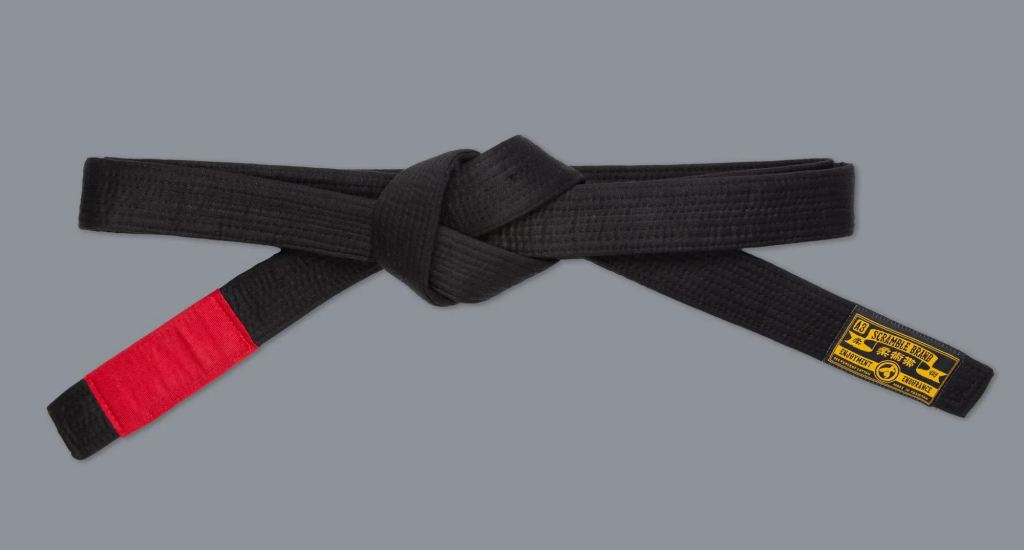
Black Belt Curriculum10+ Years of Dedication & Mat Mastery
"The Beginning of True Learning. "A black belt is a white belt who never quit." Focus shifts from personal ego to longevity, teaching, art preservation, and giving back."
Primary Tactical Focus
Economy of motion, teaching methodology, personal martial philosophy, creating new technical variations, and lifelong physical longevity.
Required Milestones
Check what you've masteredEffortless movement where every transition is guided by weight distribution and timing
Ability to teach the same technique in 5 different ways for different body types
Total calmness in high-pressure sparring and championship competition
Awarding stripes and belts to the next generation of grapplers
Common Pitfalls at This Rank
⚠Feeling pressured to "never tap" to hungry young brown or purple belts
⚠Stopping physical conditioning and losing mobility
Stripe Simulator & Time Calculator
Estimate your stripe status based on cumulative mat hours
Your Mat Hours:
Stripe #12000 hrs
3 Years active teaching & training as Black Belt (IBJJF Certification)
Stripe #22600 hrs
3 Additional Years active mentorship & contribution
Stripe #33200 hrs
3 Additional Years (Professor Degree)
Stripe #44000 hrs
5 Additional Years active leadership
There is an old saying in BJJ: "black belt is a white belt who never quit." It is a cliché, but it is also accurate. Black belt is not a mark of having learned everything — it is proof you stuck with a genuinely difficult process long enough to master the fundamentals deeply.
What Black Belt Signifies
By black belt, a practitioner is expected to have a well-rounded, deeply refined game across positions, a real understanding of how to teach the art to others, and the composure to perform under the highest pressure. It typically takes 8-12 years of consistent training to reach, though exceptional competitors sometimes arrive faster and dedicated hobbyists sometimes take longer.
Degrees (Stripes) at Black Belt
Progress does not stop at black belt. Most federations, including the IBJJF, recognize additional "degrees" (stripes) earned roughly every 3-5 years of continued practice and contribution to the art, up to a 6th degree. Beyond that sits the honorary coral belt — the 7th and 8th degree red-and-black and red-and-white ranks reserved for practitioners with 31+ years as a black belt.
Life After Black Belt
Many black belts shift focus toward coaching, competition at the highest levels, or simply refining their game for the rest of their lives — BJJ black belts often describe the rank as the real starting line, not the finish line. If you are earlier in the journey and want the full roadmap, our BJJ belt system overview covers every rank leading up to this one.
Tagged with:#black belt#belt system
Frequently Asked Questions
What happens after black belt in BJJ?
Black belts continue earning degrees (stripes) roughly every 3-5 years for continued practice and contribution, up to a 6th degree and beyond for a small number of senior practitioners.
How many degrees does a BJJ black belt have?
Most federations, including the IBJJF, recognize up to a 6th degree red-and-black belt through continued practice, with an even higher honorary red belt reserved for a small number of legendary practitioners.
How often does a BJJ black belt earn a new degree?
Roughly every 3-5 years of continued practice and contribution to the art, though this pacing is set by each federation and academy rather than a single universal rule.
What is the average age to get a BJJ black belt?
Most practitioners earn their black belt in their late 20s to mid-30s, reflecting the typical 8-12 year training timeline for those who start as adults, though age at the start of training shifts this considerably.
Sources & Further Reading
About the Author
Mohsin AyubBJJ practitioner, 6 years — Gracie Barra
Founder & Editor, BJJ Sportswear
Mohsin has trained Brazilian Jiu-Jitsu for six years at Gracie Barra and has competed at IBJJF-affiliated tournaments. He writes about competition, gear, and athlete careers, and founded BJJ Sportswear to help grapplers find equipment and information they can trust.
- Six years training Brazilian Jiu-Jitsu at Gracie Barra
- Competed at IBJJF-affiliated tournaments
- Writes on BJJ competition, gear testing, and athlete careers
This article was last reviewed and updated on 2026-08-01.