

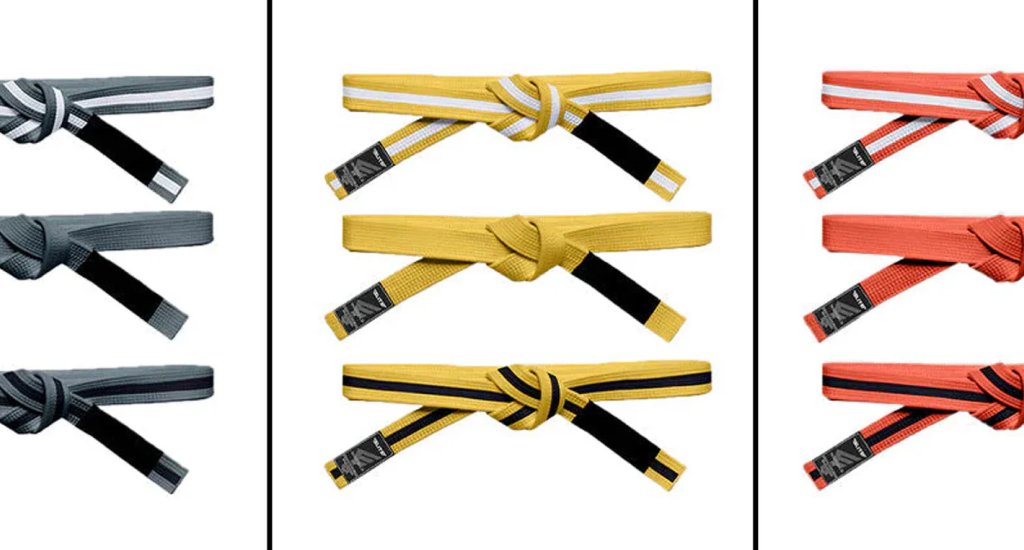
Kids BJJ Belt System: Complete Guide for Youth Ranks
The kids BJJ belt system uses more belt colors and ranks than the adult system to keep young practitioners motivated with frequent achievements. Children age 15 and under progress through 13 different belt levels including white, grey, yellow, orange, and green—each with three variations. This extended system provides short-term goals that match children’s developmental stages and attention spans.
At age 16, youth practitioners transition to the adult belt system, typically starting at blue belt or higher depending on their skill level. Understanding how the kids’ system works helps parents support their child’s BJJ journey and prepare them for the transition to adult ranks.
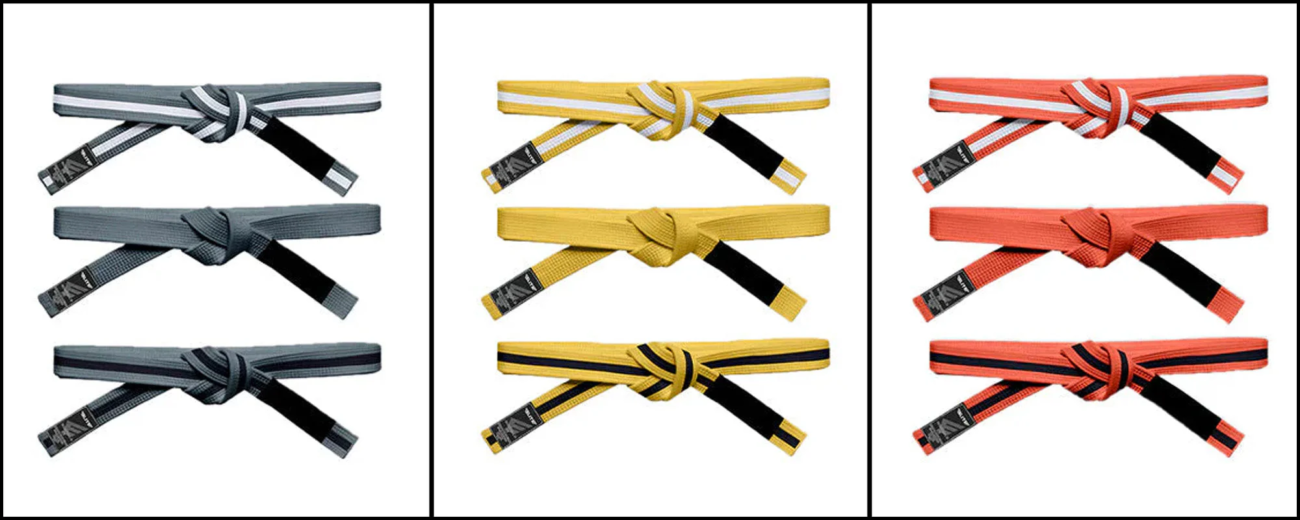
Youth Belt Order and Colors
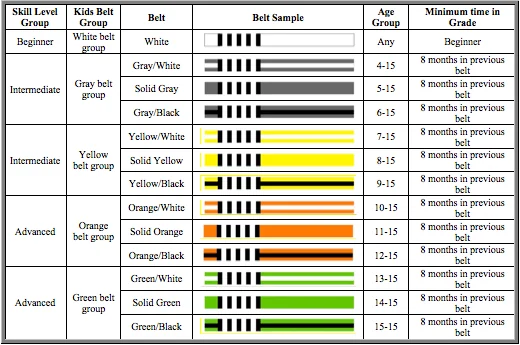
The IBJJF (International Brazilian Jiu-Jitsu Federation) establishes the standard youth belt progression with 13 ranks:
White Belt – Where every child begins, regardless of age or athletic background.
Grey Belt Series – Grey/white (age 4+), solid grey (age 4+), grey/black (age 4+)
Yellow Belt Series – Yellow/white (age 7+), solid yellow (age 8+), yellow/black (age 9+)
Orange Belt Series – Orange/white (age 10+), solid orange (age 11+), orange/black (age 12+)
Green Belt Series – Green/white (age 13+), solid green (age 14+), green/black (age 15+)
Each belt except white has three levels: a color/white combination belt, a solid color belt, and a color/black combination belt. This creates 13 distinct ranks that children progress through based on age, skill, and time training.
Age Requirements for Youth Belts
The IBJJF sets minimum ages for each youth belt level to align with child development stages.
Ages 4-6: Can hold white through grey/black belts. These youngest students focus on basic movements, safety, and learning to follow instructions.
Ages 7-9: Progress through the yellow belt series. Students develop more complex techniques, combinations, and better body control.
Ages 10-12: Move through the orange belt series. Technical depth increases, and students begin developing personal preferences for certain positions.
Ages 13-15: Advance through the green belt series, the highest youth rank. Students demonstrate advanced techniques, leadership qualities, and often help lower belts during class.
These age minimums prevent children from advancing too quickly. A talented 5-year-old cannot skip to yellow belt regardless of skill—they must wait until age 7 per IBJJF standards.
How Kids Earn Belt Promotions
Youth belt promotions happen more frequently than adult promotions to maintain motivation.
Typical Timeline: Most academies promote youth belts every 6-12 months with consistent training. Some schools use stripe systems within each belt, requiring children to earn 4-5 stripes before advancing to the next belt level.
What Instructors Look For: Promotion criteria include technical knowledge of age-appropriate techniques, regular attendance and training consistency, positive attitude and respect for training partners, and effort during drilling and sparring.
Competition Performance: Some academies factor tournament results into promotions, though competition isn’t required at most schools.
The frequent promotions serve a purpose beyond just recognition. Children learn goal-setting, experience achievement, and stay engaged during a multi-year journey that would otherwise feel overwhelming.
Skills Focus by Belt Level
Each youth belt level emphasizes age-appropriate skills.
White and Grey Belts: Learn basic positions like guard, mount, and side control. Master simple escapes and fundamental movements like shrimping and bridging. Focus on safety and following directions.
Yellow Belts: Develop guard retention skills and understand fundamental submissions. Learn to chain movements together and execute more complex techniques.
Orange Belts: Build technical depth with multiple options from each position. Start developing personal style preferences and improve competitive rolling.
Green Belts: Master advanced techniques appropriate for their age group. Demonstrate leadership by helping lower belts. Prepare mentally and technically for the transition to adult ranks.
Transitioning to Adult Belts at Age 16
When youth practitioners turn 16, they transition from the kids’ system to adult ranks.
Green Belt Holders: Typically receive blue belts upon turning 16. Exceptional green belts with strong competition results and deep technical knowledge may earn purple belts.
Orange and Yellow Belt Holders: Usually transition to white or blue belts depending on skill level and training time. Those with solid fundamentals and consistent training often start at blue belt.
Lower Youth Belts: Generally begin the adult system at white belt. This allows them to develop the technical maturity expected of adult blue belts.
The transition considers multiple factors including years of training, competition experience, technical proficiency, and physical maturity. Your instructor makes the final decision based on readiness for adult-level training and expectations. To understand the adult progression, read our BJJ blue belt guide.
Why Kids Use a Different Belt System
The expanded youth system exists for important developmental reasons.
Matching Attention Spans: Children need more frequent recognition than adults to stay motivated. Waiting 2-4 years for a belt promotion (typical in the adult system) would cause most kids to lose interest.
Developmental Appropriateness: Different ages require different teaching approaches. The belt divisions naturally group children by age and ability, allowing instructors to tailor lessons to developmental stages.
Building Foundations: The slower progression through more ranks ensures children master fundamentals before advancing. They develop proper movement patterns and technique while their bodies are still growing.
Smooth Adult Transition: By age 16, green belts have trained for years and are genuinely ready for blue belt-level expectations. The system prepares them for the longer timeline and higher standards of adult BJJ.
Supporting Your Child’s BJJ Journey
Set Realistic Expectations: Understand that belt promotions come every 6-12 months with consistent training, not based on natural talent alone. Focus on your child’s effort and enjoyment rather than comparing them to other students.
Emphasize Consistency: Regular attendance (2-3 times per week) matters more than occasional intense training. Help your child establish a consistent training schedule they can maintain long-term.
Encourage Leadership: As children advance through the belts, encourage them to help newer students. This builds confidence and reinforces their own learning.
Celebrate Progress: Recognize improvements beyond just belt promotions—better technique, increased confidence, or new friendships formed through training.
The kids BJJ belt system is designed to develop not just technical skills but character traits like perseverance, respect, and humility. These qualities matter more than the color of the belt around your child’s waist.
To understand the complete belt progression from youth through adult ranks, read our comprehensive BJJ belt system guide.