
Custom Manufacturing
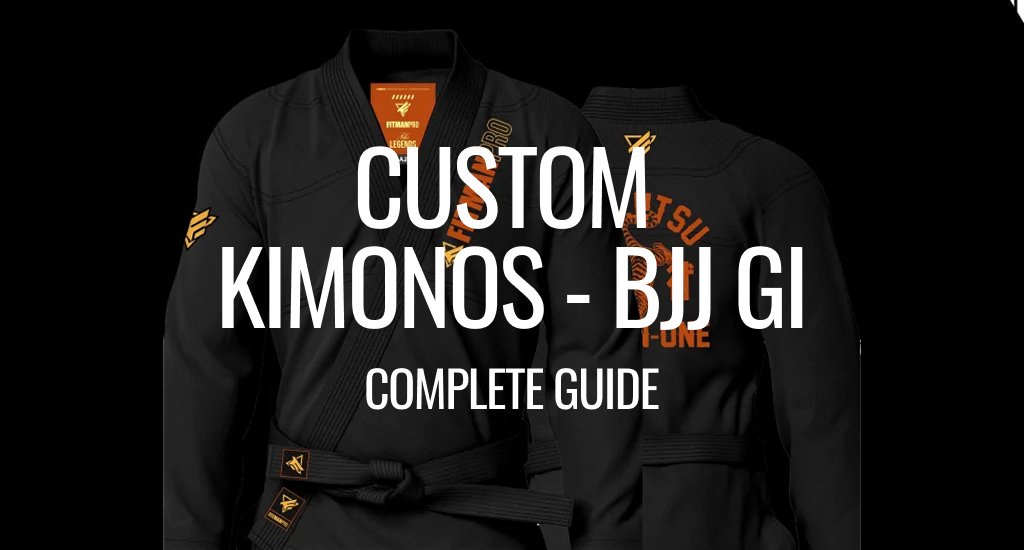
Custom BJJ Gi Manufacturing
Tournament-grade custom gis for academies and competition teams — pearl or gold weave, full embroidery, IBJJF-legal specs, low 25-unit MOQ.
$44–$68per unit, MOQ 25 — get an exact quote below
- Pearl, gold, single, or double weave, 350–550 GSM
- IBJJF-legal white, royal blue, or black colorways
- Chest, back, and shoulder embroidery included in base price
- 2–4 week production, worldwide shipping
IBJJF-compliant specs available · Free design mockups · Worldwide shipping
Why Academies Order Custom Gis
A matching gi gives a team a recognizable look at tournaments and in class photos. It's also a natural fit for an embroidered academy logo or a sponsor patch. Many academies resell custom gis to students at a markup. That can offset part of the order cost. But actual margins depend on your student base, local pricing, and how well the run sells. Treat any profit number a manufacturer quotes you as a rough estimate, not a promise.
Weave and Fabric Weight
The weave and gram weight (GSM) of the fabric are the biggest factors in how a gi feels, wears, and lasts.
Pearl weave is the most common choice for modern academies. It has a honeycomb pattern that's breathable and fairly lightweight. Within pearl weave, gram weight is the key variable: - 350 GSM — the lightest option. Good for competition and hot climates, but wears out faster under heavy daily training. - 450 GSM — the middle ground most academies choose. Durable enough for regular training, without being too heavy. - 550 GSM — heavier and more durable. Popular with hard-training academies and athletes who want a gi to last.
Gold weave has a diagonal pattern and a softer feel. It's often marketed as a step up from pearl weave, at a modest price premium.
Single weave is the lightest and least durable option. It works fine for kids' programs, loaner gis, or trial memberships, where cost matters more than longevity.
Double weave is the heaviest and most traditional option. It's very durable and warm, but slow to dry, so it's less popular in hot climates.
For pants, most academies now choose ripstop fabric. It's lightweight, quick-drying, and resists tearing. Traditional canvas or twill pants are heavier and slower to dry, but some traditionalists still prefer them.
Sizing
Manufacturers usually size gis with standard kids (M000–M4) and adult (A0–A5, plus "long" variants) charts, based on height and weight. Dedicated women's cuts are common too — a shorter jacket, narrower shoulders, and an adjusted rise. For orders of roughly 100 units or more, most manufacturers can build a custom size chart around your actual student base, instead of using the generic one.
It's also worth deciding upfront on fit. A competition fit runs tighter through the sleeves and pants, limiting an opponent's grips and staying within IBJJF measurement limits. A training fit runs looser, which is more comfortable for long drilling sessions.
Customization and Embroidery
Standard customization usually includes a chest logo, a back logo, and one or two patches. Extra placements — a second sleeve patch, lapel text, individual athlete names — usually cost more per unit. Patches generally come in three types. Woven patches have a traditional look at a moderate cost. Embroidered patches are the most durable, since they're permanent. Rubber or PVC patches have a raised 3D look, often used for a more modern style.
IBJJF-Legal Requirements
If any part of your order is meant for competition, the gi has to meet IBJJF uniform rules. These are stricter than "any gi will do":
- Colors: only white, royal blue, or black are approved. Jacket, pants, and belt must match.
- Jacket: must reach mid-thigh at minimum. Sleeves can't extend more than 5cm from the wrist with the arm out straight.
- Pants: no more than 5cm above the ankle bone.
- Fabric: cotton or a cotton blend, opaque, and sturdy enough to hold up under grip fighting.
A good manufacturer should confirm these specs during the mockup stage, before production starts.
Ordering Process, Step by Step
- Initial consultation — share your academy name, rough quantity, logo files, preferred colors, and timeline.
- Design mockup — a good manufacturer gives you a visual mockup, often 3D-rendered, before production starts, with revisions included.
- Quote and deposit — expect an itemized quote and a partial deposit, often 50%, to reserve a production slot.
- Production — fabric cutting, embroidery, assembly, and quality checks, usually with progress updates along the way.
- Pre-shipment approval — ask for photos of the finished units before they ship.
- Shipping and inspection — count the units, check for shipping damage, and confirm sizing against your chart as soon as the order arrives.
Gi Care, Once You've Received the Order
- Wash a new gi alone in cold water the first time. This prevents dye transfer and accounts for a bit of shrinkage.
- Always use cold water. Hot water speeds up shrinkage and breaks down the fabric faster.
- Skip fabric softener. It clogs the weave and reduces moisture-wicking.
- Turn the gi inside out before washing, to protect the embroidery from abrasion.
- Wash after every training session, which also matters for preventing skin infections.
Frequently Asked Questions
What's a typical minimum order for a custom BJJ gi run?
Our minimum order is 25 units for a fully custom design. Per-unit pricing drops as order size increases, with the best price-to-flexibility ratio usually landing in the 50–150 unit range for a mid-size academy.
Which gi weave is best for a BJJ academy?
450 GSM pearl weave is the most common choice for academies — it balances durability, weight, and cost better than lighter competition-focused fabrics or heavier double weave.
Are custom gis IBJJF competition legal?
Yes, when designed to spec: white, royal blue, or black only, with jacket and pants matching, sleeves within 5cm of the wrist, and jacket length reaching mid-thigh at minimum. We confirm compliance during the mockup stage.
How long does custom gi production usually take?
Production typically runs 2–4 weeks, with total time from order to delivery often stretching to 5–7 weeks once international shipping is included.