
On This Page
Editorial Standards
Reviewed by the BJJ Sportswear Editorial Team for technical accuracy and kept current.
BJJ Gi Size Chart: Complete Adult, Women's & Kids Sizing Guide
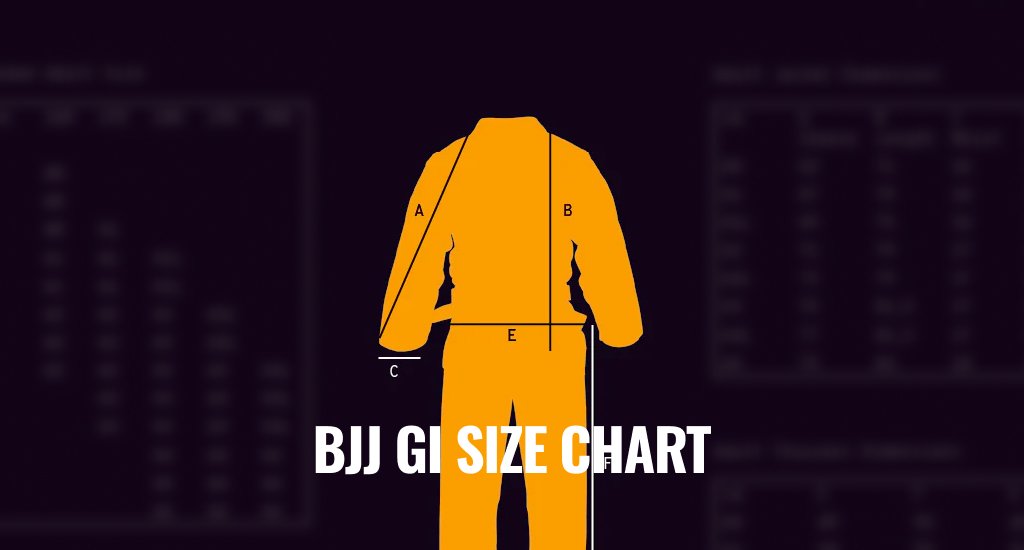
A BJJ gi size chart only helps if you know how to read it. Use the interactive calculator below for an instant recommendation, then check every size table, how to measure yourself, and why the same size fits differently across brands.
Interactive Gi & Rashguard Size Calculator
Enter your measurements for a size recommendation, with shrinkage compensation
ft
in
lbs
Recommended Kimono Size
A2(Gi)
Rashguard / Spats Size
L(Compression)
Most common adult male division size. Excellent all-around mobility.
Browse Gis in Size A2A BJJ gi size chart looks simple until you try to use one. You measure your height and weight. You find the matching row. Then an A2 from one brand fits like a second skin — and an A2 from another brand swallows you whole. The letters and numbers are only half the story. The other half is knowing how to measure yourself and how far a brand's cut strays from the "standard" chart.
Use the interactive size calculator below for an instant gi and rashguard recommendation based on your height, weight, and build. Then read on for the full A-series, F-series, and M-series size tables, how to measure yourself, and what to do about shrinkage before you buy.
How BJJ Gi Sizing Works
Most BJJ gis use a letter-number code. The letter marks the size category. The number marks where you fall within it. "A" stands for Adult. A second letter sometimes follows the number:
- A (standard) — average height and build for that weight range
- L (long) — taller than average for the weight, with longer arms and legs
- H (heavy/husky) — wider build, more room through the chest and thighs
- S (short) — shorter torso and arms relative to the weight range
- F (female) — cut specifically for women's proportions
Kids' gis use a separate M-series, or a brand's own C-series. These are sized by height in centimeters, not weight. Kids at the same age can grow at very different rates, so height is the more reliable number.
Adult BJJ Gi Size Chart (A-Series)
| Size | Weight Range | Height Range | Chest (in) | Sleeve (in) |
|---|---|---|---|---|
| A0 | 100–130 lbs | 5'0"–5'4" | 34–37" | 22–23" |
| A1 | 130–160 lbs | 5'4"–5'8" | 37–40" | 23–24" |
| A1L | 130–160 lbs | 5'8"–5'11" | 37–40" | 24–25" |
| A2 | 160–185 lbs | 5'7"–5'11" | 40–44" | 24–25" |
| A2L | 160–185 lbs | 5'11"–6'2" | 40–44" | 25–26" |
| A2H | 175–200 lbs | 5'7"–5'10" | 44–47" | 24–25" |
| A3 | 185–215 lbs | 5'10"–6'2" | 44–48" | 25–26" |
| A3L | 185–215 lbs | 6'2"–6'5" | 44–48" | 26–27" |
| A4 | 215–245 lbs | 6'0"–6'4" | 48–52" | 26–27" |
| A5 | 245–280 lbs | 6'2"–6'5"+ | 52–56" | 27–28" |
These ranges are industry averages, not one manufacturer's exact spec. Always check the actual brand's chart before ordering. Real-world differences between brands are often bigger than a full size.
If you land between two sizes: put the jacket fit first. Pants have a drawstring waist that adjusts several inches. The jacket does not. Between an A2 and A3, choose based on chest and shoulder measurements, not weight alone. If your arms are long for your weight class, pick the L variant of your normal size instead of jumping a full size up.
Women's BJJ Gi Size Chart (F-Series)
Standard A-series gis are patterned for male proportions. On a female frame, that often means shoulders too wide, hips too narrow, and a torso that runs too long. F-series gis use a different pattern entirely: a nipped waist, more room through the hips, and a jacket hem and sleeve length scaled to female proportions — not just a shrunk-down men's cut.
| Size | Weight Range | Height Range | Chest (in) | Hip (in) |
|---|---|---|---|---|
| F1 | 100–125 lbs | 5'0"–5'4" | 32–35" | 34–37" |
| F2 | 125–150 lbs | 5'3"–5'7" | 35–38" | 37–40" |
| F3 | 150–175 lbs | 5'5"–5'9" | 38–42" | 40–44" |
| F4 | 175–200 lbs | 5'7"–5'11" | 42–46" | 44–48" |
Some women still prefer a standard-cut gi, especially for open-division competition where grip dynamics differ. If that's you, size down one full size from your A-series weight range and use the drawstring to manage the waist. For fit criteria beyond sizing — jacket, sleeves, pants — see our companion guide on how a BJJ gi should fit.
Kids BJJ Gi Size Chart (M-Series)
| Size | Height Range | Approx. Age | Weight Range |
|---|---|---|---|
| M0 | 90–100 cm | 3–4 years | 30–40 lbs |
| M1 | 100–110 cm | 4–6 years | 40–55 lbs |
| M2 | 110–120 cm | 6–8 years | 55–70 lbs |
| M3 | 120–130 cm | 8–10 years | 65–85 lbs |
| M4 | 130–140 cm | 10–12 years | 80–100 lbs |
| M5 | 140–150 cm | 12–14 years | 95–115 lbs |
| M6 | 150–160 cm | 13–15 years | 110–130 lbs |
Size children by height, not age. A tall 9-year-old can need an M4. A shorter 11-year-old might still fit an M3. If your child sits at the top of a range, buy the next size up. A slightly loose gi is easy to manage with a drawstring and a pre-shrink wash. A gi that's already too small after a growth spurt is just money wasted.
Why the Same Size Fits Differently Across Brands
The A-series naming is industry-wide. But no governing body enforces the same measurements between manufacturers. Two brands can both label a gi "A2" — and you can fit comfortably in one while barely getting the jacket over your shoulders in the other. Some general tendencies, based on consistent community feedback:
- Runs slim / true to size: Tatami Fightwear, Scramble, and Hyperfly tend to cut slimmer and longer. A good starting point if you have a lean, athletic build.
- Runs generous: Fuji gis typically offer more room through the chest and thighs, which suits a stockier or more muscular build.
- Runs short: Some budget and imported gis run short in the sleeves, even at their labeled size. Check reviews for sleeve-length complaints before you buy.
- Pre-shrunk options: Scramble and some Tatami lines sell pre-shrunk gis. The size chart already reflects the final, post-wash dimensions — which removes the biggest sizing variable.
How to Measure Yourself for a BJJ Gi
A size chart is only as good as the measurements you put into it.
- Chest: Wrap a tape measure around the widest part of your chest, just under your armpits. Keep it horizontal and snug, not tight.
- Height: Stand barefoot against a wall, heels and back touching. Have someone mark the top of your head. Self-measuring with a tape held overhead is unreliable.
- Sleeve length: Extend your arm out to the side at shoulder height. Measure from the center of the back of your neck, across the shoulder, to the wrist bone.
- Inseam: Stand upright and measure from your crotch to your ankle bone. This decides whether standard or long-leg pants fit better.
Weight alone isn't enough. Two people at the same weight, with different heights and builds, can need entirely different gi sizes.
Shrinkage: Buy True to Size or Size Up?
This depends on the fabric. 100% cotton gis shrink — sometimes by a full size — when washed warm and machine dried. For these, buying one size up and shrinking down on purpose is a common, legitimate strategy. Pearl weave and ripstop blends, used in most modern competition gis, are more stable. Buy these true to size, especially if they're marketed as pre-shrunk.
The safest approach for any new gi: wash once in cold water and air dry after the first wear. This clears the manufacturing sizing without triggering major shrinkage. Then check the fit. If it needs to come in slightly, one warm wash will bring it down a touch.
[IBJJF](https://ibjjf.com/rules/) Gi Size Compliance
If you plan to compete, your gi must meet IBJJF fit standards no matter what size is on the label:
- Jacket hem must reach the top of the thigh
- Sleeve cuffs must fall within 2 cm of the wrist with the arm extended
- Pant legs must fall within 5 cm of the ankle bone
A correctly sized gi can still fail inspection if it has shrunk too much. Try on your competition gi well before tournament day. Raise your arms overhead, extend them forward, and do a full squat to check the fit under movement. Confirm current specs against the official IBJJF rulebook, since requirements do get updated.
Quick Reference: Finding Your Size in 3 Steps
- Take your height, weight, chest circumference, and sleeve length using the method above.
- Match those numbers to the A-series, F-series, or M-series chart in this guide. If you fall between two sizes, put chest and shoulder fit ahead of weight.
- Check the specific brand's own size chart. Note whether the gi is pre-shrunk or raw cotton, and size up one notch if you plan to machine wash and tumble dry.
BJJ gi sizing looks complicated mainly because there's no universal standard behind the shared naming system. Once you know your real measurements and how your chosen brand tends to run, you're rarely more than one size off. And the shrinkage variable is something you can control once you know it's there. A gi that fits well disappears once you're training — which is exactly where your attention should be.
Tagged with:#gi sizing#buying guide#gi
Frequently Asked Questions
Should I buy my true BJJ gi size or size up for shrinkage?
It depends on the fabric. 100% cotton gis can shrink up to a full size in warm-wash, machine-dry conditions, so sizing up and shrinking intentionally is common. Pearl weave, ripstop, and pre-shrunk gis are more dimensionally stable and should be bought true to size.
How do I know if I need a women's F-series gi instead of a standard A-series gi?
If a standard-cut gi leaves the shoulders too wide, the hips too narrow, and the torso too long, an F-series gi — cut specifically for female proportions with a nipped waist and adjusted hip and sleeve measurements — will usually fit better.
Why do gi sizes differ so much between brands?
The A-series letter-number system is used industry-wide, but no governing body standardizes the actual measurements behind it. Two brands can both label a gi "A2" with noticeably different chest and sleeve dimensions, so always cross-check the specific brand's own size chart.
What size gi should a kid wear?
Size by height, not age — kids grow at very different rates, so age alone is a poor predictor. Match your child's height in centimeters to the M-series chart, and buy one size up if they're near the top of a range.
What does A1 mean on a BJJ gi size chart?
A1 is the second-smallest adult size in the A-series system, generally fitting practitioners around 130–160 lbs and 5'4"–5'8" tall. The letter A marks it as an adult size; the number ranks it within that range, with A0 smaller and A2 larger.
Is the gi size calculator on this page accurate?
It gives a solid starting recommendation based on height, weight, build, and washing habits, using the same size brackets as the chart on this page. Treat it as a starting point, not a guarantee — always cross-check against the specific brand's own size chart before ordering, since actual cut varies by manufacturer.
Sources & Further Reading
About the Author
Mohsin AyubBJJ practitioner, 6 years — Gracie Barra
Founder & Editor, BJJ Sportswear
Mohsin has trained Brazilian Jiu-Jitsu for six years at Gracie Barra and has competed at IBJJF-affiliated tournaments. He writes about competition, gear, and athlete careers, and founded BJJ Sportswear to help grapplers find equipment and information they can trust.
- Six years training Brazilian Jiu-Jitsu at Gracie Barra
- Competed at IBJJF-affiliated tournaments
- Writes on BJJ competition, gear testing, and athlete careers
This article was last reviewed and updated on 2026-08-22.