
On This Page
Editorial Standards
Reviewed by the BJJ Sportswear Editorial Team for technical accuracy and kept current.
7 Harsh Truths About Why Blue Belts Quit BJJ
Blue belt has the highest dropout rate of any BJJ rank. Here are the honest reasons why, and what actually helps you push through it.
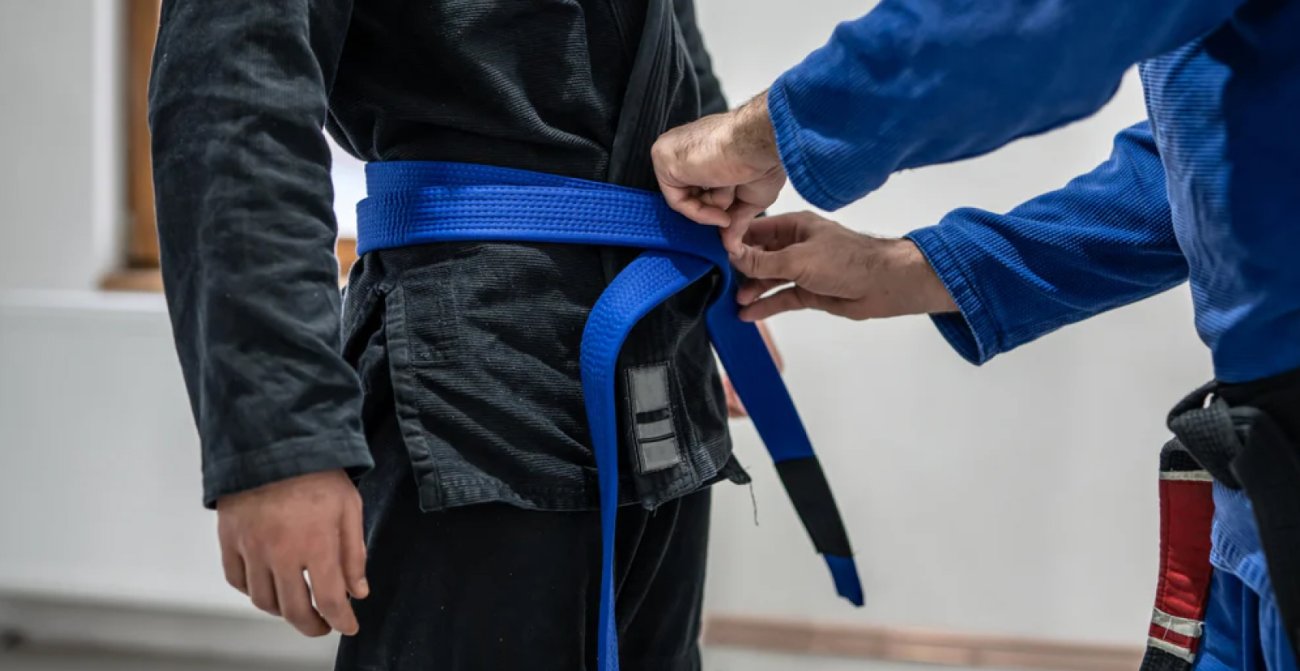
Blue belt has a well-known reputation in BJJ: it's where the highest share of practitioners quit. The white belt excitement has worn off, promotions slow down, and the "blue belt blues" set in. Here's the honest breakdown of why, and what actually helps.
1. The Novelty Has Worn Off
White belt feels like constant discovery — every class teaches something completely new. By blue belt, the fundamentals are familiar, and progress feels slower and less obviously visible, even though real technical development is still happening underneath the surface.
2. Promotions Take Noticeably Longer
Blue belt is the longest stretch in the entire belt system for many practitioners — often 2-3 years before purple. That's a long stretch without the regular milestone hits that kept white belt motivating, and it's easy to mistake slow promotion for no progress at all.
3. You Start Losing to Less Athletic Blue Belts
At white belt, raw athleticism can mask real technical gaps. By blue belt, opponents are more technical too, and pure athleticism stops being enough — a genuinely humbling adjustment for naturally athletic students who relied on it early on.
4. Injuries Start Accumulating
More mat time and harder rounds by blue belt mean a higher cumulative injury risk, and nagging injuries are one of the most common practical reasons training frequency — and motivation — drops off.
5. Life Responsibilities Compete for Time
Blue belt often arrives 1-2 years into training, right as work, relationships, or family demands intensify for a lot of adult practitioners — genuine scheduling conflict, not lost interest, drives a real share of blue belt dropout.
6. The Plateau Feels Personal
It's easy to internalize a technical plateau as "I'm just not good at this" rather than recognizing it as a completely normal part of the belt-system's design — see our guide on why the belt system moves slowly on purpose for context on why this stretch is supposed to feel this way.
7. Comparison to Newer, Faster-Progressing Students
Watching a talented new white belt progress quickly can feel discouraging at blue belt, even though the comparison isn't really fair — different starting points, different athletic backgrounds, and different training history all affect pace.
What Actually Helps You Push Through
Set process goals instead of promotion-timeline goals, find a small group of consistent training partners, and expect the plateau rather than treating it as a red flag — our guide on staying consistent at Jiu-Jitsu covers this in more depth. Most practitioners who push through blue belt's slow stretch describe purple belt as where the game genuinely starts clicking again.
Frequently Asked Questions
Why is blue belt the rank with the highest BJJ dropout rate? A combination of slower promotions, the fading novelty of white belt, rising injury accumulation, and life responsibilities competing for training time all converge around this stage for a lot of practitioners.
How long does blue belt typically last? Roughly 2-3 years for most consistent practitioners, making it one of the longest individual belt stretches in the entire system.
Is it normal to feel like you're not improving at blue belt? Yes, extremely common — real technical development is still happening, it's just less visibly obvious than the constant "new move every class" feeling of white belt.
What helps most with pushing through the blue belt plateau? Process-based goals (training frequency, not promotion timing), consistent training partners, and understanding the plateau as a normal, expected part of the belt system rather than a sign to quit.
The Bottom Line
Blue belt's high dropout rate isn't about talent — it's a predictable, well-documented stage in BJJ's progression. Understanding why it happens is often enough to push through it rather than mistaking a normal plateau for a real reason to stop.
Tagged with:#blue belt#mindset#bjj guides
Frequently Asked Questions
Why is blue belt the rank with the highest BJJ dropout rate?
A combination of slower promotions, the fading novelty of white belt, rising injury accumulation, and life responsibilities competing for training time all converge around this stage for a lot of practitioners.
How long does blue belt typically last?
Roughly 2-3 years for most consistent practitioners, making it one of the longest individual belt stretches in the entire system.
Is it normal to feel like you're not improving at blue belt?
Yes, extremely common — real technical development is still happening, it's just less visibly obvious than the constant "new move every class" feeling of white belt.
What helps most with pushing through the blue belt plateau?
Process-based goals (training frequency, not promotion timing), consistent training partners, and understanding the plateau as a normal, expected part of the belt system rather than a sign to quit.
About the Author
Mohsin AyubBJJ practitioner, 6 years — Gracie Barra
Founder & Editor, BJJ Sportswear
Mohsin has trained Brazilian Jiu-Jitsu for six years at Gracie Barra and has competed at IBJJF-affiliated tournaments. He writes about competition, gear, and athlete careers, and founded BJJ Sportswear to help grapplers find equipment and information they can trust.
- Six years training Brazilian Jiu-Jitsu at Gracie Barra
- Competed at IBJJF-affiliated tournaments
- Writes on BJJ competition, gear testing, and athlete careers
This article was last reviewed and updated on 2026-08-18.