

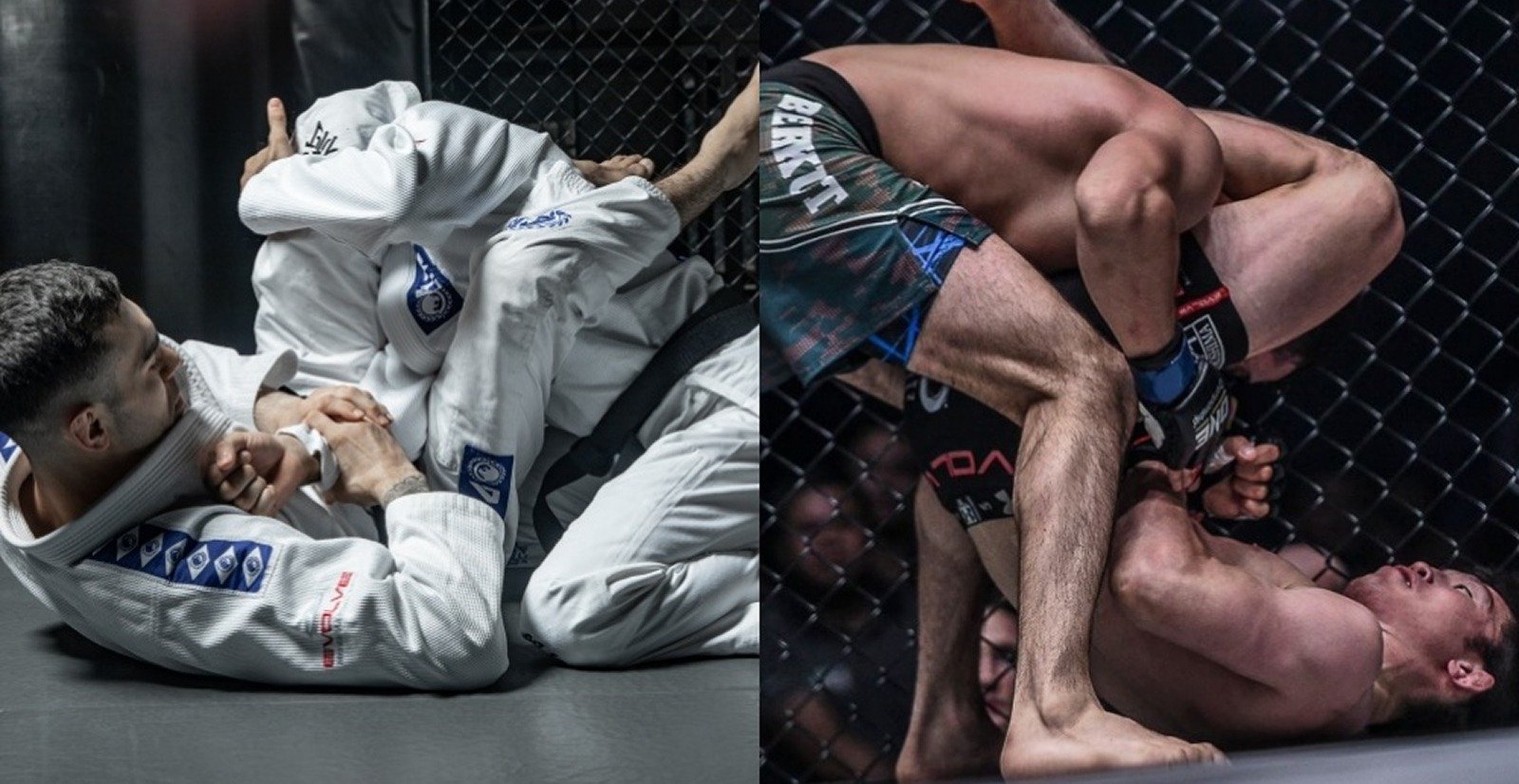
Is Brazilian Jiu Jitsu MMA? Complete Answer & Differences
By BJJ Sportswear Editorial Team
Expert Analysis | Last Updated: January 16, 2026
No, Brazilian Jiu Jitsu is NOT MMA, but rather BJJ is one component discipline within Mixed Martial Arts alongside striking arts (boxing, Muay Thai, kickboxing), wrestling (freestyle, Greco-Roman, folkstyle), and judo, with the fundamental difference being BJJ focuses exclusively on ground fighting through submissions, positional control, and grappling without striking while MMA is a full-contact combat sport combining multiple martial arts including punching, kicking, elbows, knees, takedowns, and submissions with fighters competing in venues like the UFC, Bellator, and ONE Championship.
NAGA Fighter expert comparison: “The biggest difference between BJJ and MMA is that the former exclusively focuses on ground fighting and submission techniques, while the latter also encompasses striking, grappling, and wrestling. BJJ is an individual martial art, while MMA is a full-contact combat sport that incorporates multiple combat styles”.
Elite MMA relationship explanation: “BJJ is a component of MMA—mostly focused on groundwork, grappling, and control. The sport is typically more self-defense oriented, focusing on finding positions to dominate your opponent to the point of submission”. Understanding this distinction matters because BJJ practitioners train in gi or no-gi grappling only following IBJJF rules prohibiting strikes while MMA fighters must develop well-rounded skills across all combat ranges connecting to broader martial arts training approaches and BJJ fundamentals versus comprehensive fighting systems.
The relationship between BJJ and MMA emerged when Royce Gracie shocked the world at UFC 1 in 1993 defeating larger opponents using pure Brazilian Jiu Jitsu submissions, proving ground fighting effectiveness against strikers and wrestlers, forcing all MMA fighters to learn BJJ fundamentals (guard, mount, submissions), and establishing the “You must know BJJ to compete in MMA” paradigm that persists today with champions like Charles Oliveira (BJJ black belt, most UFC submissions), Islam Makhachev (sambo/BJJ hybrid), and historical legends including Georges St-Pierre, Anderson Silva, and Khabib Nurmagomedov all cross-training extensively in Brazilian Jiu Jitsu. This comprehensive 2026 guide explains key differences between BJJ and MMA (rules, techniques, training methods, competition formats),
how BJJ fits into MMA (submission defense, ground control, percentage of MMA techniques from BJJ), whether you should train BJJ, MMA, or both based on goals (self-defense, fitness, competition), which belt level BJJ needed for MMA (purple belt minimum recommended), famous BJJ practitioners in MMA (Demian Maia, Brian Ortega, Charles Oliveira), adaptation differences (gi vs no-gi, adding striking defense), and beginner recommendations helping you choose between starting pure BJJ, joining MMA gym, or cross-training both for competition preparation understanding complete combat sports landscape.
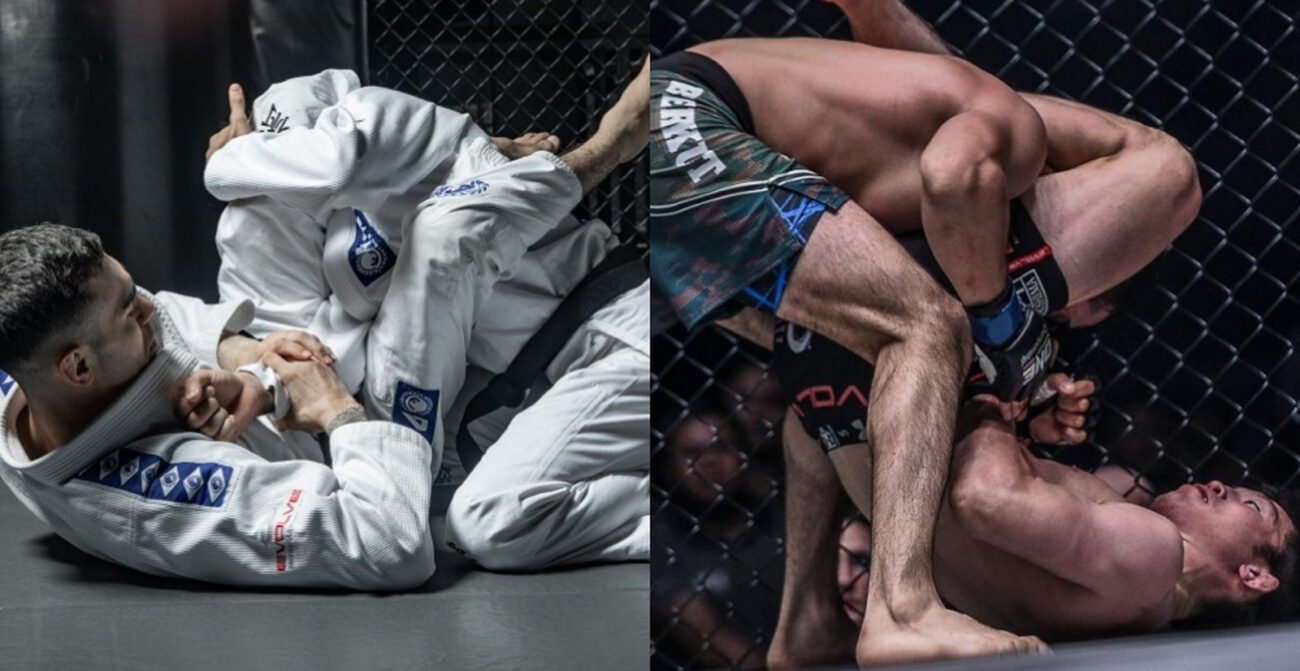
Table of Contents
Quick Answer: The Core Difference
Brazilian Jiu Jitsu (BJJ)
Specialty: Ground fighting only
Techniques: Submissions, positional control, sweeps
Striking: NONE (no punches, kicks, elbows, knees)
Uniform: Gi (traditional) or rash guard/shorts (no-gi)
Win conditions: Submission, points, advantages
Training focus: Technique, leverage, problem-solving
Mixed Martial Arts (MMA)
Specialty: All-range combat
Techniques: Striking + wrestling + submissions
Striking: YES (punches, kicks, elbows, knees allowed)
Uniform: Shorts, gloves, no shirt
Win conditions: KO, TKO, submission, decision
Training focus: Well-rounded skills, cardio, power
The relationship: BJJ is one ingredient in the MMA recipe (typically 30-40% of total skillset)
The 5 Key Differences Explained
1. End Goal: How Fights Are Won
MMA:
- ✅ Knockout (KO): Opponent unconscious from strikes
- ✅ TKO: Referee stops fight (opponent can’t defend)
- ✅ Submission: Tap out (chokehold, joint lock)
- ✅ Decision: Judges score rounds (striking, control, aggression)
BJJ:
- ✅ Submission ONLY: Chokehold, armbar, leg lock (opponent taps)
- ✅ Points: Positional dominance (guard pass, sweep, mount)
- ✅ Advantages: Near-submissions, dominant positions
- ❌ NO knockouts (striking illegal in BJJ)
Result: MMA = 4 ways to win, BJJ = 1 way (submission) or points
2. Striking Rules
Elite MMA striking comparison: “MMA competitors are trained to execute powerful leg kicks, knee strikes, and upper body strikes with hands or elbows. While not a fixed rule, Brazilian Jiu-Jitsu typically doesn’t allow striking and kicking—only takedowns and submissions in the form of chokes, armbars, and leg locks”.
MMA striking allowed:
- ✅ Punches (jab, cross, hook, uppercut)
- ✅ Kicks (leg kicks, body kicks, head kicks)
- ✅ Elbows (standing + ground)
- ✅ Knees (standing clinch, sometimes grounded)
- ✅ Ground and pound (striking on ground)
BJJ striking:
- ❌ ZERO striking allowed (instant disqualification)
- Focus: Pure grappling, submissions, control
Impact on strategy:
- MMA: Must defend strikes while grappling (can’t play guard as easily)
- BJJ: Can focus 100% on technique (no knockout threat)
Reference: MMA vs gym training
3. Training Methods & Mental Approach
MMA:
- Physically draining: Striking + grappling = high cardio demand
- Mentally exhausting: Must track multiple threats (punches, kicks, takedowns)
- Training split: 40% striking, 30% wrestling, 30% BJJ (approximate)
- Sparring intensity: Higher injury risk (KO potential)
BJJ:
- Strategic puzzle: “Human chess” problem-solving
- Lower cardio intensity: (vs MMA, still intense)
- Technique-focused: 80% technique drilling, 20% live rolling
- Safer sparring: Lower concussion risk (no strikes)
School of Jiu Jitsu on mental toughness: “BJJ instills discipline, patience, and problem-solving skills—qualities that are invaluable in the high-pressure environment of MMA”.
4. Uniform & Equipment
BJJ:
- Gi division: Traditional kimono (jacket, pants, belt)
- No-gi division: Rash guard + shorts (grappling shorts)
- Equipment: Mouthguard optional, no gloves
- Reference: Rashguard buying guide
MMA:
- Uniform: Board shorts, no shirt
- Equipment: 4oz MMA gloves (vs 12oz boxing gloves), mouthguard, groin protection
- Cage/ring: Octagon (UFC) or ring (some promotions)
5. Competition Format
BJJ tournaments (IBJJF, ADCC):
- Weight classes (rooster to super-heavyweight)
- Belt divisions (white → black)
- Round duration: 5-10 minutes (single round)
- Venue: Mats (often convention centers)
- Frequency: Weekly local, monthly regional
MMA events (UFC, Bellator, ONE):
- Weight classes (flyweight to heavyweight)
- No belt divisions (pro vs amateur)
- Round duration: 3-5 rounds × 5 minutes
- Venue: Cage/ring (arenas)
- Frequency: Monthly major events
How BJJ Fits Into MMA
BJJ’s Role in Modern MMA
School of Jiu Jitsu impact analysis: “The impact of BJJ on MMA is undeniable. From its early days with Royce Gracie to its integration into modern training regimes, BJJ has shaped the sport in countless ways. Its emphasis on technique, adaptability, and mental toughness has made it a cornerstone of MMA”.
BJJ provides MMA fighters:
1. Submission offense:
- Rear-naked choke (most common UFC finish)
- Triangle choke (Charles Oliveira specialty)
- Armbar (Ronda Rousey signature)
- Guillotine choke (quick finisher)
- Leg locks (modern meta: heel hooks, kneebars)
2. Positional control:
- Mount: Rain down strikes safely
- Back control: Most dominant position (leads to RNC)
- Side control: Control + strike (ground and pound)
- Half guard: Stall position, recovery
3. Defensive grappling:
- Guard retention: Prevent opponent passing
- Submission defense: Escape armbars, chokes
- Sweeps: Reverse bottom position
- Standup from ground: Technical standups (wrestling + BJJ)
4. Ground and pound defense:
- Elbow escapes: Create space from strikes
- Frame building: Push opponent away
- Hip movement: Avoid damage while grounded
Evolve MMA differences: “There’s a much bigger emphasis on takedown defense and takedowns in MMA grappling than in traditional BJJ. BJJ focuses strictly on ground fighting”.
Percentage Breakdown: What is BJJ in MMA?
Modern MMA skillset distribution:
| Skill | % of MMA | Source |
|---|---|---|
| Striking (boxing, Muay Thai, kickboxing) | 40-50% | Stand-up fighting |
| Wrestling (takedowns, takedown defense) | 20-30% | Positional control |
| BJJ (submissions, guard, escapes) | 20-30% | Ground finishing |
| Judo/clinch work | 5-10% | Throws, trips |
| Cardio/conditioning | Foundation | All aspects |
Result: BJJ = ~25-30% of total MMA skillset (critical, but not majority)
Famous BJJ Black Belts in MMA
UFC Champions with strong BJJ:
1. Charles Oliveira ⭐ MOST UFC SUBMISSIONS (16+)
- BJJ black belt (3rd degree)
- Submission specialist (chokes, armbars)
- Former UFC Lightweight Champion
2. Islam Makhachev
- Sambo base + BJJ black belt (under Davi Ramos)
- Current UFC Lightweight Champion
- Ground control specialist
3. Demian Maia (retired)
- BJJ 4th degree black belt
- 20+ UFC submission wins
- ADCC medalist (pure grappler background)
4. Brian Ortega
- BJJ black belt under Rener Gracie
- Known for: Triangle choke, guillotine
- UFC Featherweight title challenger
5. Mackenzie Dern
- BJJ black belt (IBJJF World Champion)
- Transitioned to MMA (UFC strawweight)
- Submission threat always
Historical legends:
- Royce Gracie (UFC 1, 2, 4 champion – started it all)
- Georges St-Pierre (BJJ black belt, well-rounded)
- Anderson Silva (BJJ black belt, striker/grappler hybrid)
Reference: Greatest BJJ fighters of all time
BJJ for MMA vs Traditional BJJ
Key Adaptations Required
Reddit martial arts on differences: “In MMA, opponents can strike you with punches and elbows—this makes it significantly more challenging to execute certain guard techniques when your opponent can target your head”.
What changes for MMA:
1. Guard playing less viable:
- BJJ: Can comfortably play guard (pull guard, work sweeps)
- MMA: Guard = vulnerable to ground and pound
- Adaptation: Aggressive guard (sweeps, submissions) vs passive control
2. No-gi emphasis:
- BJJ: Gi grips (collar, sleeve, pants)
- MMA: No-gi only (slippery, explosive)
- Adaptation: Focus on underhooks, wrist control, body locks
3. Submission setups differ:
- BJJ: Can take time setting up submissions
- MMA: Must finish fast (or get punched)
- Adaptation: High-percentage subs only (RNC, guillotine, armbar)
4. Striking defense integration:
- BJJ: No striking awareness needed
- MMA: Must defend punches while grappling
- Adaptation: Posture control, framing, hand fighting
5. Cage/octagon dynamics:
- BJJ: Open mat space
- MMA: Cage wall (affects positioning, allows wall-walking)
- Adaptation: Cage wrestling, fence work
School of Jiu Jitsu no-gi transition: “Traditional BJJ training involves a gi (kimono), but MMA fighters primarily train in no-gi BJJ. This adjustment better mimics the conditions of an MMA fight where gripping the opponent’s clothing is not allowed”.
What Belt Level BJJ Needed for MMA?
Elite Sports belt requirements: “While you don’t need to have a specific belt to take part in MMA, most of the accomplished fighters who have completed their training in jiu-jitsu are, at a minimum, a purple belt”.
MMA BJJ competency levels:
White belt (0-12 months):
- ❌ Not ready for MMA competition
- Basic submissions (armbar, RNC)
- Submission defense beginner
- Focus: Build BJJ base first
Blue belt (1-2 years):
- ✅ Amateur MMA possible
- Understand guard, mount, side control
- Can defend basic submissions
- Still vulnerable to experienced grapplers
Purple belt (2-4 years):
- ✅ Professional MMA viable
- Strong submission game
- Positional awareness
- Most UFC fighters: Purple belt+ equivalent
Brown/Black belt (5+ years):
- ✅ Elite MMA grappling
- Can compete with anyone
- Examples: Demian Maia, Charles Oliveira
- Advantage: Submission threat forces respect
Interesting case: Demetrius “Mighty Mouse” Johnson
- Competed at UFC champion level as white belt (no-gi only)
- Later earned brown belt (after retiring from UFC)
- Proves: No-gi experience > belt color in MMA
Reference: BJJ belt system explained
Should You Train BJJ, MMA, or Both?
Choose Based on Your Goals
Train BJJ if:
- ✅ Want self-defense (ground fighting focus)
- ✅ Prefer technique over power (“human chess”)
- ✅ Avoid head trauma (no striking = safer long-term)
- ✅ Like problem-solving (strategic, methodical)
- ✅ Age 30+ (lower injury risk than MMA)
- ✅ Want competition options (IBJJF, ADCC, Grappling Industries)
Best for: Office workers, parents, hobbyists seeking fitness + skills
Reference: BJJ health benefits
Train MMA if:
- ✅ Want well-rounded fighting (all ranges)
- ✅ Enjoy striking (punching, kicking)
- ✅ Aspire to compete in UFC (professional dreams)
- ✅ Like intense workouts (highest calorie burn)
- ✅ Age 18-35 (prime athletic years)
- ✅ Willing to accept injury risk (broken noses, cauliflower ear)
Best for: Athletes, fighters, adrenaline junkies
Reference: MMA training benefits
Train BOTH if:
- ✅ Serious MMA competition goals
- ✅ Want complete grappling mastery
- ✅ Have time for 5-6 training sessions weekly
- ✅ Can afford 2 gym memberships ($200-350/month total)
Optimal schedule:
textMonday: MMA sparring (striking + grappling)
Tuesday: BJJ gi class (technical)
Wednesday: MMA conditioning
Thursday: BJJ no-gi class (MMA-specific)
Friday: MMA technique (pads, drilling)
Saturday: Open mat (BJJ) or MMA sparring
Sunday: Rest or active recovery
Examples of fighters doing both:
- Charles Oliveira (BJJ competitor → MMA champ)
- Mackenzie Dern (IBJJF champ → UFC fighter)
- Brian Ortega (BJJ black belt → UFC title challenger)
Beginner Recommendations
Complete beginner (never trained):
- Start with BJJ (6-12 months)
- Build grappling foundation
- Learn submission defense, escapes
- Then add MMA (if interested)
Why BJJ first?
- Lower learning curve (no striking to worry about)
- Safer for beginners (less injury)
- Builds confidence on ground
- Then add striking (easier progression)
Former wrestler/grappler:
- Jump to MMA (you have takedown base)
- Add BJJ no-gi 2x weekly (submission game)
- Focus on striking development
Former striker (boxing, Muay Thai):
- Add BJJ immediately (biggest weakness)
- Train BJJ 3-4x weekly minimum
- Keep striking skills sharp 2x weekly
Common Misconceptions Clarified
“BJJ doesn’t work in MMA anymore”
Elite Sports effectiveness: “Even though BJJ is utilized in MMA, you’ll have to improve your skills by learning other forms of martial arts. However, BJJ still remains viable in MMA”.
REALITY: BJJ is MORE important than ever
- Charles Oliveira (most UFC submissions ever)
- Islam Makhachev (dominant grappling)
- Khamzat Chimaev (submission threat)
- All modern champions have BJJ skills
What changed: Everyone learned BJJ basics (defense improved), so pure BJJ specialists rare, but submission threat still critical
“You can just stand up in MMA”
REALITY: Ground game still dominates statistics
- ~60% of MMA fights involve ground fighting
- ~40% of UFC finishes = submissions
- Cannot just “stand up” against elite grappler
Why it seems different:
- Better takedown defense (vs UFC 1 days)
- Referees stand fighters up faster (action)
- Wrestlers learned submission defense
Reference: 2025 No-Gi Worlds results (grappling still king)
“BJJ is only for small people”
REALITY: BJJ works for all sizes in MMA
- Heavyweight: Fabricio Werdum (BJJ black belt, champ)
- Light heavyweight: Glover Teixeira (BJJ specialist)
- Middleweight: Jacaré Souza (legendary grappler)
Leverage principle: Technique > strength (applies at all weights)
The Bottom Line
Is Brazilian Jiu Jitsu MMA?
- ❌ NO – BJJ is one component of MMA
Is BJJ necessary for MMA?
- ✅ YES – Cannot compete without BJJ knowledge
Can you do MMA with only BJJ?
- ❌ NO – Need striking, wrestling too (Royce Gracie era over)
Should beginners train BJJ or MMA?
- ✅ BJJ first (6-12 months), then add MMA if interested
What’s better for self-defense?
- BJJ: Ground fighting, control, submissions
- MMA: All ranges (striking + grappling)
- Best: BJJ + basic striking awareness
What’s better for fitness?
- MMA: Higher calorie burn (1,000+ cal/hour)
- BJJ: Lower injury risk, sustainable long-term
- Reference: Does BJJ make you stronger?
Bottom line: BJJ and MMA complement each other perfectly. Train BJJ to master ground fighting, add MMA if you want complete combat skills.
Your journey, your choice. OSS! 🥋🥊
Related resources:
- What is BJJ? – Complete intro
- MMA vs Regular Gym – Training comparison
- BJJ Belt System – Progression guide
- White Belt Journey – Start training
- Competition Prep – Tournament guide
Train smart. OSS! 🙏💪
Sources
Expert Analysis: NAGA Fighter, Elite MMA, School of Jiu Jitsu, Evolve MMA
Community: Reddit r/martialarts discussions
Last Updated: January 16, 2026