
On This Page
Editorial Standards
Reviewed by the BJJ Sportswear Editorial Team for technical accuracy and kept current.
Is It Hard to Learn Brazilian Jiu-Jitsu? The Honest Truth
Yes, BJJ is hard to learn. You will get tapped by smaller people, feel lost for months, and question whether you are improving at all. Here is why that is normal, and how long it actually takes to get good.
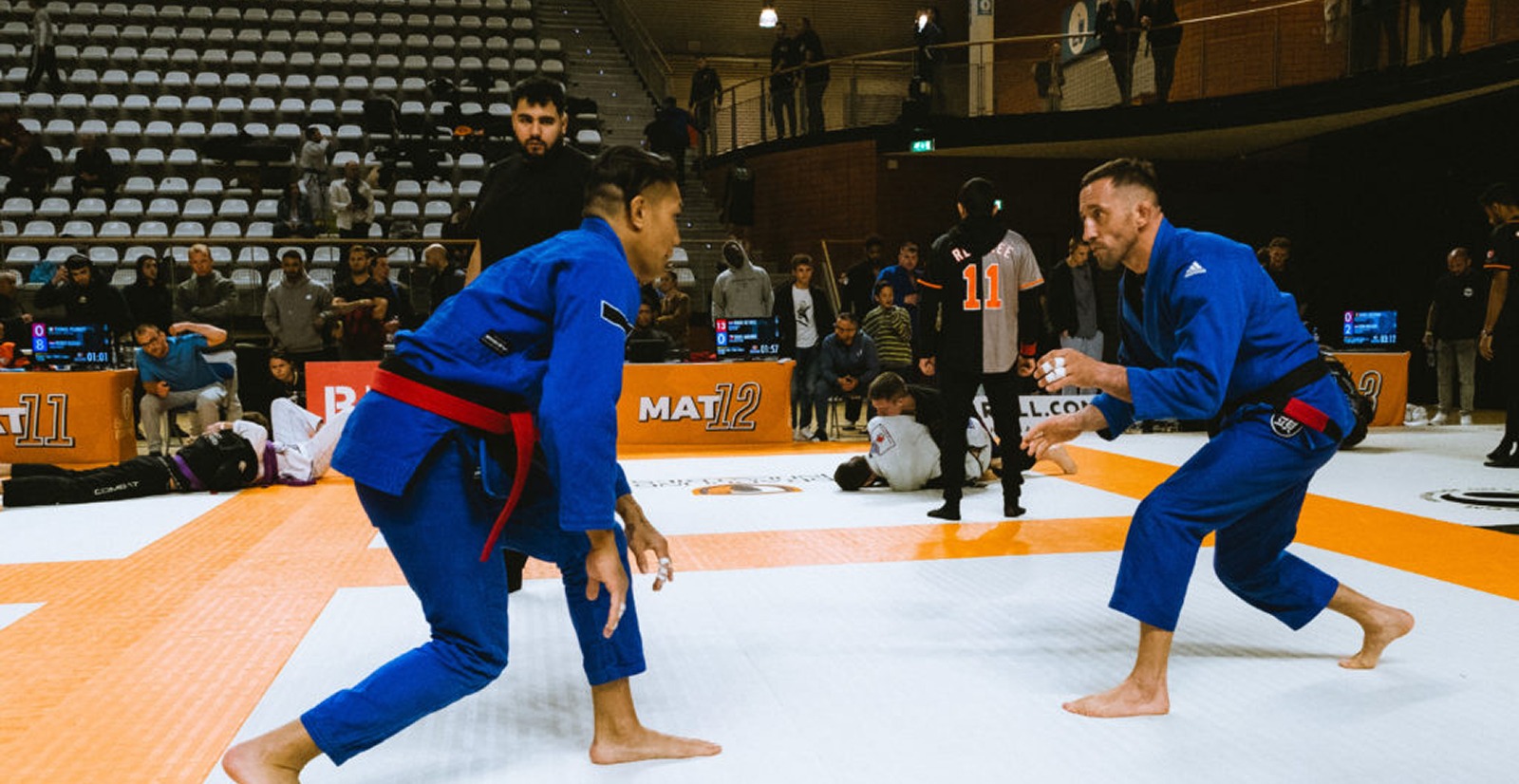
Yes, Brazilian Jiu-Jitsu is hard to learn. The learning curve is steep. The movements feel unnatural at first. You will get submitted by people smaller and less athletic than you, for longer than feels fair. That's the honest answer. The reassuring part: it's also genuinely accessible. You don't need any athletic background to start, and most of the difficulty is mental, not physical.
The Short Answer: Yes, But...
BJJ is hard because: the learning curve to blue belt runs one to two years. You'll tap out constantly at first, often ten to thirty times a class early on. The core movements — shrimping, bridging, inverting — are nothing like anything you've done before. Your ego takes a real hit when smaller people dominate you. Progress feels slow for months at a time. The physical demands hit cardio, strength, and flexibility all at once. And there are hundreds of techniques to eventually learn.
BJJ is accessible because: you don't need any prior athletic experience to start. Training scales to any fitness level. Technique beats raw strength, so size matters less than people expect. Fundamentals classes are built to teach from zero. And the culture at good academies treats early struggle as completely normal, not something to hide.
Bottom line: hard to master, easy to start, worth the journey.
What Makes BJJ Hard to Learn
The humbling white belt experience. You will get tapped out repeatedly by smaller, younger, and less experienced-looking people in your first months. A fit 200-lb former athlete can lose five times in five minutes to a 150-lb blue belt with two years of training. Why? Technique, timing, and leverage matter more than strength or athleticism. If your self-worth is tied to "winning" these sessions, the first few months will feel miserable. The mental shift that helps: treat losing as the mechanism of learning. Track small wins, like escaping side control for the first time. Don't compare yourself to others — expect this phase, and it hurts less.
Unnatural movements. Shrimping (hip escapes), bridging, inverting, technical stand-ups — none of these resemble anything your body has done before. Shrimping alone can take a hundred-plus reps before it feels remotely natural. Your brain has no reference point for these motions. It's like learning to ride a bike: awkward until the muscle memory kicks in. Most people find basic movements smoothing out around months three to four, and largely automatic by six to twelve months.
The mental "human chess" demand. You have to problem-solve while pinned and exhausted. Recognize the position. Choose the right escape from several options. Execute it while someone is actively trying to choke you. That means overriding a real fight-or-flight response and thinking clearly while genuinely uncomfortable — a skill almost nobody arrives with already built.
The physical demands. Five-minute rounds run at sprint intensity. Most beginners gas out in 60–90 seconds early on, with heart rates sustained at 160–180 bpm. It typically takes three to six months of consistent training before you can last a full round. On top of cardio, BJJ demands grip and core endurance, hip and hamstring flexibility, and coordination across multiple limbs moving at once. Most people walk in with none of that ready.
Slow, non-linear progress. Reaching black belt typically takes ten to fifteen years. That number sounds discouraging out of context, but functional self-defense skill shows up much sooner — within six to twelve months — and most students can compete at white belt after just three to six months of training.
Close physical contact. Grappling puts you in sustained close contact with training partners in a way few other activities do, and that takes real adjustment for a lot of beginners early on.
Technique overload. Classes often introduce five to ten techniques at a time, and it's completely normal to forget most of what you learned the previous week the first several months in. Retention builds with repetition, not with trying to remember harder.
A high early dropout rate. A large share of people who try BJJ quit within the first year — usually during the humbling, slow-progress phase described above, before the payoff shows up.
Realistic Timelines
- Functional self-defense basics: roughly 6–12 months of consistent training
- Ready to compete at white belt: roughly 3–6 months
- Blue belt competency: roughly 1–2 years
- Purple belt (intermediate): roughly 3–5 years
- Black belt: roughly 10–15 years
These are averages, not guarantees — actual pace depends heavily on training frequency, athleticism, and coaching quality.
Is BJJ Harder Than Other Martial Arts?
BJJ's difficulty comes from a different place than striking arts. Boxing or Muay Thai reward explosive athleticism early. BJJ rewards patience and technical precision instead, so the learning curve feels steeper at first. Long-term, though, BJJ is arguably more accessible for people without an athletic background — leverage-based technique genuinely lets smaller, less athletic practitioners compete with bigger ones, in a way that's much harder to pull off in striking sports.
10 Ways to Make the Early Months Easier
- Find a beginner-friendly academy with a real fundamentals program — our guide on what to expect from BJJ classes covers what a good one actually looks like, and our gi vs. no-gi breakdown covers which style most coaches recommend starting with — not one that throws new students straight into hard sparring.
- Set realistic expectations going in — know that the first few months are supposed to feel hard and slow.
- Train consistently, three to four times a week if you can. Consistency beats intensity for how fast you improve.
- Tap early, tap often. There's no reward for holding out an extra second in training, and it keeps you healthy enough to keep showing up.
- Ask questions, just not mid-roll — save them for between rounds or after class.
- Supplement with strength and flexibility work outside class to close the physical gaps faster.
- Choose training partners wisely early on — partners who go too hard too soon can make the ego hit worse than it needs to be.
- Record and review your rolls when you can. Seeing your own positions on video makes patterns click faster than verbal feedback alone.
- Take care of your body — sleep, nutrition, and recovery matter more in a sport this physically demanding than most people expect.
- Find your "why." Students who stick with BJJ for reasons beyond just "getting good fast" — fitness, community, stress relief — tend to outlast the rough early months.
Is BJJ Worth the Difficulty?
Most people who push through the first six to twelve months end up staying long-term. The payoff compounds: real self-defense competence, a fitness level that's hard to replicate elsewhere, and a community built around everyone having gone through the same humbling start. The difficulty is real. So is the reward on the other side of it — and that reward tends to show up faster than the ten-to-fifteen-year black belt number makes it sound.
The Bottom Line
BJJ is hard to learn, and no honest guide will tell you otherwise. But it's hard in a way that's forgiving to beginners. No athletic background required. Real progress inside a year. A culture built around the fact that everyone starts as a confused white belt who taps constantly. Show up consistently, keep your ego out of the equation, and the difficulty becomes part of what makes it worth doing — the belt-promotion standards most academies reference ultimately trace back to the IBJJF, even at gyms that aren't formally affiliated.
Tagged with:#beginners#getting started#mindset
Frequently Asked Questions
How long does it take to get good at BJJ?
Functional self-defense skill typically develops within 6-12 months of consistent training. Blue belt competency generally takes 1-2 years, and reaching black belt usually takes 10-15 years, depending heavily on training frequency and coaching quality.
Is BJJ too hard for beginners with no athletic background?
No. BJJ relies on leverage and technique rather than raw strength or athleticism, and fundamentals classes are built to teach from zero. The early months are mentally humbling more than physically impossible, and the sport scales to any starting fitness level.
Why do so many beginners quit BJJ in the first year?
Most dropouts happen during the slow, humbling early phase — getting tapped out constantly, feeling like progress has stalled, and comparing yourself to more experienced training partners. Students who train consistently through the first six months and set realistic expectations are far more likely to stick with it long-term.
Is BJJ harder to learn than other martial arts?
It's hard in a different way, not necessarily more. Striking arts often reward athleticism early, so progress feels faster at first. BJJ rewards patience and technical precision, which makes the learning curve feel steeper early on — but it's also more accessible long-term to people without an athletic background, since leverage-based technique lets smaller practitioners compete with bigger ones.
How many times a week do you need to train BJJ to get good?
Two to three times a week is enough to build real, steady progress without burning out. Beginners who train less than once a week typically struggle to retain technique between classes, since so much of BJJ is built on repetition and muscle memory.
Sources & Further Reading
About the Author
Mohsin AyubBJJ practitioner, 6 years — Gracie Barra
Founder & Editor, BJJ Sportswear
Mohsin has trained Brazilian Jiu-Jitsu for six years at Gracie Barra and has competed at IBJJF-affiliated tournaments. He writes about competition, gear, and athlete careers, and founded BJJ Sportswear to help grapplers find equipment and information they can trust.
- Six years training Brazilian Jiu-Jitsu at Gracie Barra
- Competed at IBJJF-affiliated tournaments
- Writes on BJJ competition, gear testing, and athlete careers
This article was last reviewed and updated on 2026-08-18.