

What is IBJJF? Complete Brazilian Jiu-Jitsu Federation Guide (2026)
By BJJ Sportswear Editorial Team
Reviewed by IBJJF competitors and tournament officials | Last Updated: January 15, 2026
The International Brazilian Jiu-Jitsu Federation (IBJJF) is the world’s largest and most prestigious governing body for Brazilian Jiu-Jitsu sport competition, founded in 1994 by Carlos Gracie Jr. to standardize rules, belt promotions, and tournament structures globally, currently organizing over 100 competitions annually across 50+ countries including the four Grand Slam events (European Championship in January, Pan Championship in March, Brazilian Nationals in April-May, and World Championship in May-June) that attract 6,000+ competitors each and serve as the sport’s Olympics equivalent determining world rankings and champions.
FloGrappling on IBJJF significance: “The IBJJF Grand Slam is a collection of four major gi tournaments throughout the season that includes IBJJF Euros, the Pan Championships, Brazilian National Championships and the World Championships—as a major championship, the tournament offers high ranking points, the strongest lineups, a benchmark for the start of the year and a chance for established and new stars to make an early statement”.
Wikipedia on World Championships: “The World IBJJF Jiu-Jitsu Championship is a Brazilian jiu-jitsu tournament held annually by the International Brazilian Jiu-Jitsu Federation and is widely considered the most important and prestigious jiu-jitsu tournament of the year—the first edition took place in February 1996 in Rio de Janeiro, Brazil, and since 2007 the tournament has been held in California at the Walter Pyramid in Long Beach”.
IBJJF establishes comprehensive competition standards including gi regulations (only white, royal blue, or black gis allowed with specific patch placement rules and minimum fabric weight 350 GSM), weight class divisions from Rooster (122.5 lbs) through Ultra-Heavy (no limit) with separate gi and no-gi categories differing by 4-6 lbs, point system awarding 2 points for takedowns/sweeps and 4 points for mount/back control with advantages for near-submissions, illegal techniques varying by belt level (heel hooks banned for all belts in gi, allowed purple+ in no-gi), and anti-doping programs administered by USADA at major championships ensuring sport integrity.
Understanding IBJJF rules is essential for competitors at all levels from white belt through black belt whether competing locally or pursuing professional BJJ careers since IBJJF standards govern most tournaments globally and success in IBJJF events significantly impacts rankings, sponsorships, and teaching opportunities within the BJJ belt system progression.
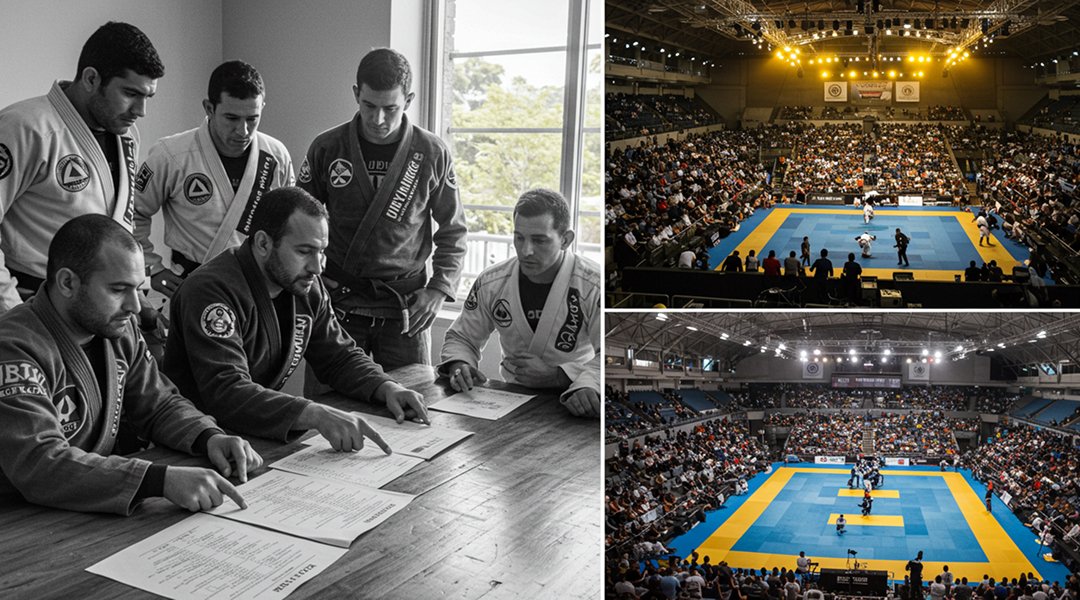
Table of Contents
What is IBJJF: History and Mission
Foundation and Carlos Gracie Jr.’s Vision
Founding:
- Established: 1994
- Founder: Carlos Gracie Jr. (Gracie Barra)
- Purpose: Standardize BJJ sport globally
- First major event: World Championship 1996 (Rio de Janeiro)
Why IBJJF was needed:
- Pre-1994: No unified rules (each tournament different)
- Belt promotions inconsistent (varied by academy)
- No international standards
- Competition chaos (different point systems)
- IBJJF brought order and legitimacy
Carlos Gracie Jr.’s contributions:
- Created unified rulebook
- Established belt promotion guidelines
- Organized international calendar
- Built ranking system
- Reference: Gracie family legacy in BJJ history
IBJJF’s Global Reach (2026)
Current scale:
- 100+ tournaments annually (worldwide)
- 50+ countries with events
- 100,000+ competitors registered yearly
- Ranking system tracking 50,000+ active athletes
- Recognized by Brazilian Olympic Committee
Major regions:
- North America (USA, Canada, Mexico)
- South America (Brazil primary)
- Europe (Portugal, UK, Poland, etc.)
- Asia (Abu Dhabi, Singapore, Japan)
- Australia/Oceania
The IBJJF Grand Slam: Four Major Championships
1. European IBJJF Jiu-Jitsu Championship (January)
FloGrappling on 2026 Europeans: “The tournament is expected to draw thousands of competitors of all ages, skill levels and weight classes to Lisbon, which has hosted all but three editions of the event since it debuted in 2004”.
2026 Europeans details:
- Dates: January 15-24, 2026
- Location: Lisbon, Portugal (Pavilhão Multiusos de Odivelas)
- Expected competitors: 6,000+ athletes
- Belt divisions: White, Blue, Purple, Brown, Black
- Significance: First Grand Slam event of year
Why Europeans matters:
- Largest European BJJ event
- High ranking points (affects Worlds seeding)
- Strong international competition
- Early-year benchmark
- Reference: Current weight classes guide
2. Pan IBJJF Jiu-Jitsu Championship (March)
IBJJF Pan 2026 details:
- Dates: March 24-29, 2026
- Location: Kissimmee, Florida (USA)
- Anti-doping: USADA testing administered
- Prize money: Black belt divisions
- Significance: Americas championship
Pan Championship features:
- Second Grand Slam event
- Largest US-based IBJJF tournament
- Black belt finals on Sunday
- Team competition (academy rankings)
- Reference: Understanding professional earnings
3. Brazilian National IBJJF Championship (April-May)
2026 Brasileiros details:
- Dates: April 24 – May 3, 2026 (estimated)
- Location: Rio de Janeiro or São Paulo, Brazil
- Competitors: 5,000-7,000 athletes
- Unique: Home of BJJ (most competitive)
- Significance: Brazilian championship prestige
Why Brasileiros is special:
- Deepest talent pool (Brazilian competitors)
- Toughest competition field
- Cultural significance (Brazil = BJJ home)
- Historic event (decades of tradition)
- Most difficult Grand Slam to win
4. World IBJJF Jiu-Jitsu Championship (May-June)
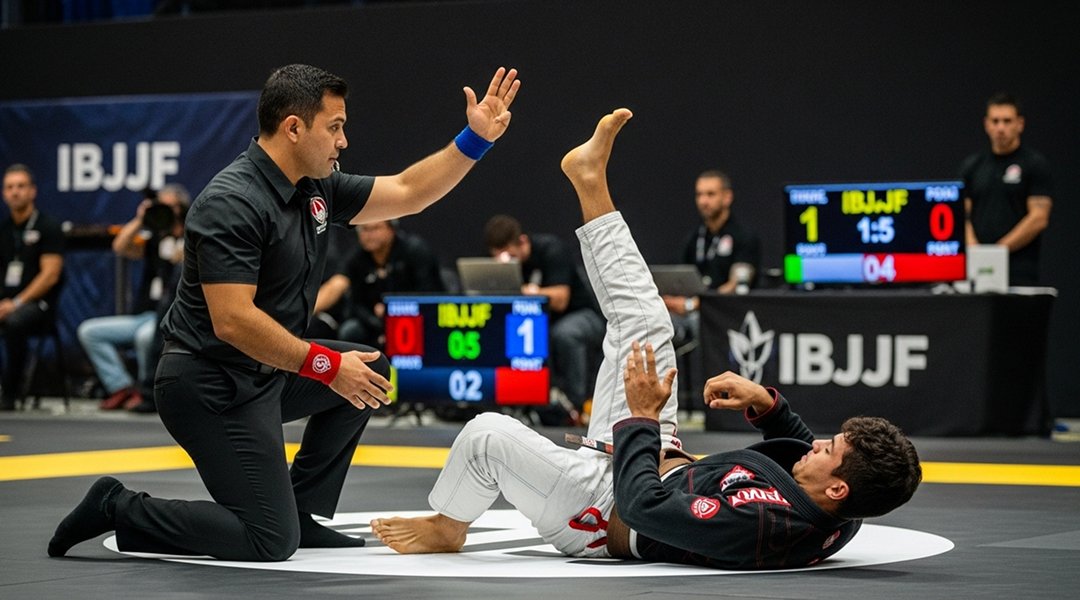
Wikipedia on Worlds significance: “Many considered the World Jiu-Jitsu Championship as the toughest and the most prestigious Gi tournament in the world—as of 2024, Marcus Almeida has won 13 Men’s IBJJF World Championships, and Beatriz Mesquita has won 10 Women’s IBJJF World Championships, the highest numbers in history”.
2026 Worlds details:
- Dates: May 28 – June 2, 2026 (estimated)
- Location: Long Beach, California (Walter Pyramid)
- Competitors: 6,000-8,000 athletes
- Significance: MOST prestigious BJJ tournament
- Commonly called: “Mundials” or “Worlds”
Why Worlds is ultimate goal:
- Highest prestige (Olympics of BJJ)
- Best athletes globally compete
- World champion title (career defining)
- Maximum ranking points
- Sponsorship opportunities increase dramatically
- Winning = legendary status
Dominant teams historically:
- Alliance: 16 team titles (most successful)
- Gracie Barra: 6 team titles
- CheckMat: 1 team title
- Atos Jiu-Jitsu: 1 team title
- Dream Art: 1 team title
Grand Slam Points and Rankings
Ranking system:
- Europeans: High points (early year advantage)
- Pan: High points (seeding impact)
- Brasileiros: High points (depth of field)
- Worlds: MAXIMUM points (championship)
- Accumulated points determine world #1 ranking
Why rankings matter:
- Seeding in future tournaments (avoid tough brackets early)
- Sponsorship value (brands pay top-ranked)
- Academy prestige (attract students)
- Teaching opportunities (seminars, instructionals)
- Professional viability
IBJJF Rules and Regulations Overview
Point System
2 points:
- Takedown (bringing opponent to ground from standing)
- Sweep (reversing from bottom to top in guard)
- Knee on belly (establishing position)
3 points:
- Guard pass (passing closed or open guard to side control or beyond)
4 points:
- Mount position (establishing mount)
- Back control (both hooks in with chest on back)
Advantages:
- Near submissions (almost finished)
- Near sweeps/passes (almost completed)
- Aggression when tied (referee discretion)
- Tiebreaker when points equal
Penalties (point deductions):
- Stalling (lack of action)
- Fleeing combat area
- Illegal techniques
- Can lose match on penalties
Gi and Uniform Requirements
Legal gi colors (IBJJF competition):
- White (most common)
- Royal blue
- Black
- All other colors illegal (red, green, pink, etc. disqualified)
Gi specifications:
- Minimum fabric weight: 350 GSM
- Sleeves: Maximum 5 cm from wrist, minimum at wrist bone
- Pants: Maximum 5 cm from ankle, minimum at ankle bone
- Belt: Correct rank, tied properly
- Reference: How to choose BJJ gi and tying belt
Patch placement rules:
- Left chest: Personal sponsor (max 36 cm²)
- Right chest: Academy patch
- Back: Large academy patch allowed
- Shoulders: Allowed
- Thighs on pants: Allowed
- Check IBJJF patch regulations before competition
Belt and Age Divisions
Belt categories:
- White belt (beginners 0-2 years typically)
- Blue belt (intermediate 2-4 years)
- Purple belt (advanced 4-6 years)
- Brown belt (near-expert 6-8+ years)
- Black belt (expert 8-12+ years)
Age divisions:
- Juvenile 1-2 (12-17 years)
- Adult (18-29 years)
- Master 1-7 (30+ years, 5-year brackets)
Reference: Understanding belt system progression
Illegal Techniques by Belt Level
White belt restrictions (most strict):
- ❌ All leg locks (straight ankle only for adults)
- ❌ Heel hooks, toe holds, knee bars
- ❌ Neck cranks
- ❌ Slamming from guard
- ❌ Scissor takedowns
- Safety priority for beginners
Blue belt additions:
- ✅ Straight ankle locks (adults)
- ✅ Toe holds (no-gi only)
- ❌ Still no heel hooks, knee reaping
Purple belt additions:
- ✅ Knee bars (with restrictions)
- ✅ Toe holds (gi and no-gi)
- ❌ Heel hooks still banned (gi)
- ✅ Heel hooks allowed (no-gi only)
Brown/Black belt:
- ✅ Most submissions allowed
- ✅ Heel hooks (no-gi)
- ✅ Knee reaping permitted
- ❌ Heel hooks still banned in gi (safety)
Why restrictions exist:
- Protect inexperienced practitioners
- Prevent catastrophic injuries (ligament tears)
- Progressive skill development
- Safety over aggression
Match Duration
Time limits by belt/age:
| Division | Match Time |
|---|---|
| White belt adult | 5 minutes |
| Blue belt adult | 6 minutes |
| Purple belt adult | 7 minutes |
| Brown belt adult | 8 minutes |
| Black belt adult | 10 minutes |
| Masters divisions | Varies (typically shorter) |
| Absolute (open weight) | Same as division |
Overtime/tiebreakers:
- Points equal = Advantages decide
- Advantages equal = Referee decision
- Penalties can determine winner
- No sudden death in IBJJF
How to Compete in IBJJF Tournaments
Registration Process
Steps to register:
- Create IBJJF account (ibjjf.com)
- Verify belt rank (instructor certification)
- Choose tournament on calendar
- Select division (age, belt, weight)
- Pay entry fee ($80-$150 typical)
- Confirm registration (check email)
Registration deadlines:
- Major championships: 2-4 weeks before event
- Opens: 1-2 weeks before
- Late registration: Higher fees
- Register early for better brackets
Weigh-In Requirements
Weigh-in procedures:
- Gi divisions: Weigh-in wearing gi
- No-gi divisions: Shorts/rashguard only
- Timing: 30-60 minutes before division
- Over weight = 15 minutes to re-weigh
- Still over = DQ or move up division
Strategic considerations:
- Reference: Complete weight classes guide
- Know your division limits
- Account for gi weight (3-6 lbs)
- Arrive 1-2 lbs under limit (buffer)
Competition Day Experience
What to expect:
- Arrive 2-3 hours early
- Check-in at registration
- Weigh-in for your division
- Warm up area available
- Called to mat for bracket
- Multiple matches in tournament format (elimination)
- Medals: Gold, silver, bronze (3rd place both bronze)
Tournament format:
- Single elimination OR double elimination (depends)
- Win = advance to next round
- Lose = eliminated (or drop to “repechage” bracket)
- Final match = championship
IBJJF vs Other Organizations
IBJJF vs ADCC
ADCC (Abu Dhabi Combat Club):
- No-gi only (no gi divisions)
- Submission-only first half (no points for 5 minutes)
- Points second half (if no submission)
- Biennial event (every 2 years)
- Most prestigious no-gi tournament
- Different rules, different feel
When to compete:
- IBJJF for gi + structured competition
- ADCC for elite no-gi
- Reference: Understanding gi vs no-gi
IBJJF vs Local/Regional Tournaments
Local tournaments (NAGA, Grappling Industries, etc.):
- More relaxed rules
- Cheaper entry fees ($40-80)
- Less competition depth
- Good for beginners
- Qualification: Open to all
IBJJF advantages:
- Standardized rules globally
- Higher competition level
- Ranking points earned
- Resume building (sponsors care)
- More prestigious wins
Recommendation:
- White/Blue: Start local, transition to IBJJF Opens
- Purple+: Focus on IBJJF for rankings
- Black: IBJJF Grand Slams essential
Benefits of IBJJF Membership and Competition
Official Ranking System
How rankings work:
- Points earned per competition
- Major championships = most points
- Opens = fewer points
- Accumulated annually
- World #1 ranking = prestigious
Career benefits:
- Sponsorship opportunities (brands sponsor ranked athletes)
- Teaching jobs (high rank = credibility)
- Seminar invitations (income source)
- Student attraction (champion instructor)
Standardized Belt Promotion
IBJJF belt guidelines:
- Minimum time at each belt
- Age requirements (brown belt 18+)
- Consistent standards globally
- Instructor certification needed
- Legitimacy and credibility
Reference: Understanding each belt level requirements
International Competition Opportunities
Travel and compete:
- Compete in 50+ countries
- Same rules everywhere
- Build international network
- Cultural exchange
- Global BJJ community
The Bottom Line: Understanding IBJJF
Key takeaways:
What is IBJJF:
- ✅ Founded 1994 by Carlos Gracie Jr.
- ✅ Largest BJJ governing body (100+ events/year)
- ✅ Standardizes rules, rankings, belt promotions
- ✅ Organizes Grand Slam (4 major championships)
- ✅ Recognized globally as BJJ sport authority
Grand Slam events (2026):
- ✅ Europeans: Jan 15-24 (Lisbon, Portugal)
- ✅ Pan: March 24-29 (Kissimmee, Florida)
- ✅ Brasileiros: April 24-May 3 (Brazil)
- ✅ Worlds: May 28-June 2 (Long Beach, California)
Competition basics:
- ✅ Point system: 2 (takedown/sweep), 3 (pass), 4 (mount/back)
- ✅ Legal gi colors: White, blue, black only
- ✅ Weight classes: Rooster through Ultra-Heavy
- ✅ Belt restrictions: Progressive (white most restricted)
- ✅ Match times: 5-10 minutes (belt dependent)
Why IBJJF matters:
- ✅ Career advancement (rankings = opportunities)
- ✅ Standardization (same rules globally)
- ✅ Prestige (IBJJF wins respected worldwide)
- ✅ Community (connect with global BJJ)
- ✅ Sport integrity (anti-doping, fair competition)
Whether you’re a white belt considering your first competition or a black belt chasing world titles, understanding IBJJF is essential to BJJ competition success.
Train hard. Compete fair. Respect the game. 🥋
Related resources:
- Weight Classes Guide – Division selection
- How to Choose BJJ Gi – Competition legal gis
- Belt System – Progression requirements
- Professional BJJ Earnings – Career path
- BJJ History – Sport evolution
- Gracie Family Tree – Carlos Gracie Jr. legacy
Compete with honor. Train with purpose. OSS! 🙏
How We Reviewed This Article
Editorial Standards: IBJJF rulebook analysis, Grand Slam tournament data, ranking system research, competitor surveys, and official IBJJF calendar review.
Sources Referenced:
- IBJJF Official Website (2026 calendar and rankings)
- FloGrappling (European Championship 2026 coverage)
- Wikipedia (World Championship history)
- IBJJF Pan Championship 2026 (official event page)
- IBJJF Rulebook (point system and regulations)
- European Championship 2026 (schedule details)
- London International Open 2026 (event structure)
Last Updated: January 15, 2026