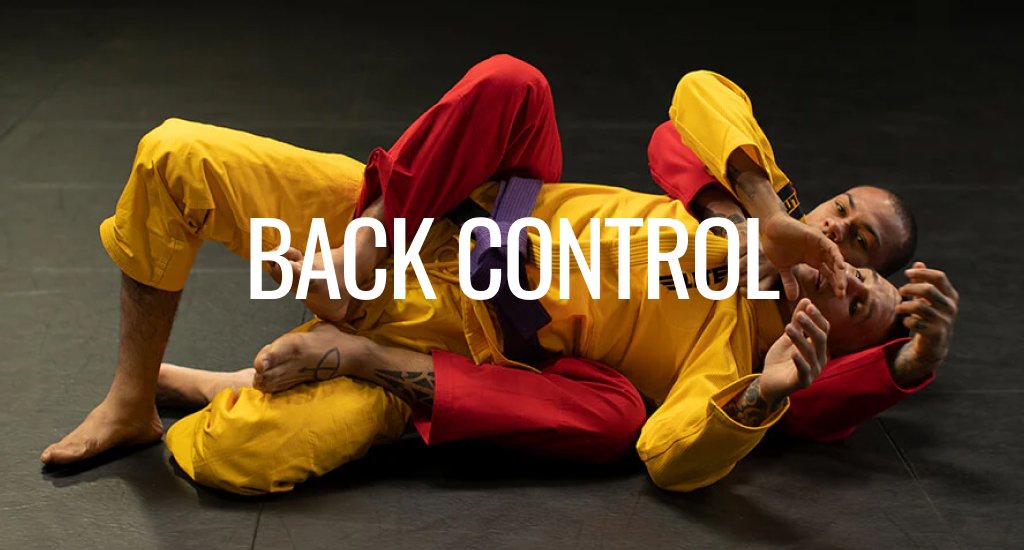
Back Control BJJ: Hooks, Seatbelt, Back Takes & Submissions
If BJJ has a checkmate position, back control is it.
From mount or side control, your opponent can still fight back — they can frame, bridge, escape, and attack. From back control, they have almost nothing. They cannot see you, cannot strike you effectively, cannot post on the mat, and their neck is fully exposed on both sides. Every escape attempt they make risks walking into the rear naked choke.
This is why IBJJF awards 4 points for back control — the highest single positional score in the sport. This is why the rear naked choke accounts for 45% of all IBJJF World Championship finishes. And this is why Gordon Ryan — the most dominant no-gi grappler in the world — has built his entire competitive system around taking and keeping the back.
Competition data: The rear naked choke accounts for 45% of IBJJF gi World Championship finishes and 20% of ADCC no-gi finishes. Back control scores 4 IBJJF points — tied for the highest single positional score. The bow and arrow choke has an 89% success rate when properly established in gi competition.

Table of Contents
Why back control dominates BJJ
Back control creates a structural asymmetry that no other position in BJJ replicates. When you are behind your opponent:
- They cannot see your attacks. Every choke and armbar is being set up outside their vision. By the time they recognise what is coming, the position is often already locked.
- Their offensive options are nearly zero. They cannot punch, kick, slam you, or apply submissions from this position. Every action they take is defensive.
- Both sides of the neck are exposed. Unlike mount where you attack from one angle, back control exposes both carotids simultaneously.
- Escape attempts tighten the choke. The defensive movements that help in other positions — bridging, hip escape, turning — often drive their neck directly into a rear naked choke that is already half-set.
The three structural elements
Back control has three distinct structural elements that must all be present simultaneously for the position to be secure.
1. Hooks. Your legs control their hips. Without hooks, you have no hip control and they can step over your legs and face you.
2. Chest-to-back connection. Your chest is glued to their back. If there is daylight between your chest and their back, they can turn to face you.
3. The seatbelt grip. Your arms control their upper body diagonally — one arm over the shoulder, one under the armpit. This controls both their arms and their torso simultaneously.
All three must work together. Strong hooks without a seatbelt allows hand-fighting and turning. A strong seatbelt without hooks allows stepping out. Both without chest connection allows them to create space. The position is only secure when all three are maintained at once.
Hook placement — the most critical detail
Your hooks are your feet pressed inside your opponent’s inner thighs. This is the most important technical detail in back control — and the most commonly performed incorrectly by beginners.
Correct position
Your heels press inside their thighs, pointing toward their centerline. Each hook operates independently, squeezing inward constantly to control hip rotation. Your feet are relaxed but pressure is active and continuous.
The critical mistake — never cross your feet
Never cross your feet behind the opponent’s body. This is the most dangerous beginner error in back control because it creates two serious problems:
- It gives your opponent a straight ankle lock — a legal submission they can finish directly
- It reduces hip control — crossed feet push outward rather than inward
Active versus passive hooks
Hooks are not a static position — they are active inward pressure at all times. Passive hooks (resting inside the thighs without squeezing) lose effectiveness quickly as the opponent shifts weight. Think of your hooks as always squeezing inward, not just when the opponent is moving.
One rule, no exceptions: Never cross your feet behind the opponent. Ever. This is the single most enforced technical rule in back control at every academy and belt level.
The seatbelt grip
The seatbelt is the primary upper body control from back control — named for the diagonal connection across the opponent’s torso.
- Choking arm over the shoulder. This arm will become the choke arm in the rear naked choke.
- Control arm under the opposite armpit. Your hand clasps with the choking arm in front of their chest.
- Clasp the hands together. Palm-to-palm or wrist-to-wrist — both work. The key is a secure connection.
- Drive the choking shoulder toward their ear. Maintain constant pressure with the back of your shoulder against the back of their neck or behind their ear.
Seatbelt key detail: The connection is diagonal — your choking shoulder is higher than your control shoulder. This diagonal angle creates the torque that controls both their arms and their torso simultaneously. A horizontal seatbelt (both shoulders level) is significantly weaker.
The diagonal control principle
The most important conceptual understanding in back control is diagonal control. Your body is always at an angle relative to your opponent — never square.
When you are square (both shoulders perpendicular to theirs), the opponent can push your choking arm’s elbow down and turn to face you. When you are diagonal — choking-side shoulder higher and behind their head, control-side shoulder lower and pulling their opposite arm down — they cannot square up to escape without fighting through the entire connection simultaneously.
Maintain the diagonal at all times. When the opponent pulls you toward square, drive your choking shoulder up toward their ear and pull your control arm down — re-establishing the diagonal. This single concept dramatically improves retention.
Body triangle — advanced alternative to double hooks
The body triangle replaces double hooks with a leg triangle locked around the opponent’s torso — one leg across the front of their hip, one behind their near knee. It is significantly harder to escape than double hooks because it requires the opponent to escape both the front pressure and the knee hook simultaneously.
Gordon Ryan — multiple ADCC World Champion — uses the body triangle as his primary back control rather than double hooks. His reasoning: once the body triangle is locked, he can focus entirely on the choke hunt rather than splitting attention between hook maintenance and submission setup.
The body triangle requires more hip flexibility than double hooks. Build hip mobility before attempting to lock it in live rolling — premature locking before the right angle is set risks exposing your own knee.
6 high-percentage back take entries
1. Seat-belt roll from turtle Most common
Circle to the better control side when your opponent turtles. Establish the seatbelt. Insert your first hook. Roll them to that side and insert the second hook as they land on their side. The foundational back take — works identically in gi and no-gi.
2. Half guard back take Very high percentage
From top half guard with the underhook won, transition to the dogfight. Drive behind the opponent using the underhook as your lever. Insert hooks and establish the seatbelt. One of the highest-percentage back takes in gi competition.
3. Arm drag from butterfly or seated
From butterfly guard, grab the opponent’s tricep with both hands and drag it across your centerline. Their arm goes past your body, exposing their back. Scoot your hips behind them and establish seatbelt and hooks. Marcelo Garcia built his entire competitive system around this entry.
4. Kimura roll from side control
From side control with the kimura locked, begin rotating toward their head. The opponent rolls away from the shoulder pressure to escape. Follow their roll by diving underneath — your chest arrives on their back. The kimura threat creates the back take.
5. Berimbolo from De La Riva guard
From De La Riva guard, invert underneath the opponent using the DLR hook to off-balance them. As they fall, rotate to face the same direction and establish the back. The berimbolo requires significant flexibility — a blue-to-purple belt technique. The Mendes brothers and Mikey Musumeci built championship careers around it.
6. Rear body lock from standing
From a standing clinch, secure a body lock from behind. Take the opponent to the mat and land in back control with one hook already in. Jump to insert the second hook. Gordon Ryan and the wrestling-influenced DDS system use this as a takedown-to-back-control combination frequently.
Retention — staying on the back
Getting the back is one skill. Keeping it is another. Three core retention principles cover the majority of escape attempts:
1. Stay connected chest-to-back. If there is daylight between your chest and their back, they are escaping. Fill every gap immediately. This is your primary retention tool.
2. Keep your hips low. Your hips should be behind their hips — not above them. If your hips ride up above theirs, they can slide down and escape your hooks. Stay at their hip level or below.
3. Move with them, not against them. When the opponent moves — bridges, hip escapes, rolls — follow them rather than fighting the movement. Holding a static position against an active escape burns energy and loses position. Moving with them maintains the connection.
The same-side principle — the most important retention concept
This single concept prevents the majority of back control escapes.
The rule: Always stay on the same side as your choking arm.
Why it works: When your opponent wants to escape, they must turn to face you. They can only turn away from your choking arm — because turning toward the choking arm drives their neck directly into the choke. This means they will always try to escape toward your control arm side.
How to apply it: When they begin turning toward your control arm side, you slide in that same direction — toward your choking arm side. Your seatbelt stays intact, your hooks stay active, and your choking arm is exactly where it was. They cannot escape because you follow them to exactly where they are going.
Core retention mantra: When they move, follow them. Always slide toward your choking arm side. The choke is right there — and turning toward it is exactly what they are avoiding.
Rear naked choke — step by step
The rear naked choke is the most effective submission in all of BJJ — 45% of gi World Championship finishes, 20% of ADCC no-gi finishes. From back control, it is the primary finish.
- Set control first. Maintain the seatbelt. Let the opponent tire fighting the control before committing to the choke setup — they will be less able to defend it.
- Slide the choking arm across the neck. Release the clasp and slide your choking arm across the front of their neck. Your forearm sits across the carotid region — not the windpipe. Your elbow aligns with their chin.
- Lock the grip. Your control hand grabs your choking arm’s bicep. Your choking hand goes to your own shoulder or behind their head.
- Squeeze and finish. Bring both elbows toward each other. Drive your choking shoulder toward their ear. The bilateral carotid compression is a blood choke — it finishes in seconds.
- Maintain hooks throughout. Keep both hooks active and chest-to-back connection during the entire finish. Their escape attempts tighten the choke.
Bow and arrow choke (gi)
The bow and arrow choke has approximately an 89% success rate when properly established — the highest of any gi submission. Applied from back control using the collar.
- From back control seatbelt, reach your choking hand deep inside the opponent’s collar — palm up, fingers deep to the back of the collar.
- With your control hand, grab the opponent’s near pants leg at the knee.
- Extend your body — straighten the choking arm side while pulling the pants leg toward you. This creates the bow and arrow stretch.
- The collar grip creates carotid compression while the body extension creates finishing pressure. The tap comes quickly.
Armbar from back control
When the opponent defends the RNC with both hands — pulling your choking arm down — their arm extends in an armbar position. Switch immediately.
- When both their hands engage your choking arm, your control arm is free.
- Reach over and grab their defending arm.
- Fall to the side of that arm, swing your near leg over their head, and extend the armbar.
The RNC-to-armbar switch is one of the most reliable combos in back control — their two-handed choke defense is what creates the armbar.
Dagestani handcuff
A wrestling-derived control technique increasingly used in BJJ back control. From the seatbelt, transition one hand to a two-on-one grip on the opponent’s far arm — controlling the wrist and elbow simultaneously. Use the other hand to control one side of their hip directly.
This diagonal tension limits hip mobility while controlling the arm — particularly valuable in no-gi when the opponent is actively peeling your seatbelt. With the arm controlled in two-on-one, they cannot effectively peel the choking arm with the remaining hand.
The Gordon Ryan back control system
Gordon Ryan — multiple ADCC World Champion — has built one of the most sophisticated back control systems in the sport’s history. According to BJJ Heroes, his match footage consistently demonstrates the same systematic approach regardless of opponent.
Key elements of his system:
- Body triangle as primary control — allows him to focus entirely on choke hunting rather than hook maintenance
- Patience over speed — establishes full control before hunting the choke; tired opponents are easier to finish
- Seat-belt roll entry — from turtle, establishing body triangle and seatbelt in the same movement
- Following escapes proactively — every escape attempt he follows with the same-side principle, creating another choke opportunity
For the most comprehensive back control instructional available, Ryan’s back attack series at BJJ Fanatics covers every detail of this system in depth.
Gi vs no-gi differences
In the gi: The bow and arrow choke becomes available as a primary finish alongside the RNC. Collar grips add a layer to the seatbelt. The opponent’s defensive options are more limited because collar control restricts hand-fighting.
In no-gi: Only RNC and armbar are primary submissions — no collar-based chokes. The body triangle becomes more important because no fabric prevents the opponent from creating space. The Dagestani handcuff is more common as a control alternative when the seatbelt is being actively peeled. Faster response to escape attempts is required.
Defending the three most common escapes
The turn-in escape
The opponent pushes your choking arm’s elbow down and tries to turn to face you. Counter: apply the same-side principle immediately. Slide toward your choking arm side and drive your choking shoulder toward their ear — their turning motion brings their neck into the choke.
The slide-down escape
The opponent slides their hips down and under your hooks. Counter: keep your hips low and glued to their lower back. When you feel them sliding, follow their hips down — staying connected at their hip level. A consistently low hip position prevents this escape before it develops.
The hand-fight escape
The opponent grabs your choking arm with both hands and tries to peel it. Counter: switch to the Dagestani handcuff on the arm they are using. Once controlled in two-on-one, they cannot peel your choking arm with one hand alone. Or switch to the armbar on the arm they are using to defend.
Common mistakes
- Crossing the feet. The most dangerous and most common beginner error. Creates an ankle lock and reduces hook control. Never cross your feet.
- Being square instead of diagonal. Losing the diagonal angle makes elbow-peel escapes easy. Maintain the higher choking shoulder at all times.
- Rushing immediately to the choke. Attempting the RNC before establishing full control leads to position loss. Control first — choke second.
- Fighting escape attempts instead of following them. Apply the same-side principle. Follow the movement, do not resist it.
- Riding too high on the back. Hips above the opponent’s hips allow the slide-down escape. Keep hips low and connected to their lower back.
- Releasing one hook to improve the other. Both hooks must be active simultaneously. Releasing one creates the slide-down window.
Belt-level training guide
White belt — hooks, seatbelt, RNC
Learn the correct hook position (inside thighs, never crossed) and seatbelt grip. Drill the RNC from back control until the movement is automatic. The diagonal principle is the key concept to master. See the white belt guide for the foundational habits that support back control development.
Blue and purple belt — retention and back takes
Add the same-side principle as an active retention strategy. Learn the seat-belt roll from turtle and the arm drag back take. Add the bow and arrow in gi. Start developing the half guard back take chain. The BJJ belt system gives clear milestones for where your back control should be at each stage.
Brown and black belt — complete system
Add the body triangle as your primary control. Build the Dagestani handcuff. Study and absorb the Gordon Ryan back system. Develop a complete back take system from every position you already play — the entire positional game should flow toward the back.
Competition — points and strategy
| Position | IBJJF points |
|---|---|
| Back control (with hooks) | 4 points — highest single score |
| Mount | 4 points |
| Guard pass | 3 points |
| Sweep | 2 points |
| Takedown | 2 points |
| Knee on belly | 2 points |
Back control and mount share the highest point value in IBJJF competition. Taking the back — even without immediately finishing — scores as many points as a successful guard pass plus knee on belly combined. In close matches, back control alone can secure a decision win without a submission.
The strategic implication: always be thinking about how every position transitions toward the back. Every technique you already train has a back take route hidden inside it — the half guard dogfight, the arm drag from butterfly, the kimura roll from side control.
Frequently asked questions
Why is back control the most dominant position in BJJ?
Back control creates a fundamental asymmetry — you can attack freely while your opponent has almost no offensive options. They cannot see you, cannot strike effectively, and their neck is exposed on both sides. IBJJF awards 4 points for back control — tied for the highest single positional score — because even experienced competitors cannot reliably escape from well-maintained back control.
What is the correct hook placement in back control?
Your hooks are your feet pressed inside your opponent’s inner thighs — never crossed behind their body. Crossing your feet creates a straight ankle lock opportunity and reduces hip control. Each hook must be independent and active, pressing inward to prevent hip rotation. Never cross your feet — under any circumstance.
What is the seatbelt grip?
One arm goes over the shoulder (the choking arm) and the other goes under the opposite armpit (the control arm). Your hands clasp in front of their chest creating a diagonal connection across their torso. The diagonal — choking shoulder higher than control shoulder — is what creates the controlling torque.
What is the body triangle?
An alternative to double hooks where you lock one leg in front of their hip and the other behind their near knee — creating a triangular leg lock around their torso. Significantly harder to escape than double hooks and Gordon Ryan’s preferred back control system in no-gi competition.
How do I stop my opponent from escaping back control?
Apply the same-side principle: always slide toward your choking arm side when they move. Follow their escape movement rather than fighting it. Stay connected chest-to-back and keep your hips low. The choke is right there on your choking arm side — they cannot turn that direction.
What is the most effective submission from back control?
The rear naked choke — 45% of IBJJF World Championship finishes. In gi, the bow and arrow choke has an 89% success rate when properly established. Together they make back control the most productive position for finishing in all of BJJ.
How do you take the back from turtle?
Insert one hook first on the better control side. Establish the seatbelt. Roll your opponent to the hook side and insert the second hook as they land on their side. This seat-belt roll from turtle is the most reliable back take in BJJ and works identically in gi and no-gi.
Quick reference
| Element | What to do |
|---|---|
| Hooks | Inside inner thighs — never crossed — always active inward pressure |
| Seatbelt | Choking arm over shoulder + control arm under opposite armpit — diagonal |
| Angle | Always diagonal — choking shoulder higher — never square |
| Chest connection | Chest glued to their back — no daylight ever |
| Hip position | Low — behind their hips — not above them |
| Same-side principle | When they move — slide toward your choking arm side |
| Body triangle | One leg front of hip + one behind knee — harder to escape than double hooks |
| RNC setup | Control first → slide arm across neck → clasp → squeeze elbows together |
| Bow and arrow | Deep collar grip + pants knee grip + extend body — gi only |
| Competition value | 4 IBJJF points — highest single positional score |
| Primary chain | Back take → seatbelt → body triangle → RNC → armbar if defended |
Back control is where BJJ matches end. The entire positional hierarchy — passing guard, achieving side control, taking mount — is building toward this position. When you reach it and maintain it with correct mechanics, the finishing options are the most reliable in the sport.
Start with the hooks and the seatbelt. Get the diagonal principle automatic. Add the same-side retention principle. Then build your back take entries from every position you already know — the half guard back take, the kimura roll, the arm drag from butterfly guard. Every position already has a back take route hidden inside it.
For the complete submission picture from back control, see our rear naked choke guide. For competition data on why back attacks dominate, see our best BJJ submissions data guide.
Mohsin has trained Brazilian jiu-jitsu for 6 years at Gracie Bara.
He has competed at IBJJF-affiliated tournaments and writes about BJJ
competition, gear, and athlete careers. He founded BJJ Sportswear
to help grapplers find quality equipment and information.