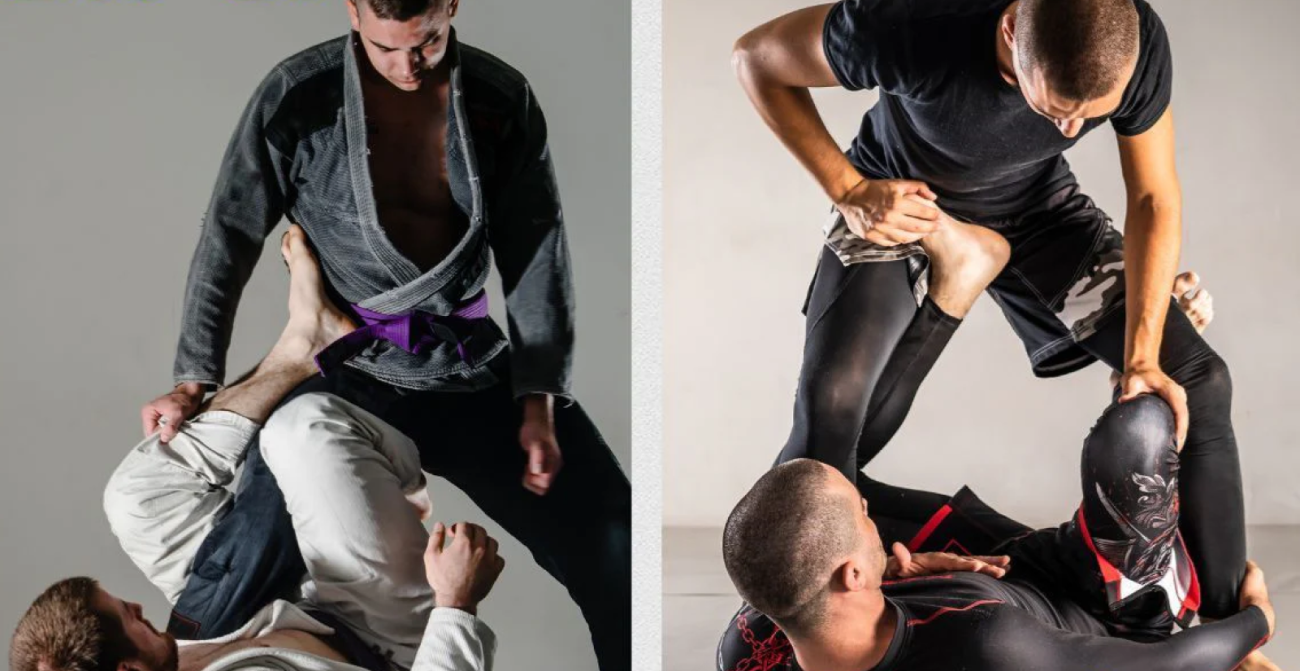
Gi vs No-Gi: Which BJJ Style is Better for You? (2026)

Gi vs No-Gi: Which BJJ Style is Better for You? (2026)

Gi or no-gi is the first question most beginners face when they start BJJ. It sounds like a simple choice of what to wear. It is actually a choice between two genuinely different sports that share the same core principles.

Both use takedowns, positional control, and submission techniques. Both are highly effective for self-defense and sport competition. But the gi changes almost everything about how BJJ is practiced — the grips, the pace, the techniques available, and the physical demands of each session.

This guide gives you the complete comparison and a clear decision framework so you can make the right choice for your goals.

Quick answer: Most experienced coaches recommend beginners start with gi. The slower pace gives you more time to understand positions and technique. Once fundamentals are established, adding no-gi accelerates your overall game significantly. But training whatever your gym offers most consistently beats optimising the format.

GI VS NO GI

What is gi BJJ?

Gi BJJ is the traditional form of Brazilian Jiu-Jitsu. Practitioners wear a kimono — called a gi or keikogi — consisting of a thick cotton jacket, reinforced drawstring pants, and a coloured belt indicating rank. The jacket is specifically designed to be gripped: the collar, sleeves, and lapels are reinforced for durability under training.

What is gi BJJ

The gi transforms the nature of grappling. Your opponent’s clothing becomes part of the fight — both as a weapon you can use and a weapon they can use against you. Collar grips control posture. Sleeve grips isolate arms. Lapel controls create submission setups that do not exist without fabric. The result is a slower, more positional style where grip fighting is a core skill.

Gi BJJ is governed primarily by the IBJJF — the International Brazilian Jiu-Jitsu Federation. Understanding the IBJJF ruleset matters for competition preparation. Belt rank is central to gi competition — the BJJ belt system runs white through black, with each level representing years of dedicated training.


What is no-gi BJJ?

No-gi BJJ is practiced without the kimono. Practitioners wear rash guards (compression tops) and BJJ shorts or spats. No fabric grips are permitted — you cannot grab sleeves, collars, or pants. All control comes from body positioning, underhooks, overhooks, and direct limb control.

What is gi BJJ no gi

The absence of fabric fundamentally changes the game. Without grip anchors slowing movement, transitions happen faster. Positions that are stable in the gi become slippery in no-gi. Techniques built on fabric grips (collar chokes, spider guard, lapel guards) become unavailable. In their place, body wrestling skills, underhook fighting, and leg entanglements become central.

No-gi competition is governed primarily by ADCC — Abu Dhabi Combat Club — for elite level, and by IBJJF No-Gi rules at the tournament level. ADCC has a more permissive ruleset that allows submissions illegal in IBJJF gi competition, including heel hooks.

Key differences — side by side

ElementGiNo-Gi
UniformKimono (jacket, pants, belt)Rash guard + shorts/spats
GripsSleeve, collar, lapel, pantsUnderhooks, overhooks, wrist, body
PaceSlower, more methodicalFaster, more scramble-heavy
Rank visibleYes — belt colourSometimes — rash guard colour
Heel hooksIllegal at all IBJJF levelsLegal at brown/black (IBJJF); all levels (ADCC)
Lapel chokesAvailable — gi fabric requiredNot available
Leg lock emphasisModerate (below heel hooks)Very high — central to modern no-gi
Guard stylesSpider, lasso, worm, lapel guardsButterfly, wrestling, leg entanglements
Self-defense applicabilityHigh (most people wear clothing)High (works when clothing unavailable)
MMA crossoverModerateVery high
Gear cost to start$80–$200 (gi) + optional rash guard$40–$80 (rash guard + shorts)
Primary governing bodyIBJJFADCC, IBJJF No-Gi

Grips — how everything changes

Grips are the most fundamental difference between gi and no-gi BJJ. They change not just what techniques are available but how every position feels and functions.

Gi grips

In the gi, the collar, sleeve, lapel, and pants give you four major grip surfaces on your opponent’s body. These grips allow you to:

  • Break posture precisely — a collar grip can pull someone’s head down from a distance
  • Isolate limbs — sleeve grips lock an arm in place for triangles and armbars
  • Create slow, controlled pressure — collar and lapel grips allow sustained positional grinding
  • Set up fabric-based submissions — cross collar choke, bow and arrow, collar sleeve guard, lasso guard

The result is that gi grappling rewards patience and technical precision. Grips slow movement — both yours and your opponent’s. This creates more time to analyse positions, set up techniques, and control the pace of exchanges.

No-gi control

Without fabric, all control comes from body mechanics. Underhooks (arm under opponent’s armpit), overhooks (arm over opponent’s arm), head ties, two-on-one wrist control, and bodylock wrestling replace the grip options of the gi. These controls are less anchored — a well-timed shrug or body movement can break no-gi control in a way that a properly taken sleeve grip cannot be shaken off.

This makes no-gi faster and more athletic. Positions cannot be held as easily. Scrambles happen more frequently. Athletes who are physically stronger and faster have a larger advantage in no-gi than in gi — though technique still dominates at high levels.


Pace and scrambles

Gi BJJ is slower. Not slow — but methodical. Positions are held longer, set-ups take more time, and the grip fighting itself eats rolling time. A skilled gi player can maintain control for minutes without the position changing.

No-gi is faster. Without grip anchors, athletes move from position to position more rapidly. A scramble that takes five seconds in no-gi might take thirty seconds in the gi. Transitions happen — and need to happen — quicker. This has significant training implications.

For beginners, the gi’s slower pace is genuinely helpful. You have more time to recognise what position you are in, more time to remember the technique you drilled, and more time to apply it before the situation changes. In no-gi, beginners often find that by the time they identify what is happening, the moment has already passed.

For experienced practitioners, the faster pace of no-gi sharpens reactions, timing, and physical conditioning in ways that gi training does not replicate.


Technique differences

Gi-only techniques

  • Collar chokes: Cross collar choke, bow and arrow, sliding choke — all require the gi collar
  • Lapel guards: Worm guard, squid guard, and other modern lapel-based guard systems
  • Spider guard and lasso guard: Both require sleeve grips
  • Collar sleeve guard: One collar grip, one sleeve grip — a foundational gi guard system
  • Sleeve-based sweeps: Scissor sweep with sleeve control, balloon sweep

No-gi-dominant techniques

  • Heel hooks: Legal in no-gi competition — the dominant submission in modern ADCC
  • Wrestling-based takedowns: Double leg, single leg — easier to establish without gi to grab
  • Leg entanglement systems: Ashi garami, saddle, 50/50 — the basis of heel hook attacks. See our heel hook safety and technique guide
  • Imanari roll: A rolling heel hook entry popularised by Masakazu Imanari, rarely seen in gi
  • Guillotine and arm-in guillotine: More common in no-gi due to faster scrambles creating entry opportunities

Techniques that work in both

The core of BJJ works in both formats. The rear naked chokearmbartriangle choke, and kimura are all highly effective in both gi and no-gi. The closed guardhalf guard, and butterfly guard all function in both formats with grip adjustments.


Competition rules — IBJJF vs ADCC

The competition landscape is one of the most practical differences for practitioners who plan to compete. Legal techniques differ significantly between formats.

SubmissionIBJJF GiIBJJF No-GiADCC
Rear naked choke✅ Legal all belts✅ Legal all belts✅ Legal all levels
Armbar✅ Legal all belts✅ Legal all belts✅ Legal all levels
Triangle choke✅ Legal all belts✅ Legal all belts✅ Legal all levels
Heel hook (inside)❌ Illegal all belts⚠️ Brown/black only✅ Legal all levels
Heel hook (outside)❌ Illegal all belts⚠️ Brown/black only✅ Legal all levels
Kneebar❌ Illegal all belts⚠️ Brown/black only✅ Legal all levels
Straight ankle lock✅ All adult belts✅ All adult belts✅ Legal all levels
Bow and arrow choke✅ Gi onlyN/A (no gi)N/A (no gi)
Knee reap❌ Illegal all belts❌ Illegal all belts✅ Legal all levels

Important for competitors: A technique legal in ADCC may be illegal in IBJJF no-gi — and techniques legal in IBJJF no-gi may be illegal in IBJJF gi. Always confirm the ruleset for your specific event before competing. A legal move in one format earns points — the same move in another format earns disqualification.


Self-defense applications

Both gi and no-gi BJJ develop genuine self-defense capability. The difference is in what type of scenario each prepares you for.

Gi training advantage: Most people in the real world wear clothing — jackets, hoodies, shirts. Gi training teaches you to use an attacker’s clothing against them. Collar grips can be applied to jacket collars. Sleeve grips translate to wrist and forearm control. Many street altercations end up in a clinch where gi-based positional control is directly applicable.

No-gi training advantage: Clothing can be removed, torn, or be unavailable. No-gi training ensures your technique works regardless of what your attacker is wearing. The body control, underhook fighting, and wrestling-based takedowns in no-gi work in any clothing scenario.

The practical consensus among self-defense instructors: train both. Gi training handles the clothed attacker scenario; no-gi handles the bare-skin scenario. Together they cover the full range of realistic encounters.


No-gi BJJ and MMA

No-gi BJJ has a much more direct relationship with MMA than gi BJJ does.

MMA fighters compete without a uniform. The clinch, takedown, and ground control skills of no-gi transfer directly to the cage. Underhook fighting, body wrestling, double leg and single leg takedowns — all central to no-gi — are also central to MMA grappling.

By contrast, gi-specific techniques have no direct MMA equivalent. You cannot use a collar choke in a fight. Spider guard requires sleeve grips that do not exist in MMA. A practitioner who trains exclusively in the gi will need to rebuild significant parts of their game for MMA.

That said, gi training builds positional discipline and defensive awareness that does benefit MMA practitioners. Many elite MMA grapplers — Demian Maia, Fabricio Werdum, Charles Oliveira — have strong gi backgrounds that contribute to their technical precision even in the cage.

If MMA is your goal: Prioritise no-gi training heavily — at least 70/30 no-gi to gi. Add gi training for the positional and defensive benefits, but do not let it dominate your schedule at the expense of no-gi wrestling and scramble work.


Does gi training help no-gi — and vice versa?

This is one of the most debated questions in BJJ. The evidence strongly suggests that gi training transfers to no-gi more than no-gi transfers to gi.

Why gi helps no-gi: Gi training forces slower, more precise positional work. Practitioners who train gi develop a deep understanding of weight distribution, leverage points, and positional escapes — all of which remain valid in no-gi. The grip fighting in gi also builds grip strength and wrist control that is directly applicable without the gi.

Why no-gi helps gi: The faster pace of no-gi sharpens reactions and timing. Practitioners who train no-gi develop explosive transitions and scramble awareness that often makes their gi game more dynamic. The wrestling emphasis in no-gi also addresses a common weakness of pure gi practitioners — takedowns and standing grappling.

The practical recommendation from most coaches: train both. If you have to choose one first, choose gi. If you primarily do no-gi, add gi sessions for the technical depth. If you primarily do gi, add no-gi sessions for the speed and leg lock awareness.


Gear and cost

ItemGiNo-Gi
Primary garmentBJJ gi — $80 to $200+ for a quality optionRash guard — $30 to $80
BottomsIncluded with giBJJ shorts or spats — $25 to $60
Under-gi layerOptional rash guard — $30 to $60Optional spats — $25 to $50
BeltRequired — usually included with gi or $10 to $20 separatelyNot used
Total to start$80 to $220$40 to $100
Washing frequencyAfter every session — gis are heavy and take longer to dryAfter every session — quick-drying fabric
Replacement frequency1 to 3 years with regular training6 to 18 months for rash guards under heavy use

For academy custom gear, both gi and no-gi kit can be ordered in bulk with your academy branding. See our guides on custom BJJ gis for teams and custom rash guards for academies.


For beginners — which to start with

The gi recommendation for beginners is not universal — but it has strong practical logic behind it.

Why gi is recommended for beginners:

  • The slower pace gives more time to process positions and apply techniques
  • Grip anchors make positions easier to hold while you are learning — both as attacker and defender
  • The gi visually signals rank — you can immediately identify who is more experienced and calibrate your intensity accordingly
  • Most structured beginner curricula are built around gi fundamentals
  • The foundation built in gi transfers well to no-gi when you add it later

When to start with no-gi instead:

  • Your gym offers no-gi classes more frequently than gi
  • Your primary goal is MMA and you need immediate no-gi development
  • You are a wrestler or judoka with existing grappling experience — your skills transfer more directly to no-gi
  • The gi cost is a barrier right now — no-gi gear is significantly cheaper to start

The most honest answer, as expressed by experienced coaches across the BJJ community: train what your gym offers on the best schedule for your life. Consistency on the mat is worth more than the optimal format choice. A practitioner who attends no-gi classes three times a week will develop faster than one who attends gi classes once a week because they are trying to optimise.


Decision framework — choose your path

Choose gi if you…

  • Are a complete beginner with no grappling background
  • Want to compete in IBJJF gi tournaments
  • Prefer a slower, more strategic style
  • Value the traditional martial arts culture
  • Want to build the deepest technical foundation first
  • Train at a predominantly gi academy

Choose no-gi if you…

  • Have a wrestling or judo background
  • Are training for MMA competition
  • Prefer a faster, more athletic style
  • Want to focus on leg locks and modern submission grappling
  • Plan to compete in ADCC or submission grappling events
  • Train at a predominantly no-gi academy

Gi training develops

  • Grip strength and grip fighting
  • Positional control and patience
  • Collar and lapel submission systems
  • Guard retention under slow pressure
  • Technical precision in movement
  • Defensive awareness and survival

No-gi training develops

  • Speed and explosive transitions
  • Wrestling and takedown skills
  • Leg lock entries and defense
  • Scramble awareness and reactions
  • Cardio and athletic conditioning
  • MMA-applicable grappling skills

Notable practitioners of each style

Built on gi

  • Roger Gracie: 10-time IBJJF World Champion. The definitive argument that gi fundamentals — done to perfection — beat everything. His cross choke system from closed guard is a masterclass in gi-specific technique.
  • Bernardo Faria: 5-time IBJJF World Champion. Built a complete competition system around the half guard and deep half guard in the gi.
  • Buchecha (Marcus Almeida): 13-time World Champion across multiple weight classes in gi. One of the most dominant gi competitors in the sport’s history.

Built on no-gi

  • Gordon Ryan: Multiple ADCC Champion. The dominant figure in modern no-gi competition — built an entire back take and leg lock system that has defined contemporary submission grappling.
  • Marcelo Garcia: 4-time ADCC Champion, 5-time World No-Gi Champion. Used the butterfly guard and arm-in guillotine to dominate athletes twice his size. See our butterfly guard guide for his complete system.
  • Lachlan Giles: ADCC 2019 dark horse — submitted three heavyweights including Kaynan Duarte using outside heel hooks. Demonstrated that a complete leg lock system could defeat any size opponent.

Elite in both

  • Mikey Musumeci: IBJJF World Champion and ONE Championship No-Gi World Champion — demonstrating elite level in both formats simultaneously.
  • Kade Ruotolo: Built primarily in no-gi at 10th Planet, won ADCC — now competes in gi as well with elite results. Evidence that world-class no-gi transfers upward to gi.

Frequently asked questions

Should beginners start with gi or no-gi BJJ?

Most coaches recommend beginners start with gi BJJ. The slower pace gives you more time to recognise positions, understand why techniques work, and build movement habits before the speed of no-gi makes everything harder to process. That said, train what your gym offers most — consistency matters more than format at the beginner stage.

What is the main difference between gi and no-gi BJJ?

The main difference is clothing and grips. In gi BJJ, you wear a kimono and can grab the fabric — collar, sleeve, lapel — to control and submit. In no-gi, you wear rash guard and shorts with no fabric grips allowed. This changes pace (no-gi is faster), technique availability (lapel chokes only exist in gi; heel hooks dominate no-gi), and the physical demands of each session.

Is no-gi BJJ better for MMA?

Yes — no-gi BJJ transfers more directly to MMA because MMA fighters compete without a uniform. No-gi techniques rely on body control, underhooks, and wrestling — all of which directly apply in the cage. Gi-specific techniques like collar chokes and lapel guards do not have direct MMA equivalents.

Can you do heel hooks in gi BJJ?

No. Heel hooks are illegal in IBJJF gi competition at all belt levels. They are also banned in most gi training environments because gi pants create friction that accelerates rotational force — making accidental injury more likely. See our complete heel hook safety guide for the full legality breakdown by ruleset.

Does gi training help no-gi?

Yes, significantly. Gi training builds positional discipline, defensive awareness, and technical precision that transfers directly to no-gi. Practitioners who train gi develop patience in controlling positions and a deep understanding of weight distribution and leverage — all of which improve their no-gi game. Many elite no-gi competitors still train in the gi regularly.

Is gi or no-gi better for self-defense?

Both have value for self-defense but in different ways. Gi training teaches you to use an attacker’s clothing against them — relevant because most people wear jackets and hoodies. No-gi builds body control and takedown skills that work regardless of clothing. Most self-defense instructors recommend training both for the most complete capability.

What gear do you need for gi vs no-gi BJJ?

For gi BJJ: a BJJ gi ($80–$200), optional rash guard underneath, and flip-flops for off-mat use. For no-gi BJJ: a rash guard ($30–$80) and BJJ shorts or spats ($25–$60). No-gi gear is significantly cheaper to start — total cost of $40–$100 versus $80–$220 for gi.

The bottom line

Gi and no-gi are not rivals. They are two expressions of the same art that develop different and complementary skill sets. The practitioners who train both consistently become the most complete grapplers.

If you are starting out, gi is the safer choice for building fundamentals. If your gym is primarily no-gi, start there and add gi when the opportunity arises. If you train for MMA, prioritise no-gi while keeping some gi sessions for technical depth.

The worst decision you can make is spending weeks paralysed by this choice instead of just getting on the mat. Pick what is available, train consistently, and revisit the question after six months when you have direct experience to inform your preference.

For further reading on BJJ fundamentals, see our guides on the closed guardBJJ history and origins, and the BJJ belt system.

Leave a Reply

Scroll to Top