
On This Page
Editorial Standards
Reviewed by the BJJ Sportswear Editorial Team for technical accuracy and kept current.
Best Brands for Durable BJJ Sportswear
Durability in BJJ gear comes down to fabric weight, stitching, and construction — not the logo. Here is what to check before you buy, and which brands consistently deliver it.
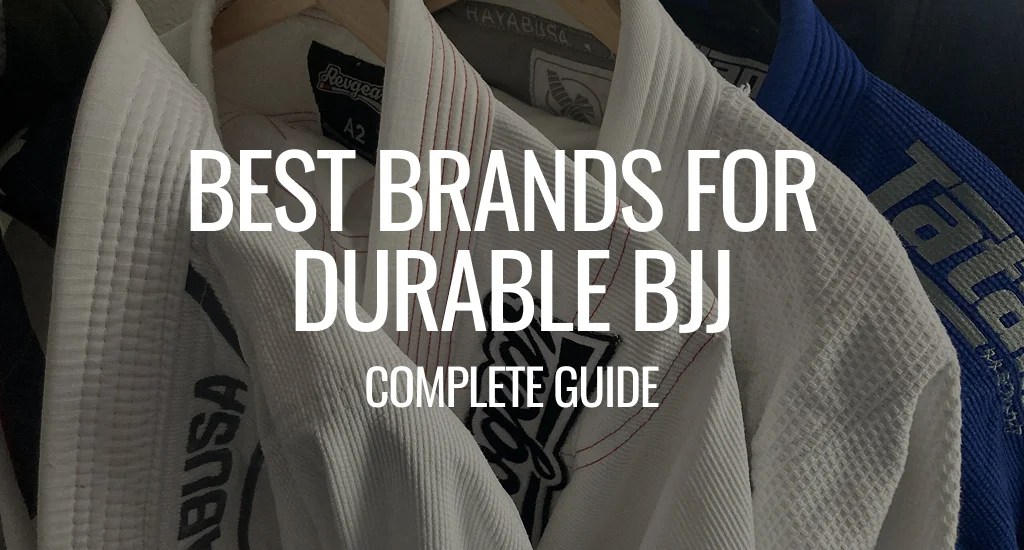
Durable BJJ sportswear comes down to a small set of measurable factors: fabric weight, stitching quality, and how the garment is constructed at its stress points. The brand name matters less than whether it consistently gets those factors right. This guide covers what actually determines durability, and which brands have built a real reputation for it.
What Makes BJJ Gear Actually Durable
A few specific things separate gear that lasts years from gear that falls apart in months.
Fabric weight matters most for gis, measured in GSM (grams per square meter). Competition and daily-training gis typically run 350–550 GSM — heavier weaves resist tearing under grip fighting, but add weight and cost. For no-gi gear like rash guards and shorts, fabric weight affects stretch recovery and how well the material resists pilling from repeated washing.
Stitching at stress points is where cheap gear fails first. Reinforced stitching at the collar, knees, and cuffs of a gi, or flatlock seams on a rash guard, is what actually survives hundreds of grip breaks and scrambles. A gi with a heavy fabric but weak stitching will still fail early.
Decoration method affects long-term appearance, not just initial durability. Full sublimation printing dyes color into the fabric itself, so it doesn't crack or peel the way a screen-printed design can after repeated washing.
Pre-shrunk construction keeps sizing consistent after dozens of washes — a gi that isn't pre-shrunk can lose its intended fit within the first few months of regular use.
Brands Known for Durability
**Fuji Sports** has built gear since 1969 and is widely recognized in the BJJ community for gis that hold up over years of regular training, across both training and competition weights.
**Gameness** is known for its Pearl Gi construction, a common reference point for balancing durability against weight in a competition-oriented gi.
**Progress** takes a different approach — its Featherlight line prioritizes low weight without sacrificing the reinforced stitching that keeps a lightweight gi from tearing under real grip pressure.
Tatami Fightwear and Kingz are both frequently cited across the BJJ community for reliable construction across gis, rash guards, and shorts at a range of price points.
Durability vs. Price
A heavier, more reinforced gi generally costs more, but that's not a straight line — some brands charge a premium for the name rather than genuinely superior construction. The practical way to judge a specific product is to check its actual GSM, stitching type, and whether it's pre-shrunk, rather than assuming a higher price automatically means it will last longer.
For Academies Ordering in Bulk
If you're outfitting a team rather than buying for yourself, durability calculations change — gear worn in class multiple times a week by dozens of students needs to hold up to far more washing and use than an individual practitioner's rotation. See our guide on custom BJJ team gear cost for how fabric weight and construction choices affect bulk order pricing.
Frequently Asked Questions
What GSM is best for a durable BJJ gi? 450–550 GSM gis hold up best to daily training and hard grip fighting, though they run heavier. Lighter 350 GSM gis prioritize speed and comfort and can still be durable if the stitching and construction are solid.
Do more expensive gis always last longer? Not automatically. Price often reflects brand reputation and features as much as raw durability — check the actual GSM and stitching details rather than assuming a higher price guarantees a longer lifespan.
How many washes should a good gi survive without falling apart? A well-constructed gi from a reputable brand should handle 100+ washes while maintaining its size and stitching integrity, assuming it's cared for with cold water and air drying rather than a hot dryer.
The Bottom Line
Durability in BJJ sportswear is measurable — fabric weight, stitching quality, and construction method — not just a matter of picking a trusted logo. Brands like Fuji, Gameness, Progress, Tatami, and Kingz have built real reputations for getting those fundamentals right, but checking the actual specs on any specific piece of gear is still the most reliable way to know it will last.
Tagged with:#gear#buying guide#durability
Frequently Asked Questions
What GSM is best for a durable BJJ gi?
450–550 GSM gis hold up best to daily training and hard grip fighting, though they run heavier. Lighter 350 GSM gis prioritize speed and comfort and can still be durable if the stitching and construction are solid.
Do more expensive gis always last longer?
Not automatically. Price often reflects brand reputation and features as much as raw durability — check the actual GSM and stitching details rather than assuming a higher price guarantees a longer lifespan.
How many washes should a good gi survive without falling apart?
A well-constructed gi from a reputable brand should handle 100+ washes while maintaining its size and stitching integrity, assuming it's cared for with cold water and air drying rather than a hot dryer.
About the Author
Mohsin AyubBJJ practitioner, 6 years — Gracie Barra
Founder & Editor, BJJ Sportswear
Mohsin has trained Brazilian Jiu-Jitsu for six years at Gracie Barra and has competed at IBJJF-affiliated tournaments. He writes about competition, gear, and athlete careers, and founded BJJ Sportswear to help grapplers find equipment and information they can trust.
- Six years training Brazilian Jiu-Jitsu at Gracie Barra
- Competed at IBJJF-affiliated tournaments
- Writes on BJJ competition, gear testing, and athlete careers
This article was last reviewed and updated on 2026-08-18.