
On This Page
Editorial Standards
Reviewed by the BJJ Sportswear Editorial Team for technical accuracy and kept current.
Knee on Belly: Complete BJJ Control Guide
Knee on belly trades stability for pressure and options. Here is how to hold it, why it hurts more than side control, and where it leads.
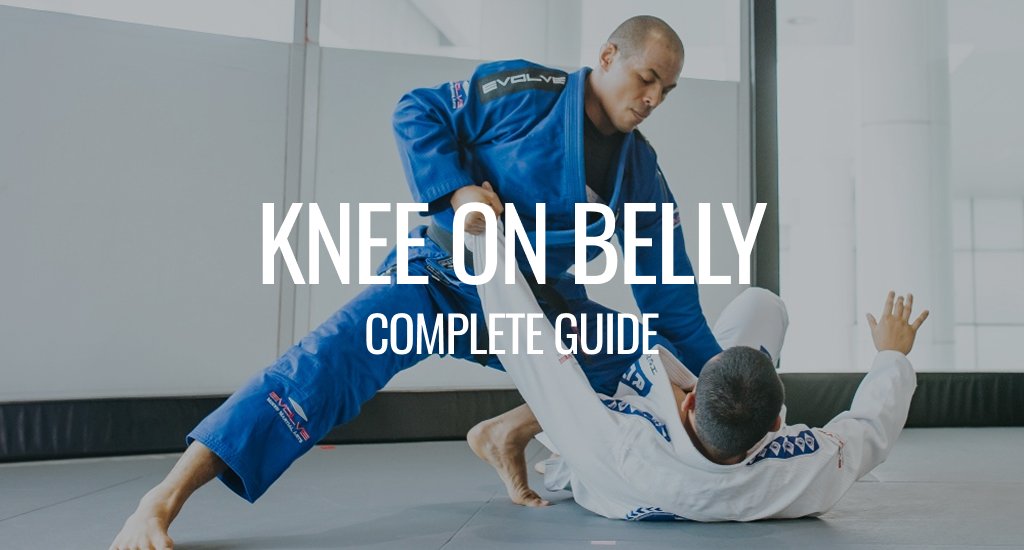
What Knee on Belly Is
Knee on belly is a pinning position where one knee drives into your opponent's stomach or sternum while your other foot posts on the mat, torso upright. You are not lying on top of them the way you would in side control. All of your weight funnels through a single small point of contact, which is exactly why it hurts more than a pin twice its size.
Why It Beats Side Control for Some Situations
Side control is heavier and harder to escape outright, but it is also slower. Knee on belly trades some of that stability for mobility. You can shift your knee to either side almost instantly, follow a hip that is trying to turn away, and keep your hands free to attack a collar or an arm the whole time. Against an opponent who scrambles well, that mobility often matters more than raw pinning weight.
How to Set It Up
- From side control or after a pass, post your far-side hand on the mat past their head and your near-side hand on their far hip or collar.
- Drive your knee closest to their hips into their stomach, keeping your shin roughly perpendicular to their body.
- Post your other foot flat on the mat, torso upright and weight sinking straight down through the knee.
- Keep your posted foot close enough to your knee that you can spring in either direction the instant they try to bridge or roll.
The Two Variations
- Standard knee on belly. Knee pointed toward their far hip, weight sinking straight down. This is the version most people learn first and the one that generates the most pressure.
- Cross knee on belly. Your knee crosses further toward their opposite shoulder, which cuts off more of their space to turn into you but sacrifices a little of the straight-down pressure of the standard version.
Common Mistakes
- Sitting too far back on your heel, which lets your opponent's hips escape underneath you before you can react.
- Keeping both hands busy on grips instead of leaving one free to post, so a hard bridge takes you straight over.
- Staying in the position too long without attacking. Knee on belly is uncomfortable enough that most opponents give up a submission or a better position quickly if you keep the pressure moving.
Escaping It
Frame against the knee itself with both hands and bridge explosively toward the posted foot, not away from it — that is the direction they have the least base to stop you. Our side control escape guide covers the same framing principles once you land back in a pin you can work from.
Where It Leads
Because your hands stay free, knee on belly sets up fast transitions to mount, an arm drag to the back, or a direct collar choke if your opponent is still wearing a gi. It scores two points in IBJJF competition, held for three seconds, making it one of the few positions worth holding on the scoreboard even before you attack anything from it.
Tagged with:#knee on belly#pins#control#fundamentals
Frequently Asked Questions
How many points is knee on belly worth in competition?
Two points under IBJJF rules, awarded once you hold the position for three seconds.
Why does knee on belly hurt more than side control?
Your entire weight channels through one small point — the knee — instead of being spread across your chest and hips the way it is in side control, concentrating the pressure into a much smaller area.
What is the best way to escape knee on belly?
Frame against the knee with both hands and bridge explosively toward their posted foot rather than away from it, since that is the direction they have the least base to stop you.
Is knee on belly a stable position to hold?
Less stable than side control, but that trade-off is deliberate — it sacrifices some pinning weight for the mobility to chase a turning hip and keep both hands free to attack.
Sources & Further Reading
About the Author
Mohsin AyubBJJ practitioner, 6 years — Gracie Barra
Founder & Editor, BJJ Sportswear
Mohsin has trained Brazilian Jiu-Jitsu for six years at Gracie Barra and has competed at IBJJF-affiliated tournaments. He writes about competition, gear, and athlete careers, and founded BJJ Sportswear to help grapplers find equipment and information they can trust.
- Six years training Brazilian Jiu-Jitsu at Gracie Barra
- Competed at IBJJF-affiliated tournaments
- Writes on BJJ competition, gear testing, and athlete careers
This article was last reviewed and updated on 2026-08-18.