
On This Page
Editorial Standards
Reviewed by the BJJ Sportswear Editorial Team for technical accuracy and kept current.
Baseball Bat Choke: The Turtle Position Killer
The baseball bat choke can finish a match from a position you are supposedly losing. Here is the grip, the spin, and the turtle setup that makes it work.
What the Baseball Bat Choke Is
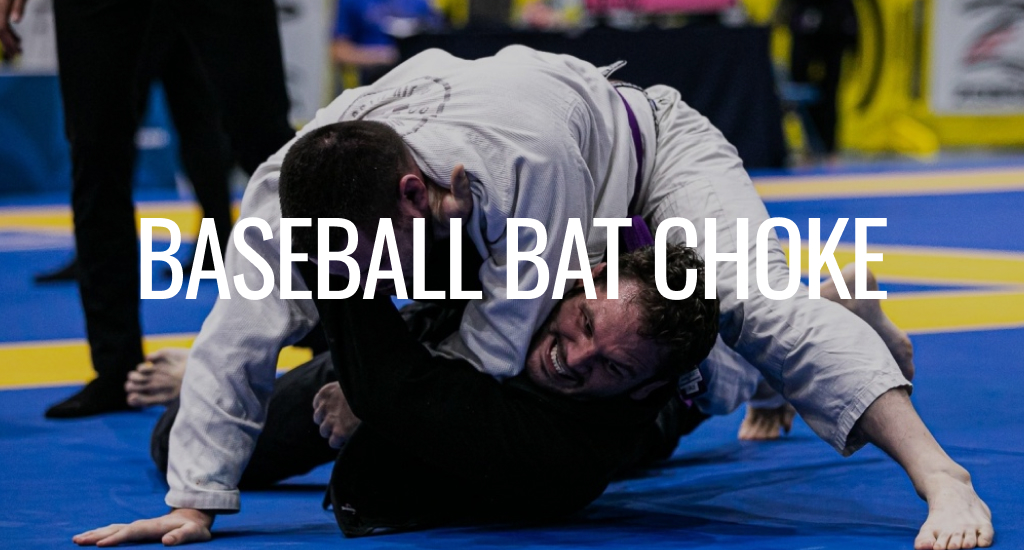
The baseball bat choke is a gi collar choke named after the grip. One hand goes palm up, the other palm down, and both hands hold the same collar right next to each other, exactly like hands on a bat handle. Then you turn your body, and your forearms close on the neck like a vice.
It is a blood choke, so the pressure lands on the carotid arteries at the sides of the neck rather than on the windpipe. That combination makes it quiet, fast, and genuinely difficult to feel coming.
Magid Hage made the choke famous by catching high-level black belts who believed they were busy passing his guard, and that element of surprise is still the entire appeal. Position matters less here than leverage does.
Why the Grip Works
Three parts do all the work.
- The grips. Both hands hold the same collar. One hand feeds four fingers inside the lapel, palm down. The other feeds the thumb inside, palm up. Your hands stay touching.
- The scissor. Your elbows point in opposite directions, so your forearms cross over both sides of the neck.
- The rotation. Your hips supply the power, not your arms. When your body spins, the collar shortens and the choke closes.
That last element is the one most people miss, because the finish comes from rotation rather than from squeezing.
Baseball Bat Choke From Turtle
Turtle is the cleanest place to learn this attack, because your opponent has already handed you their collar and cannot see your hands from down there.
- Stay tight to one side of their body, with your chest low over their shoulder.
- Feed your near hand deep into the far collar, thumb inside, palm up. Get past the shoulder line.
- Bring your other hand to the same collar just below it, four fingers inside, palm down. Hands touching.
- Pull both elbows into your ribs to strip the slack. Do not lift them.
- Walk your feet toward their head and sit through to north-south, keeping the grips glued.
- Let the rotation finish it. As your chest turns, your forearms close and they tap.
If they stand up or begin rolling away, switch to the sacrifice version instead. Post your head next to their hip, roll over your own shoulder, and drag them along with you. You land on your back with your opponent on top, and the rotation tightens the collar on the way down.
Turtle also gives you a clean fallback. If they defend the collar and expose their back, take the hooks and switch to the rear naked choke instead.
From Knee on Belly and Side Control
You do not need your opponent turtled, and the knee on belly entry is the version most academies teach first.
- Establish knee on belly. Their collar opens the moment they push on your knee.
- Slide your bottom hand into the near collar, thumb in, palm up.
- Add the second hand to the same collar, four fingers in, palm down.
- Drop your elbow toward the mat past their head and spin toward north-south.
- Keep your hips low as you rotate, so they cannot follow you and unwind the grip.
Side control works the same way. You just lose the height of knee on belly, so feed the first grip while your shoulder is still pinning their jaw. Our side control escape guide shows the frames they will use to fight you off.
The Magid Hage Setup From Bottom
Here is the counterintuitive part: you deliberately allow your opponent to pass your guard.
- From butterfly guard or a knee shield, set both baseball bat grips deep in the collar.
- Keep your elbows tight so the grips look harmless.
- Relax your legs and invite the pass. They will happily settle into side control.
- As their weight lands, spin your body away from them, toward north-south.
- The rotation closes the collar instantly.
Most opponents never register the danger, because every physical signal they are receiving suggests the exchange is going their way. Set the grips from butterfly guard or half guard, where your hands are already near their lapel.
Can You Do It No-Gi?
Yes, although the mechanics change. Without a collar you have nothing to hold, so your own arms have to become the loop.
- Clamp a gable grip or S-grip around their head and near arm, like an arm triangle setup.
- Keep the hands tight together and the elbows scissored.
- Rotate your body to compress the neck, the same way you would with cloth.
The result feels closer to a north-south choke than a collar choke, and that is a good way to think about it. Same rotation, different loop.
Why It Fails
- Hands too far apart. A gap makes the choke loose. Fix: hands touch, like a real bat grip.
- Not enough spin. Staying parallel to them gives you no pressure. Fix: rotate until you are at least perpendicular, and keep going toward north-south.
- Straight arms. Long, stiff arms invite an armbar. Fix: keep the elbows bent and glued to your ribs until you commit to the spin.
- Shallow first grip. If the thumb-in hand stops short of the shoulder line, the collar never shortens. Fix: feed it deeper before adding the second hand.
How to Defend It
Defense begins before the grips are established, because once the rotation starts you have almost no time to react.
- Watch the collar. If both of their hands are on one lapel, stop passing. Back out or attack the arms.
- Strip early. Peel the top hand first, since that grip holds the slack.
- Spin with them. If you are already caught, turn in the same direction they do. Following the rotation is the only way to unwind the pressure.
- Tap early. This choke is faster than it looks.
Safety and Competition Rules
Collar chokes are legal at every belt level and age division under IBJJF rules, so you can use this one from your first competition. That does not make it a casual technique. Because rotation loads the choke, it travels from loose to finished in roughly a second, and training partners regularly go unconscious before they can tap.
Drill it slowly and announce the spin. Release the grips the instant your partner moves, and never crank a collar on somebody who cannot see your hands.
Where to Start
Begin from knee on belly, where the collar is easiest to reach and you can feel the rotation without any real risk. Once the grip becomes automatic, move to turtle. Save the Magid Hage bait for last, because surrendering a guard pass on purpose is only sensible when your grips are already reliable.
For more collar work in the same family, our cross collar choke guide covers the two-hand version from mount, the loop choke guide covers the other great punish for a bad head position, and the clock choke guide covers the walking version of this exact attack.
Tagged with:#baseball bat choke#collar choke#turtle position#knee on belly#gi#submissions
Frequently Asked Questions
Is the baseball bat choke dangerous?
It is a blood choke, so it carries low injury risk, but it tightens through body rotation and finishes very fast. Partners often lose consciousness before they can tap, so apply it slowly in training.
Is the baseball bat choke legal in IBJJF competition?
Yes. It is a collar choke, so it is legal at every belt level and age division under IBJJF rules, including white belt.
How do you defend the baseball bat choke?
Stop passing the moment you see both hands on one lapel, and strip the top grip first. If the choke is already set, spin in the same direction your opponent does to unwind the pressure.
Can you do a baseball bat choke in no-gi?
Yes, using a gable or S-grip around the head and near arm instead of a collar. You clamp the hands together and rotate your body, much like an arm triangle or north-south choke.
Why does my baseball bat choke feel loose?
Usually your hands are apart or your first grip is shallow. Keep both hands touching on the same collar, feed the thumb-in hand past the shoulder line, and finish with a full spin toward north-south.
Sources & Further Reading
About the Author
Mohsin AyubBJJ practitioner, 6 years — Gracie Barra
Founder & Editor, BJJ Sportswear
Mohsin has trained Brazilian Jiu-Jitsu for six years at Gracie Barra and has competed at IBJJF-affiliated tournaments. He writes about competition, gear, and athlete careers, and founded BJJ Sportswear to help grapplers find equipment and information they can trust.
- Six years training Brazilian Jiu-Jitsu at Gracie Barra
- Competed at IBJJF-affiliated tournaments
- Writes on BJJ competition, gear testing, and athlete careers
This article was last reviewed and updated on 2026-08-17.