

Open Guard Concepts: A Complete Guide to BJJ’s Most Dynamic Position
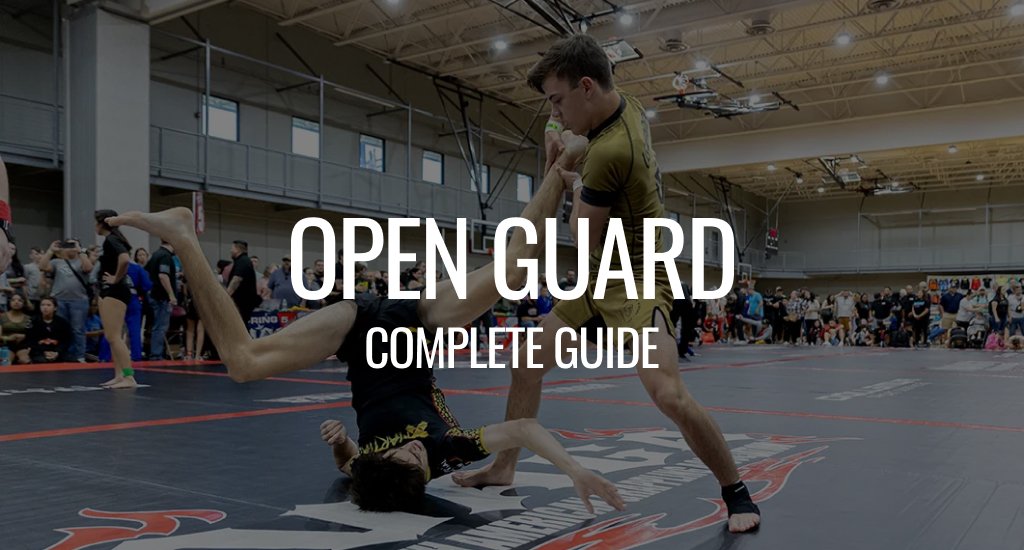
By BJJ Sportswear Editorial Team
Reviewed by competitive black belts | Last Updated: February 2, 2026
The Open Guard is the heart of modern Brazilian Jiu-Jitsu.
While the Closed Guard offers safety and static control, this dynamic position offers infinite possibilities. It is where the most creative sweeps, leg locks, and back takes occur. However, because your legs are not locked around your opponent, it requires a much deeper understanding of mechanics to maintain.
In this guide, we break down the fundamental concepts that will transform your bottom game from a defensive shell into an offensive weapon.
Table of Contents
The 3 Pillars of This Position
Unlike a locked guard where friction helps you, Open Guard relies on structure and physics. To make it work, you must master three core principles.
1. Connection (Points of Contact)
You cannot control what you do not touch. In this style of play, you generally need at least three points of contact (e.g., two hands and one foot, or two feet and one hand). These connections allow you to push, pull, and monitor your opponent’s movement.
2. Distance Management
This is the most critical skill. You must dictate the range:
- Long Range: Feet on hips/biceps to keep them away (defense).
- Close Range: Hooks underneath them (Butterfly/X-Guard) to elevate them (offense).
- The Danger Zone: If you are in the middle—too far to grapple but close enough to be grabbed—your guard will get passed.
3. Off-Balancing (Kuzushi)
A static guard is a passed guard. You must constantly use your points of contact to disrupt their base. If they are fighting to regain their balance, they cannot pass you.
Seated vs. Supine Variations
There are two main ways to play, and knowing when to use each is vital.
- Seated Guard: You are sitting up. This is aggressive and mobile. It allows you to wrestle up, snap down, or enter into leg entanglements. It is the preferred starting position in No-Gi.
- Supine Guard: You are lying on your back. This is often a defensive reaction when the opponent forces you down, but it opens up “underneath” games like X-Guard or deep De La Riva.
Major Styles You Must Know
The Open Guard is actually a family of positions. Here are the essential variations:
- Collar & Sleeve: The fundamental Gi style. You control their posture with a collar grip and their ability to post with a sleeve grip.
- De La Riva: An outside hook used to stop opponents from running around your legs. It is excellent for taking the back.
- Spider Guard: Uses foot-on-bicep pressure to stretch the opponent out, neutralizing their strength.
- Butterfly Guard: Uses hooks inside the thighs to lift and sweep. (See our full Butterfly Guard Guide).
Retention: How to Stay Safe
The moment your legs are bypassed, you are in survival mode (see our Side Control Escape Guide). To prevent this, use the “Frames and Hips” concept:
- Frame: Never let them control your head. Keep your arms extended or framing against their shoulders.
- Pummel: If they grab your legs, circle (pummel) your feet from the outside back to the inside.
- Inversion: As you advance, learning to invert (roll upside down) can help you recover when they flank you.
Conclusion
Mastering the Open Guard is a lifelong journey.
Start by focusing on your connections. If you can maintain 3 points of contact and constantly off-balance your opponent, you will find that your defense becomes an impassable wall.