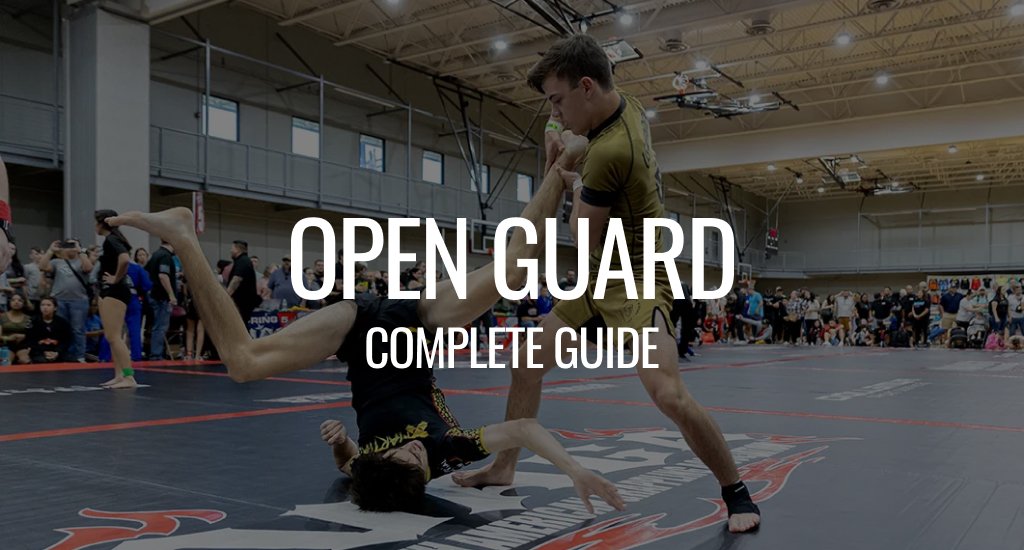
Open Guard: The Complete Concepts Guide
By BJJ Sportswear Editorial Team
Reviewed by competitive black belts specializing in guard systems and modern open guard development | Last Updated: January 14, 2026
The open guard is Brazilian Jiu-Jitsu’s most dynamic defensive position—a fluid guard where your legs remain uncrossed, creating a mobile barrier that controls distance, manages space, and sets up sweeps and submissions while preventing your opponent from passing to dominant positions. What makes mastering open guard concepts essential is versatility: unlike closed guard where you lock legs around your opponent, open guard encompasses dozens of variations—from spider guard to De La Riva to butterfly guard—making it the foundation of modern sport BJJ.​
According to Digitsu, mastering the open guard is crucial for maintaining a dynamic defense and setting up offensive strategies. Unlike the closed guard, where you lock your legs around the opponent, the open guard is characterized by utilizing your legs to create a barrier while they remain uncrossed. Your legs act as your first line of defense, controlling the distance and pace of the engagement.​
NAGA Fighter emphasizes importance: The open guard is one of the three fundamental guard positions in Brazilian Jiu-Jitsu, along with the closed and half guard. Mastering these techniques is essential for becoming a skilled and effective BJJ Competitor. With well-rounded guard skills, you can juggle a variety of techniques, alternating between sweeps, submissions, and transitions.​
After coaching hundreds of students through guard development, I’ve found that understanding open guard concepts matters more than memorizing specific variations—because distance management, grip fighting, and leg placement principles apply across ALL open guards, from basic to championship level.
Whether you’re a white belt learning when to open your guard or a purple belt refining modern De La Riva systems, mastering open guard concepts gives you the framework that makes every specific open guard variation more effective.

Table of Contents
What Is Open Guard?
Digitsu defines: Unlike the closed guard, where you lock your legs around the opponent, the open guard is characterized by utilizing your legs to create a barrier while they remain uncrossed.​
Core Open Guard Concepts:
- Legs remain UNCROSSED (not locked around opponent)
- Legs create mobile barrier
- Controls distance between bodies
- Uses grips (gi) or hooks (no-gi)
- Hip movement essential (never flat!)
- Active feet (pushing, hooking, framing)
- Multiple variations (spider, DLR, butterfly, etc.)
- Opposite of closed guard
- Foundation of modern sport BJJ
- Offensive AND defensive position
BJJ Fanatics contrasts with closed: The bjj open guard is an extremely attacking form of guard, which will allow an athlete to have significant freedom in how they attack their opponents.​
Understanding closed guard first helps you see the difference—closed is more controlling but less mobile, while open is more dynamic but requires constant activity.
Open Guard vs. Closed Guard
Fundamental Differences
Closed Guard:
- Legs locked around opponent
- More static control
- Easier to maintain
- Breaks opponent’s posture
- Limits opponent’s movement
- Good for beginners
- Classic BJJ position
Open Guard:
- Legs uncrossed (multiple contact points)
- Dynamic and fluid
- Requires constant adjustment
- Manages distance actively
- More attacking options
- Modern competition focus
- Multiple variations
BJJ Fanatics explains open guard advantage: An open guard may have some form of connection like the feet in the hips, or a simple collar or a wrist grip. The open guard is one of the main choices that an athlete will use, and this is due to a broader range of technical movements.​
When to Use Each
Use Closed Guard When:
- Opponent standing and trying to break guard
- Need to control and rest
- Setting up submissions (triangle, armbar)
- Against larger opponents
- Breaking their posture down
Use Open Guard When:
- Opponent already standing
- Want to attack with sweeps
- Need mobility and movement
- Playing modern sport game
- Transitioning between guards
- Against aggressive passers
The Three Pillars of Open Guard
Pillar #1: Distance Management
BJJ Mental Models teaches concept: Distance management is a concept consistent between all combat sports. When on the bottom in open guard, you may create space by backing out, then standing up. Or you may go on the offensive by getting underneath your opponent, taking away space, and attacking his legs.​
Distance Ranges:
Long Range (Far Away):
- Space between you and opponent
- Defensive position
- Safe from pressure
- Grips not established yet
- Can stand up if needed
Mid-Range (Nebulous Zone):
- Neither close nor far
- DANGEROUS ZONE
- Neither attacking nor defending
- Opponent can dictate
- Avoid this range!
Close Range (Very Close):
- Bodies connected
- Offensive position
- Attack with sweeps/submissions
- Use grips and hooks
- Control their movement
BJJ Mental Models warns: As a general rule, don’t get caught in the mid-range. From this distance, you are neither attacking nor defending, which means you aren’t dictating the terms of the fight.​
NAGA Fighter emphasizes: Proper distance is vital to maintaining an open guard that’s hard to pass or maneuver.​
Pillar #2: Grip Fighting
Digitsu teaches grips: In gi BJJ, grips are crucial. Grab your opponent’s sleeves or collar to manipulate their posture and balance. Without a strong grip, controlling your adversary becomes challenging.​
Essential Gi Grips:
- Sleeve grips (control arms)
- Collar grips (break posture)
- Pant grips (control legs)
- Belt grips (central control)
No-Gi Grips:
- Wrist control (replaces sleeve)
- Ankle control (replaces pants)
- Overhooks (arm control)
- Underhooks (posture control)
NAGA Fighter adds detail: Use grips effectively. Instead of blocking, actively grip your opponent’s arms as they extend, or secure their feet in No-Gi situations. In Gi, aim to control by gripping their sleeves, collar, or pant legs to establish a stronger connection.​
Reddit discusses strategy: In general, I’d say control at least one sleeve, keep them fighting for their balance and posture, peel their grips. It’s surprising how many people don’t just regrip after you break it.​
Pillar #3: Active Legs
Digitsu emphasizes leg activity: Keep constant tension in your legs to manage the distance between you and your opponent. Use your legs to create barriers, engage your biceps, and thwart any passing attempts.​
Leg Functions:
- Pushing (create distance)
- Hooking (control balance)
- Framing (block passing)
- Elevating (off-balance opponent)
- Trapping (prevent movement)
Active Feet Principle:
- Feet constantly moving
- Never just lying there
- Creating angles
- Responding to pressure
- Setting up attacks

Core Open Guard Principles
Principle #1: Never Flat on Back
Jon Thomas teaches: Never have two shoulder blades on the mat.​
Why Flat Is Bad:
- Loses mobility
- Easy to pass
- Can’t generate movement
- Vulnerable to pressure
- Limited options
Stay on Side:
- One shoulder on mat
- Face opponent
- Hip mobility maintained
- Can shrimp instantly
- Defensive structure
Principle #2: Guard Retention
Digitsu defines: Guard retention is fundamental to a strong open guard. To effectively maintain your guard, practice the following essentials:​
Guard Retention Essentials:
Leg Placement:
- Keep feet active
- Use hooks and pushes
- Optimal control positions
Hip Movement:
- Continuously reposition
- Avoid being pinned
- Never accept flat
Grip Control:
- Secure grips on sleeves/pants
- Manipulate opponent movement
- Break their grips constantly
Principle #3: Offense from Defense
Digitsu teaches mindset: Your goal is to use your open guard not just to defend, but to set up attacks and transitions. Remember, the open guard is as much a dynamic position of control as it is a shield.​
Open Guard Is:
- NOT just defensive
- Active attack position
- Sets up sweeps
- Creates submission opportunities
- Transitions to better positions

The Major Open Guard Variations
Butterfly Guard
Digitsu describes: The Butterfly Guard is identified by sitting up with both of your feet inside the opponent’s thighs. Your hooks and hand grips are crucial here, as they allow you to lift and manipulate your opponent’s balance, facilitating sweeps.​
Key Features:
- Both feet inside thighs (hooks)
- Sitting up position
- Elevating sweeps
- Marcelo Garcia specialty
Spider Guard
Digitsu teaches: Your legs play a pivotal role, as you control one or both of your opponent’s arms by placing your feet on their biceps. This position is excellent for maintaining distance and setting up triangulations or sweeps.​
Key Features:
- Feet on biceps
- Sleeve grips
- Distance control
- Triangle setups
De La Riva Guard
Digitsu explains: You wrap one leg around your opponent’s leading leg and hook it from the outside, often using grips on the sleeve or ankle to control their posture. It opens up a variety of attacks, including back takes and sweeps.​
Key Features:
- Hook around leading leg
- Ankle/sleeve grips
- Back take opportunities
- Modern competition staple
X-Guard
Digitsu describes: X-Guard is a more advanced position where you position yourself beneath your opponent, your legs crossed in an ‘X’ formation around one of their legs. This highly dynamic guard is a powerful launching point for technical sweeps.​
Key Features:
- Legs crossed in X
- Under opponent
- Technical sweeps
- Advanced position
Single Leg X Guard
Key Features:
- Control one leg
- Ashi garami position
- Sweep or leg attack entry
- Modern essential
Reverse De La Riva
Key Features:
- Inside hook
- Opposite of DLR
- Berimbolo entries
- Miyao brothers specialty
Lasso Guard
Digitsu teaches: The Lasso Guard involves looping one leg around your opponent’s arm and then securing it with your foot on their far shoulder or back. This creates a leverage point that allows for sweep and submission combinations.​
Key Features:
- Leg lassoed around arm
- Foot on shoulder/back
- Leverage control
- Armbar/triangle setups

Attacking from Open Guard
Sweeps
NAGA Fighter lists basics: Basic sweeps: You can initiate a scissor sweep or hook sweep by grabbing your opponent’s collar or sleeves (if in Gi), gripping their ankles, or locking around their hips (if No-Gi).​
Common Open Guard Sweeps:
- Scissor sweep (closed guard transition)
- Hook sweep (butterfly)
- Tripod sweep (open guard fundamental)
- Spider guard sweep
- DLR sweeps
Submissions
NAGA Fighter teaches: The possible submissions from an open guard include the triangle choke and armbar. While waiting for your opponent to strike, you can see their neck nearing and target it for a triangle choke.​
Open Guard Submissions:
- Triangle choke
- Armbar
- Omoplata
- Lasso armbar
- Spider guard triangle
Defending Against Guard Passes
Common Passes You’ll Face
NAGA Fighter lists threats:​
Knee Slice Pass:
You have complete article
- Defense: Bring knees together
- Grip their pants
- Limit movement
- Create weak frames
Toreando Pass (Bullfighter):
You have complete article
- Defense: Lock knees
- Counter with half guard
- Use false movements
Leg Drag Pass:
You have complete article
- Defense: Recover leg
- Turn into them
- Reset guard

Open Guard for No-Gi and MMA
Digitsu teaches no-gi adaptations: In no-gi scenarios, the lack of clothing to grip alters your approach. In MMA, where striking is involved, maintaining an effective open guard becomes even more essential to protect yourself and to control the distance.​
No-Gi Essentials:
Hooks:
- Butterfly hooks
- Elevate and unbalance
- No gi to grip = rely on hooks
Overhooks and Underhooks:
- Control posture
- Set up sweeps
- Critical for no-gi
MMA Considerations:
- Protect from strikes
- Constant movement (avoid ground-and-pound)
- Control upper body
- Stand up when possible
Training Open Guard
Progressive Development
White Belt:
- Learn closed guard first
- Basic open guard concept
- Butterfly guard introduction
- Distance management basics
Blue Belt:
- Spider guard development
- Basic DLR
- Sweep fundamentals
- Grip fighting
Purple Belt:
- Advanced DLR/RDLR
- X-Guard systems
- Berimbolo
- Competition game
Drilling Essentials
Guard Retention Drills:
- Hip escapes
- Leg circles
- Enhance mobility
- Develop muscle memory
Transition Drills:
- Switching guards (spider → DLR)
- Seamless transitions
- Flow drills
- Keep opponent off-balance
Strength and Conditioning:
- Core exercises (essential!)
- Grip strength workouts
- Gi pull-ups
- Fortify control
The Open Guard Legacy
From the Mendes brothers’ spider guard dominance to the Miyao brothers’ berimbolo revolution and Marcelo Garcia’s butterfly sweep mastery, the open guard represents modern Brazilian Jiu-Jitsu’s most dynamic evolution. What makes open guard essential is adaptability—while closed guard remains fundamental, open guard’s dozens of variations create the offensive freedom that defines championship-level sport BJJ.
Digitsu concludes: In summary, a potent open guard in BJJ is about control, grip, and tension. Infuse your practice with these elements, and your open guard will become a formidable part of your arsenal.​
The open guard proves a fundamental grappling truth: mobility creates opportunity. While static positions offer control, the open guard’s fluid nature—managing distance, fighting grips, and keeping active legs—creates the offensive platform from which modern BJJ attacks emerge.
Whether you’re learning basic butterfly hooks or refining championship-level De La Riva systems, mastering open guard concepts gives you the framework that makes every specific variation more effective—because understanding distance management, grip fighting, and leg activity principles applies universally across all open guards.
How We Reviewed This Article
Editorial Standards: Technical information verified through modern open guard principles, Mendes brothers methodology, Miyao brothers innovation, and contemporary guard development systems. Conceptual framework reviewed by competitive black belts emphasizing universal principles over specific techniques. Training progressions based on proven guard development used in successful competition academies worldwide.
Sources Referenced:
- Digitsu (comprehensive open guard concepts)
- NAGA Fighter (open guard execution and applications)
- BJJ Mental Models (distance management principles)
- BJJ Fanatics (open vs. closed guard comparison)
- Jon Thomas (guard principles)
- Reddit BJJ community (practical grip strategies)
Last Updated: January 14, 2026