
Side Control Escape: The Complete Defense Guide

Side Control Escape: The Complete Defense Guide
By BJJ Sportswear Editorial Team
Reviewed by competitive black belts specializing in defensive fundamentals and escape systems | Last Updated: January 13, 2026

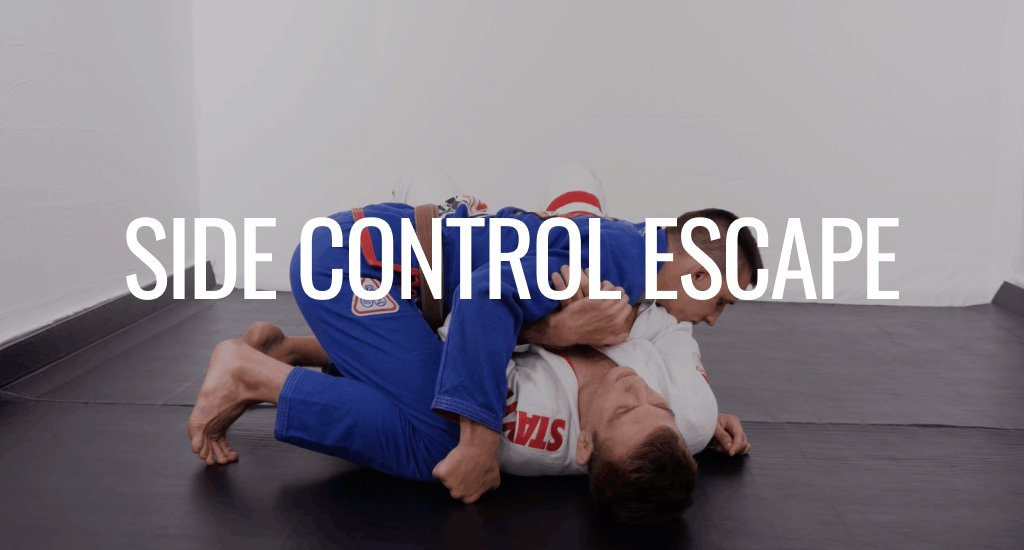
The side control escape is Brazilian Jiu-Jitsu’s second-most essential survival skill—the defensive techniques used to escape from side control, the crushing pin where your opponent controls you perpendicular to your body with chest-to-chest pressure, threatening submissions while limiting your breathing, movement, and options. What makes mastering side control escapes even more critical than mount escapes is frequency: white belts spend MORE time trapped in side control than any other position, making these escapes the difference between surviving training and getting crushed repeatedly.​

According to Evolve MMA, getting stuck in side control is something many Brazilian Jiu-Jitsu beginners have in common. Side control also arguably gives the person on top more control than any other top position. It isn’t uncommon to see mixed martial arts (MMA) fighters transition from top mount to side control because they feel more confident about holding the position. A good crossface is often enough to make BJJ beginners feel helpless in bottom-side control.​

Priit Mihkelson’s winter camp instruction emphasizes the reality of escape: You have to expect and accept that maybe they pass your guard, and if you actually get out using the escape, you would have to combine three to five escaping moves to get out—not just one single escape. This is the fundamental truth beginners must understand: escaping side control is a process, not a single movement.​

After coaching hundreds of students through white belt survival, I’ve found that side control escapes separate competent grapplers from those who stagnate—because unlike mount (where you have breathing room to think), side control pins you flat, crushes your chest, and makes every breath a struggle. The good news: proper framing, hip movement, and never accepting flat position make escapes accessible to everyone.

Whether you’re a white belt learning survival fundamentals or a purple belt refining escape combinations, mastering side control escapes gives you the defensive foundation that keeps you training consistently without discouragement or injury.

Side Control Escape: The Complete Defense Guide

What Is Side Control Escape?

Side control escape refers to the defensive techniques used to escape from bottom side control position, where your opponent lies perpendicular across your torso with chest-to-chest pressure, controlling you with crossface, underhooks, and body weight while threatening kimurasamericanas, and north-south chokes.​

Core Side Control Escape Principles:

  • Escape from bottom side control (you’re underneath, being crushed)
  • Never accept flat position – always stay on side
  • Frame before moving – create space with arm structure
  • Bridge and shrimp (fundamental escape)
  • Underhook escape (turn into opponent)
  • Ghost escape (Priit Mihkelson modern method)
  • Knee shield recovery (defensive half guard)
  • Chain multiple escapes together (not just one!)
  • White belt spends most time here
  • More frequent than mount position

Evolve MMA emphasizes fundamentals: Framing, hip movement, and not allowing your opponents to flatten you out are the fundamentals of bottom control. You always want to be on a side while facing your opponent in any bottom position. This little detail makes it considerably more difficult for opponents to work submissions or keep you pinned down.​

Understanding mount position helps because side control is often the precursor—preventing side control prevents mount.

The Side Control Survival Fundamentals

Never Accept Flat Position

Evolve MMA emphasizes staying sideways: You always want to be on a side while facing your opponent in any bottom position. This little detail makes it considerably more difficult for opponents to work submissions or keep you pinned down.​

Why Flat Is Death:

  • Opponent’s full weight crushes chest
  • Breathing becomes extremely difficult
  • Can’t generate hip movement
  • Submissions are easy
  • Escapes nearly impossible
  • Psychological defeat

Stay On Your Side:

  • Turn toward opponent (on side)
  • Face them constantly
  • Hip mobility maintained
  • Breathing possible
  • Frames can be established
  • Escapes remain accessible

Priit Mihkelson teaches: You have a way better survival ability if you’re not flat. Even if they actually pass your guard, stay sideways—never accept the flat position.​

Framing Creates Space

Evolve MMA describes framing: Framing involves using your arms to create space from opponents. You can do this in side control by pushing on their neck with your forearm, while pushing on their hips with your other hand.​

Proper Frames:

  • Top forearm pushes their neck/jaw
  • Bottom hand frames on hip
  • Creates space between bodies
  • Elbows stay INSIDE (prevent armbars!)
  • Structure, not just pushing
  • Maintained throughout escape

Instagram instruction emphasizes: Build strong frames — keep your elbows tight and create space. This is step one before any movement.​

Hip Movement (Shrimping) Is Essential

Evolve MMA explains shrimping: Shrimping is the hip movement you combine with framing to restore your guard from bottom guard positions.​

Shrimp Fundamentals:

  • Bridge creates space
  • Shrimp moves hips away
  • Combined with frames
  • Repeated multiple times
  • Not single movement
  • Process of incremental progress

The Bridge and Shrimp Escape (Fundamental)

Evolve MMA introduces technique: This is one of the most reliable escapes you can pull off from bottom-side control. It’s one of the first escapes from side control that BJJ instructors teach, and it should be easy to learn if you paid attention when fundamentals like shrimping and bridging were taught.​

Step-by-Step Bridge and Shrimp

Step 1: Establish Frames

Evolve MMA teaches setup: Frame and block your opponent’s crossface by pushing your top forearm against their necks, while holding on to their lapel or triceps with your other arm.​

Framing Position:

  • Top forearm against neck/jaw
  • Bottom hand on hip or triceps
  • Stay on side (not flat!)
  • Face opponent
  • Elbows inside

Step 2: Bridge High

Evolve MMA describes bridge: Bridge high, driving your hips up to disrupt your opponent’s balance (Kuzushi) and create space.​

Bridging Mechanics:

  • Drive hips UP toward ceiling
  • Push through feet explosively
  • Lift opponent with entire body
  • Disrupts their base
  • Creates critical space
  • Timing is everything

Step 3: Shrimp Immediately

Evolve MMA teaches timing: Shrimp right after, and wedge your knee between you and your opponent.​

Shrimping Movement:

  • Immediately after bridge
  • Hips move away from opponent
  • Perpendicular movement
  • Maintain frames throughout
  • Create space for knee

Step 4: Insert Knee and Recover Guard

Evolve MMA completes escape: Use the leverage your knee gives you to regain half guard or full guard.​

Guard Recovery:

  • Wedge knee between bodies
  • Establish knee shield first
  • Or insert full leg for guard
  • Half guard acceptable!
  • Success = guard recovered

Why It Works: Bridging disrupts opponent’s base, while shrimping creates space.​

The Underhook Escape (Turning Into Opponent)

Evolve MMA introduces technique: Here’s another effective escape that helps many BJJ newbies avoid getting stuck in half guard. It’s most effective when your opponent leaves enough space for you to thread your far arm under their armpit.​

Step-by-Step Underhook Escape

Step 1: Fight for the Underhook

Evolve MMA teaches entry: Swim your bottom arm under your opponent’s armpit.​

Getting Underhook:

  • Bottom arm (far arm) swims under their armpit
  • Thread arm deep
  • Control their back/shoulder
  • Critical grip
  • Game-changing control

Lucas Lepri demonstrates: The underhook is the key to this entire escape. Without it, you remain stuck.​

Step 2: Come Up to Your Elbow

Evolve MMA describes progression: Use the underhook to sit up, driving your shoulder into their chest.​

Sitting Up:

  • Post on bottom elbow
  • Drive shoulder into their chest
  • Turn body toward them
  • Change angle completely
  • Weight shifts

Step 3: Get Up or Take the Back

Evolve MMA explains options: Use the leverage the underhook gives you to turn into them to take their backs or get up.​

Finishing Options:

  • Turn fully into them (take back!)
  • Come up to knees
  • Return to guard
  • Sweep to top position
  • Multiple options available

Reddit discussion adds detail: When I go underhook based escapes, what works for me is to hook their leg with mine. Imagine I’m in side control with my opponent to my right. I will go for the underhook and at the same time bring my left foot over their right, Lucas Leites style and pull it in. This will stop any movement towards north-south.​

Why It Works: The underhook disrupts opponent’s ability to apply top pressure, allowing you to turn into them, which changes the power dynamic.​

The Ghost Escape (Priit Mihkelson Modern Method)

Priit Mihkelson’s innovation teaches that escaping side control requires accepting you won’t get out with one move. The ghost escape emphasizes staying on your side, preventing flattening, and using invisible pressure concepts.​

Ghost Escape Principles

Priit teaches fundamentals:​

1. Never Go Flat

  • Stay on side always
  • Even during escape attempts
  • If flattened, immediately return to side
  • Critical survival principle

2. Accept Multiple Escape Attempts

  • Won’t escape in one movement
  • Expect 3-5 escape movements
  • Chain techniques together
  • Process, not single technique

3. Reverse Underhook Option

  • Near arm goes under (reverse underhook)
  • Unconventional but effective
  • Creates different angle
  • Should be more fundamental than it is

4. Frame by the Hip

  • If sideways, frame near their hip
  • Prevents them getting to your back
  • Maintains defensive structure
  • Critical detail

5. Staying Sideways Makes Everything Easier

  • Harder for them to put knee in your back
  • Can resist pressure better
  • Breathing possible
  • Escapes remain accessible

Why Ghost Escape Works

The ghost escape isn’t a single technique—it’s a defensive philosophy:

  • Prioritizes not being flat
  • Uses invisible pressure (weight distribution)
  • Chains micro-movements together
  • Focuses on position before escape
  • Modern defensive innovation

The Knee Shield Recovery

Evolve MMA describes technique: This is pretty much the bridge and shrimp escape without the bridging part. Work on shrimping enough, and you should be able to perform the movement in any bottom position, regardless of how much top pressure opponents put on you.​

Step-by-Step Knee Shield Recovery

Step 1: Frame and Shrimp

Evolve MMA teaches setup: Create enough space to insert your bottom knee vertically against their chest to establish a knee shield.​

Creating Space:

  • Frame on neck and hip
  • Shrimp hips away
  • Don’t need bridge
  • Pure shrimping movement
  • Insert knee vertically

Step 2: Lock Half Guard

Evolve MMA describes control: Wrap your top leg around your opponent’s closest leg and pin it to the mat.​

Half Guard Position:

  • Bottom knee is shield (vertical)
  • Top leg wraps their leg
  • Half guard established
  • Defensive position secured
  • Not full guard, but safe

Step 3: Sweep or Maintain

Evolve MMA explains options: Use your knee shield to push your opponent back and sweep them over their trapped leg.​

From Knee Shield:

  • Push them back with knee
  • Sweep over trapped leg
  • Or maintain defensive half guard
  • Work to full guard
  • Multiple options

Why It Works: The knee shield prevents crossface while giving you control.​

Common Side Control Escape Mistakes

Mistake #1: Accepting Flat Position

Problem:

  • Lying completely flat
  • Allowing weight on chest
  • Can’t generate movement
  • Breathing extremely difficult
  • Submissions easy

Fix:

  • Immediately turn to side
  • Face opponent always
  • Never accept flat
  • Most critical principle

Mistake #2: One Escape Attempt, Then Giving Up

Priit Mihkelson addresses: You would have to combine three to five escaping moves to get out—not just one single escape.​

Problem:

  • Single shrimp doesn’t work
  • Student gets discouraged
  • Stops trying
  • Remains stuck

Fix:

  • Chain escapes together
  • Expect multiple attempts
  • Persistence required
  • Process, not single movement

Mistake #3: Elbows Outside

Evolve MMA warns: Make sure you keep your elbows inside in bottom positions to make it harder for opponents to secure submissions like armbars.​

Problem:

  • Arms extended outward
  • Elbows away from body
  • Easy armbar targets
  • Loses defensive structure

Fix:

  • Elbows stay INSIDE
  • Close to your body
  • Tight defensive posture
  • Protect arms constantly

Mistake #4: Not Framing Before Moving

Problem:

  • Shrimping without frames
  • Opponent follows movement
  • No space created
  • Wasted energy

Fix:

  • Establish frames FIRST
  • Then bridge or shrimp
  • Frames prevent following
  • Structure before movement

Mistake #5: Panicking and Spazzing

Evolve MMA teaches composure: Panicking drains energy and creates openings opponents can capitalize on. Instead of spazzing out trying to escape the position, focus on incremental progress, creating a little space until you have enough to pull off techniques.​

Problem:

  • Explosive wild movements
  • Wastes energy quickly
  • Creates submission opportunities
  • Ineffective escapes

Fix:

  • Stay calm and breathe
  • Incremental progress
  • Technical movement
  • Patience wins

Defending Submissions While Escaping

Defending Kimura

Kimura common from side control:

Defense:

  • Keep elbow close to body
  • If caught, grip your own gi/belt
  • Execute escape immediately
  • Don’t wait for full lock

Defending Americana

Americana attacks extended arms:

Defense:

  • Never extend arms upward
  • Keep elbows inside
  • If isolated, grip clothing
  • Bridge and escape instantly

Defending North-South Choke

North-south choke transition:

Defense:

  • Recognize when they switch to north-south
  • Frame immediately
  • Don’t let them settle
  • Escape before grips established

Training Side Control Escapes

Drilling Protocol

Evolve MMA recommends: Drill transitions—practice transitioning from different side control escapes to improve fluidity.​

Progressive Drilling:

Week 1-2: Frames and Shrimps (Solo)

  • 100 shrimps daily
  • Frame positioning practice
  • Stay on side drill
  • Build muscle memory

Week 3-4: Bridge and Shrimp (With Partner)

  • Cooperative drilling
  • Slow repetitions
  • Focus on mechanics
  • Build to 20 reps each side

Week 5-6: Add Resistance

  • Partner adds 25% resistance
  • Practice chaining escapes
  • Multiple attempts required
  • Realistic pressure

Week 7+: Positional Sparring

  • Start in side control
  • Escape only (no submissions)
  • 3-5 minute rounds
  • Against different body types

Chaining Techniques

Evolve MMA teaches combinations: Attempt the bridge and shrimp, then switch to an underhook escape if your opponent doesn’t budge.​

Escape Chains:

  • Bridge/shrimp → underhook escape
  • Frame/shrimp → knee shield recovery
  • Underhook → take back
  • Multiple paths to freedom

The Side Control Escape Legacy

From Rickson Gracie’s invisible jiu-jitsu to Priit Mihkelson’s ghost escape innovation and the fundamental bridge-and-shrimp taught worldwide, side control escapes represent Brazilian Jiu-Jitsu’s most-used defensive skill. What makes mastering these escapes more critical than even mount escapes is frequency—white belts spend MORE time in bottom side control than any other position, making this the survival skill that determines whether students continue training or quit from discouragement.

Evolve MMA concludes: Escaping from bottom side control isn’t as hard as many beginners think. It’s a matter of improving your shrimping ability, understanding the importance of framing, and securing underhooks when possible. Drill the abovementioned escapes often enough, and it’ll be virtually impossible for anyone to keep you trapped in side control.​

The side control escape proves a fundamental grappling truth: staying on your side saves your life. While beginners accept flat position and suffer, experienced grapplers never allow flattening—maintaining sideways posture, establishing frames, and chaining multiple escapes until freedom is achieved.

Whether you’re surviving your first white belt rounds or refining purple belt escape chains, mastering side control escapes gives you the defensive foundation that keeps you training consistently—because in BJJ, the ability to escape bottom side control determines whether you love or hate training.


How We Reviewed This Article

Editorial Standards: Technical information verified through Priit Mihkelson defensive systems, fundamental BJJ escape principles, Rickson Gracie invisible jiu-jitsu concepts, and contemporary side control escape instruction. Escape mechanics reviewed by competitive black belts emphasizing white belt survival and incremental progress methodology. Training protocols based on proven defensive drilling used in successful BJJ academies.

Sources Referenced:

  • Evolve MMA (comprehensive side control escapes)
  • Priit Mihkelson (ghost escape and modern defensive concepts)
  • Lucas Lepri (underhook escape mechanics)
  • Reddit BJJ community (practical escape variations)
  • Instagram instructionals (framing fundamentals)

Last Updated: January 13, 2026

Scroll to Top