Closed Guard BJJ: Posture, Sweeps & Submissions
The closed guard is where Brazilian Jiu-Jitsu was built.
Every technique in this guide — the triangle, the armbar, the kimura, the guillotine — was developed and refined from the closed guard first. It is the position where BJJ’s core principle is most clearly demonstrated: a smaller person on their back can control, submit, and dominate a larger person on top through technique alone.
Roger Gracie — widely considered the greatest BJJ competitor of all time — submitted the majority of his world championship opponents from the closed guard using a single technique: the cross choke. Not because he lacked variety, but because his closed guard control was so precise that he never needed anything else. He made opponents fight for every centimetre of posture and then took what the position gave him.
This guide covers the complete closed guard system — posture breaking, every major sweep and submission, passing defense, and how to build it at every belt level.

Table of Contents
What is the closed guard?
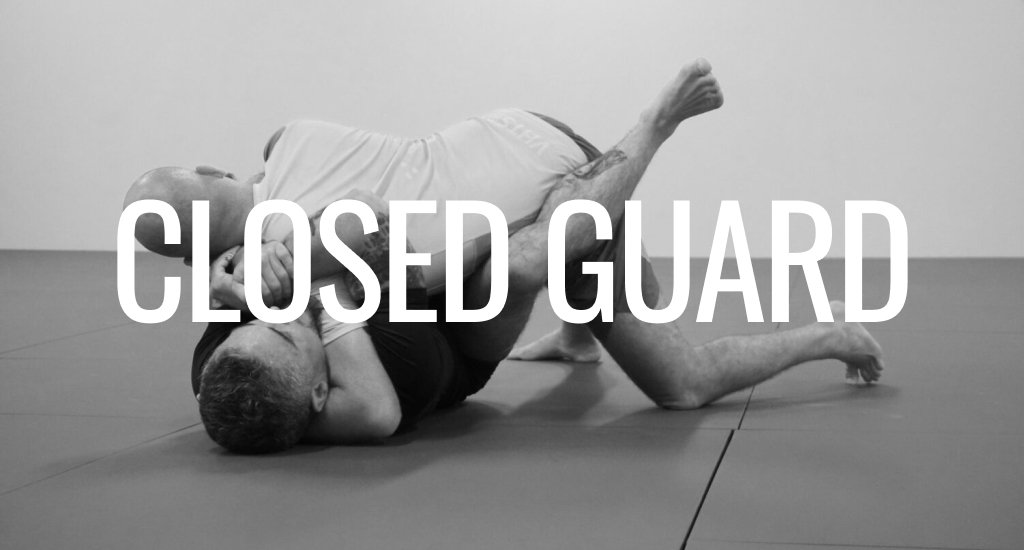
The closed guard is a BJJ position where you lie on your back, wrap your legs around your opponent’s waist, and cross your ankles behind their back. The legs are physically locked — the guard is closed — preventing your opponent from pulling their hips back or standing up without opening your legs first.
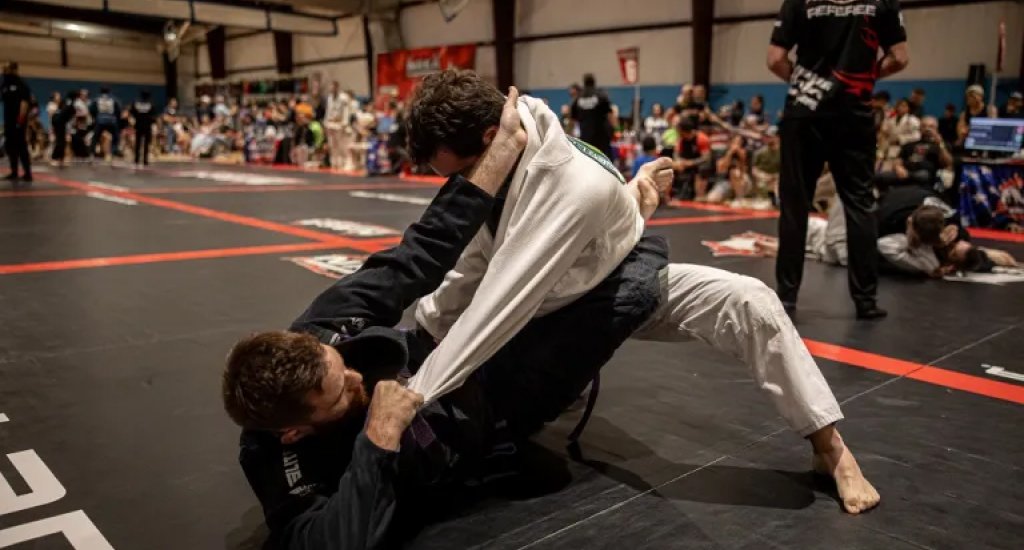
Your hands grip their collar, sleeve, wrist, or neck to control their upper body. Your legs control their hips. Together, these four contact points give you control over almost their entire body from underneath.
It looks passive. It is not. The closed guard is an active offensive position. Every time your opponent moves — tries to posture up, tries to pass, tries to strike — you have an attack available. The position punishes upright posture with sweeps and broken posture with submissions.
Position fact: The closed guard is the position from which the most BJJ submissions have historically been finished in competition. The triangle choke, armbar, and kimura — three of the top five submissions in gi competition — all originate primarily from closed guard attacks.

Why the closed guard is so powerful
Three things make the closed guard uniquely powerful in BJJ.
1. It controls range. Your legs lock the opponent at close range where their strength advantage is minimised and your leverage is maximised. They cannot create distance to strike or base out freely. Every movement they make must go through your leg control.
2. It punishes every response. If they posture up — sweep them. If they break down — submit them. If they try to pass — attack with the submission that their pass attempt opens. The closed guard creates a situation where every defensive action by your opponent creates a new offensive opportunity for you.
3. It works at every level. White belts can control larger, stronger opponents from the closed guard their first week of training. Roger Gracie won multiple world titles from it. Helio Gracie used it in challenge matches at age 70. The technique scales from beginner to world champion without fundamental change — only refinement.
History
The closed guard is the foundation position of Brazilian Jiu-Jitsu. According to Wikipedia’s entry on guard positions in grappling, the closed guard was central to the Gracie challenge match system from its earliest days — specifically designed to allow a smaller practitioner to neutralise a larger, stronger opponent from the ground.
The Gracie family’s key innovation was not inventing the guard position but developing it as an offensive system. In judo and catch wrestling, the guard was seen as a defensive or neutral position. The Gracies transformed it into an attack platform — developing sweeps, submissions, and positional chains that made the bottom position as threatening as the top.
According to BJJ Heroes, figures like Rolls Gracie and later Rickson Gracie refined the closed guard attack system through countless challenge matches and competition appearances. The armbar-triangle combination from closed guard — the discovery that defending one submission opened the other — is credited to practitioners at Osvaldo Alves’ gym in the late 1970s and remains the core of closed guard attacking today.
Modern competitors like Roger Gracie, Bernardo Faria, and John Danaher have each built distinct closed guard systems — demonstrating that the position still yields new tactical insights at the highest levels of the sport.
Breaking posture — the foundation of everything
Before any sweep or submission from the closed guard, you need one thing: broken posture. Every attack in this guide begins here. If your opponent maintains upright posture — back straight, head above their hips — they can defend, pass, and escape. A broken posture removes their base and opens every attack simultaneously.
What broken posture looks like
Their back curves forward. Their head drops toward your chest. Their elbows come off the mat or off your hips. They can no longer generate power upward or create frames against you effectively.
How to break posture in the gi
- Grab the collar behind their neck with one hand — deep, past the lapel onto the back of the collar.
- Grab their sleeve or wrist with the other hand.
- Pull the collar forward and down while squeezing your legs simultaneously.
- Angle your hips to one side — do not lie flat.
- Maintain the collar grip. Attack immediately.
How to break posture in no-gi
Reach for an overhook on one arm — hook their arm at the elbow and pull it across your body. Use your other hand to control their head or wrist. Squeeze your legs and pull simultaneously. Without collar grips, the overhook becomes your primary posture-breaking tool.
Core principle: Every second you wait after breaking posture gives them time to base out and recover. Break posture and attack in one connected movement. The posture break is not a separate step — it is the beginning of the attack.
Grip systems — gi and no-gi
Gi grips
The gi opens a much wider grip menu than no-gi. The three most important grips from the closed guard:
- Cross collar grip: One hand grips deep in the collar on the opposite side — palm up, knuckles inside the collar. This is the setup for the cross choke and creates strong posture control.
- Same-side collar grip: One hand grips the collar on the same side as your attacking arm. Used for posture breaking and setting up the triangle and armbar.
- Sleeve grip: Control their wrist or sleeve to isolate one arm — essential for the armbar, kimura, and triangle setups.
No-gi grips
- Overhook: Your arm hooks over their arm at the elbow and controls it. Your primary posture break in no-gi. Also the setup for the triangle and omoplata.
- Underhook: Your arm goes under their arm at the armpit. Less common from guard bottom but used in some sweeping systems.
- Two-on-one wrist control: Both hands control one of their wrists — used for isolating the arm before the armbar or triangle.
- Head control: One hand behind their head, pulling toward your chest. The no-gi substitute for the collar grip.
Scissor sweep — step by step
The scissor sweep is one of the first sweeps learned in BJJ and one of the most reliable at every level. It works when your opponent is on their knees with their weight forward.
- Break posture — pull their head toward your chest with a collar grip or head control.
- Establish a collar grip with one hand and a sleeve grip on their near arm with the other.
- Open your guard. Place your top shin across their chest — horizontally, at chest height. Your bottom leg hooks behind their knee.
- Kick your top shin forward across their chest while simultaneously pulling their sleeve and kicking your bottom leg back — like scissor blades closing.
- Their base collapses. They fall to the side. You follow them up and end in mount or side control.
Scissor sweep key detail: The shin must be at chest height — not at their hip. Too low and there is no lever. The scissor motion creates the sweep, not the strength of the kick. Pull the sleeve and kick simultaneously.
Hip bump sweep — step by step
The hip bump sweep works when your opponent sits back on their heels — creating space between their chest and yours. It is the natural companion to the scissor sweep.
- Your opponent is sitting back in your guard — there is space between your bodies.
- Open your guard. Post one hand on the mat behind you for base.
- Sit up explosively — driving your hip forward and into their chest on the side opposite your posted hand.
- As they fall backward, come up on top and end in mount.
- If they post their hand to stop the fall — switch to the kimura on the posted arm. The posted arm is isolated in the perfect kimura position.
Pendulum sweep — step by step
The pendulum sweep (also called the flower sweep) works when your opponent posts their arm to the side to stop the hip bump. It chains directly from the hip bump attempt.
- You attempt the hip bump sweep. Your opponent posts their arm to the mat to stop the fall.
- Take an overhook on the posted arm — hook it and pull it across your body, isolating it.
- Open your guard. Bring one leg up high over their hip on the overhook side.
- Pendulum your leg — swing it like a pendulum from high to low — pulling their weight over as you swing.
- They roll over your body. You end in mount with the overhook still controlling their arm.
The sweep chain — how the three sweeps connect
The scissor sweep, hip bump sweep, and pendulum sweep form a natural chain. Understanding how they connect is more important than drilling each one in isolation.
- Scissor sweep works when they are on their knees, weight forward.
- Hip bump sweep works when they sit back, creating space.
- Pendulum sweep works when they post their arm to stop the hip bump.
The opponent’s defense to each sweep creates the entry for the next one. You are not choosing one sweep — you are reading their reaction and following them to whichever option they give you. This is the sweep system, not three individual techniques.
Add submissions to the chain:
- Scissor sweep attempt → they posture up → catch the triangle choke
- Hip bump attempt → they post their arm → switch to kimura
- Pendulum sweep → they defend the overhook → switch to omoplata
Every defensive action your opponent makes closes one door and opens another. This is why the closed guard is so difficult to defend at high levels — stopping one attack creates the next one automatically.
Triangle choke from closed guard
The triangle choke is the most powerful submission from the closed guard. When your opponent reaches forward with one arm — to push your hip, post on the mat, or establish a grip — that arm is your triangle entry.
Full step-by-step mechanics, grip details, angle requirements, and combo chains are in our dedicated triangle choke guide.
The key connection to closed guard: break posture first. The triangle entry opens when their head comes forward and their arm extends. Both happen as a result of a broken posture. Posture breaking creates the triangle entry — which is why posture control is always the first step.
Armbar from closed guard
The armbar from closed guard attacks when one arm is isolated and extended across your body. It is the natural companion to the triangle — they defend the triangle by posturing up, and the posturing opens the armbar.
Full step-by-step mechanics, the thumb rule, and the triangle-armbar-omoplata chain are in our dedicated armbar guide.
The triangle-armbar double threat is the most fundamental combination in closed guard. Attack the triangle. They stack or posture to defend. Switch to the armbar. They pull the arm free. Switch back to the triangle. Neither technique works alone as well as the two work together.
Kimura from closed guard
The kimura from closed guard attacks the near arm when it posts on your chest or hip. The setup is immediate — when your opponent plants their hand on your body to create a frame, grab the wrist and thread the figure-four.
Full step-by-step mechanics and the kimura trap system are in our dedicated kimura guide.
The kimura and the hip bump sweep share the same entry. When your opponent posts their arm to stop the hip bump, their arm is already in the kimura position. Many practitioners attack the hip bump first, intentionally forcing the post, and then lock the kimura on the posted arm. The sweep threat creates the submission setup.
Guillotine from closed guard
The guillotine from closed guard attacks when your opponent’s head drops forward — typically as they try to posture up from a broken position or as they attempt a guard pass that leads with their head.
Full step-by-step mechanics, the high elbow detail, and the Marcelo Garcia arm-in system are in our dedicated guillotine guide.
The guillotine and triangle share the same defensive reaction from your opponent. When they posture up to escape the triangle, their head comes forward — that is the guillotine entry. When they drop their head to escape the guillotine, their posture breaks — that is the triangle entry. They defend each other.
Cross choke from closed guard (gi)
The cross choke is the most historically significant submission from the closed guard. Roger Gracie used it to win multiple world championships. It is often called the hardest beginner technique and the easiest black belt technique — the mechanics are simple but the precision required to finish it against a resisting opponent demands thousands of repetitions.
- Get the first grip. One hand grips deep in the collar on the opposite side — palm up, four fingers inside the collar, as deep as possible. Your knuckles should be touching the back of their neck.
- Break posture. Use the first collar grip to pull their head forward. Their posture breaks.
- Get the second grip. Your other hand grips the collar on the near side — palm down, thumb inside. Cross your arms so both hands are in the collar, one palm up and one palm down.
- Angle your hips. Rotate your hips to one side — toward the palm-up hand side.
- Finish. Drive both forearms toward the mat on either side of their neck — not a squeeze inward, but a downward rotation of the forearms. Your forearms cross like scissors against their neck, compressing both carotid arteries. The tap comes quickly.
Cross choke key detail: The depth of the first grip determines whether this choke works. Grip behind the collar — past the lapel, all the way to the back of their neck. A shallow grip on the lapel only creates an air choke and is easy to defend. Deep grip on the collar = blood choke = fast tap.
Overhook game
The overhook is one of the most powerful control tools in the closed guard — both gi and no-gi. When you hook your arm over their arm at the elbow and pull it across your body, you break their posture on that side and isolate the arm for multiple attacks.
From the overhook position, these attacks all become available:
- Triangle choke — overhook controls the arm inside the triangle
- Omoplata — swing your leg over the overhook arm and lock the shoulder
- Armbar — extend the overhook arm for the armbar
- Pendulum sweep — use the overhook to control their arm during the swing
- Back take — when they posture away from the overhook, sit up and take the back
The overhook creates a “locked” arm that cannot post effectively, cannot frame well, and opens multiple submission threats simultaneously. Many coaches teach the overhook closed guard game before the straight-arm attacks because overhook control makes every other closed guard technique easier to set up.
Guard passing defense
The closed guard is passed regularly at every level. Understanding how to defend the most common passes keeps your guard intact and keeps your attacks available.
Torreando (bullfighter) pass defense
Your opponent grabs both of your pants at the knee and pushes your legs to one side. Counter: the moment they grip your pants, frame against their bicep with your near arm and shrimp your hips away in the same direction they are pushing. Do not resist the push — redirect it. Recover your guard by bringing your knee between you and re-establishing your hooks.
Knee slice pass defense
Your opponent opens your guard and drives one knee across your thigh to pin it down. Counter: prevent the knee slice before it lands by keeping your knees active and turned toward them. If the knee slice is already happening, grab their ankle and use your hip movement to follow them, maintaining your guard frame while recovering position.
Standing pass defense
Your opponent stands up inside your guard, breaking your ankle lock and creating distance. Counter: open your guard actively when they stand — do not let your ankles get broken painfully. Come up to a seated position as they stand, establishing a sitting guard or transitioning to an open guard. Fight for grips on their legs or sleeve to prevent the pass and set up leg attacks.
Stack pass defense
Your opponent folds you in half — stacking your legs toward your head — to relieve submission pressure and pass. Counter: angle your hips sharply to one side. A properly angled body is very difficult to stack. If already stacked, use the momentum to roll and recover. Never remain flat on your back during a stack attempt.
The Roger Gracie closed guard system
Roger Gracie is widely considered the greatest BJJ practitioner of all time. He won ten world championships — and submitted the majority of his opponents from the closed guard using the cross choke. His system demonstrates that a complete closed guard game does not require complexity. It requires precision.
The principles of his system:
Posture control above all else. Roger’s first priority is always breaking posture and maintaining the broken position. He does not rush to submissions — he works to deny posture recovery until the opponent makes a mistake or an opening appears.
Submission through structure, not athleticism. His cross choke is not applied with strength. It is applied with correct arm positioning, deep collar grips, and a precise forearm rotation. The technique does not rely on physical attributes.
One technique, perfect execution. Roger’s competitors knew exactly what he was going to do. They tried to stop it. They failed — because his positional control was perfect enough that he could apply the same technique repeatedly, even against opponents preparing specifically for it.
The lesson for every BJJ practitioner: a small number of techniques drilled to perfection beats a large number of techniques drilled superficially. The closed guard system does not require complexity. It requires depth.
Gi vs no-gi differences
In the gi: Collar and sleeve grips are your primary tools. The cross choke, collar choke, and lapel attacks are only available in the gi. The gi slows transitions — opponents cannot escape grips as easily, giving you more time to set up attacks after breaking posture. The closed guard is arguably strongest in the gi because the grip options are wider.
In no-gi: No collar to grip. All posture breaking goes through overhooks, underhooks, and head control. The closed guard is harder to maintain in no-gi because opponents can posture up more easily without fabric friction. Transitions happen faster. The triangle, armbar, kimura, and guillotine all work — but the setups require faster execution and sharper timing.
Key no-gi adjustment: Build your closed guard around the overhook. In the gi, the collar grip is your primary posture break. In no-gi, the overhook replaces it. Establish the overhook first — everything else flows from there.
Common mistakes
- Lying flat without attacking. The closed guard is not a resting position. Flat hips with no grips and no attacks invite your opponent to pass. Your hips must always be active — angled, moving, creating frames.
- Letting posture recover. Breaking posture and then releasing the collar grip defeats the purpose. Maintain the grip. Maintain the head control. The moment posture recovers, you lose the attack.
- Attacking one technique at a time. Single-submission attacks are predictable and easily defended. Attack in chains — sweep to submission, submission to sweep. Never give your opponent one thing to focus on.
- Holding a closed guard with no purpose. If your closed guard is not threatening — if you have no grip, no angle, and no attack imminent — your opponent will stand up or systematically break it down. The closed guard must be threatening at all times.
- Not using hip movement. Your hips generate power, create angles, and make attacks possible. A BJJ player with flat, static hips in the closed guard is easy to control. Moving hips — even subtle shifts — constantly disrupt your opponent’s balance and create openings.
- Opening the guard without a plan. Opening the guard without establishing an attack entry gives your opponent space to pass. Open the guard to attack — not to give them room.
Belt-level training guide
The closed guard is one of the few positions that rewards investment at every stage of the BJJ belt system.
White belt — two sweeps, one submission, posture control
Learn the scissor sweep and the hip bump sweep. Learn the triangle choke. Drill posture breaking until it is automatic — this single skill improves everything else simultaneously. Do not try to learn the entire closed guard system at white belt. See the white belt guide for the full framework of fundamentals that support your closed guard development.
Blue and purple belt — chains and combinations
Add the pendulum sweep. Add the armbar. Build the triangle-armbar chain until the switch between them is automatic. Add the kimura and the hip bump-to-kimura chain. Develop the overhook game. At this stage, your closed guard should be threatening multiple attacks simultaneously — not one at a time.
Brown and black belt — system and pressure
Develop a complete personal system — specific entries, specific chains, specific responses to each common defense. Study the Roger Gracie cross choke system. Add the cross choke to your gi game. Study Bernardo Faria’s pressure-based closed guard. For advanced study, John Danaher’s New Wave Closed Guard and Bernardo Faria’s Closed Guard instructional are among the most respected resources available.
Famous closed guard practitioners
The closed guard has produced some of the most dominant performers in BJJ history:
- Roger Gracie: Ten-time world champion. Submitted almost every opponent from the closed guard cross choke. The definitive argument that precision beats variety.
- Bernardo Faria: Five-time world champion. Built a complete pressure-based closed guard system around the over-under pass counter and submission chains from the bottom.
- Marcelo Garcia: Multiple ADCC and world champion. Made the closed guard a threat in no-gi through the arm-in guillotine system and overhook attacks.
- Helio Gracie: The grandfather of BJJ closed guard. Defended the position and attacked from it in challenge matches well into his later years, demonstrating the position’s independence from physical attributes.
- Ronaldo Jacaré Souza: UFC middleweight contender and multiple BJJ world champion. Known for one of the most aggressive and technically complete closed guard games in competition history.
Frequently asked questions
What is the closed guard in BJJ?
The closed guard is a BJJ position where you lie on your back, wrap your legs around your opponent’s waist, and cross your ankles behind their back. It is one of the most fundamental positions in BJJ — simultaneously defensive and highly offensive — giving the bottom player control, sweep options, and submission threats against the top player.
Why is posture breaking so important in closed guard?
Posture breaking is the foundation of every attack from closed guard. An opponent with upright posture can defend, pass, and control effectively. A broken posture — head down, back curved — removes their base and opens every sweep and submission available. Every attack starts with a broken posture.
What are the best sweeps from closed guard?
The three highest-percentage sweeps are the scissor sweep, the hip bump sweep, and the pendulum sweep. They chain together naturally — defending one creates the entry for the next. The scissor sweep works when their weight is forward. The hip bump sweep works when they sit back. The pendulum sweep works when they post their arm to stop the hip bump.
What is the difference between closed guard and open guard?
In closed guard, your ankles are crossed behind your opponent’s back — the guard is physically locked. In open guard, your legs are uncrossed and your feet push on their hips or thighs without locking. Closed guard gives more control but limits mobility. Open guard gives more mobility but requires active leg work. Beginners learn closed guard first because it is more controlled.
How do I stop my guard from being passed?
Keep their head down with collar or head control at all times. When they begin to pass, shrimp away in the direction they are pushing rather than resisting. Replace your knee as a frame and re-establish your hooks. Preventing posture recovery is the most effective guard retention tool — if they cannot posture up, most passes become impossible.
Is closed guard effective in no-gi BJJ?
Yes, though adjustments are needed. Without collar grips, posture breaking relies on overhooks and head control. The triangle, armbar, kimura, and guillotine all work in no-gi. The overhook replaces the collar grip as the primary control tool. The closed guard is slightly harder to maintain in no-gi because opponents posture up more easily without gi friction.
Who has the most famous closed guard in BJJ history?
Roger Gracie is widely considered the greatest closed guard practitioner in BJJ history. He won ten world championships submitting most opponents from the cross choke — demonstrating that perfect mechanics and posture control beat complexity at the highest level. Bernardo Faria and Marcelo Garcia also built highly successful competitive games around distinct closed guard systems.
Quick reference
| Element | What to do |
|---|---|
| First priority | Break posture — every attack starts here |
| Hip position | Never flat — always angled to one side |
| Scissor sweep entry | Opponent on knees, weight forward |
| Hip bump sweep entry | Opponent sits back, space between bodies |
| Pendulum sweep entry | Opponent posts arm to stop hip bump |
| Triangle entry | One arm in, one arm out after posture break |
| Kimura entry | Posted arm on hip or chest |
| Cross choke key | Deep grip — knuckles past the lapel to back of collar |
| Overhook game | Hook elbow, pull arm across body → triangle/omoplata/pendulum |
| No-gi adjustment | Replace collar grips with overhook + head control |
| Primary chain | Sweep threat → submission → sweep → back take |
The closed guard is where BJJ lives. It is the position the sport was built around, the position where its core principle — technique beating strength — is demonstrated most clearly.
Start with posture breaking and two sweeps. Add one submission. Drill the chain between the sweep and the submission until the switch is automatic. Then add the next layer. The closed guard is not learned in a session — it is built over months and years. But every hour you invest in it pays back at every belt level for the rest of your BJJ career.
Mohsin has trained Brazilian jiu-jitsu for 6 years at Gracie Bara.
He has competed at IBJJF-affiliated tournaments and writes about BJJ
competition, gear, and athlete careers. He founded BJJ Sportswear
to help grapplers find quality equipment and information.