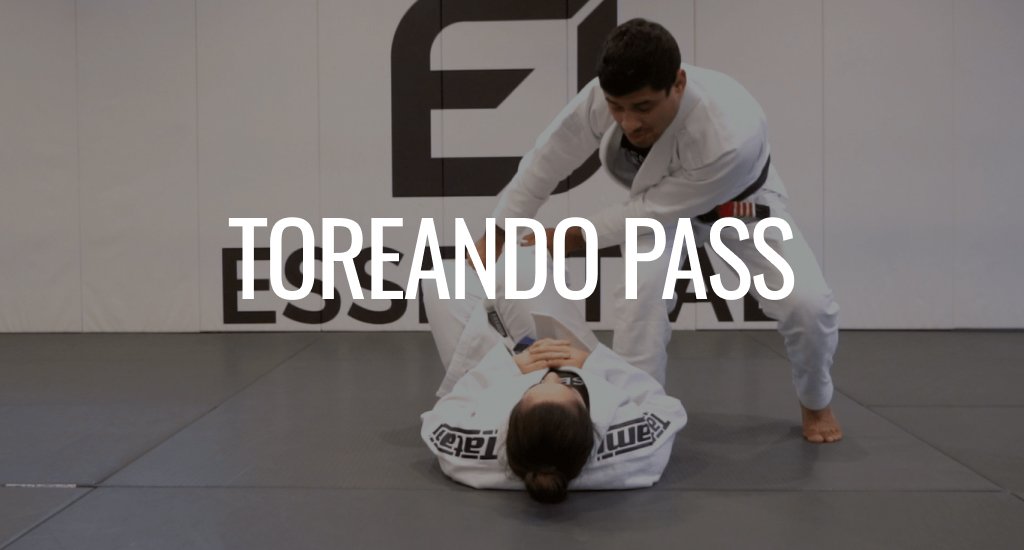
Toreando Pass: The Bullfighter Technique That Beats Modern Guards
By BJJ Sportswear Editorial Team
Reviewed by competitive black belts specializing in movement-based passing systems | Last Updated: January 11, 2026
The Toreando Pass—also called the bullfighter pass—stands as Brazilian Jiu-Jitsu’s most dynamic and explosive guard passing technique. While the knee slice pass dominates through pressure and control, the toreando wins through speed, angles, and misdirection.​
According to BJJ Fanatics’ toreando breakdown, this pass is one of the most simple and effective techniques that works in both gi and no-gi grappling. The name comes from bullfighting—mimicking the motion a matador makes when a bull charges, using quick footwork to pivot and redirect energy.​
Evolve MMA’s toreando analysis emphasizes that this speed-based pass relies on quickly misdirecting the opponent’s energy, using angles and explosiveness to blow past the guard. The toreando became popular in the 1990s when grapplers started using standing passes to open closed guard.​
After coaching hundreds of students and using toreando extensively in competition, I’ve found it’s the perfect complement to pressure passing. When opponents defend heavy pressure well, the toreando’s quick direction changes catch them off guard. When they defend toreando effectively, switch to pressure passing. This alternating strategy keeps opponents guessing.
Whether you’re a blue belt building movement skills or a brown belt refining competition strategies, learning toreando mechanics gives you the speed-based passing foundation that works against any guard style, particularly the modern guards covered in previous articles.

Table of Contents
What Is the Toreando Pass?
The toreando pass happens when the standing passer controls the opponent’s legs (at ankles or knees), uses explosive footwork to move laterally past their guard, and finishes in side control, knee on belly, or back position.​
Core Toreando Parts:
- Standing position above opponent’s open guard
- Grip control on ankles, knees, or pants
- Explosive lateral movement (like matador dodging bull)
- Quick footwork stepping past hip line
- Leg kickback and pivot creating quarter-turn motion
- Finish in dominant position (side control, knee on belly, or back)
The technique gets its name from bullfighting—the matador’s last-minute leg kickback allowing him to pivot as the bull charges past. Your footwork mirrors this motion exactly.​
Understanding what is guard in BJJ helps you see why movement passing differs from pressure passing—it’s about going around rather than through.

The Evolution: From 1990s Innovation to Modern Staple
The Standing Pass Revolution
The toreando came into favor when grapplers started using standing passes to open closed guard in the 1990s. After opening closed guard, grabbing the opponent’s legs became a natural option. Since toreando starts by controlling legs, it became the logical follow-up.​
Historical Context:
- Before 1990s: Most passing happened from knees/combat base
- Closed guard dominated competition
- Standing to open guard created new passing opportunities
- Leg control from standing led to toreando development
The position emerged from necessity—once you’re standing and controlling legs, why drop back to knees? Just circle around and pass.
Roberto Magalhaes vs. Fabio Gurgel (1996)
The toreando was first highlighted during the match between Roberto Magalhaes and Fabio Gurgel in 1996.​
The Matchup:
- Roberto Magalhaes:Â Known for whimsical, unpredictable open guard game
- Flexible guard work notoriously difficult to crack
- One of the most defensive guards in BJJ at that time
Fabio Gurgel neutralized Roberto’s guard using the toreando pass. He passed one of the era’s best guards by going around the legs instead of trying to force through them. This match proved toreando’s effectiveness against elite-level guard players.​
Modern Champions Using Toreando
Contemporary competitors who built games around toreando:
Elite Toreando Practitioners:
- Leandro Lo – Legendary competitor with lightning-fast toreando
- Gordon Ryan – No-gi GOAT using systematic toreando approach
- Gui Mendes – Technical precision with angle management
- Lucas Lepri – Combining toreando with pressure passing
- Lachlan Giles – Analytical approach to toreando systems
The position evolved from basic standing pass to sophisticated movement system that world champions use as primary weapon.
Understanding how closed guard works helps you see why standing to pass became so important.
Why the Toreando Works: Key Advantages
Speed-Based vs. Pressure-Based Passing
There are two main passing styles in BJJ:​
Pressure-Based Passes:
- Focus on pinning hips and neutralizing legs
- Use weight to slowly move past legs
- Favor bigger and heavier grapplers
- Examples:Â Knee slice, smash pass
Speed-Based Passes:
- Rely on quickly misdirecting opponent’s energy
- Use angles and explosiveness to blow past guard
- Favor smaller and more agile grapplers
- Examples: Toreando, leg drag, x-pass
The toreando is the fundamental speed-based pass. Although initial entry is speed-based, you can switch to pressure-based approach when fighting to control hips, arms, and head.

Universal Applicability
The toreando works everywhere:​
Gi Competition:
- Pant grips at ankles or knees
- Works against all modern guards
- Legal at all belt levels
- Quick pass scoring 3 points
No-Gi and Submission-Only:
- Ankle or knee control without gi
- Even faster without friction
- Works in ADCC and all formats
- Creates scrambles favoring aggressive passers
MMA Use:
- Standing position defends strikes
- Quick pass limits bottom player’s offense
- Creates top position rapidly
- Better than slow pressure passes in MMA
This flexibility explains why everyone from white belts to world champions use toreando.​
Beating Modern Guards
The toreando specifically defeats positions covered in previous articles:
Against De La Riva Guard
- Standing position makes DLR hook less effective
- Quick lateral movement defeats hook’s off-balancing
- Throwing legs to side forces them to abandon DLR
- Speed prevents berimbolo entries
Against Reverse De La Riva
- Standing eliminates RDLR’s inside hook effectiveness
- Lateral movement escapes their hook range
- Speed prevents them recovering guard
- Going around bypasses their defensive structure
Against Single Leg X Guard
- Explosive movement prevents SLX establishment
- Quick direction changes stop their sweeps
- Going around legs avoids leg entanglements
- Speed favors top player in scrambles
Understanding half guard helps because toreando sometimes forces half guard situations you must navigate.
The Movement Principle
Quick lateral movement and direction changes separate effective toreando from failed attempts:
Key Movement Ideas:
- Never stay in one place—constant motion
- Change directions explosively
- Use their push/pull reactions against them
- Small quick steps beat big slow movements
- Footwork more important than grips
I tell students: “The toreando is like being a matador. Don’t fight the bull head-on—dodge and redirect.”
Core Toreando Mechanics and Setup
Getting Started
The foundation starts from standing position:
Standing Guard Position
- Both feet planted, staggered stance
- Hips back (don’t lean over opponent)
- Hands ready to control legs
- Balance and mobility maintained
- Weight on balls of feet (ready to move)
Critical Preparation: If you’re in closed guard, you must open it and stand up first. The toreando requires standing position to work.​
Standard Toreando Grip Options
Different grips create different toreando variations:
Ankle Grips (Old School)
- Both hands grip opponent’s ankles
- Controls their feet and lower legs
- Easiest grip for beginners to learn
- Allows throwing legs to side
Knee Grips (Modern)
- Both hands grip below opponent’s knees
- Controls entire leg more easily
- Allows lifting tailbone off mat
- Better control than ankle grips
BJJ Fanatics notes: Knee grips work better because you’re closer to their body, giving better leg control.​
Shin/Pant Grips
- Grips on shins or pants near knees
- Works gi and no-gi (with modifications)
- Allows push-pull mechanics
- Most versatile grip option
In my experience, blue belts should start with ankle grips, then progress to knee grips as they develop better movement skills.
Footwork Fundamentals
Footwork is more important than grips in toreando passing:
Essential Footwork Rules
- Small outside step first – Don’t cross your feet yet
- Big cross step past hip line – This is critical
- Pivot so knee points to far hip – Creates passing angle
- Stay on balls of feet – Never flat-footed
- Immediate recovery – Ready to change directions
Critical Detail: When you cross step, step PAST their hip line. Stepping to the hip line puts no pressure. Stepping past it puts them in real danger of getting passed.​
Step-by-Step Toreando Execution
Variation 1: Old School/Traditional Toreando
The basic version grapplers drill in warmups:​
Traditional Toreando Steps
- Stand in opponent’s open guard
- Grip both ankles with strong grips
- Use misdirection by throwing legs to one side
- Circle to opposite side as legs go
- Drop into knee on belly position
- Secure position and advance
Why It Works: You’re using their legs’ momentum against them. As legs fly one way, you go the other.​
Limitation: At high-level BJJ (especially world championships), most grapplers are skilled in guard retention and can defend this basic version.​
Variation 2: Force Legs to Floor, Circle, Pin With Shoulder
Modern improvement on traditional toreando:​
Execution Sequence
- Grip below opponent’s knees (not ankles)
- Push opponent forward to gather momentum
- Move feet and hips backward when they push away
- Drag their feet to floor
- Circle to the side quickly
- Drop shoulder to opponent’s belly (like throw-by pass)
- Stay up on toes maintaining pressure
- Switch grips to head and secure side control
Why It Works: Uses push-pull reaction to create momentum, then capitalizes with quick direction change.​
Problem: Opponent can wrestle up once you force legs to floor, or enter spider/lasso guard from knee grips.​
Variation 3: Push and Pull Toreando
Mechanics
- Grab knee with inside grips (or near shins)
- Push opponent’s hips to one side
- Simultaneously push far leg down
- This forces hips and body to turn
- Exposes back when this happens
- Take back or complete pass
Tactical Use: When opponent has good guard retention, force them to turn and expose back instead of fighting for traditional pass.​
Understanding rear naked choke helps when back exposure happens during toreando.
Variation 4: Steering Wheel to North-South
Best when opponent balls up:​
Setup and Finish
- Opponent starts using grips, entering lasso/spider
- Control both knees with strong grips
- Perform steering wheel motion (turning wheel)
- This puts you into north-south position
- Drop head into opponent’s belly
- Deny their frames and secure position
Why This Works: When they defend traditionally, the steering wheel motion breaks their structure and forces different position.​
Variation 5: Toreando With One Hand on Hip
Execution
- Double v-grip on opponent’s shins
- Move one grip to their hip
- Circle to the side using hip control
- Maintain hip and shin grip throughout
- Crash in to get side control
- Prevent them going back to guard
Advantage: Hip control prevents them re-establishing guard as effectively as double leg control.​
Gordon Ryan’s Systematic Toreando
Gordon Ryan—widely considered the greatest no-gi grappler ever—uses highly systematic toreando approach:
Gordon’s Footwork Emphasis
The footwork is the most important element, not the grips.​
Gordon’s Footwork Sequence
- Small outside step with left foot
- Big cross step with right foot PAST partner’s hip line
- Pivot so knee points toward partner’s far hip
- Immediately recover ready to move opposite direction
- Repeat creating constant pressure
Critical Teaching Point: “The second I step past Dominic’s hip line, now he’s in real jeopardy of having his guard passed”.​
The Hip Line Concept
Every time you pass from one side to the other, immediately get past their hip line and get ready to pass.​
Why It Matters:
- Stepping to hip line = no pressure
- Stepping past hip line = massive pressure
- Forces them to pull knees to chest (exhausting)
- Creates abdominal strain they can’t maintain
This concept separates effective toreando from ineffective attempts.
Touch and Go Grip Philosophy
Gordon teaches: “I touch and I go. I just grab the ankles and I throw”.​
Don’t Hold Static Grips:
- Grip, move, release if needed
- Constant motion more important than death grips
- Adjust grips based on their reactions
- Flow between variations seamlessly
Elite passers play “footwork game” where every direction change creates passing opportunity.​

Defending the Toreando
Core Defensive Principle: Don’t Over-Rely on Frames
Keenan Cornelius teaches that putting too much faith in frames can prove costly when defending toreando.
The Problem with Hip Frames:
- Double frame on opponent’s hip creates pivot point
- Instead of blocking, it creates pivot for them to circle
- Overstretched posts are weak structurally
- More they circle, more your arms bend
- Eventually they drop hip and close distance to pass
Better defensive options exist beyond simple framing.
Defense 1: The Old Stiff Arm
Creating distance control:
Mechanics:
- Post foot on their hip or thigh
- Create stiff arm extension
- Prevents them closing distance
- Allows time to recover guard
- Better than bent-arm frames
Defense 2: Knee Frame to Technical Standup
Either regain guard or stand up:
Execution:
- Create knee frame as they circle
- Use frame to either recover guard
- Or technical standup to standing position
- Choice depends on situation
- Both options better than getting passed
Defense 3: Worm Guard
Using lapel to trap their movement:
How It Works:
- Your leg fastened between you and opponent using lapel
- Any wild lateral movements become futile
- No matter how fast or strong, can’t complete pass
- Must remove leg from lapel tangle first
Worm guard turns toreando’s speed advantage into weakness—movement gets them more tangled.
Defense 4: Squid Guard
Worm guard’s evil twin:
Mechanics:
- Similar fundamental grip to worm guard
- Controls opponent in multiple movement planes
- Becomes toreando passer’s worst nightmare
- Multidimensional control stops lateral movement
Defense 5: Wrestler’s Switch
Counter-attack option:
Setup:
- As they commit to one side
- Switch your hips underneath
- Come up on single leg or take their back
- Offensive defense rather than passive
I teach students: Against good toreando passers, passive defense fails. You must create offensive counters.
Training Toreando by Belt Level
For White Belts: Building Basics
White belts should master fundamental toreando before variations:
Beginner Priorities
- Learn standing guard posture and balance
- Practice old school ankle grip version
- Develop basic footwork (step and circle)
- Study one direction first, then add switching
- Drill slow and controlled repetitions
Resources about first BJJ class expectations help beginners understand passing progression.
Training Tip: Practice footwork without partner first. Master the movement pattern before adding resistance.
For Blue Belts: Building Systems
Blue belts develop complete toreando systems:
Intermediate Development
- Master multiple grip options (ankle, knee, shin)
- Study all five main variations
- Learn to chain toreando with other passes
- Develop explosive movement (speed training)
- Practice both gi and no-gi versions
Exploring blue belt development goals helps structure toreando integration.
For Purple/Brown Belts: Refinement
Advanced practitioners perfect details:
Advanced Focus
- Develop personalized toreando based on body type
- Study elite practitioners (Leandro Lo, Gordon Ryan, Gui Mendes)
- Create seamless transitions when toreando fails
- Perfect footwork (minimal steps, maximum effect)
- Understand when NOT to use toreando
- Combine with pressure passing systems
At this level, your toreando should feel effortless. Quick, efficient, explosive when needed.
For Black Belts: Teaching and Innovation
Black belts refine and teach:
Master Level
- Develop signature variations
- Teach footwork to students effectively
- Create counter-strategies for modern defenses
- Perfect invisible movement (looks effortless but devastates)
- Adapt toreando to opponent’s specific game
Competition Strategy and Uses
IBJJF Gi Competition
Toreando thrives in points-based gi:
Strategic Advantages
- Guard pass = 3 points (major score)
- Quick execution limits opponent’s offense
- Works against all modern guards
- Chains with knee on belly (extra 2 points)
- Time-efficient scoring opportunities
Competition Reality: When time is running out and you need quick points, toreando provides fastest passing option.
ADCC and No-Gi
Toreando dominates no-gi formats:
No-Gi Advantages
- Faster execution without gi friction
- Ankle/knee control without grips
- Works perfectly in overtime situations
- Gordon Ryan uses extensively
- Creates scrambles favoring aggressive style
MMA
Toreando appears constantly in MMA:
MMA Advantages
- Standing position defends strikes
- Quick pass limits damage from bottom
- Creates top position for ground-and-pound
- Better than slow pressure passes under strikes
- Works in cage situations
Self-Defense: The toreando’s standing position and quick execution make it safer than ground-based passing in real confrontations.
Common Toreando Mistakes
Not Stepping Past Hip Line
The #1 technical error:
The Problem
- Stepping to hip line instead of past it
- Creates no pressure on opponent
- Easy for them to recover guard
- Wastes explosive energy
The Solution
- Every step must go PAST their hip line
- Think “step deep, not short”
- Knee points to their far hip after step
- Create real passing danger with each movement
Static Footwork
Standing in one place:
Issue
- Staying stationary lets them set grips
- Can’t create misdirection without movement
- Opponent has time to defend
- Pass becomes predictable
Correction
- Constant motion and direction changes
- Never stay in same spot more than 1-2 seconds
- Use their reactions to change directions
- Flow like water around obstacles
Death Gripping
Holding grips too long:
Problem
- Static grips telegraph your intentions
- Wastes energy fighting grip battles
- Slows down explosive movement
- Makes pass predictable
Fix
- Touch and go grip philosophy (Gordon Ryan method)
- Grip when needed, release when not
- Focus on footwork over grip strength
- Flow between grips based on reactions
Fighting Lost Positions
Forcing toreando when clearly defended:
Issue
- Opponent has perfect defensive grips
- You’re fighting uphill battle
- Better options available
- Wastes time and energy
Better Approach
- Recognize when toreando is blocked (2-3 seconds)
- Transition to knee slice or other pass
- Chain passes fluidly
- Alternate between speed and pressure passing
Elite passers alternate between toreando and pressure passing. This keeps opponents guessing and unable to settle into defensive patterns.
The Toreando Legacy: Speed That Never Gets Old
From the 1990s standing pass revolution to Gordon Ryan’s systematic no-gi dominance, the toreando pass represents BJJ’s most dynamic and explosive passing technique. What makes it special isn’t complexity—it’s the simple footwork and movement principles that work for everyone willing to develop speed and agility.
Fabio Gurgel used it to defeat Roberto Magalhaes’ legendary guard in 1996. Leandro Lo used lightning-fast toreando to win multiple world championships. Gordon Ryan uses systematic toreando to pass the world’s best guards. And forty years from now, grapplers will still be using it because the movement principles are timeless.
The toreando shows a fundamental BJJ truth: you don’t always need to go through obstacles—sometimes going around is smarter. The matador doesn’t fight the bull head-on. He uses angles, speed, and misdirection to win.
Whether you’re a white belt learning your first movement pass or a black belt competing at world championships, the toreando gives reliable passing mechanics that work against any guard, in any context, under any rules. It’s the perfect complement to pressure passing systems.
Mastering toreando fundamentals creates the foundation for all movement-based passing—from basic standing passes to advanced systems that defeat De La Riva guard, Reverse De La Riva, and Single Leg X variations that define modern competition.
How We Reviewed This Article
Editorial Standards: Technical information verified through instructional content from Gordon Ryan, Leandro Lo, Gui Mendes, and current movement passing specialists. Mechanical analysis reviewed by competitive black belts using toreando in tournament settings. Strategic applications based on IBJJF, ADCC, and MMA competition footage (1996-2025).
Sources Referenced:
- Gordon Ryan systematic toreando approach
- Leandro Lo competition footage
- Gui Mendes and Rafael Mendes passing systems
- BJJ Fanatics toreando technical breakdown
- Evolve MMA toreando analysis and variations
- Keenan Cornelius defensive strategies
- Historical match analysis (Magalhaes vs. Gurgel 1996)
Last Updated: January 11, 2026