
On This Page
Editorial Standards
Reviewed by the BJJ Sportswear Editorial Team for technical accuracy and kept current.
Toreando Pass: Master the "Bullfighter" Pass in BJJ
The Toreando pass runs on speed and angles instead of pressure. Here is the classic throw-by, the modern Leandro Lo variation, and how to chain it into your other passes.
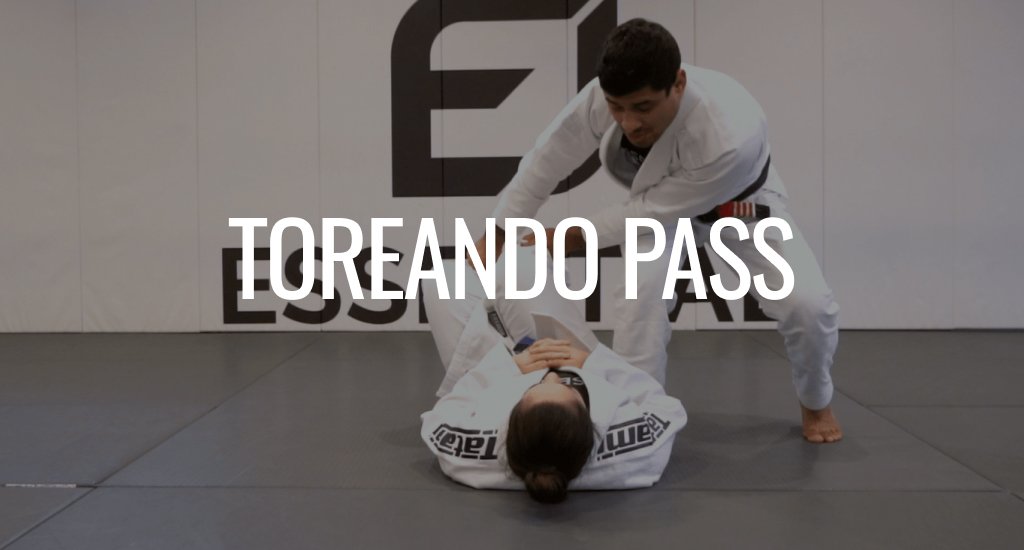
The Toreando pass, often called the Bullfighter pass, is one of the fastest guard passes in Brazilian Jiu-Jitsu. Pressure passes grind an opponent down slowly. The Toreando runs on speed, angles, and misdirection instead.
It was the signature weapon of the late Leandro Lo. He used a relentless, pressuring version of the Toreando to dominate the featherweight and middleweight divisions for a decade. This guide breaks down the mechanics of the pass, Leandro Lo's modern variation, and how to chain it into other passes like the knee slice.
What Is the Toreando Pass?
The name "Toreando" comes from the Spanish word for bullfighting. A matador redirects a charging bull with a cape. You redirect your opponent's legs the same way, to clear a path to side control.
- The grips. You control the opponent's pants, usually at the knees or shins in the gi. In no-gi, you cup the shins or ankles instead.
- The motion. You push one leg down and pull the other up in a steering-wheel motion, or throw both legs to one side at once.
- The finish. You step around their guard and drop your shoulder onto their chest to secure the pin.
The goal is always the same. Disconnect your opponent's knees from their chest. Do that, and they cannot reconnect their guard before you land in side control.
The Leandro Lo Variation (Modern Style)
The old-school Toreando meant throwing the legs and running around to the side right away. Leandro Lo changed the game by adding pressure to that speed. His version punished opponents who tried to sit up, not just the ones who stayed still.
The Active Post Concept
Instead of throwing the legs and hoping to win the race around the corner, the active post version works off a read:
- Stiff arm. Lock your arms straight. Put your full weight into the grips on the knees, not into bent elbows.
- Step in. Step deep between your opponent's legs. Keep your arms stiff and your base wide.
- Read the reaction. If they push back against your posts, throw their legs to the side and finish the classic Toreando. If they don't push back, drive your knee down to the mat instead and finish with a knee slice pass.
That read is what separates a modern Toreando from the old-school version. You are no longer locked into one outcome before you even touch your opponent's legs.
Step-by-Step: The Classic Throw-By
Learn this fundamental version first. Add the active post refinements once it feels automatic.
- Grips. Grab the inside of both knees in the gi, or cup the shins in no-gi.
- Step back. Take a small step back to straighten your opponent's legs. This removes any bend they could use to recover.
- The throw. Push their legs hard to your left while you step to your right. Move your hands and feet together.
- The drop. As you clear their legs, drop your left shoulder onto their sternum. This stops them from turtling or recovering guard.
Chaining Attacks: The "One-Two" Punch
The Toreando rarely works on the first try against a skilled opponent. Chain it into a second pass instead, so your opponent has to solve two problems, not one.
- Toreando to knee slice. Fake the throw to one side. When they open their legs to recover, drive your knee into the middle for a knee slice pass instead.
- Toreando to leg drag. If they kick a leg across your body to stop the throw, catch that leg. Drag it across into a leg drag pass.
- Toreando to stack. Against a flexible opponent who keeps resetting the angle you're trying to beat, abandon the race entirely and fold their hips into a stack pass instead.
Troubleshooting: Common Mistakes
Mistake 1: Bent Arms
Bent elbows let your opponent break your grips. Worse, they can use the slack to pull you into a guard like spider guard.
The fix: Keep your arms straight and stiff, like steel rods, from the moment you take the grips.
Mistake 2: Leaving Your Hips Behind
If you throw the legs but leave your feet planted, your opponent's legs simply recover before you clear them.
The fix: Your feet must move with your hands. Think "throw and go," not "throw, then go."
Mistake 3: Landing Too High
Land high on your opponent's chest, and they can bridge and roll you before the pin settles.
The fix: Land hip-to-hip, or drop your shoulder low. Keep your weight heavy through their chest.
Frequently Asked Questions
Is it Toreando or Toreada?
Both spellings show up in the BJJ community. "Toreando" is by far the more common one. "Toreada" sits closer to the original Portuguese usage, but either spelling gets the point across on the mats.
Does the Toreando pass work in no-gi?
Yes. Without pants to grab, you cup the shins or ankles instead of gripping fabric. That grip is harder to hold, so you need to move faster and commit sooner than you would in the gi.
Is the Toreando pass good for beginners?
Yes, though the footwork takes reps to feel natural. Beginners usually start with the classic throw-by. Add Leandro Lo's active-post reads once the steering-wheel motion and the drop to side control feel automatic.
Conclusion
The Toreando pass teaches the value of footwork and loose, evasive passing. That makes it the perfect complement to heavy pressure passes like the knee slice. Drill the side-to-side steering-wheel motion until your feet move without thinking. Then start layering in Leandro Lo's active post to punish opponents who try to sit up and recover guard.
Tagged with:#toreando pass#bullfighter pass#guard passing#gi#no-gi
Frequently Asked Questions
Is it Toreando or Toreada?
Both are used. "Toreando" is the most common spelling in the BJJ community, though "Toreada" is technically closer to the original Portuguese usage.
Does the Toreando pass work in no-gi?
Yes. In no-gi you cannot grab the pants, so you cup the shins or ankles instead. It is a harder grip to hold onto, so you must move faster than you would in the gi.
Is the Toreando pass good for beginners?
Yes. Beginners typically start with the classic throw-by, then add Leandro Lo's active-post reads once the steering-wheel motion and the drop to side control feel automatic.
What is the biggest mistake in the Toreando pass?
Bending your arms when gripping the knees. Bent elbows let your opponent break the grip or pull you into an open guard like spider guard, so keep your arms straight and stiff throughout the pass.
Sources & Further Reading
About the Author
Mohsin AyubBJJ practitioner, 6 years — Gracie Barra
Founder & Editor, BJJ Sportswear
Mohsin has trained Brazilian Jiu-Jitsu for six years at Gracie Barra and has competed at IBJJF-affiliated tournaments. He writes about competition, gear, and athlete careers, and founded BJJ Sportswear to help grapplers find equipment and information they can trust.
- Six years training Brazilian Jiu-Jitsu at Gracie Barra
- Competed at IBJJF-affiliated tournaments
- Writes on BJJ competition, gear testing, and athlete careers
This article was last reviewed and updated on 2026-08-17.