
On This Page
Editorial Standards
Reviewed by the BJJ Sportswear Editorial Team for technical accuracy and kept current.
Leg Drag Pass: Angle-Based BJJ Passing Guide
The Mendes brothers changed modern guard passing with this one. It is built on angle and structure, not pressure or athleticism.
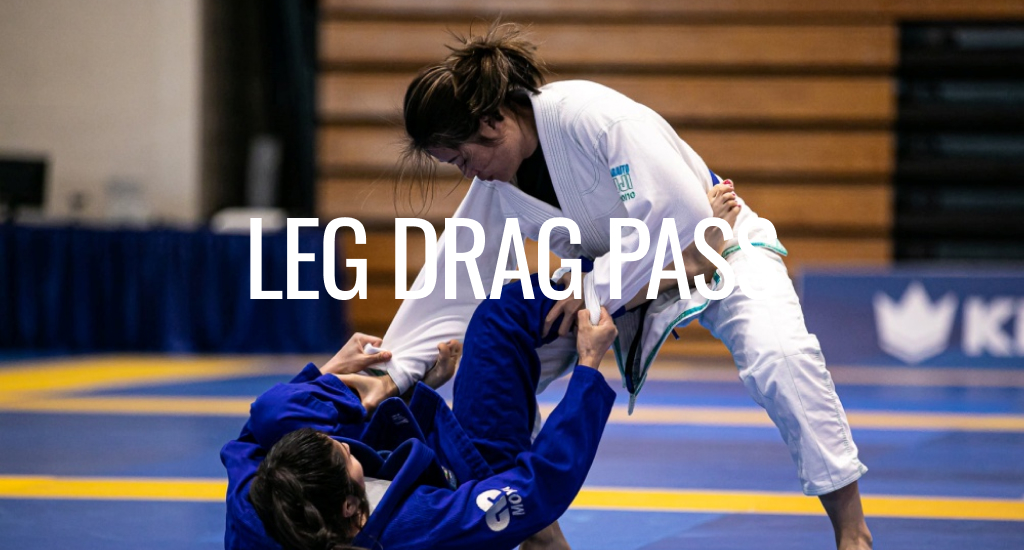
What the Leg Drag Pass Is
The leg drag is a passing technique built on angles, not pressure. You redirect one of your opponent's legs across their body, then pin it there. Their hips get twisted away from you. They can't recover guard from that position easily.
The Mendes brothers popularized this pass in the 2010s. It changed how modern competitors approach guard passing.
The Two Essential Steps
- Drag their leg across their centerline.
- Pin it against the mat with your hip and thigh.
That's the whole pass in structure. Everything else is detail and entry.
Common Entries
- From de la riva, when they extend a leg toward you.
- From standing, after breaking their grips.
- Off a failed toreando pass, redirecting instead of forcing.
Where the Pass Finishes
You have two main options once the leg is pinned. Settle into side control for a safe, high-percentage finish. Or step around toward their back if they turn away to defend. The second option scores more but needs sharper timing.
Common Mistakes
- Dragging without pinning, which lets them recover guard immediately.
- Standing too tall, giving them room to re-guard underneath you.
- Rushing to the back before the leg pin is secure.
For the guard this pass most often beats, see our de la riva guide. For a different passing approach, our knee slice pass guide covers the pressure-based alternative.
Tagged with:#leg drag#guard passing#competition
Frequently Asked Questions
Why does my opponent keep recovering guard after a leg drag?
You are likely dragging without pinning. The drag alone does nothing lasting. You need to trap the leg against the mat with your hip and thigh before moving on.
Should I finish the leg drag in side control or take the back?
Side control is the safer, higher-percentage finish. Taking the back scores more points but requires the opponent to turn away and demands sharper timing.
Does the leg drag pass work in no-gi?
Yes. You cup the ankle or shin instead of gripping the pants, and the same drag-and-pin structure carries over directly.
Is the leg drag pass legal at white belt?
Yes. It is a standard guard pass with no belt restriction under IBJJF rules and is taught from white belt onward.
Sources & Further Reading
About the Author
Mohsin AyubBJJ practitioner, 6 years — Gracie Barra
Founder & Editor, BJJ Sportswear
Mohsin has trained Brazilian Jiu-Jitsu for six years at Gracie Barra and has competed at IBJJF-affiliated tournaments. He writes about competition, gear, and athlete careers, and founded BJJ Sportswear to help grapplers find equipment and information they can trust.
- Six years training Brazilian Jiu-Jitsu at Gracie Barra
- Competed at IBJJF-affiliated tournaments
- Writes on BJJ competition, gear testing, and athlete careers
This article was last reviewed and updated on 2026-08-01.