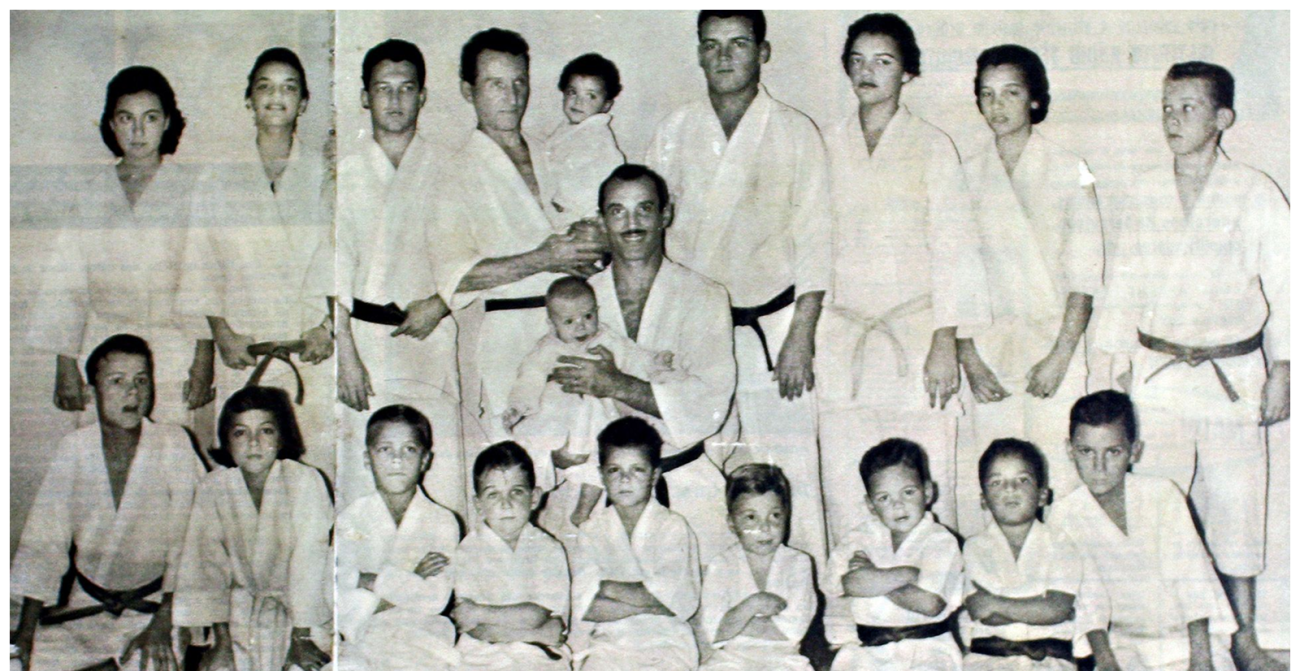
7 Powerful Lessons from the Gracie Family Tree for BJJ Success
By BJJ Sportswear Editorial Team
Honoring the legacy that built Brazilian Jiu-Jitsu | Last Updated: January 14, 2026
The Gracie family tree provides seven transformative lessons for BJJ practitioners: leverage conquers strength (Helio Gracie’s undersized frame defeating larger opponents through technique refinement), consistent challenge testing validates effectiveness (Carlos Gracie’s Vale Tudo matches against boxers and wrestlers from 1920s-1940s proved BJJ superiority), family unity multiplies impact (21 Gracie siblings spreading BJJ across Brazil and eventually worldwide), adaptability ensures survival (modifying traditional Japanese Judo into Brazilian Jiu-Jitsu for smaller practitioners), sharing knowledge accelerates growth (opening first Gracie Academy in 1925 rather than keeping techniques secret), proving effectiveness publicly builds credibility (Royce Gracie’s UFC 1 victory in 1993 demonstrating BJJ dominance), and multi-generational commitment creates lasting legacy (four generations from Carlos/Helio to modern Gracies maintaining family art).
BJJ Blog states: “Carlos Gracie Sr. learned Judo from Mitsuyo Maeda, teaching his four brothers what would later develop into Gracie jiu-jitsu or Brazilian jiu-jitsu—he opened the first Gracie Academy in 1925 in Rio de Janeiro, Brazil, and between Helio and Carlos’ children, an army of Gracie fighters was born ready to spread jiu-jitsu throughout the world”. Jiu Jitsu Brotherhood adds: “Helio Gracie competed against wrestlers, boxers, and other submission artists for several decades, firmly establishing the Gracie name in the world of combat arts—he was in his son Royce’s corner in 1993 when he shocked the world by winning UFC 1”.
Understanding the Gracie family’s journey from 1920s Brazil to global BJJ dominance reveals principles applicable to every practitioner’s personal journey: technical refinement over brute force enables smaller individuals to defeat larger opponents (fundamental BJJ philosophy), public demonstration builds confidence and reputation (challenge matches and competitions), teaching others reinforces personal mastery (opening academies and running classes), family or team support accelerates progress (training partners and mentorship), adaptation to changing environments ensures relevance (evolving from self-defense to sport), proving effectiveness through competition validates training methods (tournament success), and long-term commitment transcends individual achievement to create lasting impact (building BJJ into global martial art).
This comprehensive guide explores the Gracie family tree from founding fathers Carlos and Helio through modern descendants, extracts seven powerful lessons applicable to white belts through black belts, explains how these lessons shaped Brazilian Jiu-Jitsu philosophy, provides actionable applications for modern practitioners training in gi and no-gi, and demonstrates how family legacy principles apply to personal BJJ journey regardless of lineage.

Table of Contents
The Gracie Family Tree: Foundation of BJJ
Origins: From Scotland to Brazil
The official Gracie family tree: “The Gracie family story begins with George Gracie, who emigrated from Scotland to Brazil—it is his son Gastão Gracie, who was the father of Carlos Gracie”.
Family origins:
- George Gracie – Scottish immigrant to Brazil (late 1800s)
- Gastão Gracie – Son of George, father of Carlos (born 1878)
- Carlos Gracie Sr. – Patriarch of Brazilian Jiu-Jitsu (1902-1994)
- Helio Gracie – Technical innovator, Carlos’s brother (1913-2009)
The pivotal moment:
- 1914: Carlos Gracie (age 14) meets Mitsuyo Maeda
- Maeda: Japanese Judo champion traveling Brazil
- Teaches Carlos traditional Kodokan Judo techniques
- Carlos learns for several years before Maeda moves on
- 1925: Carlos opens first Gracie Academy in Rio de Janeiro
This is where Brazilian Jiu-Jitsu was born. 🥋
First Generation: The Founding Brothers
Carlos Gracie Sr. (1902-1994):
- Learned Judo from Mitsuyo Maeda (1914-1918)
- Taught brothers: Helio, George, Oswaldo, Gastão Jr.
- Opened first Gracie Academy (1925)
- Established “Gracie Challenge” tradition (1920s-1940s)
- Competed in Vale Tudo (no-holds-barred) matches
- Father of 21 children (many became BJJ masters)
Helio Gracie (1913-2009):
- Smaller, weaker than brothers (frail as child)
- Watched Carlos teach, couldn’t participate initially
- Modified techniques for smaller, weaker practitioners
- Created leverage-based system = modern BJJ
- Competed into his 40s against larger opponents
- Father of Royce, Rickson, Royler, Relson (UFC/ADCC champions)
Wikipedia states: “Carlos Gracie was credited with being one of the primary developers of Brazilian jiu-jitsu—along with his younger brother Hélio Gracie and fellow students Luis França and Oswaldo Fadda, he helped develop Brazilian jiu-jitsu based on the teachings of famed Japanese judōka Mitsuyo Maeda”.
George Gracie:
- Helped Carlos open first academy (1925)
- Competed in boxing, Vale Tudo, no-holds-barred
- Star pupil and emerging competitor
- Spread BJJ through competition victories
Second Generation: Global Expansion
Carlos Gracie Jr. (Son of Carlos Sr.):
- Founded Gracie Barra (1986) after brother Rolls died
- Grew Gracie Barra to 300+ academies in 10 countries
- Created structured curriculum and belt system
- Modernized BJJ competition rules
- One of most influential figures in sport BJJ evolution
Rolls Gracie (1951-1982):
- Jiu Jitsu Brotherhood: “Widely regarded as the father of modern BJJ, Rolls Gracie was born March 28, 1951—he was the son of Carlos Gracie but was raised by his uncle, Helio”
- Innovative technician, incorporated wrestling and Judo
- Trained many current BJJ legends before his death
- Died in hang gliding accident (1982) at age 31
- Legacy continued through Carlos Jr.’s Gracie Barra
Rorion Gracie (Son of Helio):
- Moved to United States (1978)
- Taught BJJ from garage in California
- Created UFC with Art Davis (1993)
- Brought Royce as family representative to UFC 1
- Instrumental in bringing BJJ to North America
Royce Gracie (Son of Helio):
- Wikipedia UFC success: “Despite being the smallest competitor, Royce was able to win all three of his matches at UFC 1, and was crowned champion—as more events were held, Royce would go on to win two more early UFC tournaments, bringing widespread attention to the family’s style of jiu-jitsu”
- Won UFC 1, 2, and 4 (1993-1994)
- Defeated opponents 50-100 lbs heavier
- Proved BJJ effectiveness to global audience
- Single-handedly popularized BJJ in North America
Rickson Gracie (Son of Helio):
- Considered by many as greatest Gracie fighter
- Undefeated in over 400 matches (claimed record)
- Won Japan Vale Tudo championships (1994-1995)
- Known for perfect technique and invisible jiu-jitsu
- Influenced modern BJJ philosophy profoundly
Third Generation: Modern Champions
Roger Gracie (Grandson of Carlos Sr.):
- 10x IBJJF World Champion
- Most decorated Gracie in competition history
- Known for fundamental, “basic” technique mastery
- Earns $400,000 annually from academy ownership
- Reference: Professional BJJ earnings
Renzo Gracie (Son of Robson, grandson of Carlos):
- MMA pioneer and BJJ champion
- Founded Renzo Gracie Academy network (worldwide)
- Trains UFC champions and top grapplers
- Known for fighting spirit and warrior mentality
Kyra Gracie (Great-granddaughter of Carlos):
- First female Gracie to compete at highest level
- Multiple-time World Champion
- Broke gender barriers in Gracie family tradition
- Promoted women’s BJJ globally
Fourth Generation: Carrying the Torch
Modern Gracies continue competing and teaching:
- Gregor Gracie (ADCC veteran)
- Ralek Gracie (founded Metamoris promotion)
- Neiman Gracie (Bellator MMA fighter)
- Clark Gracie (World Champion)
- Igor Gracie (MMA fighter)
Family tree now includes 100+ black belts across 4+ generations.
Lesson 1: Leverage Conquers Strength
Helio’s Transformation: Weakness into Philosophy
The origin story:
- Helio Gracie was frail and weak as teenager
- Couldn’t perform many traditional Judo techniques
- Watched Carlos teach, memorized sequences
- One day Carlos was late, Helio taught class
- Modified techniques to work without strength
- Created leverage-based system = modern BJJ
Gracie Family Legacy explains: “Helio was smaller and weaker than many of his opponents, so he focused on leverage, timing, and technique rather than brute strength—this approach made Jiu-Jitsu accessible to people of all sizes and ages, which is why it’s so effective for self-defense”.
Key innovations:
- Emphasized guard position (fighting from back)
- Refined defensive techniques (escapes, sweeps)
- Developed leverage-based submissions
- Perfected positional control over athleticism
Application for your training:
- Stop relying on strength in sparring
- Focus on proper angles and leverage
- Master defensive positions first
- Use technique to defeat larger training partners
- Reference: Will BJJ build muscle? – technique over strength
White belt application:
- Learn closed guard fundamentals
- Practice shrimping and bridging movements
- Master technical stand-up
Lesson 2: Test Your Skills Through Challenge
The Gracie Challenge: Proving Effectiveness
Carlos and Helio’s tradition (1920s-1960s):
- Issued open challenges to all martial artists
- Fought boxers, wrestlers, capoeira masters
- Competed in Vale Tudo (no-holds-barred) matches
- Publicized victories in newspapers
- Built reputation through competitive victories
Sol BJJ history: “The Gracie family gained recognition through challenge matches against practitioners of various martial arts in Brazil, showcasing the effectiveness of BJJ’s ground fighting techniques—in the 1920s, they established the first Gracie BJJ Academy, marking the birthplace of organized BJJ training”.
Famous Gracie Challenge matches:
- Helio vs Masahiko Kimura (1951) – Lost but showed courage
- Carlson Gracie vs Waldemar Santana (1955)
- Countless unnamed challengers defeated
Modern version: Competition
- IBJJF tournaments test technique
- ADCC tests no-gi skills
- Local competitions build confidence
- Sparring against different styles
- Reference: Competition earnings in professional BJJ
Application for your training:
- Compete at least 2-3 times per year
- Test skills against unfamiliar opponents
- Pressure-test techniques in sparring
- Accept challenge rolls from higher belts
- Train gi and no-gi both
Competition mindset:
- View losses as learning opportunities
- Challenge yourself regularly
- Document progress through competition results
- Build mental toughness through testing
Lesson 3: Family and Team Multiply Impact
The Power of 21 Siblings
Carlos Gracie Sr.’s family:
- Father of 21 children
- Taught all of them BJJ from childhood
- Each child became ambassador for art
- Spread BJJ across Brazil and world
- Created network effect for family art
BJJ Blog family impact: “Between Helio and Carlos’ children, an army of Gracie fighters was born, ready to spread jiu-jitsu throughout the world—and that’s exactly what they did”.
Second generation collaboration:
- Rorion brought BJJ to USA (1978)
- Carlos Jr. built Gracie Barra empire (300+ schools)
- Royce won UFC 1-4 showcasing family art
- Rickson dominated Vale Tudo in Japan
- Each contributed unique strength
Modern application: Your BJJ Team
- Train regularly with same teammates
- Help training partners improve (they help you)
- Create study groups for technique review
- Support teammates at competitions
- Build academy community
Team culture lessons:
- Consistency in training partners = faster growth
- Teaching others reinforces your learning
- Shared struggle creates bonds
- Community accountability keeps you training
- Reference: Finding your team through BJJ near me
Action steps:
- Attend open mats weekly
- Drill with consistent training partners
- Join competition teams
- Participate in academy events
- Build relationships beyond mat
Lesson 4: Adapt and Evolve the Art
From Judo to Brazilian Jiu-Jitsu
The transformation:
- 1914: Carlos learns traditional Kodokan Judo
- 1920s: Helio modifies for smaller practitioners
- 1930s-1950s: Vale Tudo testing refines techniques
- 1960s-1980s: Sport competition evolves ruleset
- 1990s: UFC proves effectiveness globally
- 2000s-2020s: Modern sport BJJ emerges
Key adaptations:
- Emphasized ground fighting over throws
- Developed guard position (not in Judo)
- Created leverage-based submissions
- Modified for self-defense scenarios
- Evolved sport competition rules
- Integrated wrestling and other styles
Rolls Gracie’s innovation:
- Incorporated wrestling takedowns
- Added Judo pins and control
- Experimented with different styles
- Created more athletic, dynamic BJJ
- Influenced modern sport approach
Modern evolution continues:
- Leg lock revolution (2010s-2020s)
- 50/50 guard innovations
- Lapel guard systems (worm guard, squid guard)
- Wrestling integration
- No-gi submission-only formats
Application for your training:
- Don’t be dogmatic about techniques
- Test new positions and guards
- Study modern innovators (Danaher, Lachlan Giles)
- Incorporate wrestling and Judo
- Adapt game to your body type
- Embrace gi vs no-gi both
Lesson 5: Share Knowledge Freely
Opening Academies vs. Keeping Secrets
Traditional martial arts approach:
- Keep techniques secret within family
- Restrict teaching to select students
- Guard knowledge jealously
- Limit spread of art
Gracie approach (revolutionary):
- 1925: Opened first public Gracie Academy
- Taught anyone willing to learn
- Published books and videos
- Created instructional materials
- Spread BJJ globally through teaching
Why sharing accelerated growth:
- More practitioners = more innovation
- Public academies = financial sustainability
- Teaching others = refined understanding
- Global spread = international competitions
- Knowledge sharing = faster evolution
Carlos Jr. and Gracie Barra:
- Created systematic curriculum (Fundamentals → Advanced)
- Franchised academy model (300+ schools)
- Standardized instruction quality
- Made BJJ accessible worldwide
Application for your training:
- Share techniques with training partners
- Help beginners learn fundamentals
- Create training notes/journal
- Post instructional content (if experienced)
- Teach when you reach purple belt
Teaching benefits you:
- Reinforces your technical understanding
- Identifies gaps in knowledge
- Develops communication skills
- Builds reputation and network
- Reference: Teaching income in professional BJJ
Lesson 6: Prove It Publicly
UFC 1: The Ultimate Test
November 12, 1993 – UFC 1:
- Rorion Gracie co-created UFC with Art Davis
- Tournament format: 8 fighters, one-night elimination
- Royce Gracie represented family (smallest fighter)
- Opponents: boxer, sumo wrestler, savate fighter, shootfighter
Wikipedia UFC 1 results: “Rorion’s younger brother Royce served as a combatant in the tournament, representing the family’s martial art—despite being the smallest competitor, Royce was able to win all three of his matches, and was crowned champion, bringing widespread attention to the family’s style of jiu-jitsu”.
Royce’s victories:
- Fight 1: Submitted Art Jimmerson (boxer) in 2:18
- Fight 2: Submitted Ken Shamrock (shootfighter) in 0:57
- Fight 3: Submitted Gerard Gordeau (savate) in 1:44
- Result: UFC Champion, BJJ validated globally
Impact:
- BJJ enrollment exploded in North America
- Every MMA fighter now trains BJJ
- Gracie family became legendary
- Public proof more powerful than any marketing
Modern application:
- Compete publicly to validate skills
- Post training videos (build credibility)
- Demonstrate techniques at seminars
- Earn medals/tournament results
- Build reputation through performance
Competition as proof:
- Tournament wins validate training
- Losses identify weaknesses
- Public performance builds confidence
- Results speak louder than claims
- Reference: BJJ competition culture
Lesson 7: Multi-Generational Commitment
100+ Years of Gracie Legacy
Timeline of commitment:
- 1914-1925: Carlos learns and teaches (11 years)
- 1925-1950s: First generation builds academies (25+ years)
- 1950s-1980s: Second generation expands globally (30+ years)
- 1980s-2010s: Third generation dominates sport (30+ years)
- 2010s-2026: Fourth generation continues (ongoing)
Four generations of excellence:
- Carlos/Helio – Created BJJ (1920s-1960s)
- Rolls/Rorion/Royce – Spread globally (1960s-1990s)
- Roger/Renzo – Dominated competition (1990s-2010s)
- Modern Gracies – Continue evolution (2010s-present)
Long-term thinking:
- Not about quick results
- Building lasting legacy
- Each generation improves art
- Commitment transcends lifetime
- Impact measured in decades
Application for your journey:
- White belt → Black belt = 10-15 years
- Reference: BJJ belt system timeline
- Think in years, not months
- Consistency over intensity
- Build skills incrementally
- Train for life, not just competition
Your personal legacy:
- How will you contribute to BJJ?
- Will you teach future generations?
- What techniques will you innovate?
- How will you improve the art?
Applying Gracie Lessons to Your BJJ Journey
For White Belts:
Lesson 1 – Leverage: Master basic techniques before strength
Lesson 2 – Testing: Compete at local tournaments within 6-12 months
Lesson 3 – Team: Build relationships with training partners
Lesson 4 – Adapt: Be open to different styles and instructors
Lesson 5 – Share: Help newer white belts learn basics
Lesson 6 – Prove: Track progress through competition and sparring
Lesson 7 – Commit: View BJJ as lifelong journey
For Blue/Purple Belts:
Lesson 1 – Leverage: Refine technique against stronger opponents
Lesson 2 – Testing: Compete in IBJJF Opens and regional tournaments
Lesson 3 – Team: Mentor white belts, build training partnerships
Lesson 4 – Adapt: Develop personal game, experiment with guards
Lesson 5 – Share: Start teaching fundamentals classes
Lesson 6 – Prove: Enter absolute divisions, test against all sizes
Lesson 7 – Commit: Dedicate 5-10 years to blue→brown belt
For Brown/Black Belts:
Lesson 1 – Leverage: Master efficiency, develop “invisible jiu-jitsu”
Lesson 2 – Testing: Compete at Worlds, ADCC, high-level events
Lesson 3 – Team: Build academy or teaching program
Lesson 4 – Adapt: Evolve with modern techniques, stay current
Lesson 5 – Share: Create instructionals, seminars, content
Lesson 6 – Prove: Establish competition record or teaching reputation
Lesson 7 – Commit: Build lasting legacy through students
The Bottom Line: Your Gracie Connection
You don’t need Gracie blood to apply Gracie principles:
✅ Use leverage – Not strength (applicable to everyone)
✅ Test yourself – Through competition and challenge
✅ Build community – Train with team consistently
✅ Adapt and evolve – Never stop learning
✅ Share knowledge – Teaching reinforces mastery
✅ Prove publicly – Compete and demonstrate skills
✅ Commit long-term – Think in decades, not months
The Gracie family built BJJ through these principles.
You can build YOUR legacy through the same approach.
Related resources:
- What is BJJ? – Understanding the art
- BJJ Belt System – Your journey
- Gi vs No-Gi – Training both
- Professional BJJ – Career paths
- BJJ Near Me – Finding your academy
Honor the legacy. Apply the lessons. Build your journey. 🥋🔥
OSS! 🙏
How We Reviewed This Article
Editorial Standards: Historical research from Gracie family sources, official timelines, competition records, and lineage documentation from multiple BJJ historians and family members.
Sources Referenced:
- Wikipedia (Gracie family history, Carlos Gracie biography)
- Jiu Jitsu Brotherhood (Gracie family first family analysis)
- BJJ Blog (Gracie family tree breakdown)
- Official Gracie family tree (gracie.com)
- Sol BJJ (Brazilian Jiu Jitsu history)
- Gracie Family Legacy (TPJJHNL)
- Renzo Gracie Academy (family teaching philosophy)
- Historical UFC and competition records
Last Updated: January 14, 2026

Pingback: 7 Harsh Truths: Why Blue Belts Quit BJJ
Pingback: What is IBJJF? Complete BJJ Federation Guide 2025
Pingback: 12 Proven Ways to Stay Consistent at Jiu Jitsu