
On This Page
Editorial Standards
Reviewed by the BJJ Sportswear Editorial Team for technical accuracy and kept current.
Is BJJ Good for Self-Defense? An Honest Look
BJJ is genuinely effective for self-defense in the scenario it was built for, but it is not a complete answer to every real-world threat. Here is the honest breakdown.
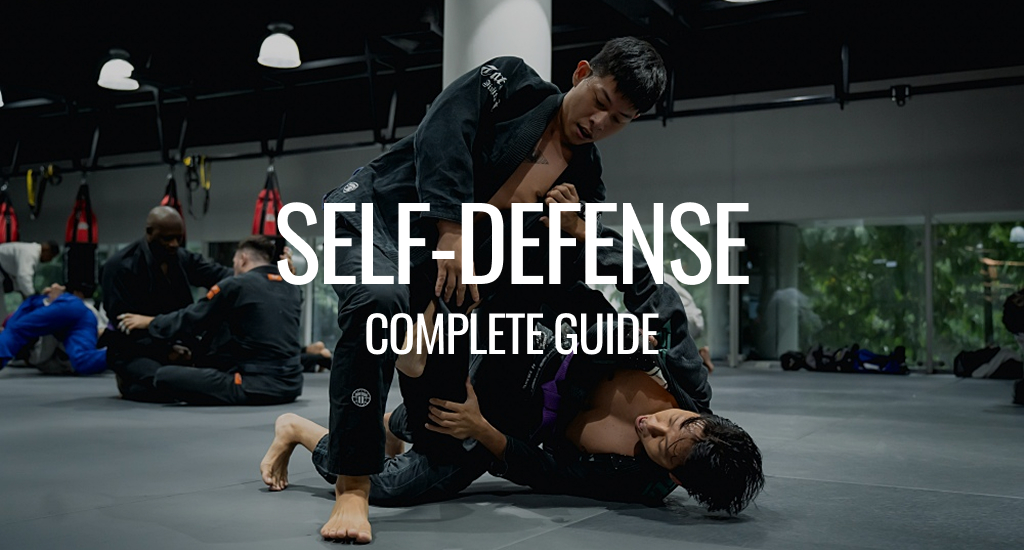
Yes, BJJ is genuinely effective for self-defense, particularly in the most statistically common real-world confrontation: a one-on-one, unarmed altercation. But it has real limits worth understanding honestly rather than assuming it covers everything.
Where BJJ Genuinely Excels
Most real-world physical altercations end up in a clinch or on the ground within seconds, whether the people involved intend that or not. BJJ trains exactly that scenario more thoroughly than almost any other martial art — controlling a resisting opponent, neutralizing their offense, and finishing a confrontation without relying on strikes. A practitioner with real BJJ training who ends up grabbed, tackled, or taken to the ground has a genuine, pressure-tested toolkit most untrained people simply don't have.
The live-sparring training method matters here specifically. Because BJJ techniques get tested against a fully resisting partner every class, the skills that survive training tend to actually work under real pressure — a meaningful difference from martial arts trained primarily through cooperative forms.
Where BJJ's Coverage Is Limited
Multiple attackers. BJJ's ground-control approach assumes a one-on-one situation. Staying on the ground against a second or third attacker is genuinely dangerous, and BJJ's sport-oriented rule set doesn't train for that scenario.
Weapons. BJJ training doesn't specifically address knife or firearm defense. Some schools incorporate weapon-awareness modules, but it isn't core to standard BJJ curriculum the way it is in some traditional martial arts.
Striking. Standard BJJ doesn't teach striking at all. In a situation where distance and striking defense matter before any clinch happens, that's a real gap compared to a striking-inclusive art or MMA-style cross-training.
Does Size Matter Less With BJJ?
Genuinely, yes, more than in most physical confrontations. BJJ's core premise — leverage and technique over raw strength — means a smaller, trained practitioner has a real, demonstrated ability to control and neutralize a larger, untrained attacker in a ground or clinch situation. This is one of BJJ's most consistently proven real-world advantages.
Frequently Asked Questions
Is BJJ enough for complete self-defense on its own? For the most common scenario — a one-on-one, unarmed confrontation — yes, it's genuinely effective. For multiple attackers or weapon-involved scenarios, it has real gaps that dedicated training in other areas would need to cover.
Does BJJ work for self-defense against a bigger, stronger attacker? Often yes — leverage-based technique is specifically designed to let a smaller, trained person control and neutralize a larger, untrained one, and this is one of BJJ's most reliably demonstrated real-world strengths.
How long does it take before BJJ is useful for self-defense? Functional self-defense-relevant skill typically develops within 6-12 months of consistent training, well before reaching any advanced belt level.
Should you learn striking in addition to BJJ for self-defense? It's a reasonable addition if your specific concern includes standing altercations before any clinch happens, since standard BJJ doesn't include striking training.
The Bottom Line
BJJ is a genuinely strong self-defense foundation for the most statistically common real-world scenario, with real, honest limits around multiple attackers and weapons. Most complete self-defense preparation benefits from BJJ's ground and clinch skills alongside awareness of what it doesn't cover.
Tagged with:#self-defense#bjj guides
Frequently Asked Questions
Is BJJ enough for complete self-defense on its own?
For the most common scenario — a one-on-one, unarmed confrontation — yes, it's genuinely effective. For multiple attackers or weapon-involved scenarios, it has real gaps that dedicated training in other areas would need to cover.
Does BJJ work for self-defense against a bigger, stronger attacker?
Often yes — leverage-based technique is specifically designed to let a smaller, trained person control and neutralize a larger, untrained one, and this is one of BJJ's most reliably demonstrated real-world strengths.
How long does it take before BJJ is useful for self-defense?
Functional self-defense-relevant skill typically develops within 6-12 months of consistent training, well before reaching any advanced belt level.
Should you learn striking in addition to BJJ for self-defense?
It's a reasonable addition if your specific concern includes standing altercations before any clinch happens, since standard BJJ doesn't include striking training.
About the Author
Mohsin AyubBJJ practitioner, 6 years — Gracie Barra
Founder & Editor, BJJ Sportswear
Mohsin has trained Brazilian Jiu-Jitsu for six years at Gracie Barra and has competed at IBJJF-affiliated tournaments. He writes about competition, gear, and athlete careers, and founded BJJ Sportswear to help grapplers find equipment and information they can trust.
- Six years training Brazilian Jiu-Jitsu at Gracie Barra
- Competed at IBJJF-affiliated tournaments
- Writes on BJJ competition, gear testing, and athlete careers
This article was last reviewed and updated on 2026-08-18.