
On This Page
Editorial Standards
Reviewed by the BJJ Sportswear Editorial Team for technical accuracy and kept current.
Starting BJJ at 30: Your Complete Guide
Starting BJJ at 30 puts you in good company — it is one of the most common starting ages. Here is what to actually expect, and how to train smart.
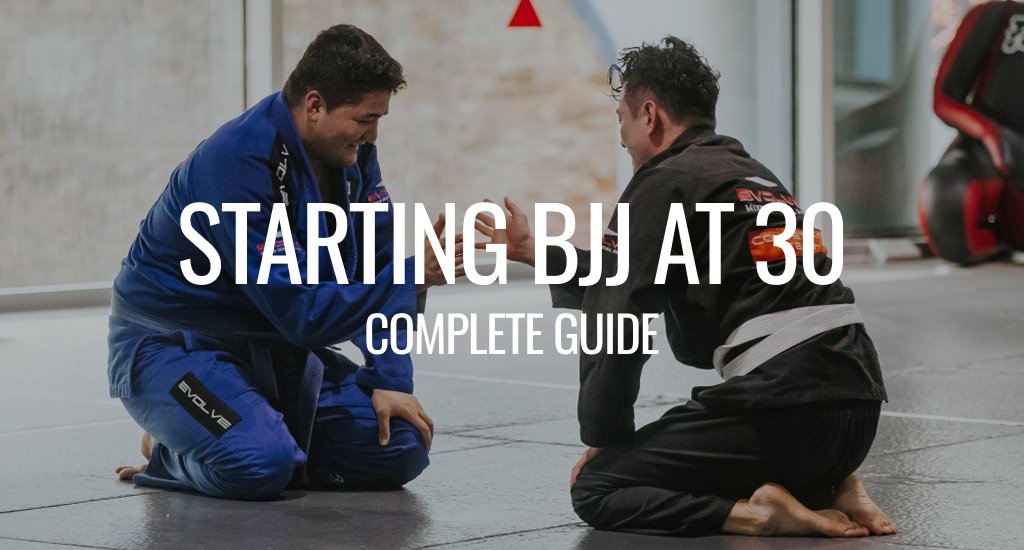
Thirty is one of the most common ages to start BJJ, not an unusual one. If you're worried you've "missed the window," you haven't — you're just starting alongside a large share of everyone else on the mats.
What's Different About Starting at 30
Recovery takes more deliberate management. Joints and connective tissue don't bounce back from hard training as fast at 30 as they did at 20, so warming up properly and not chasing every hard round matters more than it did for a younger training partner.
You bring more self-awareness. Most 30-year-old beginners handle the ego hit of getting tapped by smaller, less experienced people better than a typical teenager does — a real advantage during the humbling early months.
Your schedule is more constrained. Work and family commitments usually mean less flexible training time than a 22-year-old with an open schedule, which makes consistency (not raw hours) the metric that matters most.
How to Train Smart From Day One
- Prioritize a proper warm-up every single session — cold joints and hard sparring are a bad combination at any age, but the cost of skipping it compounds faster past 30.
- Tap early and often. There's zero reward for holding out an extra second, and injuries cost you far more training time than the ego hit of tapping does.
- Choose training partners with some care, especially early on — a training partner who goes too hard with a new 30-something beginner can turn a great first year into an injured, discouraging one.
- Add mobility work outside class, even just 10-15 minutes a few times a week — it pays off disproportionately for anyone starting BJJ later than their early 20s.
- Set a sustainable schedule, typically 2-3 times a week to start, rather than an ambitious 5-day plan that collides with real life within a month.
Can You Still Reach Black Belt Starting at 30?
Yes. The typical 8-12 year black belt timeline applies regardless of starting age — plenty of practitioners who started at 30 reach black belt in their early-to-mid 40s, following the exact same belt-by-belt path as someone who started at 20.
Frequently Asked Questions
Is 30 a bad age to start BJJ? No — it's one of the most common starting ages, and starting later doesn't meaningfully cap how far you can progress.
What should a 30-year-old beginner focus on differently than a younger student? Recovery management and a sustainable training pace matter more — proper warm-ups, tapping early, and choosing training partners thoughtfully all pay off more at 30 than they might at 20.
Can someone starting BJJ at 30 still reach black belt? Yes, on the same 8-12 year timeline as anyone else. Starting age doesn't change the belt progression system.
Is it harder to make friends starting BJJ at 30 compared to younger students? Not usually — most academies have a wide age range on the mats, and the shared experience of being a beginner tends to build community regardless of age gaps.
The Bottom Line
Thirty is a completely normal, common age to start BJJ. Manage recovery more deliberately than a 22-year-old might need to, keep your schedule sustainable, and the belt progression works exactly the same as it does for anyone else who starts.
Tagged with:#beginners#starting later#bjj guides
Frequently Asked Questions
Is 30 a bad age to start BJJ?
No — it's one of the most common starting ages, and starting later doesn't meaningfully cap how far you can progress.
What should a 30-year-old beginner focus on differently than a younger student?
Recovery management and a sustainable training pace matter more — proper warm-ups, tapping early, and choosing training partners thoughtfully all pay off more at 30 than they might at 20.
Can someone starting BJJ at 30 still reach black belt?
Yes, on the same 8-12 year timeline as anyone else. Starting age doesn't change the belt progression system.
Is it harder to make friends starting BJJ at 30 compared to younger students?
Not usually — most academies have a wide age range on the mats, and the shared experience of being a beginner tends to build community regardless of age gaps.
About the Author
Mohsin AyubBJJ practitioner, 6 years — Gracie Barra
Founder & Editor, BJJ Sportswear
Mohsin has trained Brazilian Jiu-Jitsu for six years at Gracie Barra and has competed at IBJJF-affiliated tournaments. He writes about competition, gear, and athlete careers, and founded BJJ Sportswear to help grapplers find equipment and information they can trust.
- Six years training Brazilian Jiu-Jitsu at Gracie Barra
- Competed at IBJJF-affiliated tournaments
- Writes on BJJ competition, gear testing, and athlete careers
This article was last reviewed and updated on 2026-08-18.