

Will BJJ Build Muscle? Real Results + How to Grow Faster
Yes—Brazilian Jiu-Jitsu can build muscle, especially if you’re a beginner, you train consistently, and you recover (sleep + food) well. It’s also common to gain “dense” functional muscle (grip, back, hips, core) more than bodybuilder-style size unless you add a simple lifting plan.
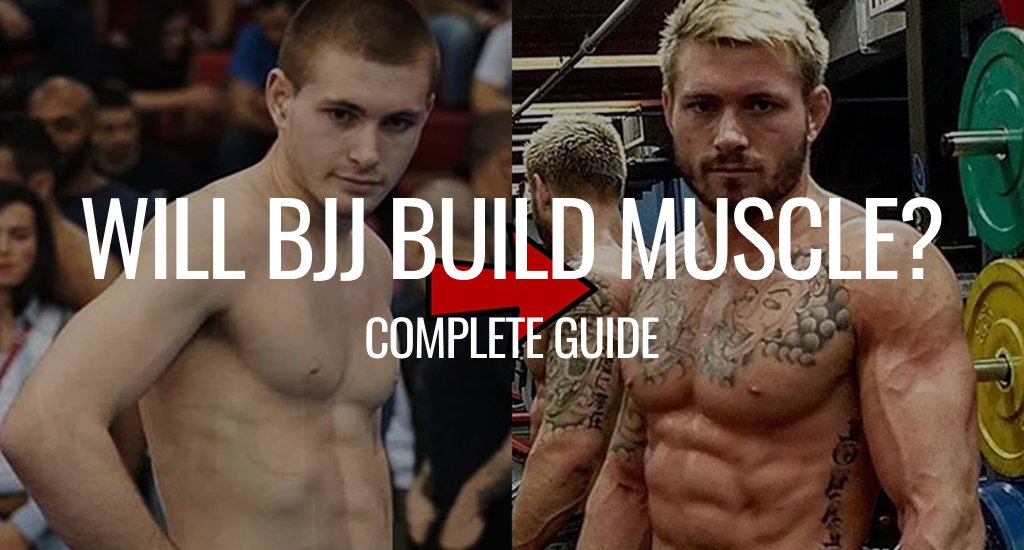
Table of Contents
What kind of muscle BJJ builds best
BJJ is loaded with pulling, squeezing, bracing, and explosive hip movement, so people usually notice growth and strength first in:
- Forearms and grip (gi grips, wrist fighting, clinch control)
- Upper back and lats (pulling posture down, controlling frames, finishing chokes)
- Core (guard retention, bracing under pressure, passing stability)
- Glutes/hamstrings (bridges, hip escapes, takedown drive)
- Shoulders/arms (underhooks, frames, posting, pummeling)
If you’re new, you may see changes in 8–12 weeks just from training and eating better. If you’re already strong or already lift, you’ll still get stronger in “BJJ-specific” positions, but size gains usually slow without progressive overload.
Why some people don’t gain muscle from BJJ
If you’re training hard but not getting bigger, it’s almost always one (or more) of these:
- You’re in a calorie deficit (BJJ burns a lot; many people under-eat without realizing it)
- Protein is too low
- Too many “death rolls,” not enough recovery
- Training is mostly endurance (lots of long rounds) without a strength stimulus
- You’re advanced and need a more intentional hypertrophy plan
BJJ is amazing for athleticism, but it’s not structured like a muscle-building program (progressive overload, planned volume, planned recovery).
The fastest way to build more muscle with BJJ
Keep BJJ as your sport, and add 2–3 days of lifting as “support training.”
ACSM’s progression models recommend using 1–12RM loads in a periodized way, with emphasis on the 6–12RM range for hypertrophy.
A widely used hypertrophy approach is moderate-to-heavy loads for multiple sets, commonly in the 8–12 rep range for many movements, with progression over time.
ACSM’s resistance-training progression guidance also highlights hypertrophy work often using roughly 6–12RM loading as part of a structured program.A review on loading recommendations notes that 8–12 reps per set at roughly 60–80% of your 1RM is commonly associated with hypertrophy-focused training.
A research review on loading recommendations explains the general pattern that heavier loads tend to maximize strength, while moderate loads with more reps tend to emphasize hypertrophy, with overlap depending on total volume and proximity to failure.
Simple 2-day lifting plan (works for most BJJ schedules)
Day A (Full body)
- Squat or leg press: 3×6–10
- Bench press or dumbbell press: 3×6–10
- Row (cable, dumbbell, or chest-supported): 3×8–12
- Split squat or lunge: 2×8–12
- Farmer carry: 3 short walks
Day B (Full body)
- Deadlift or trap-bar deadlift: 3×3–6
- Pull-ups or lat pulldown: 3×6–12
- Overhead press: 2–3×6–10
- Hamstring curl: 2×10–15
- Core bracing (plank/ab wheel): 2–3 sets
Practical rule: most of the time, stop with 1–2 reps “in the tank” so you can still roll well and avoid burnout.
How to schedule BJJ + muscle gains (without wrecking recovery)
A good “grow + still improve skill” weekly setup:
- 3–4 BJJ sessions (make 1–2 of them more technical/positional)
- 2 lifting sessions (the plan above)
- 1 full rest day (or active recovery)
If you want a beginner-friendly idea of what weekly training normally looks like inside a gym, use your class-structure guide as an internal hub link: BJJ classes.
If you’re starting later in life, recovery becomes even more important, so link this in your “recovery” section: starting at 30.
Nutrition for muscle (simple, realistic)
If you want visible muscle growth while training BJJ, you generally need:
- A small calorie surplus (or at least not a big deficit)
- Enough protein daily
- Enough carbs to support performance (because performance drives training quality)
Simple check: if your strength is dropping, you’re always sore, and your weight keeps falling, you’re probably not eating enough to build.
USA + Canada note: if you track bodyweight in pounds, it can help to think in both units for consistency (for example, 180 lb is about 82 kg). Keep it simple—consistency beats perfection.
What to expect: “BJJ-only” vs “BJJ + lifting”
If you only do BJJ:
You’ll likely get leaner, stronger, and more athletic, and beginners often add some muscle early on.
If you do BJJ + lifting 2–3x/week:
You’ll usually add muscle faster, look more “filled out,” and have more resilient joints/tendons for hard training.
A review on BJJ physical/physiological profiles discusses the sport’s demands and the relevance of strength/conditioning to support performance.
FAQ
Does gi build more muscle than no-gi?
Gi often creates more constant grip/isometric tension (forearms and upper back get lit up), while no-gi can be more scramble-heavy and conditioning-based. Both can build muscle; the best choice is the one you can train consistently.
Can BJJ replace the gym for hypertrophy?
It can for many beginners, but it’s less reliable than a progressive lifting plan. If size is a priority, 2 days of lifting is usually the highest ROI add-on.
What’s a good internal link for “progress and belts” sections?
Use your belt progression hub as the internal reference point: belt system.