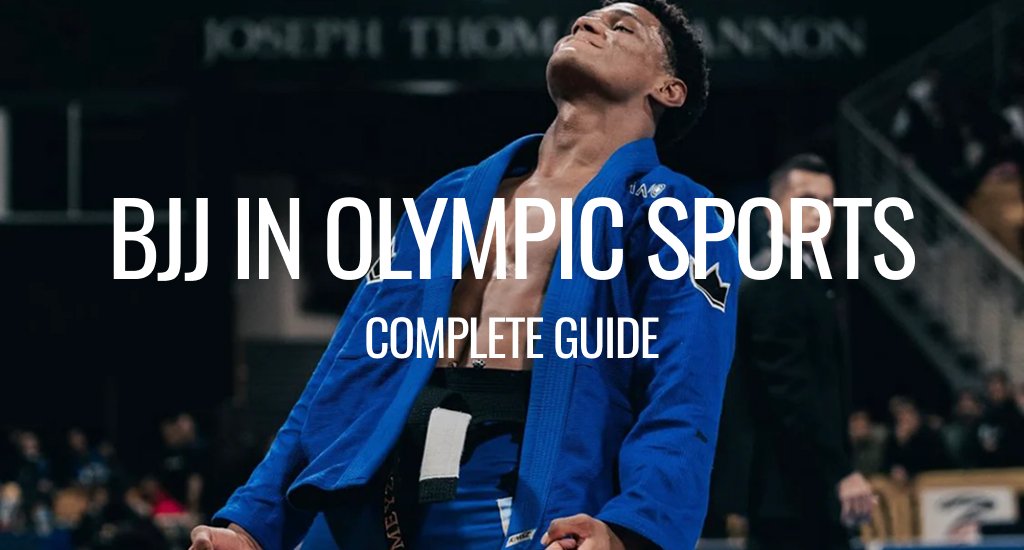
Is Brazilian Jiu Jitsu an Olympic Sport? Status and Future Outlook (2026)

Is Brazilian Jiu Jitsu an Olympic Sport? Status and Future Outlook (2026)

By BJJ Sportswear Editorial Team
Reviewed by black belts and Olympic sports analysts | Last Updated: January 14, 2026

No, Brazilian Jiu Jitsu is not currently an Olympic sport and will not appear in the 2028 Los Angeles Olympics. The main barriers preventing BJJ’s Olympic inclusion are the lack of a unified international governing body recognized by the International Olympic Committee (IOC), no standardized global ruleset (IBJJF, ADCC, UAEJJF, and other organizations use different rules and scoring systems), and significant overlap with Judo—which has been an Olympic sport since 1964 and already represents grappling arts in the Games. While efforts are underway through organizations like United World Grappling and the Ju-Jitsu International Federation (JJIF) to establish IOC-compliant governance and potentially include BJJ in future Olympics beyond 2028, the sport currently does not meet IOC requirements for international recognition, which mandate practice by men in at least 75 countries across four continents and women in at least 40 countries across three continents.​

MCW & MA explains: “For BJJ to reach Olympic status, IOC recognition is essential—as of now, a unified and IOC-compliant international governing body for BJJ is still in the development stage, and without collaboration between federations, the path to Olympic legitimacy remains rocky”. Elite Sports notes the fundamental problem: “Each BJJ organization has different rules—certain techniques allowed in no-gi are not permitted in gi, and some tournaments are submission-only with no scoring system, creating a major hurdle for IOC recognition”.​

This guide explains why BJJ is not currently in the Olympics, how it compares to Olympic Judo, what would need to change for future inclusion, the reality of 2028 Olympics prospects, and community concerns about whether Olympic status would benefit or harm the sport.

Is Brazilian Jiu Jitsu an Olympic Sport? Status and Future Outlook (2026)

Why BJJ Is Not in the Olympics

No Unified International Governing Body

Ronin Athletics identifies the primary barrier: “The number one reason why Brazilian Jiu-Jitsu is not in the Olympics is the lack of a cohesive international federation that governs and regulates the sport at the global level—the IBJJF is a private company, not an official international federation”.

Current BJJ organizational landscape:

IBJJF (International Brazilian Jiu-Jitsu Federation):

  • Largest BJJ competition organizer globally
  • Private company (not IOC-compliant federation)
  • Standardized gi and no-gi rules
  • Dominates competitive BJJ but lacks IOC recognition
  • Competitors train for guard passingguard retention, submissions

ADCC (Abu Dhabi Combat Club):

  • Premier no-gi grappling championship
  • Different ruleset than IBJJF (submission-only focus)
  • Held biennially
  • No governing body structure

UAEJJF (UAE Jiu-Jitsu Federation):

  • Government-backed federation (UAE)
  • Different weight classes and rules than IBJJF
  • Strong Middle East presence
  • Limited global coordination

JJIF (Ju-Jitsu International Federation):

  • IOC-recognized for “Ju-Jitsu” (not specifically BJJ)
  • Closest to Olympic compliance
  • Backed by UAE Jiu-Jitsu Federation
  • “Zero presence in major Jiu Jitsu countries”
  • US federation struggles to organize competitions

Reddit r/bjj notes: “There isn’t a single NGB (National Governing Body) that realistically has the number of national member federations, participants/events, or community support—JJIF is probably closest but has zero presence in major Jiu Jitsu countries”.

IOC requirement:

  • Sports need single, unified international federation
  • Federation must be democratic (not private company like IBJJF)
  • Must follow Olympic Charter and anti-doping protocols
  • BJJ currently fails this requirement

No Standardized Global Ruleset

Elite Sports explains: “Each BJJ organization has different rules for scoring and techniques—some tournaments are submission-only with no scoring system, while others use points, creating a major hurdle for IOC recognition which only includes sports following a single worldwide ruleset”.

Rule variations across BJJ organizations:

IBJJF rules:

ADCC rules:

  • First half: no points (submission-only)
  • Second half: points awarded
  • Negative points for stalling
  • No-gi only format
  • Different submission rules (heel hooks allowed)

Submission-only formats:

  • No points awarded
  • Winner determined by submission or referee decision
  • Variable time limits
  • Growing popularity but inconsistent rules

Weight class variations:

  • IBJJF: specific weight divisions by gender and belt
  • ADCC: different weight classes
  • UAEJJF: unique weight structure
  • No global standard

IOC requirement:

  • Single, standardized ruleset worldwide
  • Consistent scoring system
  • Clear, objective judging criteria
  • BJJ currently fails this requirement

Overlap with Judo (Already Olympic Since 1964)

ATT FTL notes: “Judo has been an Olympic sport since 1964—the IOC is hesitant to add another grappling-based martial art that shares similar origins and techniques, creating redundancy in the Olympic program”.

Judo’s Olympic advantages:

Established presence:

  • Olympic sport for 60+ years (since Tokyo 1964)
  • International Judo Federation (IJF) fully IOC-compliant
  • Standardized rules globally
  • Proven Olympic format (medal structure, weight classes)

Shared origins:

  • Both BJJ and Judo derive from Japanese Jujutsu
  • Mitsuyo Maeda (Judoka) taught Carlos Gracie
  • BJJ evolved from Judo ground techniques (ne-waza)
  • Significant technical overlap

Guto Campos BJJ explains: “Judo funnels everyone toward the same goal: the Olympics—every Judoka follows the same IJF federation system with medals decided by throws and pins under strict rules, while BJJ offers varied circuits like IBJJF, ADCC, and open tournaments”.

IOC perspective:

  • Limited spots for new sports in Olympics
  • Reluctance to add sports too similar to existing ones
  • Judo already represents grappling arts
  • BJJ faces uphill battle proving it’s sufficiently distinct

Reference: BJJ vs Judo Gi comparison shows equipment differences, while BJJ vs Wrestling explains how wrestling (another Olympic grappling art) differs from BJJ.

Insufficient Global Participation

Elite Sports states: “According to the IOC, a sport must be practiced by men in at least 75 countries and four continents and by women in at least 40 countries and three continents—BJJ is still emerging and has not gained enough recognition to fulfill this requirement”.

IOC universality requirements:

  • Men: practiced in 75+ countries across 4+ continents
  • Women: practiced in 40+ countries across 3+ continents
  • Established national federations in each country
  • Regular international competitions

BJJ’s current reach:

  • Strong in Brazil, USA, Europe, Australia
  • Growing in Middle East (UAE investment)
  • Limited presence in Africa, parts of Asia
  • Women’s participation increasing but uneven globally

Reddit r/bjj community notes: “Although BJJ is huge in the USA, we forget it is NOT huge in many other countries—the Olympics is a global event and their committee cares about official world championships their federation has approved”.

Comparison to established Olympic sports:

  • Judo: practiced in 200+ countries
  • Wrestling: ancient sport, global participation
  • Taekwondo: 206+ national federations
  • BJJ: estimated 50-80 countries with organized federations

No USADA Anti-Doping Compliance

Anti-doping requirements:

  • IOC mandates USADA (U.S. Anti-Doping Agency) or WADA compliance
  • Random drug testing year-round
  • Strict banned substances list
  • Therapeutic Use Exemptions (TUEs) process

BJJ’s current situation:

  • IBJJF conducts limited drug testing at major events
  • Testing inconsistent across organizations
  • Not year-round or random
  • Does not meet Olympic anti-doping standards

What would be required:

  • Comprehensive USADA testing program
  • Athlete biological passports
  • Out-of-competition testing
  • Significant financial investment in testing infrastructure

What Makes BJJ Different from Olympic Judo?

Ground Fighting Emphasis

MCW & MA explains: “BJJ competitions prioritize positional control and submissions with points for guard passes, sweeps, and dominant positions like mount and back control—unlike Judo, BJJ matches allow prolonged ground engagement giving practitioners more time for submission victories”.

BJJ’s ground game specialization:

Guard systems (BJJ’s signature):

Reference: What is Guard in BJJ? explains this fundamental difference from Judo.

Judo’s emphasis:

  • Throws (tachi-waza) – primary focus
  • Instant win for perfect throw (ippon)
  • Limited ground time (15-20 seconds in ne-waza)
  • Referee stands fighters up quickly
  • Ground work exists but not emphasized

Time allocation comparison:

  • Judo match: 80% standing throws, 20% ground work
  • BJJ match: 30% takedowns/throws, 70% ground work

Submission Variety and Positional Control

MCW & MA notes: “BJJ practitioners use chokes and joint locks to submit opponents, while Judo practitioners rely more on pins and brief submission opportunities in competition”.

BJJ submission arsenal:

Chokes from various positions:

Joint locks:

  • Armbar – elbow hyperextension
  • Kimura – shoulder lock
  • Omoplata – shoulder rotation
  • Leg locks (various systems)

Positional control scoring:

Judo submissions:

  • Limited to armlocks and chokes (no leg locks)
  • Must be executed quickly (limited ground time)
  • Pins (osaekomi) worth ippon if held 20 seconds
  • Less variety than BJJ submission systems

What Would It Take for BJJ to Become Olympic?

Unified International Governing Body

MCW & MA states: “For BJJ to reach Olympic status, IOC recognition is essential—the SportAccord (GAISF) and other umbrella organizations work as gatekeepers to IOC recognition, requiring a unified and IOC-compliant international governing body”.

Requirements for IOC-compliant federation:

Structural requirements:

  • Democratic governance (elected leadership)
  • Transparent financial reporting
  • Adherence to Olympic Charter
  • Gender equality in leadership and competitions
  • Anti-discrimination policies

Geographic requirements:

  • National federations in 75+ countries (men)
  • National federations in 40+ countries (women)
  • Continental federations on all continents
  • Regular continental championships

Operational requirements:

  • Standardized competition calendar
  • Official world championships
  • Athlete representation in governance
  • Anti-doping program (WADA-compliant)

Current obstacle:

  • IBJJF is private company (Gracie family interests)
  • Multiple competing federations (no unity)
  • No collaboration between major organizations
  • Commercial interests conflict with Olympic ideals

What needs to happen:

  • Major federations merge or collaborate
  • Create democratic, non-profit international body
  • Establish national federations globally
  • Apply for IOC recognition (multi-year process)

Standardized Global Ruleset

Elite Sports explains: “The IOC only includes sports following a single worldwide ruleset—BJJ’s different rules across organizations create a major hurdle for recognition”.

What would need to be standardized:

Competition format:

  • Single time limit structure (all divisions)
  • Unified scoring system (points, advantages, penalties)
  • Standardized weight classes (male/female)
  • Clear submission rules (what’s legal at all levels)

Technical regulations:

  • Gi specifications (uniform standards)
  • Legal/illegal techniques list
  • Match start/stop procedures
  • Referee signals and decisions

Age and belt divisions:

  • Consolidate belt systems (adult divisions only for Olympics)
  • Age categories aligned with Olympic standards
  • Clear qualification pathways

Judging criteria:

  • Objective scoring (no subjective judging)
  • Video review protocols
  • Tiebreaker procedures
  • Clear decision criteria

Challenge:

  • BJJ community values variety in competition formats
  • Different organizations serve different audiences
  • Gi vs. no-gi debate (would Olympics include both?)
  • Resistance to rule homogenization

Increased Global Participation

Expansion requirements:

  • Develop BJJ infrastructure in underrepresented regions (Africa, parts of Asia)
  • Establish national federations in 75+ countries (men)
  • Establish national federations in 40+ countries (women)
  • Host regional championships on all continents
  • Create pathways for white belts through black belts globally

Investment needed:

  • Coaching education programs worldwide
  • Equipment donations (gis, mats) to developing nations
  • Travel funding for international competitions
  • Grassroots development programs

Women’s participation:

  • Increase female participation globally
  • Equal medal opportunities (IOC requirement)
  • Women’s development programs
  • Gender parity in leadership

WADA Anti-Doping Compliance

Implementation requirements:

  • Year-round random testing program
  • Out-of-competition testing
  • Athlete biological passports
  • Therapeutic Use Exemptions process
  • Substantial financial investment ($500K-$1M+ annually)

Current gaps:

  • IBJJF testing limited to major events
  • Most BJJ competitions have no testing
  • No out-of-competition testing infrastructure
  • Limited banned substances enforcement

2028 Olympics: Current Reality and Prospects

LA 2028 Sports Program (BJJ Not Included)

Olympic.com confirms: “Twenty-eight sports including skateboarding, sport climbing, and surfing will be proposed for LA28 Initial Sports Programme” —BJJ is not among them.

Sports included in LA 2028:

  • Traditional Olympic sports (athletics, swimming, gymnastics)
  • Established combat sports (boxing, judo, wrestling, taekwondo)
  • Newer additions (skateboarding, sport climbing, surfing)
  • Baseball/softball returning

Sports NOT included:

  • Breaking (breakdancing) – debuted Paris 2024, not returning
  • Kickboxing – denied for 2028
  • Muay Thai – denied for 2028
  • Brazilian Jiu Jitsu – not even under consideration

Timeline reality:

  • LA 2028 sports program finalized in 2021
  • No mechanism to add BJJ at this late stage
  • Next opportunity: 2032 Brisbane or beyond

United World Grappling Championship Efforts

Reddit r/bjj discusses current efforts: “Brandon Quick and AGF are working with USA Grappling and United World Grappling to hold qualifying events for the United World Grappling Championship in Kazakhstan—the hope is that with enough support, we can get the Olympic Committee to approve Jiu-Jitsu for 2028”.

Current initiative:

  • United World Grappling (breakoff from United World Wrestling)
  • Holding world championships in Kazakhstan
  • Seeking viewership and participation growth
  • Attempting to establish IOC-compliant structure

Reality check:

  • “It’s not going to happen that fast”
  • No NGB has sufficient national federations
  • Limited community support coordination
  • Infrastructure development takes decades, not years

Realistic timeline:

  • 2028 LA: Not happening (already finalized)
  • 2032 Brisbane: Possible but unlikely (need 5+ years infrastructure)
  • 2036 and beyond: More realistic target

Community Division on Olympic Inclusion

Concerns about “watering down” the sport:

Potential negative impacts:

  • Rule changes to fit Olympic format (limited match time)
  • Loss of sport’s martial art essence
  • Commercialization changing BJJ culture
  • Technique restrictions (safety concerns)

ATT FTL notes: “Some in the BJJ community worry Olympic inclusion would water down the sport—similar concerns exist about how Olympic rules changed Judo and Taekwondo from their traditional forms”.

Examples from other martial arts:

  • Judo: Limited ne-waza time, emphasis on throws increased
  • Taekwondo: Electronic scoring changed fighting style
  • Wrestling: Rule changes to increase spectator appeal

Robert Drysdale and other black belts’ concerns:

  • BJJ’s identity could be compromised
  • Corporate interests overriding tradition
  • Loss of belt system integrity
  • Technique evolution stunted by fixed rules

Arguments FOR Olympic inclusion:

  • Global recognition and legitimacy
  • Increased funding and infrastructure
  • More opportunities for athletes
  • Growth of sport worldwide

BJJEE reports: “Politics preventing BJJ from ever becoming Olympic sport—internal divisions and competing commercial interests may be insurmountable obstacles”.

Frequently Asked Questions

Will BJJ ever be in the Olympics?

BJJ may eventually become an Olympic sport, but not before 2032 at the earliest—it currently lacks the unified international governing body, standardized ruleset, and global participation required by the IOC. MCW & MA states that “without collaboration between federations, the path to Olympic legitimacy remains rocky—a unified IOC-compliant international governing body is still in development”. Organizations like United World Grappling and JJIF are working toward Olympic recognition, but infrastructure development typically takes decades, making 2036 or later a more realistic target than 2028 or 2032.​

Why is Judo in the Olympics but not BJJ?

Judo has been an Olympic sport since 1964 because it has a single unified governing body (International Judo Federation/IJF), standardized rules worldwide, and established global participation across 200+ countries, while BJJ has competing private organizations (IBJJF, ADCC, UAEJJF) with different rulesets and no IOC-compliant federation. Guto Campos BJJ explains: “Judo funnels everyone toward the Olympics through the same IJF federation system, while BJJ offers varied circuits like IBJJF, ADCC, and open tournaments with different rules”. Additionally, the IOC is hesitant to add another grappling art when Judo already represents this category. Reference: BJJ vs Judo Gi comparison explains equipment differences.​

Is BJJ in the 2028 Los Angeles Olympics?

No, BJJ will not be in the 2028 Los Angeles Olympics—the sports program was finalized in 2021 and includes 28 sports (skateboarding, sport climbing, surfing) but not Brazilian Jiu Jitsu. Reddit r/bjj confirms that while “Brandon Quick and AGF are working with United World Grappling toward Olympic inclusion, it’s not going to happen that fast—there isn’t a single governing body with sufficient infrastructure”. Other martial arts like kickboxing and Muay Thai were also denied for 2028. The earliest realistic opportunity is 2032 Brisbane or 2036.​

What would BJJ need to change to be Olympic?

BJJ would need to create a unified IOC-compliant international federation (replacing competing private organizations like IBJJF), establish a single standardized ruleset for all competitions worldwide, expand to organized federations in 75+ countries for men and 40+ countries for women, and implement WADA-compliant year-round anti-doping testing. Elite Sports states: “Each BJJ organization has different rules—IBJJF, ADCC, UAEJJF use different scoring and weight classes, and the IOC only includes sports following a single worldwide ruleset”. Additionally, BJJ would need to prove it’s sufficiently distinct from Judo to justify inclusion as a separate Olympic sport.​

Should BJJ be in the Olympics?

The BJJ community is divided—some believe Olympic inclusion would provide global recognition, increased funding, and growth opportunities, while others worry it would “water down” the sport through rule changes and commercialization, similar to what happened with Olympic Judo and Taekwondo. ATT FTL notes concerns that “Olympic inclusion would water down the sport—similar worries exist about how Olympic rules changed Judo from its traditional form”. Black belts like Robert Drysdale express concern about losing BJJ’s martial art essence and belt system integrity to Olympic commercialization, while others see Olympic status as validation and growth for the sport.​

What’s the difference between BJJ and Olympic Judo?

BJJ emphasizes prolonged ground fighting with guard systems (closedspiderDe La Riva), guard passing, positional control, and diverse submissions, while Olympic Judo focuses primarily on throwing techniques with limited ground time (15-20 seconds), instant wins for perfect throws (ippon), and emphasis on pins over submissions. MCW & MA explains: “BJJ competitions allow prolonged ground engagement for submission victories, while Judo matches focus on high-impact throws with referees standing fighters up quickly”. Time allocation differs dramatically: Judo is ~80% standing/20% ground, while BJJ is ~30% standing/70% ground fighting.

Can you use a Judo gi for BJJ?

Yes, you can use a Judo gi for BJJ training, but not for IBJJF competition—Judo gis have longer, wider sleeves (5-7 cm from wrist vs. BJJ’s 5 cm maximum) and are heavier (550-750 GSM double-weave vs. BJJ’s 350-550 GSM pearl-weave), giving opponents easier gripping advantages in techniques like spider guard and lasso guardRead our complete comparison: BJJ vs Judo Gi: Key Differences covers fit, sleeve length, weight, collar thickness, and IBJJF competition requirements. While acceptable for white belt beginners, serious practitioners should invest in BJJ-specific gis for optimal training and competition.​


Understand BJJ’s Unique Position

Belt System and Progression:

What Makes BJJ Different from Olympic Judo:

BJJ’s Signature Techniques:

Related Comparisons:

The bottom line: BJJ is not currently an Olympic sport and will not appear in the 2028 Los Angeles Olympics due to lack of unified IOC-compliant governance, no standardized global ruleset, and significant overlap with Olympic Judo. While efforts through United World Grappling and JJIF aim for future inclusion, realistic estimates place potential Olympic status at 2032 Brisbane or beyond—if the BJJ community can overcome internal divisions, establish democratic international federation, standardize rules globally, and expand participation to meet IOC requirements of 75+ countries. Whether Olympic inclusion would benefit or harm BJJ’s martial art essence remains hotly debated within the community.

Train the art. Build the community. Respect the journey. 🥋🏅


How We Reviewed This Article

Editorial Standards: Information verified through IOC requirements documentation, BJJ federation structures analysis, Olympic sports inclusion criteria, community feedback from black belts and competitors, and comparison with Judo’s Olympic history and governance.

Sources Referenced:

  • Ronin Athletics (BJJ Olympic barriers analysis)
  • ATT FTL (community concerns about inclusion)
  • MCW & MA (IOC recognition requirements)
  • Elite Sports (universality and ruleset standards)
  • Reddit r/bjj (community consensus and 2028 efforts)
  • BJJEE (political obstacles)
  • Guto Campos BJJ (Judo vs. BJJ competition paths)
  • Olympics.com (LA 2028 official sports program)

Last Updated: January 14, 2026

2 thoughts on “Is Brazilian Jiu Jitsu an Olympic Sport? Status and Future Outlook (2026)”

  1. Pingback: Brazilian Jiu Jitsu Classes: The Ultimate Guide for All Skill Levels

  2. Pingback: Your Ultimate Guide to BJJ Austin, TX: Where to Train and Why It Matters - BJJ Sportswear

Leave a Comment

Your email address will not be published. Required fields are marked *

Scroll to Top