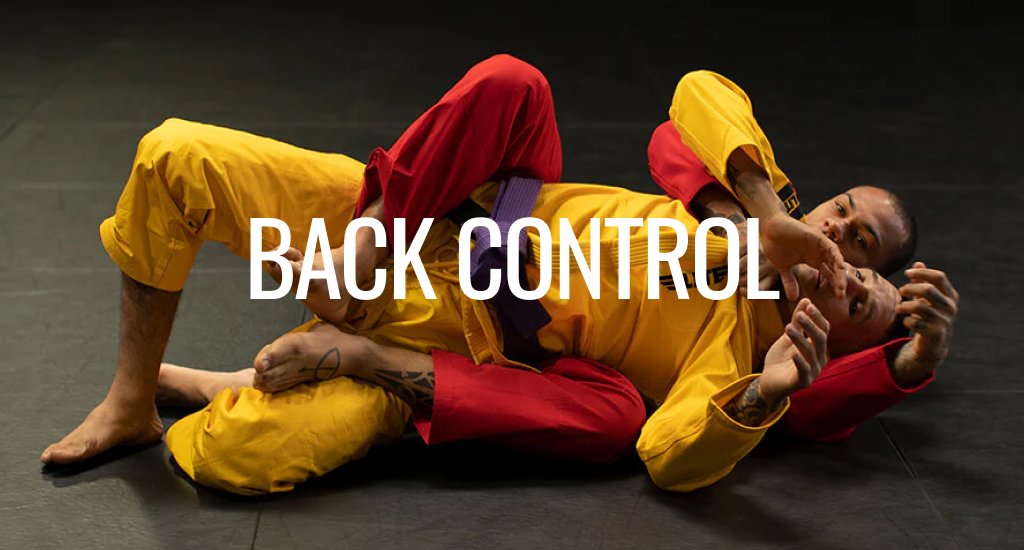
Back Control: The Most Dominant Position in BJJ

Back Control: The Most Dominant Position in BJJ

By BJJ Sportswear Editorial Team
Reviewed by competitive black belts specializing in back attacks | Last Updated: January 11, 2026

Back Control is Brazilian Jiu-Jitsu’s most dominant and highest-scoring position. Worth 4 points in IBJJF competition—the maximum positional score—back control gives you complete control over your opponent while they cannot see your attacks coming, making it the most dangerous position in grappling.​

According to NAGA Fighter’s back control analysis, back control is incredibly efficient because it’s much harder to anticipate and defend against attacks when you cannot see your opponent’s hands or eyes, allowing you to use the element of surprise. Among the most dominant positions in BJJ, back control gives a fighter significant control because it effectively immobilizes their opponent.​

Evolve MMA emphasizes that the back mount allows you to submit your opponents or rain down strikes in an MMA match while keeping them second-guessing. Getting there is one thing, but keeping it is another.​

After coaching hundreds of students and using back control extensively in competition, I’ve found it’s the ultimate goal of many techniques covered in previous articles—berimboloX-Guard, and Single Leg X all create pathways to back control. Mastering this position transforms your entire game.

Whether you’re a blue belt learning positional dominance or a brown belt refining championship strategies, understanding back control mechanics gives you the highest-value position in BJJ that leads to the most submissions.

What Is Back Control?

Back control is when you take control of your opponent’s back, place your heels between their thighs without crossing your legs, and trap at least one of their arms below the shoulder line.​

Core Back Control Components:

  • You’re behind opponent facing their back
  • Hooks (feet) between their thighs
  • Seatbelt grip (one arm over shoulder, one under armpit)
  • Chest-to-back connection maintained
  • Head positioning controls their movement
  • Worth 4 points when held for 3 seconds (IBJJF)

According to the IBJJF rule book, if you can hold back control for three seconds, you will be awarded four points —the highest positional score possible.​

Understanding what is guard in BJJ helps you see why back control is so valuable—you’ve completely bypassed their guard and achieved the most dominant position.

Back Control vs. Back Mount

NAGA Fighter clarifies: When competing in BJJ, you get points for securing back mount and back control, but new fighters are often confused about the differences between these two positions.​

Back Control (IBJJF Definition):

  • Heels between opponent’s thighs
  • Legs NOT crossed
  • At least one arm trapped below shoulder line
  • 4 points when held 3 seconds

Back Mount (IBJJF Definition):

  • Sitting on opponent’s torso
  • Two knees or one foot and one knee on ground
  • Facing opponent’s head
  • Up to one arm trapped under leg
  • Also scores 4 points when held 3 seconds

Evolve MMA notes: An athlete can have back control but not be in back mount, but if an athlete has back mount, they essentially have back control.​

In practice, most grapplers use “back control” and “back mount” interchangeably to mean controlling opponent from behind.

Why Back Control Works

The Positional Hierarchy

BJJ has a clear positional hierarchy based on control and submission potential:

Position Values (IBJJF Points):

  1. Back Control – 4 points (highest)
  2. Mount – 4 points
  3. Guard Pass – 3 points
  4. Knee on Belly – 2 points
  5. Sweep – 2 points
  6. Takedown – 2 points

Back control and mount share the highest value because they represent complete positional dominance.​

Strategic Advantages

NAGA Fighter explains the key benefits:​

Why Back Control Dominates:

  • Element of surprise: Opponent can’t see your hands or eyes
  • Defensive limitation: Hard to defend what you can’t see
  • Submission access: Multiple high-percentage chokes available
  • Safe position: Opponent can’t strike you effectively (MMA)
  • Point advantage: 4-point lead often wins matches
  • Psychological impact: Being on back is demoralizing

The invisibility factor makes back control uniquely powerful—your opponent must defend blind.

Connections to Previous Positions

Back control is the natural destination of many techniques:

From Berimbolo

  • Berimbolo specifically designed to take the back
  • Inversion creates back exposure
  • Primary goal is back control
  • 4 points reward for successful technique

From X-Guard

  • X-Guard sweeps often expose back
  • Marcelo Garcia specialized in X-Guard to back
  • Natural transition when sweeps defended
  • Elevation creates back attack entries

From Single Leg X-Guard

  • Technical standup creates back opportunities
  • When sweeps fail, back attacks available
  • Leg positioning transitions naturally
  • Common championship-level sequence

Understanding half guard helps because many back takes start from half guard positions.

Taking the Back: Entry Methods

From Mount

NAGA Fighter describes: Destabilize your opponent in mount position and use techniques like high mount or S-mount to make them turn and expose their back.​

Execution:

  • Establish dominant mount position
  • Create high mount or S-mount pressure
  • Opponent turns to escape pressure
  • Slide one knee behind their back
  • Insert first hook
  • Pull opponent into you
  • Secure second hook
  • Establish seatbelt grip

This is one of the highest-percentage back takes in BJJ.

From Side Control

Forcing the turn:​

Steps:

  • Move from side control to knee on belly
  • Create space and force reaction
  • As they turn away to relieve pressure
  • Slide bottom knee across their body
  • Insert hooks
  • Secure seatbelt grip

Understanding passing positions like knee slice helps create these opportunities.

From Turtle

Attacking defensive position:​

Method:

  • Apply pressure on opponent in turtle
  • Create openings for hook insertion
  • Insert one hook on side with more control
  • Establish seatbelt grip (one arm over shoulder, one under armpit)
  • Roll opponent to side with hook
  • Insert second hook
  • Maintain control

Turtle position is extremely vulnerable to back attacks.

From Guard

NAGA Fighter explains: Try sweeps or attacks from butterfly or closed guard to get your opponent off-balance.​

Process:

  • Attempt sweeps from butterfly or closed guard
  • As opponent reacts to sweeps
  • Transition to their back while maintaining control
  • Insert hooks one at a time
  • Maintain grip control throughout
  • Lock in seatbelt grip

Understanding closed guard fundamentals helps create these opportunities.

From Standing

Taking back in standing position:​

Execution:

  • Use grips and body positioning
  • Move to opponent’s back while standing
  • Use trip or takedown
  • As you go to ground, insert hooks
  • Find seatbelt grip
  • Establish full control

This is common in MMA and self-defense situations.

Maintaining Back Control

Evolve MMA emphasizes: Getting there is one thing, but keeping it is another.​

The Seatbelt Grip

The primary control mechanism:​

Seatbelt Configuration:

  • One arm over opponent’s shoulder
  • Other arm under their armpit
  • Hands locked together on their chest
  • Choking arm protected by other arm
  • Upper body control established

NAGA Fighter notes: The seatbelt grip protects your choking hand and provides upper body control. Position your choking arm on your opponent’s chest, covered by your other arm, and use your head to control your opponent’s head.​

Diagonal Control

Evolve MMA teaches: The concept of diagonal control gives you complete control over the opponent’s body, starting from one hip to the opposite shoulder.​

Diagonal Control Principle:

  • Control one hip with hook (right hip)
  • Control opposite arm (left wrist)
  • Creates diagonal control across body
  • If opponent moves, you control everything
  • Makes escape extremely difficult

Without diagonal control—if you have one hook but don’t control far wrist—the opponent can always face you and re-guard.​

Chest-to-Back Connection

NAGA Fighter emphasizes: Maintain tight chest-to-back connection to stay glued to your opponent.​

Connection Principles:

  • Your chest stays on their back
  • Move with them as one unit
  • Makes creating space difficult
  • Essential for maintaining position
  • More important than hooks alone

Evolve MMA adds: Keeping chest-to-back connection with your chin locked beside the opponent’s head for security will give you excellent back control.​

Hook Placement

Proper hook mechanics:​

Hook Fundamentals:

  • Wrap legs around opponent’s thighs
  • Feet hooking inside their legs
  • Prevents them from turning
  • Keep hooks active by squeezing
  • Maintain constant pressure

NAGA Fighter warns: Keep your hooks active—lazy hooks lead to lost control and getting escaped.​

Body Triangle

Advanced leg control:​

Body Triangle Configuration:

  • Start from back mount
  • Pull opponent to one side
  • Push off their hip with foot
  • Bring opposite leg to same side of hip
  • Create triangle shape with legs
  • Squeeze to apply midsection pressure

Benefits:

  • Restricts opponent’s movement
  • Prevents leg-based escapes
  • Frees your legs from defense
  • Very difficult to escape
  • Common in high-level competition

Threat of Submission

Evolve MMA teaches: If you can keep a constant threat of choking on the opponent’s neck, you will have a higher success rate in keeping back control.​

Submission Threat Principle:

  • If opponent thinks about choke threat constantly
  • Can’t focus on escaping simultaneously
  • Can only defend one thing at once
  • Either defends neck or tries to escape
  • Creates control opportunity

When applied in MMA, submission threat opens them up to strikes, and striking opens them up to submissions.​

Top Submissions from Back Control

Rear Naked Choke

The highest-percentage submission:​

Execution:

  • Wrap one arm around opponent’s neck
  • Place elbow under their chin
  • Lock other arm behind their head
  • Apply pressure to choke
  • Keep choking arm deep
  • Lock grip behind head to prevent escape

See complete rear naked choke guide for detailed breakdown.

Bow and Arrow Choke

Gi-specific option:​

Mechanics:

  • Grip opponent’s collar with one hand
  • Use other hand to pull pants or belt
  • Creates bowstring-like tension
  • Use legs to control body
  • Pull collar and pants opposite directions
  • Creates devastating leverage

This choke is unique to gi and extremely powerful.

Armbar from Back

Transitioning to armbar:​

Setup:

  • Isolate one of opponent’s arms
  • Move their body into position
  • Hyperextend arm using legs and hips
  • Secure arm control
  • Position hips correctly
  • Apply maximum pressure on elbow

Triangle Choke (Body Triangle Variation)

Less common but effective:​

Application:

  • Trap opponent’s arm and head between legs
  • Use legs to apply pressure
  • Control opponent’s posture
  • Adjust angle for tight choke
  • Works from body triangle position

Common Back Control Mistakes

Crossing Feet

Beginner error with serious consequences:

The Problem

  • Crossing feet while in back control
  • Creates ankle lock vulnerability
  • IBJJF rules violation
  • Easy submission for opponent

The Solution

  • Never cross feet
  • Keep hooks active but separate
  • Use body triangle instead if needed
  • Maintain proper positioning

Poor Chest-to-Back Connection

Losing the connection:​

Issue

  • Gap between your chest and their back
  • Allows opponent to create space
  • Makes maintaining position difficult
  • Escapes become easier

Correction

  • Stay glued to their back
  • Move as one unit
  • Eliminate all space
  • Constant connection throughout

No Diagonal Control

Missing the control principle:​

Problem

  • Hooks in but no far wrist control
  • Opponent can face you
  • Can re-establish guard
  • Difficult to maintain position

Fix

  • Always control far wrist when using hooks
  • Create diagonal control (hip to opposite shoulder)
  • Makes escape nearly impossible
  • Fundamental control principle

Static Position

Not adapting to movement:​

Issue

  • Staying static while opponent moves
  • Not anticipating escape attempts
  • Rigid approach fails
  • Missing opportunities to adjust

Better Approach

  • NAGA Fighter teaches: Anticipate escapes and adjust​
  • If they turn into you, use seatbelt to pull back
  • Shift weight to counter movements
  • Maintain chest-to-back connection
  • Constant awareness and adjustment

Training Back Control by Belt Level

For Blue Belts: Building Foundations

Start with fundamental mechanics:

Priorities:

  • Master seatbelt grip
  • Practice hook placement
  • Learn basic rear naked choke
  • Develop chest-to-back awareness
  • Drill back takes from mount and side control

Resources about first BJJ class expectations help beginners understand positional progression.

Training Tip: Evolve MMA recommends countless rounds of positional sparring to become proficient.​

For Purple/Brown Belts: System Development

Develop complete back attack systems:

Development:

  • Master diagonal control concept
  • Perfect body triangle
  • Study Marcelo Garcia back attacks
  • Practice all submission entries
  • Develop invisible control details
  • Create seamless transitions from guards

Exploring blue belt development goals helps structure back control integration.

For Black Belts: Mastery

Perfect championship-level systems:

Master Level:

  • Develop signature back attack system
  • Teach control principles effectively
  • Perfect submission timing
  • Create training progressions
  • Adapt to modern escape strategies

Competition Strategy

IBJJF Gi Competition

Back control dominates points-based formats:

Strategic Advantages:

  • 4 points (highest positional score)
  • Often creates insurmountable lead
  • Multiple submission opportunities
  • Safe defensive position
  • Demoralizing for opponent

Competition Reality: Many world championships are won by achieving back control early and maintaining it.

ADCC and No-Gi

Extremely effective in submission-only:

No-Gi Applications:

  • Works without gi grips
  • Even faster without friction
  • Creates submission opportunities
  • Marcelo Garcia won 5 ADCC golds specializing in back attacks
  • Favored by elite no-gi competitors

MMA Applications

Dominant in mixed martial arts:​

MMA Advantages:

  • Safe from opponent’s strikes
  • Can rain down strikes on opponent
  • Submission threat is constant
  • Creates psychological pressure
  • Often ends fights

The Back Control Legacy

From Marcelo Garcia’s revolutionary back attack system to modern competitors like Gordon Ryan and the Danaher Death Squad, back control represents BJJ’s most valuable position. What makes it special isn’t complexity—it’s the simple principle of controlling what your opponent cannot see.

Marcelo Garcia won five ADCC championships using back control as his primary weapon. Roger Gracie submitted countless black belts with basic rear naked chokes from back control. And forty years from now, grapplers will still be pursuing back control because the positional value is timeless.

The back control proves a fundamental BJJ truth: position before submission. Achieving and maintaining back control demonstrates complete positional mastery and creates the highest-percentage submissions in the sport.

Whether you’re a blue belt learning positional dominance or a black belt competing at world championships, back control provides the ultimate goal position. Combined with entries from berimboloX-Guard, and Single Leg X, you have the complete modern guard-to-back system.


How We Reviewed This Article

Editorial Standards: Technical information verified through Marcelo Garcia instructional content, IBJJF competition footage, and contemporary back control specialists. Mechanical analysis reviewed by competitive black belts using back control in tournament settings. Strategic applications based on IBJJF, ADCC, and MMA competition analysis (1993-2025).

Sources Referenced:

  • NAGA Fighter back control fundamentals and entries
  • Evolve MMA back control maintenance strategies
  • Marcelo Garcia back attack system
  • IBJJF rulebook definitions
  • Modern competition footage and applications

Last Updated: January 11, 2026

Scroll to Top