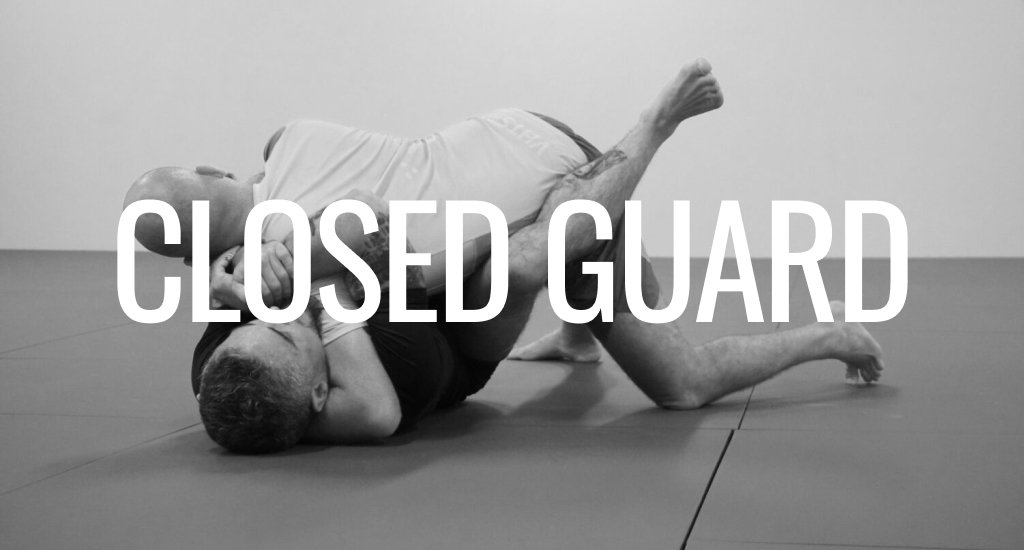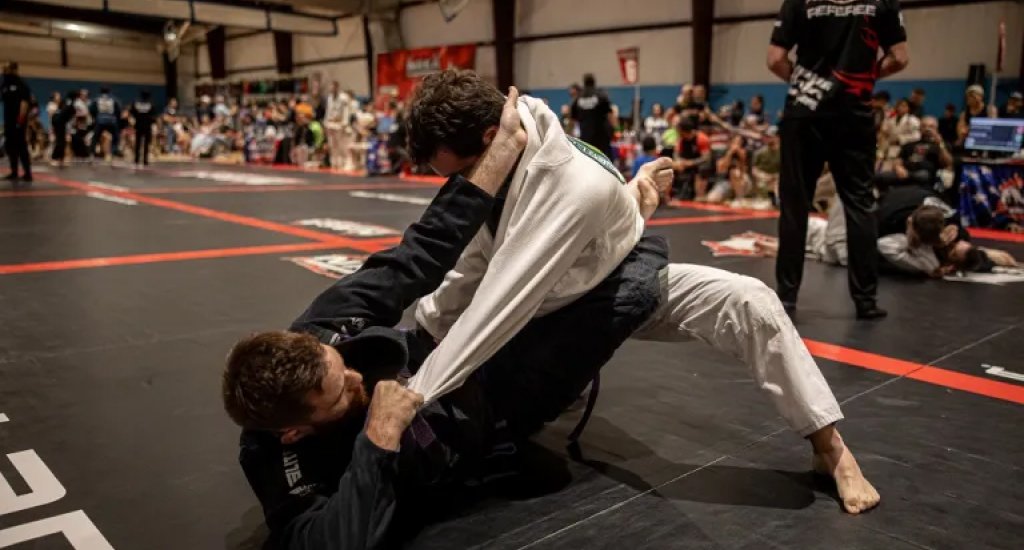
The closed guard is Brazilian Jiu-Jitsu’s most fundamental position, where the bottom practitioner wraps their legs around the opponent’s waist and crosses their ankles, creating a locked barrier that controls movement and sets up sweeps and submissions. When BJJ pioneers started developing their art in 1920s Brazil, the closed guard wasn’t just a position—it was the magic formula that made smaller grapplers invincible against larger, stronger opponents. Despite the explosion of modern guard variations, the closed guard remains one of the most powerful and reliable positions in all of grappling, equally effective for beginners learning fundamentals and advanced practitioners executing sophisticated attack systems.

Table of Contents
What Is the Closed Guard?
The closed guard occurs when you’re on your back with your legs wrapped around your opponent’s torso, ankles locked together behind their back. Your legs function as a “noose”—a tight barrier that prevents your opponent from escaping, passing to more dominant positions, or creating distance.​
In this configuration, you control your opponent’s hips and posture while your hands remain free to grip, break structure, and set up attacks. The position offers both defensive security (preventing the opponent from advancing) and offensive potential (creating opportunities for sweeps and submissions).​
The closed guard is typically the first guard position beginners learn because it provides clear mechanical principles: legs control the lower body, hands control the upper body, and the combination creates a complete control system. Understanding what is guard in BJJ provides broader context for why the closed guard serves as the foundation for all other guard variations.​
Historical Significance in Brazilian Jiu-Jitsu
When BJJ began developing in the early 1900s, the closed guard represented a revolutionary concept in martial arts. Traditional fighting systems emphasized standing techniques and viewed being on your back as a losing position. The Gracie family challenged this assumption by proving that a skilled practitioner could not only survive from the back but actively dominate and finish opponents.​
The closed guard became the signature position of early BJJ, allowing smaller Gracie family members to control and submit larger challengers during the famous “Gracie Challenges” that tested their system. When Royce Gracie shocked the martial arts world at UFC 1 in 1993, many of his victories came from closed guard positions where he controlled opponents before transitioning to submissions.​
According to BJJ historian insights shared on BJJEE’s analysis of closed guard evolution, when practitioners started training in 1994, “the Closed Guard was not just a position. It was the magic pill that makes you invincible”. This historical dominance explains why the closed guard remains foundational despite modern guard innovations.​
Why the Closed Guard Still Works
Complete Control System
The closed guard offers unmatched control because it restricts your opponent’s movement in multiple dimensions simultaneously:​
- Legs locked around waist – Controls hip movement and prevents backing out
- Ankle lock – Maintains the barrier even when opponent tries to break guard
- Hand grips – Breaks posture, controls arms, and prevents strikes
- Hip mobility – Creates angles for off-balancing and attacks
This multi-layered control makes the closed guard “one of the toughest guards to crack, especially when the legs are fully locked”. Even experienced grapplers struggle to pass a well-structured closed guard without making mistakes that create submission opportunities.​
Defensive Security
From closed guard, you’re relatively safe from most attacks. Your opponent cannot:​
- Pass to side control or mount without first breaking your guard
- Strike effectively (in MMA or self-defense contexts) due to posture control
- Apply most submissions without first escaping the position
- Create the space needed for explosive movements
This defensive foundation allows you to slow the pace, recover from earlier exchanges, and systematically work toward offensive opportunities. The control gives you time to think and plan rather than constantly defending emergencies.​
Offensive Versatility
Despite being on bottom, the closed guard provides numerous attacking paths:​
Primary Submissions:
- Armbar – Isolating and hyperextending the elbow
- Triangle Choke – Using legs to strangle with opponent’s own shoulder
- Kimura Lock – Shoulder lock using figure-four grip
- Omoplata – Shoulder lock using leg control
- Cross Choke – Utilizing gi lapels for strangulation
- Guillotine Choke – Front headlock when opponent dives forward
Sweeps to Top Position:
- Scissor Sweep – Using legs in scissoring motion to dump opponent
- Hip Bump Sweep – Explosive hip movement to reverse position
- Pendulum Sweep – Momentum-based reversal
- Flower Sweep – Circular sweeping motion
The synergy between submissions and sweeps creates powerful combinations. As one experienced practitioner noted: “throw up triangles, cross chokes, armbars and omoplatas and often you can sweep them as they defend—or vice versa throw pendulums, flowers, hip bumps, scissors and you will find openings for submissions”.​
For detailed breakdowns of specific attacks, exploring resources like the BJJ armbar guide shows how fundamental closed guard submissions work mechanically.

Core Principles of Effective Closed Guard
1. Breaking Opponent’s Posture
The first and most critical skill in closed guard is breaking your opponent’s upright posture. If they maintain strong posture with a straight back, they can effectively defend submissions and work to pass your guard.​
Posture breaking techniques include:
- Pulling down on the back of the head or neck
- Gripping behind the shoulder blades and pulling forward
- Using collar grips (in gi) to drag opponent down
- Controlling one arm while pulling the opposite side
Once posture is broken and your opponent is bent forward, their defensive options decrease dramatically while your offensive opportunities multiply.​
2. Grip Control
Hand placement and grip management determine success in closed guard:​
Essential grip concepts:
- Control wrists to limit opponent’s hand mobility
- Secure collar or sleeve grips in gi training
- Break opponent’s grips on your gi to maintain freedom
- Use two-on-one grips to isolate limbs for attacks
According to John Danaher’s systematic approach, grip fighting in closed guard follows predictable patterns that create attacking opportunities when properly understood. Learning the fundamentals of common hand grips in jiu jitsu enhances closed guard effectiveness significantly.​
3. Hip Movement and Angles
Your hips provide the engine for closed guard attacks. Static closed guard with no hip movement allows opponents to stabilize and work on breaking your guard.​
Key hip movements:
- Angling off to one side to create attack angles
- Using hip escapes (shrimping) to create space when needed
- Elevating hips to off-balance opponent
- Circular hip movement to transition between attacks
Master instructor John Danaher explains that back explosion—sudden hip movement—forces opponents to react in predictable ways that create secondary attacks.​
4. Systematic Attack Chains
Modern closed guard relies on systematic combinations rather than single techniques. Elite practitioners connect attacks so that defending one creates vulnerability to another.​
According to BJJ Fanatics’ breakdown of Danaher’s closed guard system, the closed guard has “six main vulnerabilities” that can be exploited for submissions and sweeps. By understanding these systematic connections, you transform closed guard from a single position into a complete attacking system.​
Top 8 Closed Guard Attacks
1. Armbar
The armbar from closed guard is BJJ’s most iconic submission. The technique involves isolating one arm, swinging your leg over the opponent’s head, and hyperextending their elbow by pulling the wrist toward your chest while thrusting your hips upward.​
Basic armbar sequence:
- Control opponent’s wrist with both hands
- Swing leg over their head while opening guard
- Clamp knees together around their shoulder
- Fall back and extend the arm across your hips
The BJJ armbar guide provides comprehensive details on finishing mechanics and common mistakes.
2. Triangle Choke
The triangle uses your legs to create a blood choke by trapping the opponent’s neck and one of their own arms. This submission works when opponents posture up with one arm inside your guard and one outside.​
Triangle setup:
- Control opponent’s posture and arm placement
- Throw one leg over their back/shoulder
- Secure the triangle lock by catching your shin behind your opposite knee
- Pull opponent’s head down while squeezing knees together
Triangles frequently combine with armbars—if the opponent defends the triangle, you can often transition to armbar on the trapped arm.​
3. Kimura Lock
The kimura targets the shoulder using a figure-four grip on the opponent’s arm. This versatile submission works from numerous positions but excels from closed guard when opponents post their hands on the mat.​
Kimura mechanics:
- Trap opponent’s wrist with one hand
- Thread your other arm under their elbow
- Grip your own wrist to complete the figure-four
- Apply pressure by rotating their arm behind their back
Understanding the kimura lock’s wrestling origins shows how this catch wrestling technique became a BJJ staple.
4. Omoplata
The omoplata is a shoulder lock that uses your legs to control the opponent’s arm while rotating to create submission pressure. This technique requires good flexibility and precise positioning.​
Omoplata setup:
- Secure grips on opponent’s wrist and collar
- Swing leg over trapped arm
- Rotate your hips perpendicular to opponent
- Sit up and drive forward to apply shoulder pressure
Even when the submission doesn’t finish, omoplatas often create sweeping opportunities as opponents defend.​
5. Cross Choke
The cross choke (or “X choke”) uses the gi collar to create a devastating strangulation. This traditional technique remains highly effective because it works even when opponents maintain some posture.​
Cross choke technique:
- Grip deep inside opponent’s collar with one hand (palm up)
- Grip opposite collar with other hand (palm down)
- Pull opponent down while crossing your forearms
- Finish by expanding chest and pulling elbows apart
Cross chokes epitomize classical BJJ efficiency—simple mechanics creating powerful results.​
6. Guillotine Choke
The guillotine becomes available when opponents dive forward or drop their head while trying to pass. This front headlock choke can finish quickly when properly applied.​
Guillotine mechanics:
- Wrap arm around opponent’s neck when head is low
- Clasp hands together (various grip options)
- Arch back while squeezing forearm across throat
- Use legs to prevent opponent from posturing out
7. Scissor Sweep
The scissor sweep is the foundational closed guard sweep that every beginner should master. It teaches the principle of using legs in opposite directions to off-balance and reverse position.​
Scissor sweep sequence:
- Open guard and control opponent’s sleeve and collar
- Place one knee across opponent’s torso
- Extend other leg to block their opposite knee
- Off-balance opponent by pulling toward your head
- Execute scissoring leg motion to dump them sideways
Successfully sweeping puts you in mount or dominant top position.​
8. Hip Bump Sweep
The hip bump (or “sit-up sweep”) works when opponents maintain strong posture. This sweep uses explosive hip movement to reverse position when other attacks are unavailable.​
Hip bump technique:
- Sit up while maintaining closed guard
- Wrap one arm over opponent’s shoulder
- Control their same-side wrist
- Explosively bump hips while pulling opponent over your shoulder
These fundamental eight attacks create the foundation for more advanced closed guard systems.

Closed Guard in Modern BJJ
Evolution vs. Tradition
While modern BJJ has introduced numerous open guard variations—spider guard, De La Riva, X-guard—the closed guard remains highly relevant. Elite competitors still use closed guard effectively, though often as part of larger guard retention systems rather than exclusively.​
The key evolution is integrating closed guard with other positions. Modern practitioners use closed guard to:
- Reset when more complex guards get passed
- Control pace and recover stamina during matches
- Set up transitions to modern guards like De La Riva
- Attack when opponents give specific reactions
Understanding how closed guard connects to other positions—like transitioning to rubber guard, butterfly guard, or standing up—creates a complete bottom game.
Gi vs. No-Gi Applications
Closed guard functions differently in gi and no-gi contexts:​
Gi Advantages:
- Collar grips provide powerful posture breaking
- Sleeve control limits opponent’s hand mobility
- Gi friction helps maintain guard closure
- Chokes using lapels become available
No-Gi Adaptations:
- Emphasis shifts toward underhooks and overhooks
- Submissions focus more on guillotines and arm attacks
- Guard retention requires more active hip movement
- Transitions happen faster due to reduced friction
Both contexts benefit from closed guard fundamentals, though specific techniques and emphasis shift based on available grips.
Common Mistakes and How to Fix Them
Staying Too Flat
Remaining flat on your back with minimal hip movement allows opponents to stabilize and work on breaking your guard. Fix this by constantly adjusting angles, creating off-balancing movements, and threatening attacks.​
Crossing Ankles Too Low
Locking your ankles around the opponent’s hips instead of higher on the waist reduces control and makes your guard easier to break. Proper ankle position should be around the lower back area.​
Releasing Guard Too Early
Opening your guard prematurely—before properly off-balancing your opponent or securing strong grips—allows them to pass easily. Maintain closure until you’ve created the conditions for successful attacks.​
Neglecting Grip Fights
Allowing opponents to establish their preferred grips gives them control and makes breaking your posture difficult. Actively fight for dominant grips while stripping their grips.​
Training Closed Guard Effectively
For Beginners
Start with the fundamental four: armbar, triangle, kimura, and scissor sweep. Drill these extensively until the mechanics become automatic. Focus on:​
- Maintaining closed guard under pressure
- Breaking opponent’s posture consistently
- Executing clean technique before adding combinations
- Understanding why each technique works mechanically
Resources like 30 essential tips for BJJ white belts provide guidance on building strong closed guard fundamentals early.
For Intermediate Practitioners
Develop systematic combinations where one attack sets up another. Study how elite grapplers chain:​
- Triangle to armbar transitions
- Failed sweep attempts that create submission openings
- Submission attempts that force opponents into sweep vulnerabilities
- Guard retention strategies when closure breaks
Exploring goals to focus on as a BJJ blue belt helps structure your closed guard development during this crucial phase.
For Advanced Students
Refine timing, pressure, and control details that separate good closed guard from elite-level mastery. Study:​
- Micro-adjustments in grip placement that increase submission percentages
- Counter-strategies for common guard break attempts
- Integration with modern positions like the truck when opponents defend traditionally
- No-gi adaptations and grip variations
John Danaher’s systematic approach emphasizes that closed guard “is the most amenable to being broken down into systems” because it has “less movement” and more predictable reactions than chaotic standing positions.​
Closed Guard for Self-Defense
The closed guard’s self-defense value extends beyond sport applications. In real confrontations:​
- You can control an attacker without striking, potentially de-escalating
- The position protects you from strikes while maintaining offensive options
- Submissions allow you to neutralize threats decisively
- Closed guard works regardless of size disparity when properly applied
Many self-defense scenarios—falling during altercations, being taken down—naturally lead to guard positions. Understanding how to fight effectively from your back provides crucial survival skills that most people lack.
For those wondering is it hard to learn Brazilian jiu jitsu, the closed guard represents both the challenge and the beauty of BJJ—simple in concept but requiring dedicated practice to master.
The Closed Guard’s Enduring Legacy
Despite decades of technical evolution in Brazilian Jiu-Jitsu, the closed guard remains as relevant today as when the Gracie family first proved its effectiveness. While modern practitioners have more guard options than ever before, the fundamental principles of control, posture breaking, and systematic attacks that define closed guard continue underpinning all effective guard play.​
Whether you’re a beginner learning your first sweeps and submissions or an advanced practitioner refining sophisticated attack chains, investing time in closed guard mastery provides returns throughout your entire BJJ journey. The position that made smaller fighters invincible in 1920s Brazil still works today—proof that sound mechanical principles transcend trends and innovations.​
Understanding closed guard fundamentals creates the foundation for exploring advanced positions like the crab ride, modern shoulder locks like the tarikoplata, and every other guard variation in BJJ’s ever-expanding technical universe.