
On This Page
Editorial Standards
Reviewed by the BJJ Sportswear Editorial Team for technical accuracy and kept current.
Wristlock in BJJ: Setup, Finish & IBJJF Legality
The wristlock is one of the fastest submissions in grappling and one of the most overlooked. Here is how it works and who is actually allowed to use it.
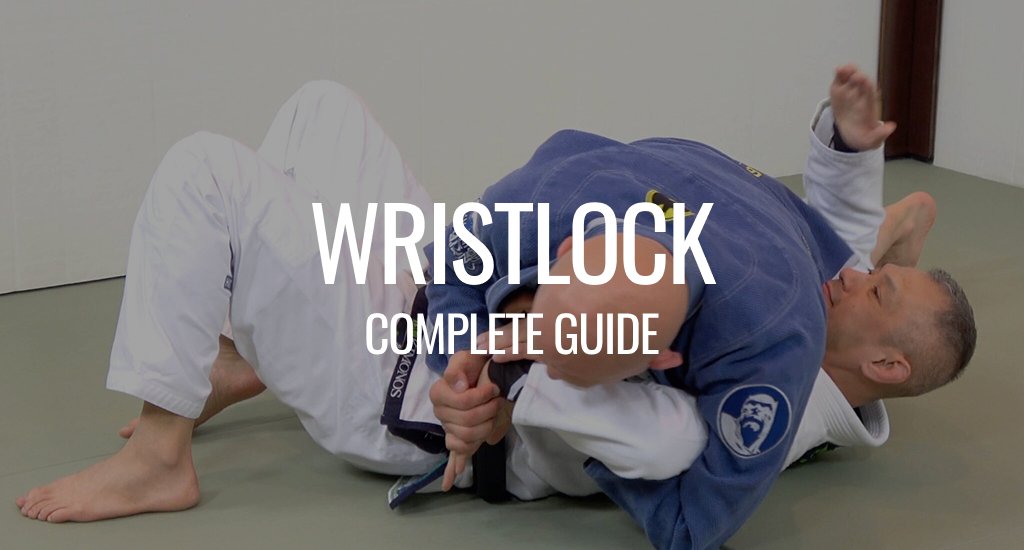
What a Wristlock Does
A wristlock forces the wrist joint past its normal range of motion — usually by flexing it sharply forward, backward, or rotating it — rather than attacking a larger joint like the elbow or shoulder. Because the wrist is a small, comparatively fragile joint with far less surrounding muscle to protect it, a wristlock can tap even a strong, flexible opponent almost instantly once the grip is secure. It is also one of the fastest submissions to miss entirely if your opponent feels it coming, since a small joint gives up leverage the moment they straighten or rotate free.
The Basic Setup
- Control your opponent's hand, most commonly by trapping it flat against your own chest, the mat, or their own body so it cannot rotate away.
- Isolate the wrist without also controlling the elbow — over-controlling the arm actually gives them a lever to fight the lock with.
- Apply pressure by folding the hand toward the forearm (a flexion wristlock) or rotating it against the joint's natural range (a rotational wristlock), depending on which grip you already have.
- Finish with a slow, controlled squeeze rather than a fast crank — the wrist taps quickly, and a sudden application risks injuring a training partner who has no time to signal.
Where It Shows Up
Wristlocks rarely get hunted as a standalone attack. They usually appear as a natural byproduct of another submission attempt that stalls out. A kimura grip that never fully rotates the shoulder — because your opponent's elbow is too tight to their body — often leaves their wrist trapped and exposed instead, since your hand is already controlling it from the original figure-four. The same thing happens from an americana attempt: your palm is already pinning their wrist to set up the shoulder lock, so a defender who yanks their arm free in the wrong direction can hand you the wrist instead.
Common Mistakes
- Cranking too fast. The wrist has a short warning window between "uncomfortable" and "injured," so speed is the single biggest risk factor in this submission.
- Losing the isolation by also grabbing the elbow, which gives your opponent a longer lever to rotate their whole arm out of the lock.
- Abandoning a stalled kimura or americana attempt completely instead of noticing the wristlock that is already available from the same grip.
Defending the Wristlock
Rotate your hand in the direction it is being forced rather than resisting straight against the pressure — following the rotation, even briefly, buys the split second you need to free the wrist or grab your own hand for support. Tap early. Because the joint is small, there is very little difference between "starting to hurt" and "injured" compared to larger joints like the shoulder.
Is the Wristlock Legal in Competition?
Under IBJJF rules, wristlocks are illegal for white belts and legal from blue belt through black belt in adult divisions. That restriction exists for the same reason the technique is dangerous to drill carelessly — a beginner without the mat awareness to tap early is at higher risk from a fast-acting small-joint lock than from a slower submission like an armbar or a choke.
Tagged with:#wristlock#submissions#small joint locks
Frequently Asked Questions
Is the wristlock legal in IBJJF competition?
It is illegal for white belts and legal from blue belt through black belt in adult divisions under IBJJF rules. Juvenile and kids divisions restrict it further regardless of belt.
Why is the wristlock considered dangerous?
The wrist is a small joint with little surrounding muscle to protect it, so there is very little warning between the lock starting to hurt and causing real injury, especially compared to larger joints like the shoulder or elbow.
Can a wristlock happen by accident from other submissions?
Yes — it is one of the most common accidental submissions in grappling. A stalled kimura or americana attempt often leaves the wrist trapped and exposed, since your hand is already controlling it from the original grip.
How do I defend a wristlock?
Rotate your hand in the direction it is being forced rather than resisting straight against the pressure, which buys time to free the wrist, and tap early since the joint gives very little warning before injury.
Sources & Further Reading
About the Author
Mohsin AyubBJJ practitioner, 6 years — Gracie Barra
Founder & Editor, BJJ Sportswear
Mohsin has trained Brazilian Jiu-Jitsu for six years at Gracie Barra and has competed at IBJJF-affiliated tournaments. He writes about competition, gear, and athlete careers, and founded BJJ Sportswear to help grapplers find equipment and information they can trust.
- Six years training Brazilian Jiu-Jitsu at Gracie Barra
- Competed at IBJJF-affiliated tournaments
- Writes on BJJ competition, gear testing, and athlete careers
This article was last reviewed and updated on 2026-08-18.