
On This Page
Editorial Standards
Reviewed by the BJJ Sportswear Editorial Team for technical accuracy and kept current.
Americana Shoulder Lock: Complete BJJ Guide
The americana is one of the first submissions you learn and one of the last you stop using. Here is the grip, the angle, and the escape that beats it.
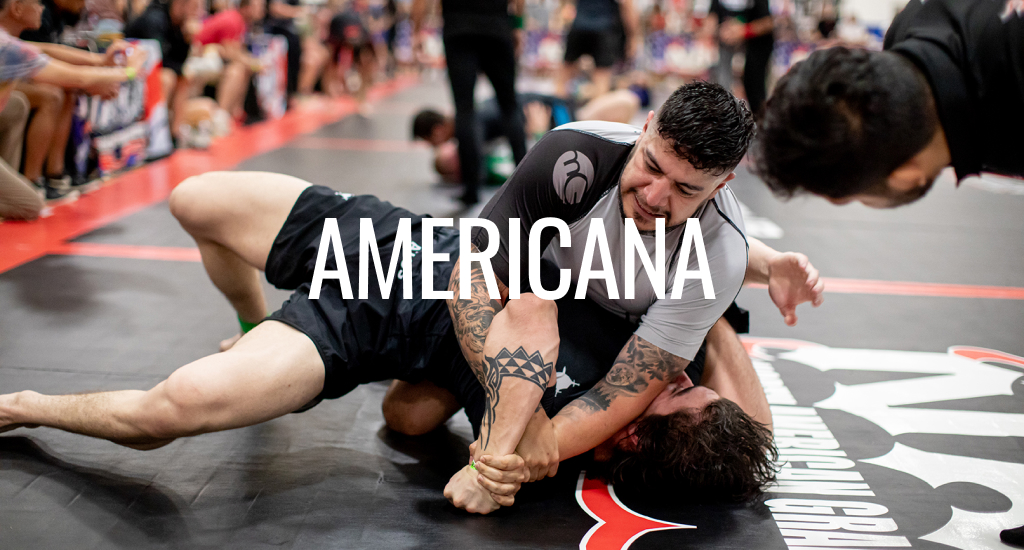
What the Americana Is
The americana is a shoulder lock. You bend your opponent's arm to roughly 90 degrees, then rotate it upward, as if they were waving hello. Judo calls the same lock ude-garami. Wrestlers call it a keylock. Most coaches call it the paint brush, because you drag the back of your opponent's hand across the mat.
It is one of the first submissions white belts learn, and it stays useful forever. The lock runs on structure and body weight rather than speed, and it is legal at every belt level under IBJJF rules, so you can drill it and compete with it from your very first week.
How the Lock Breaks the Shoulder
The americana attacks the shoulder joint, not the elbow. Three parts make it work.
- The grip. Your two arms form a figure-four around their bent arm.
- The fulcrum. Your forearm sits under their elbow and lifts it.
- The rotation. Their hand travels down toward their hip while their elbow travels up.
Together those three elements rotate the shoulder past its safe range, and the rotator cuff feels it first. Your opponent taps well before anything tears, which is why this lock is safe enough to drill regularly.
Americana From Mount
Mount is the classic setup. It works best when your opponent pushes on your chest or covers their face.
- Pin one of their wrists to the mat with your palm. Keep that arm straight and drive your weight down through it.
- Drop your other elbow next to their ear. This blocks their head and kills their escape angle.
- Slide your free hand under their tricep and grab your own wrist. That is the figure-four.
- Use a thumbless monkey grip. It gives your wrist more range and more power.
- Drag their elbow toward their hip to strip out the slack.
- Lift the elbow slowly while sweeping their knuckles along the mat.
Slow is correct here, because a fast crank usually just spins your opponent free and teaches your training partners to avoid you.
Americana From Side Control
Mount is the more dominant position, but side control is the more stable one, and many grapplers finish more americanas from there.
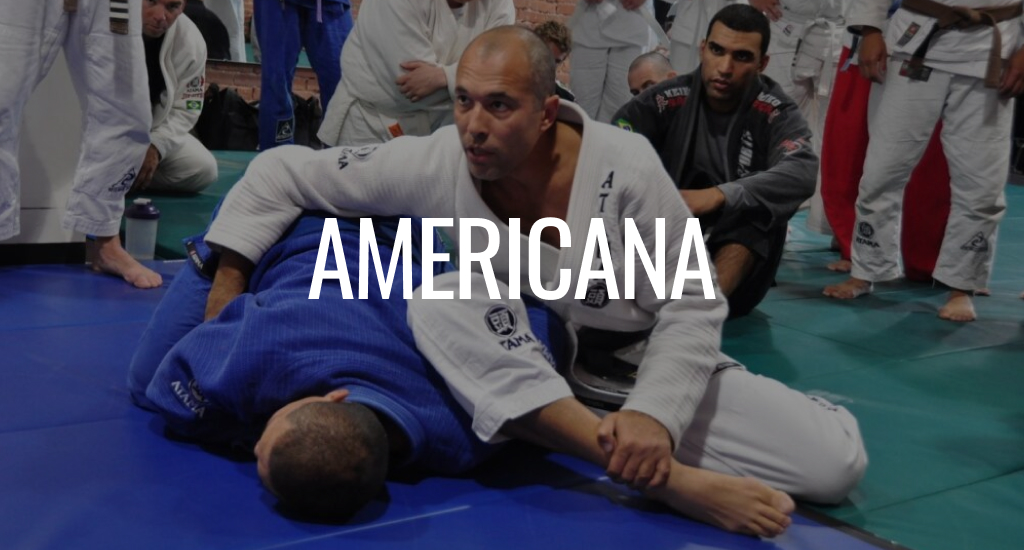
- Build a tight side control with chest-to-chest pressure.
- Wait for them to frame on your neck. That frame hands you the arm.
- Trap their wrist against the mat with your head and shoulder, then take over with your hand.
- Lock the same figure-four grip.
- Squeeze your elbows together to isolate the shoulder.
- Drag the knuckles down and lift the elbow.
Keep your chest heavy the whole time. The moment your weight comes up to chase the arm, they get their hips back.
Americana vs Kimura
The two locks look almost identical, and direction is the only thing separating them.
- Americana: the hand rotates up, toward their head.
- Kimura: the hand rotates down, behind their back.
Same figure-four grip, opposite arc. So if your opponent defends one hard, the other is often wide open. Our kimura guide covers that switch in detail.
Why It Fails
- Their elbow sits above their shoulder line. You have no fulcrum. Fix: drag the elbow down to their ribs first.
- Their wrist floats off the mat. Now they can straighten the arm. Fix: keep the wrist glued to the floor the whole time.
- You lift before removing slack. Fix: pull the elbow toward their hip, then rotate.
- You chase the arm and lose your base. Fix: keep your hips heavy and let the position feed you the arm.
How to Defend the Americana
Escape early. Once your shoulder starts to turn, the window has closed.
- Answer the phone. Bring your hand to your ear. That removes the 90-degree angle they need for leverage.
- Punch the ceiling. Straighten the arm hard and the figure-four falls apart.
- Bridge and roll. From bottom mount they have both hands on one of your arms, which leaves them no post. Our mount escape guide covers the timing.
Learning the escape also improves your attack, because you start to feel the exact moment their defense arrives.
What It Sets Up
Even a failed americana pays off, because your opponent has to straighten their arm to defend it. A straight arm is an armbar waiting to happen, so the two attacks pair together naturally. Our armbar guide picks up from there, and our mount position guide covers the control you need before either one.
Your palm is also already pinning their wrist to the mat the moment this grip starts forming, which is exactly the control a wristlock needs — worth checking for whenever the shoulder rotation itself stalls out.
Tagged with:#americana#shoulder lock#keylock#mount#side control#submissions
Frequently Asked Questions
Is the americana legal in IBJJF competition?
Yes. The americana is legal at every belt level and age division under IBJJF rules, including white belt, because it rotates the shoulder rather than attacking the spine or knee.
What is the difference between an americana and a kimura?
Both use the same figure-four grip on a bent arm. The americana rotates the hand upward toward the head, while the kimura rotates it downward behind the back.
Why is the americana called the paint brush?
Because of how the finish looks. You drag the back of your opponent's hand along the mat while lifting their elbow, so the hand sweeps the floor like a brush.
Does the americana work in no-gi?
Yes. It needs no grips on cloth, so it works the same in gi and no-gi. Sweat makes the wrist harder to pin, so no-gi finishes rely more on trapping the wrist against the mat.
Sources & Further Reading
About the Author
Mohsin AyubBJJ practitioner, 6 years — Gracie Barra
Founder & Editor, BJJ Sportswear
Mohsin has trained Brazilian Jiu-Jitsu for six years at Gracie Barra and has competed at IBJJF-affiliated tournaments. He writes about competition, gear, and athlete careers, and founded BJJ Sportswear to help grapplers find equipment and information they can trust.
- Six years training Brazilian Jiu-Jitsu at Gracie Barra
- Competed at IBJJF-affiliated tournaments
- Writes on BJJ competition, gear testing, and athlete careers
This article was last reviewed and updated on 2026-08-17.