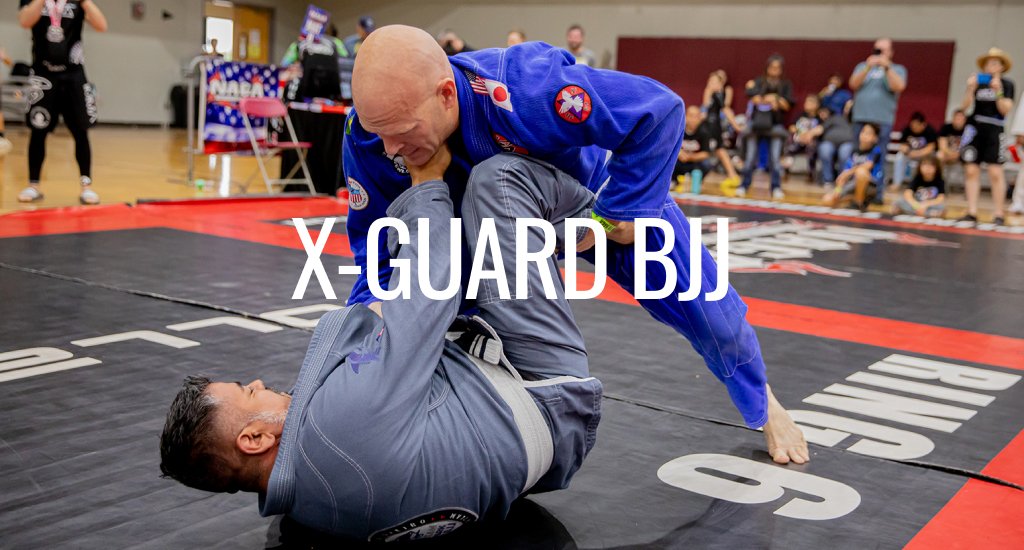
X-Guard: The Sweep-Based Guard That Controls From Below

X-Guard: The Sweep-Based Guard That Controls From Below

By BJJ Sportswear Editorial Team
Reviewed by competitive black belts specializing in X-guard systems | Last Updated: January 11, 2026

The X-Guard is Brazilian Jiu-Jitsu’s most dynamic sweep-based guard position. While Single Leg X Guard focuses on controlling one leg for sweeps and submissions, X-Guard entangles both legs to create maximum off-balancing leverage and sweeping opportunities.​

According to Evolve MMA’s X-Guard analysis, this ground control position has you on your back with your legs entangling one of your opponent’s legs, creating an ‘X’ formation with your limbs. The X-Guard is a favored technique of BJJ legend Marcelo Garcia, who used it to defeat some of the world’s top competitors.​

The X-Guard is highly regarded for its effectiveness in unbalancing and controlling opponents, making it a preferred choice in both gi and no-gi grappling. It offers high leverage for sweeps thanks to underhooking and positioning beneath the opponent, which makes executing sweeps easier.​

After coaching hundreds of students and using X-Guard in competition, I’ve found it’s the perfect complement to Single Leg X Guard—when SLX is defended, transition to X-Guard. When X-Guard is defended, return to SLX. This seamless flow creates unstoppable sweeping systems.

Whether you’re a blue belt building sweeping skills or a brown belt refining competition strategies, mastering X-Guard mechanics gives you the sweep-based foundation that works against any opponent, particularly when combined with the leg-based guard systems covered in previous articles.

x-guard bjj
x-guard bjj

What Is the X-Guard?

The X-Guard is a ground control position where you entangle one of your opponent’s legs with both of your legs, creating an ‘X’ formation while positioning yourself directly underneath them.​

Core X-Guard Components:

  • You’re on your back directly beneath opponent
  • One foot on their hip (creates extension)
  • Other foot hooks behind their far knee/thigh
  • Both legs create ‘X’ formation around one leg
  • Arms control their upper body (collar, sleeve, or underhook)
  • Entire system creates off-balance leverage

The position gets its name from the X-shape your legs create when entangling their leg. This configuration gives you maximum control over their balance and movement.​

Understanding what is guard in BJJ helps you see why X-Guard is so effective—you’re attacking from below using your strongest weapons (legs) against their weakest structure (standing balance).

x-guard bjj
x-guard bjj

Why the X-Guard Works

The Kuzushi Principle

Kuzushi—a term borrowed from Judo—refers to balance breaking.​

Evolve MMA emphasizes: In the context of X-Guard, applying Kuzushi involves manipulating the opponent’s weight and balance to create openings for attacks or to execute sweeps. Effective use of X-Guard relies heavily on your ability to off-balance your opponent continuously.​

Kuzushi in X-Guard:

  • Constant pressure keeps them defensive
  • Extension and elevation disrupt their base
  • They can’t settle into stable position
  • Off-balance creates sweeping opportunities
  • Control from directly underneath maximizes leverage

I tell students: “X-Guard is like being a puppeteer—you control their balance from below.”

Benefits of X-Guard

The X-Guard offers multiple strategic advantages:​

Key Benefits:

  • High leverage for sweeps: Positioning beneath opponent makes sweeps easier
  • Versatility: Transitions to other guards or stand-up positions
  • Strong defensive attributes: Keeps opponent off-balance and defensive
  • Submission opportunities: Leg locks and back takes available
  • Works gi and no-gi: Effective in all grappling contexts

The guard’s versatility provides multiple offensive and defensive strategies during matches.​

Relationship to Single Leg X-Guard

Evolve MMA notes: The Single Leg X-Guard is often seen as a subset of X-Guard but focuses more specifically on isolating one leg between your legs.​

X-Guard vs. Single Leg X:

  • X-Guard: Both legs entangle one of their legs (more control)
  • Single Leg X: One leg isolated (more submission-focused)
  • Transition: Seamless flow between positions
  • Strategy: Adapt based on opponent reactions and competition rules

The transition between SLX and traditional X-Guard is seamless, allowing you to adapt based on reactions.​

Beating Modern Defenses

The X-Guard works against contemporary passing covered in previous articles:

Against Knee Slice Pass

  • Off-balancing prevents their forward pressure
  • Extension disrupts knee slice mechanics
  • Sweep before they establish pressure
  • X-Guard forces them defensive

Against Toreando Pass

  • Leg entanglement stops lateral movement
  • Can’t execute bullfighter motion
  • X-Guard controls their center of gravity
  • Speed passing ineffective from below

Against Leg Drag Pass

  • X-Guard prevents leg dragging
  • Both legs entangled = can’t be thrown
  • Off-balance stops passing attempts
  • Sweeps counter their passing pressure

Understanding half guard helps because X-Guard often develops from half guard positions.

Core X-Guard Mechanics

Standard X-Guard Position

The classic configuration:​

Position Elements:

  • Bottom leg: Hooks behind their far knee/thigh
  • Top leg: Foot on their near hip (creates extension)
  • Arms: Control collar, sleeve, or create underhook
  • Body: Directly underneath opponent
  • Hooks: Active and engaged (not lazy)

Evolve MMA emphasizes: Your hooks are your primary tools for control in X-Guard—keep them active and engaged. Lazy hooks lead to lost control and getting passed.​

Extension and Elevation

Creating off-balance:​

Control Mechanisms:

  • Extension: Straightening legs pushes opponent away
  • Elevation: Lifting them disrupts balance
  • Combination: Extension + elevation = maximum off-balance
  • Wedges: Creating pressure points (shoulder and kneecap)
  • Constant adjustment: React to their movements

Extension and elevation are the core mechanical principles that make sweeps work.​

Upper Body Control

Arms complement leg work:​

Grip Options:

  • Gi: Collar grips, sleeve grips, underhooks
  • No-Gi: Underhooks, wrist control, head control
  • Purpose: Off-balancing, controlling, executing techniques
  • Integration: Upper body aids leg work

Evolve MMA notes: While the legs do a lot of work in X-Guard, remember to use your hands, arms, and torso as well.​

Essential X-Guard Sweeps

Shoulder Dump Sweep

The foundational X-Guard sweep:​

Execution Steps

1. Establish X-Guard Position

  • Both hooks active
  • Wedges on shoulder and kneecap
  • Good extension created

2. Grab Sleeve

  • Extend out and grab their sleeve
  • Creates directional control
  • Prepares rotation

3. Rotate to Dump

  • Rotate to dump them on their shoulder
  • Maintain hook behind knee entire time
  • Maintain hook on far hip entire time
  • Pins their leg and locks up hips

4. Finish Sweep

  • Leg locked over your shoulder prohibits hip escape
  • Come up to top position
  • Secure control

This is the most basic and highest-percentage X-Guard sweep.​

Stand Up Sweep

Technical standup variation:​

Mechanics

1. Create Extension

  • Wedges on kneecap and shoulder
  • Extend and elevate opponent
  • Off-balance them

2. Come to Elbow

  • Come up to your elbow
  • Foot on kneecap maintains pressure
  • Post far foot

3. Technical Standup

  • Come up to your hand
  • Stand up in base
  • Maintain control throughout

4. Finish

  • Sweep to top position
  • Or enter leg drag pass
  • Or secure back control

This sweep works particularly well when opponent tries to defend shoulder dump.​

Push Back Sweep

Pushing them backward:​

Setup:

  • X-Guard established
  • Extend and push back
  • Opponent tries to base
  • Use momentum against them
  • Execute sweep

Marcelo Garcia uses this extensively in his X-Guard system.​

Kick Over Sweep

Elevating and kicking over:​

Execution:

  • X-Guard control established
  • Elevate opponent high
  • Kick leg over their body
  • Dumps them backward
  • Secure top position

Works when they resist other sweeping directions.

x-guard bjj
x-guard bjj

X-Guard Variations

Single Leg X-Guard

Evolve MMA describes: The Single Leg X-Guard focuses on one leg, making it highly effective for direct attacks on the trapped leg.​

Key Features:

  • Greater control of one leg
  • Disrupts balance efficiently
  • Prime guard for leg attacks
  • Leg configuration same as ankle locks
  • Particularly useful managing passing attempts

See the complete Single Leg X Guard guide for full breakdown.

Overhook X-Guard

Adding overhook control:​

Configuration:

  • Overhook on opponent’s leg
  • X-Guard configuration maintained
  • Tighter control over limb
  • Beneficial for technical sweeps
  • Transitions to standing positions

Strategic choice in both defensive and offensive scenarios.​

Reverse (Wrong Way) X-Guard

Reversed leg positioning:​

Setup:

  • Typical leg positioning reversed
  • Creates unique angles and leverage
  • Particularly effective for sweeps
  • Leg submissions against strong base
  • Catches opponents off-guard

Powerful tool for surprising experienced opponents.​

Scissor X-Guard

Integrating scissor sweep elements:​

Mechanics:

  • Elements of scissor sweep added
  • Layer of complexity and deception
  • Highly effective against advancing opponents
  • Combines destabilizing scissor motion
  • Control and versatility of X-Guard

Effective against opponents trying to pass aggressively.​

Attacking the Back from X-Guard

Back Take Entries

X-Guard creates natural back attack opportunities:​​

Setup:

  • Establish X-Guard control
  • Create extension and elevation
  • As they defend sweeps
  • Bring leg over shoulder
  • Pressure on chin and neck
  • Step through to side control or back

Marcelo Garcia specializes in X-Guard to back transitions.​​

Finish Options:

  • Secure back control (4 points)
  • Attack rear naked choke
  • Or complete sweep to top position

Understanding rear naked choke mechanics helps when back exposure happens.

Common X-Guard Mistakes

Lazy Hooks

The #1 technical error:​

The Problem

  • Hooks not active and engaged
  • Leads to lost control
  • Getting passed becomes easy
  • Opponent escapes without resistance

The Solution

  • Keep hooks constantly active
  • Adjust hooks responding to movement
  • Never let hooks go slack
  • Maintain tension throughout

Evolve MMA warns: Lazy hooks can lead to lost control and potentially getting passed.​

Poor Extension/Elevation

Not creating off-balance:

Issue

  • Static position without movement
  • Opponent can stabilize base
  • Sweeps become impossible
  • They pass easily

Correction

  • Constant extension and elevation
  • Keep them off-balance continuously
  • Never let them settle
  • Adjust pressure based on reactions

Neglecting Upper Body

Legs only, no arm work:​

Problem

  • Only using legs for control
  • Missing upper body control opportunities
  • Limited off-balancing ability
  • Incomplete X-Guard system

Fix

  • Integrate collar grips (gi)
  • Use underhooks (gi and no-gi)
  • Sleeve control when available
  • Upper body aids leg work

Not Adapting

One-size-fits-all approach:​

Issue

  • Every opponent reacts differently
  • Same technique doesn’t work on everyone
  • Rigid approach fails
  • Missing opportunities

Better Approach

  • Adapt strategy based on reactions
  • Some muscle out, some use technical escapes
  • Flexibility in approach counters moves
  • Read and respond continuously

Evolve MMA teaches: Be prepared to adapt your strategy based on their responses.

​

x-guard bjj
x-guard bjj

Training X-Guard by Belt Level

For Blue Belts: Building Foundations

Start with fundamental mechanics:

Priorities:

  • Master standard X-Guard first
  • Practice shoulder dump sweep extensively
  • Learn technical standup sweep
  • Develop extension and elevation skills
  • Drill transitions to Single Leg X

Resources about first BJJ class expectations help beginners understand guard progression.

Training Tip: Evolve MMA recommends spending time drilling each variation with focus on transitions between them to build muscle memory.​

For Purple/Brown Belts: System Development

Develop complete X-Guard systems:

Development:

  • Master all 5 major variations
  • Study Marcelo Garcia footage extensively
  • Perfect back attack entries
  • Develop invisible off-balancing
  • Practice gi and no-gi equally
  • Create seamless guard transitions

Exploring blue belt development goals helps structure X-Guard integration.

For Black Belts: Mastery and Teaching

Perfect complete systems:

Master Level:

  • Develop signature X-Guard game
  • Teach Kuzushi principles effectively
  • Create training progressions for students
  • Perfect competition applications
  • Adapt to modern defensive strategies

Competition Strategy

IBJJF Gi Competition

X-Guard thrives in points-based formats:

Strategic Advantages:

  • Sweeps score 2 points (major score)
  • Back takes score 4 points (highest)
  • Works from bottom (defensive start)
  • Creates multiple scoring opportunities
  • Legal at all belt levels

Competition Reality: Marcelo Garcia won multiple ADCC championships using X-Guard as primary weapon.​

ADCC and No-Gi

Highly effective in submission-only:

No-Gi Applications:

  • Works without gi grips
  • Even faster without friction
  • Creates leg lock entries
  • Back takes extremely high percentage
  • Favored by elite no-gi competitors

Strategic Integration

X-Guard completes leg-based guard system:

The Complete System:

  1. De La Riva Guard – Outside hook control
  2. Reverse De La Riva – Inside hook control
  3. Single Leg X Guard – One leg isolation
  4. X-Guard – Full leg entanglement

Flow between these four guards creates unstoppable systems that world champions use.

The X-Guard Legacy

From Marcelo Garcia’s revolutionary systematization in the 2000s to modern competitors building entire games around it, the X-Guard represents BJJ’s most dynamic sweep-based guard position. What makes it special isn’t complexity—it’s the simple principle of controlling balance from directly underneath your opponent.

Marcelo Garcia used it to win five ADCC championships and four IBJJF world titles. Countless competitors have built championship games copying his system. And forty years from now, grapplers will still be using it because the Kuzushi principles are timeless.​

The X-Guard proves a fundamental BJJ truth: you don’t need to be on top to control the match. From directly underneath, using extension, elevation, and perfect leverage, you can sweep anyone.

Whether you’re a blue belt learning sweeping fundamentals or a black belt competing at world championships, the X-Guard provides the sweep-based foundation that completes your guard game. Combined with Single Leg XDe La Riva, and Reverse De La Riva, you have the complete modern guard system.

x-guard bjj

How We Reviewed This Article

Editorial Standards: Technical information verified through Marcelo Garcia instructional content, competition footage, and contemporary X-Guard specialists. Mechanical analysis reviewed by competitive black belts using X-Guard in tournament settings. Strategic applications based on IBJJF, ADCC, and modern competition analysis (2000-2025).

Sources Referenced:

  • Marcelo Garcia X-Guard system (instructionals and competition)
  • Evolve MMA X-Guard variation analysis
  • Modern competition footage and applications
  • Kuzushi principles from Judo integration

Last Updated: January 11, 2026

Scroll to Top