On This Page
Editorial Standards
Reviewed by the BJJ Sportswear Editorial Team for technical accuracy and kept current.
Crab Ride BJJ: The Ultimate Guide to Back Takes & Transitions
The crab ride skips guard passing entirely and puts you directly behind your opponent. Here is how to enter it, hold it, and finish the back take.
What the Crab Ride Is
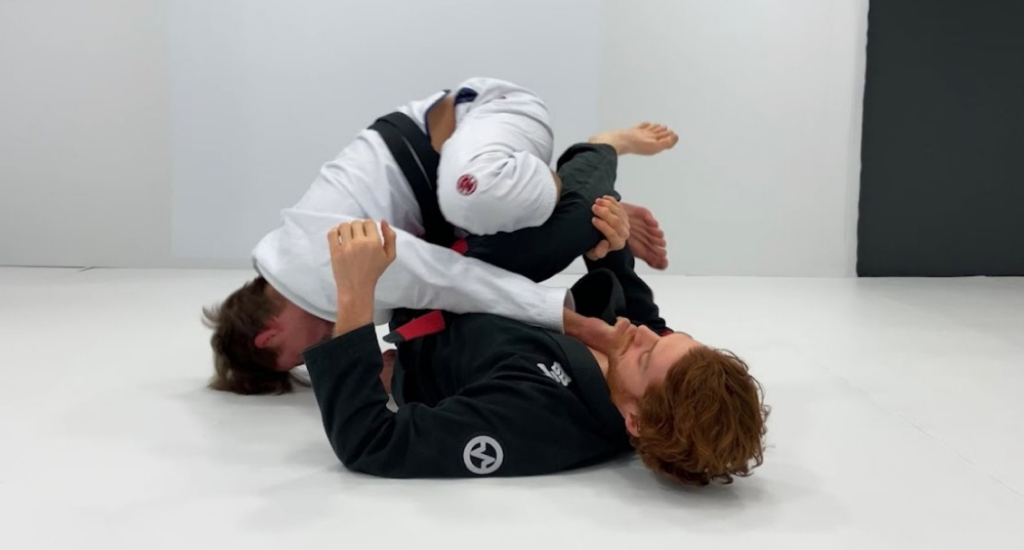
The crab ride is a back-take position. You end up behind your opponent, hips elevated, riding their back like a saddle. It skips guard passing entirely. That gives you a direct route to back mount. Wrestlers used a version of this for decades. BJJ competitors, including the Miyao brothers, later refined it for grappling.
Common Entries
- From the berimbolo, when your opponent turtles to defend the sweep.
- From de la riva guard, off a failed guard pass attempt.
- From a double guard pull, going straight to the position instead of playing guard.
Maintaining the Position
Keep your hips high. Keep your weight off your opponent's back. Heavy, flat pressure lets them stand up and dump you. Staying light and mobile keeps the position stable while you hunt for the back take.
From Crab Ride to Back Control
Once you're stable, walk your hooks in one at a time. Rushing both hooks at once often gives your opponent the half-second they need to spin out. Patience here pays off far more than speed.
Common Mistakes
- Settling your full weight down. This telegraphs the position and lets your opponent counter.
- Chasing both hooks at the same time instead of securing one first.
- Losing hip elevation, which turns the position into an easy roll for your opponent.
Gi vs No-Gi
The crab ride shows up constantly in no-gi competition. Speed and hip mobility drive most modern back takes there. It also works in the gi, though grips on the pants or jacket can slow the transition slightly.
Once you're comfortable riding the position, our back control guide covers what to do once both hooks are in.
Tagged with:#crab ride#back take#no-gi
Frequently Asked Questions
What is the crab ride in BJJ?
A back-take position where you sit behind your opponent with elevated hips, riding their back to set up hooks and full back control without passing guard first.
Is the crab ride only for no-gi?
No. It appears constantly in no-gi competition but also works in the gi, where grips can slightly slow the entry.
Is the crab ride legal at white belt?
Yes. The position itself is a control position rather than a submission, so it carries no belt restriction under IBJJF rules.
How do I stop my opponent from standing up out of the crab ride?
Keep your hips elevated and your weight off their back. Settling flat and heavy is what telegraphs the position and lets them stand and dump you.
Sources & Further Reading
About the Author
Mohsin AyubBJJ practitioner, 6 years — Gracie Barra
Founder & Editor, BJJ Sportswear
Mohsin has trained Brazilian Jiu-Jitsu for six years at Gracie Barra and has competed at IBJJF-affiliated tournaments. He writes about competition, gear, and athlete careers, and founded BJJ Sportswear to help grapplers find equipment and information they can trust.
- Six years training Brazilian Jiu-Jitsu at Gracie Barra
- Competed at IBJJF-affiliated tournaments
- Writes on BJJ competition, gear testing, and athlete careers
This article was last reviewed and updated on 2026-08-01.