

De La Riva Guard: The Ultimate Guide to Modern Open Guard
By BJJ Sportswear Editorial Team
Reviewed by competitive black belts | Last Updated: February 1, 2026
The De La Riva Guard (DLR) is the gateway to modern Brazilian Jiu-Jitsu.
Before the 1980s, the Open Guard was loose and undefined. Then came Ricardo De La Riva, a slim Carlson Gracie black belt who needed a way to stop heavy opponents from smashing him. He developed a hook that changed the sport forever.
Today, the De La Riva Guard is the foundation for advanced games like the Berimbolo and the Crab Ride. In this guide, we break down how to control, sweep, and take the back from the DLR.
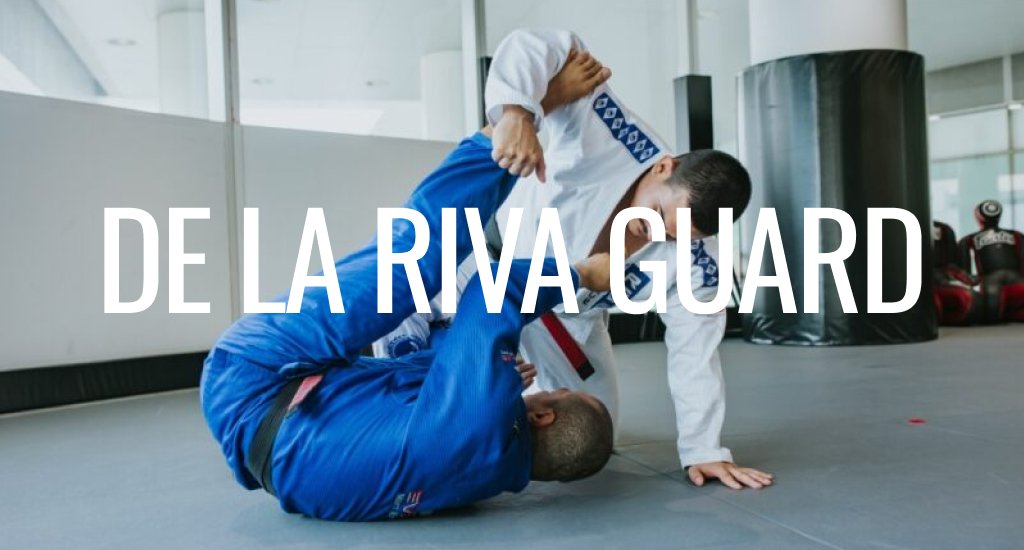
Table of Contents

What is the De La Riva Guard?
The De La Riva Guard is an open guard position where you control the opponent’s lead leg with an outside hook.
- The Hook: Your outside leg wraps around their lead leg, with your foot hooking behind their knee or thigh.
- The Anchor: Your hand grabs their ankle (on the same side as the hook). This is non-negotiable. If you lose the ankle grip, you lose the guard.
- The Control: Your other hand controls their sleeve or collar, and your free foot pushes on their hip or knee to manage distance.
As Evolve MMA notes, this guard works by destroying the opponent’s base and preventing them from stepping back.
The 3 Pillars of a Strong DLR
To stop the passer, you need three points of contact working together.
1. The Ankle Grip (The Root)
You must grab their heel or pants cuff. This prevents them from running around your guard (The Toreando Pass).
2. The Hook (The Pivot)
Your DLR hook is not just “hanging there.” You must actively flair your knee outward to turn their knee inward. This pressure compromises their knee structure (Medial Collateral Ligament pressure) and off-balances them.
3. The Free Leg (The Shield)
Your non-hooking leg is your shield. Place it on their hip, thigh, or bicep to keep them from smashing you.
Top 3 De La Riva Attacks
The DLR is versatile. You can go underneath, go around, or knock them over.
1. The Ball and Chain Sweep
This is a classic overhead sweep.
- Action: Control both their sleeves. Extend your legs to push them away, then pull them forward over your head while lifting with your hooks.
- Result: They post their hands on the mat, giving you space to stand up or take the back.
2. The Berimbolo (Inversion)
The most famous DLR attack.
- Action: Spin upside down (invert) while holding their belt and pants.
- Result: You rotate behind them to take the back or enter the Crab Ride.
3. The Sit-Up Guard (Single Leg)
If the opponent postures up too high:
- Action: Release your hook and sit up aggressively, hugging their leg.
- Result: Drive forward into a Single Leg Takedown or Single Leg X-Guard.
De La Riva vs. Reverse De La Riva
What if they knee cut?
- De La Riva: Best when the opponent is standing upright or squaring up.
- Reverse De La Riva (RDLR): Best when the opponent tries to Knee Slice Pass. You switch your hook to the inside of their leg to create a shield against the pressure.
Troubleshooting: How to Retain Guard
Problem: They are smashing my hook leg down.
Solution: Do not let them flatten your knee. Keep your knee pointing outward. If they push it down, switch to Reverse De La Riva immediately.
Problem: They are running around to the side.
Solution: You lost the ankle grip! You must chase the ankle. If you can’t reach it, frame on their hip and retain guard.
Frequently Asked Questions
Is DLR effective in No-Gi?
Yes. While it is harder without the pants grip, you can cup the heel or ankle. The Ruotolo Brothers and Mikey Musumeci use DLR effectively in No-Gi.
Can I do DLR if I have short legs?
Absolutely. Ricardo De La Riva himself was not a giant. The key is using your hips to angle yourself, not just relying on leg length.
Conclusion
The De La Riva Guard is an essential tool for any BJJ player. It teaches you how to control a standing opponent and opens up the entire world of modern Jiu-Jitsu.
Start by securing that ankle grip—it is your lifeline.