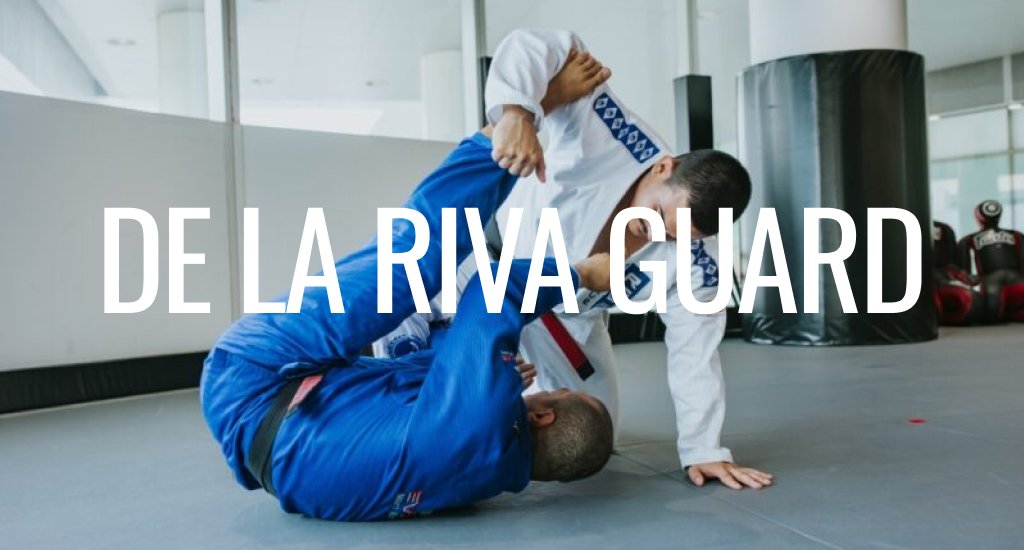
De La Riva Guard BJJ: Sweeps, Berimbolo & Back Takes
The De La Riva guard is the gateway to modern Brazilian Jiu-Jitsu.
Before it existed in the 1980s, open guard was loose and reactive — a way to survive against standing opponents rather than attack them. Ricardo De La Riva changed that. He developed a specific outside hook on the lead leg that transformed open guard from defensive survival into a complete offensive system.
Today, DLR is the foundation for the berimbolo, the reverse DLR, and the worm guard. It connects directly to X-guard, single leg X, and back control. Competitors from Leandro Lo to Mikey Musumeci to the Mendes brothers built world championship careers on it. Understanding DLR is understanding the architecture of modern competitive BJJ.
Competition data (BJJ Graph): De La Riva guard sweeps succeed at approximately 35–40% for beginners, 50–60% for intermediate practitioners, and 65–75% for advanced competitors. The high advanced success rate reflects the guard’s dilemma-based structure — every defensive reaction opens a different attack.

Table of Contents

What is the De La Riva guard?
The De La Riva guard is an open guard position where the bottom player wraps their outside leg around the opponent’s lead leg from the outside — hooking behind the knee or inner thigh — while controlling the ankle of that same leg with the same-side hand.
The free leg manages distance, typically pushing on the opposite hip. The free hand controls the sleeve, collar, or wrist. Together these four points of contact — hook, ankle grip, free leg push, upper body control — create a complete control system against a standing or kneeling opponent.
The position is unique because of its off-angle relationship. Where most open guards are square, DLR operates from a sideways angle — the guard player’s body is not directly below the opponent but offset to one side. This angle creates sweeping leverage and inversion pathways that are not available from square open guard.
History — Ricardo De La Riva
Ricardo De La Riva is a Brazilian BJJ black belt who trained under Royler Gracie at the Carlson Gracie Academy in Rio de Janeiro. In the 1980s, he faced a consistent problem: larger, heavier training partners and opponents were using their weight to smash through his open guard, standing above him and applying heavy pressure before passing.
His solution was the outside hook. By wrapping his leg around the outside of the opponent’s lead leg, he could disrupt their base and prevent them from planting their weight effectively. According to BJJ Heroes, De La Riva began using this hook systematically in sparring and competition, developing sweeps and back takes from the position through experimentation. His success with it drew attention from training partners and competitors — and the hook that bore his name began spreading throughout Brazilian BJJ.
The guard’s evolution did not stop with De La Riva. The Mendes brothers — Rafa and Gui — developed the berimbolo from DLR at Alliance, transforming a back take entry into one of the most complex and feared sequences in gi competition. Leandro Lo used DLR as a hub for his complete open guard game. Mikey Musumeci adapted it for no-gi. Each generation found new pathways from the same foundational hook.
The three control elements
De La Riva guard has three distinct control elements that must all be present for the position to be functional. Understanding each separately prevents the most common positional failures.
1. The DLR hook. Your outside leg wrapped around the opponent’s lead leg. The hook creates the mechanical leverage that makes every attack possible. Without it, you have no control over the lead leg and the opponent can pass easily.
2. The ankle grip. Your same-side hand gripping the ankle of the hooked leg. This is your anchor — it prevents the opponent from stepping over the hook or escaping laterally. The ankle grip must be maintained throughout every attack and transition.
3. Upper body and free leg management. Your free hand controls the sleeve, collar, or wrist. Your free leg manages distance against the opposite hip. These two elements determine which attack is available based on your opponent’s posture and reaction.
DLR hook — placement and mechanics
The hook is the foundation of the entire guard. Where it sits determines how much control and leverage you have.
Correct position — behind the knee
The optimal hook position is just behind the knee — your foot wraps around the back of the joint where the thigh meets the calf. Your toes point inward toward the opponent’s centerline. This position gives you maximum leverage for unbalancing, is close enough to the hip to control the leg, and is difficult for the opponent to physically remove.
Too high — on the thigh
A hook too high on the thigh reduces your leverage because the leg is thicker and harder to move. The opponent can also more easily stack your hook leg by pressing down. Avoid the upper thigh as a primary hook position.
Too low — on the ankle or shin
A hook too low has almost no lever effect on the hip. The opponent can easily step over it or simply walk forward. The behind-the-knee position is the sweet spot.
Active hook pressure
The hook is not passive — it creates constant inward tension against the leg. Think of your hook as actively pulling the leg toward you while your ankle grip resists their stepping away. The tension between pull (hook) and control (ankle grip) is what keeps the position intact.
Hook rule: Behind the knee, toes inward, constant inward tension. If the hook is comfortable for your opponent — it is in the wrong position. The hook should constantly disrupt their base.
Ankle grip — the lifeline
The ankle grip is the most important single control point in the De La Riva guard. Lose it and most attacks become impossible — the opponent can step out of the hook by pushing laterally.
Grip the ankle firmly with your same-side hand. In the gi, wrap the pant cuff. In no-gi, cup the heel directly or grip the ankle joint itself.
The ankle grip must survive every attack. When you invert for the berimbolo, when you extend for the toreando sweep, when you transition to X-guard — the ankle grip stays. If you feel the grip slipping, secure it before attacking. Attacking from a lost ankle grip is the most common DLR failure mode.
How to establish DLR from seated guard
- Sit up facing the standing opponent. From seated guard, your hips are slightly off the mat, weight on your hands and tailbone. Face the opponent directly.
- Identify the lead leg. As they step forward, identify the lead leg — the one closest to you. This is your DLR target.
- Insert the hook. Wrap your outside leg around their lead leg from the outside. Foot hooks behind the knee. Toes point inward.
- Secure the ankle grip. Same-side hand grips the ankle immediately. Do not wait — the ankle grip must be established as the hook goes in.
- Establish upper body control. Free hand grips the sleeve (gi) or wrist (no-gi). Free leg pushes on their opposite hip.
- Get to your hip. Immediately rotate to one hip — do not lie flat on your back. Your hip position determines which attacks are available.
Toreando sweep — primary DLR sweep
The toreando sweep (also called the hook sweep or kick-out sweep) is the most fundamental attack from De La Riva guard. It works when the opponent is upright and their weight is over their lead leg.
- From full DLR with hook behind knee and ankle grip secured.
- Pull the ankle toward you with your grip while simultaneously extending your hook leg — kicking forward and outward to push their lead leg away from under them.
- As their lead leg sweeps out, their base collapses. Maintain your upper body grip during the fall to pull yourself up.
- Follow the sweep to top position — typically landing in side control or the single leg position.
The key detail: the kick and the ankle pull must happen simultaneously. The ankle pull brings the leg toward you while the kick pushes it sideways — the scissors motion creates the off-balance.
Back take from De La Riva guard
When your opponent tries to pass by stepping around to your head side, their back is exposed. This is the fundamental DLR back take entry that requires no inversion.
- You have DLR guard. Opponent steps their lead leg forward and tries to move their back leg around your head to pass.
- As they step to your head side, follow their movement by sitting up aggressively toward them.
- Release the DLR hook and come up behind them — your chest reaching their back.
- Establish the seatbelt grip. Insert hooks. Back control achieved. Attack the rear naked choke.
This back take is particularly reliable because the opponent’s pass attempt generates the momentum that helps you get to their back. Their movement does the work for you when you follow it correctly.
Berimbolo — step by step
The berimbolo is the most famous DLR technique in modern gi competition. It is an inversion that transitions into a back take — using the DLR hook to sweep the opponent’s base as the guard player rolls underneath them.
Popularised by Rafa and Gui Mendes at Alliance, it requires flexibility and timing but has been demonstrated to work at the highest levels of competition by practitioners who have drilled it thoroughly.
- Establish deep DLR. Hook behind knee, ankle grip tight. Pull the opponent’s ankle toward you to reduce their base.
- Grip the belt or far hip. With your free hand, grip the opponent’s belt or back of their shorts — this is your rotation anchor during the inversion.
- Invert under them. Roll onto your shoulder away from the hook side, going upside down beneath the opponent. Your DLR hook leg pushes the opponent’s lead leg in the same direction as your roll.
- Drive with the hook leg. As you invert, push with the hook leg — driving the opponent’s leg upward and forward. This creates the sweep that takes their base.
- Rotate to face the same direction. As the opponent falls, rotate your body to face the same direction as them. You are now behind them.
- Establish back control. Come up on their back. Seatbelt grip. Insert hooks. Attack the rear naked choke.
Berimbolo key principle: The inversion is a rotation — not a crash. You are rolling around a fixed axis (the ankle grip) using the hook as the lever. Practitioners who “crash” into the berimbolo lose the hook and end up in a bad scramble. Smooth, controlled rotation is what produces reliable back takes.
Reverse De La Riva guard (RDLR)
The Reverse De La Riva is a DLR variation where the hook goes to the inside of the opponent’s lead leg rather than the outside. It creates an inside frame that is most effective as a counter to the knee slice pass — when the opponent drives their knee across your thigh to pass.
When to switch to RDLR
When your opponent begins a knee slice pass — driving their near knee across your top thigh toward the mat — switch your DLR hook to the inside of that knee immediately. The RDLR hook blocks the knee slice and creates a new control angle.
Attacks from RDLR
- Back take: When the opponent straightens up from the knee slice attempt, come up behind them using the RDLR hook for leverage
- Single leg X entry: Transition from RDLR into single leg X by threading your free leg between their legs from the inside
- Kiss of the dragon: An advanced inversion from RDLR that creates a back take from the other direction
The DLR / RDLR combination creates a two-way dilemma for the passer. Standard knee slice → switch to RDLR. RDLR entry → switch to standard DLR. This constant switching makes it very difficult for the top player to establish a clean pass.
X-guard transition from DLR
When the opponent stands with their lead leg deep into your DLR hook, the X-guard transition becomes available.
- From DLR, as they step their lead leg forward, scoop under their lead thigh with your near arm — supporting the leg from below.
- Thread your far leg between their legs and hook behind their far thigh with your far leg.
- Your near leg maintains the DLR hook or transitions to hook in front of their near hip.
- You now have X-guard — both their legs controlled, their base completely compromised.
- Extend both legs simultaneously to sweep. They fall. Follow to top position.
The X-guard transition from DLR is particularly valuable against opponents who step forward aggressively to squash the DLR hook. Their forward step is the entry — follow it by scooping under rather than fighting it.
Reaction table — reading the opponent from DLR
They step forward aggressively →
- X-guard transition (scoop under the leg)
- Single leg takedown (come up on the leg)
- Sit-up to single leg
They try knee slice pass →
- Switch to Reverse DLR immediately
- Back take from RDLR
- Single leg X entry
They try to run around to your head →
- Sit up and take the back directly
- Berimbolo entry
- Hip escape and re-guard
They stand upright with weight on lead leg →
- Toreando sweep (kick + pull)
- Back take if base collapses
- Berimbolo if hook is deep
They smash your hook leg down →
- Switch to RDLR immediately
- Frame on hip and retain guard
- Move hips to re-angle
They break ankle grip and step out →
- Chase the ankle immediately
- Frame on hip and re-establish guard
- Come up to seated guard
Guard retention — keeping DLR intact
DLR is a proactive guard — it requires constant adjustment, not static holding. Three principles govern retention:
1. Never let go of the ankle grip. The moment the ankle grip is lost, the hook loses its anchor and the opponent can step out. If they are peeling your ankle grip, fight it with two hands before attacking. The ankle grip is your lifeline.
2. Keep your knee pointing outward. If they push your hook leg’s knee downward to flatten it, they break your hook position. Keep the knee actively pointing outward — away from the mat — throughout every transition. If they flatten it anyway, switch to RDLR immediately.
3. Move your hips constantly. A flat-backed, static DLR player is easy to pass. Constant hip movement — micro-adjustments in angle — prevents the passer from establishing a stable footing. Think of your hips as always turning slightly, never fixed.
Passing the De La Riva guard — top player concepts
Understanding how DLR is passed helps you both pass it and prevent your own guard from being passed.
The toreando pass (bullfighter)
Grab both the guard player’s knees or lower legs and push them to one side while you move in the opposite direction. This disrupts the hook and the ankle grip simultaneously. See our toreando pass guide. The key is moving faster than the guard player can follow.
The knee slice pass
Drive your near knee across the guard player’s top thigh toward the mat — a knee slice pass that pins the hook leg and creates the pass lane. Watch for the immediate switch to RDLR — this is the standard counter and you need a plan for it.
Stack passing
Step into the guard player’s hook, grab their leg, and stack your weight forward — folding them toward their own head. Stacking eliminates hip mobility and makes inversion attacks very difficult. Walk around the head to complete the pass.
The over-under pass
One arm goes over their hook leg, one arm goes under it — creating an asymmetric grip on the leg. Drive forward and down, then walk around to side control. Requires physical commitment but is effective when the opponent is playing a passive DLR.
Gi vs no-gi differences
In the gi: Pant grips for the ankle are more secure than cupped heel grips. Sleeve grips for upper body control are precise and hard to break. Lapel grips create additional attacks from DLR — the worm guard and related lapel systems start from DLR. The berimbolo is primarily a gi technique due to the belt grip needed during the inversion.
In no-gi: Replace the pant ankle grip with a cupped heel grip — your palm cups the opponent’s heel from below. Upper body control relies on wrist control and underhooks rather than sleeve grips. The Ruotolo brothers and Mikey Musumeci use DLR effectively in no-gi by combining the cupped heel with immediate offensive pressure — spending less time holding position and more time immediately threatening sweeps and back takes.
Key no-gi adjustment: In no-gi, the cupped heel grip must be established immediately when the hook goes in — no-gi ankles are significantly more slippery than gi-pant ankles. A delayed ankle control in no-gi allows the opponent to step out before you can attack.
Combo chains
- DLR toreando sweep → top position → kimura from side control
- DLR berimbolo → back control → rear naked choke — the most iconic DLR chain
- DLR → RDLR (knee slice counter) → back take
- DLR → X-guard sweep → top position → armbar
- DLR → spider guard hybrid — use spider hook on one arm while maintaining DLR hook on leg — creates submissions and sweeps from the combined position
- DLR → single leg X → outside heel hook — the leg entanglement chain from a standing opponent
Common mistakes
- Hook too high on the thigh. Reduces leverage, makes stacking easy. Aim for behind the knee.
- Releasing the ankle grip to attack. The ankle grip must survive every attack. If you feel it going, secure it before attacking — never attack from a lost ankle grip.
- Lying flat on the back. A flat-backed DLR player has no hip movement and limited attack options. Always be on one hip with an active, angled position.
- Not switching to RDLR when hook is smashed. If they push your hook knee down, switch immediately. Waiting means getting passed. The switch must be automatic.
- Attempting berimbolo without the belt grip first. The belt or back-of-shorts grip is your rotation anchor during the inversion. Inverting without it produces an uncontrolled crash rather than a smooth back take.
- Passive DLR — holding without attacking. DLR must be constantly threatening. If you hold the position without constant sweep or inversion threats, the opponent has time to establish a stable pass. Attack continuously.
Belt-level training guide
White belt — hook and ankle grip only
Learn to establish the DLR hook correctly (behind the knee, toes inward) and maintain the ankle grip. Drill the entry from seated guard. Do not attempt the berimbolo yet. See the white belt guide for the guard foundations that make DLR easier to develop. The BJJ belt system gives clear milestones for positional development at each stage.
Blue and purple belt — toreando sweep, back take, RDLR
Add the toreando sweep as your primary attack. Learn the simple back take from the opponent running around your head. Add the RDLR as a knee slice counter. Begin drilling the berimbolo entry slowly with a cooperative partner — understanding the rotation before the speed. DLR should be creating sweep opportunities in live rolling regularly at this stage.
Brown and black belt — berimbolo, kiss of the dragon, leg lock connections
Develop the complete berimbolo to back take chain. Add the kiss of the dragon from RDLR. Connect DLR to the leg entanglement system (X-guard, SLX, heel hooks). For advanced study, Rafa Mendes’ Art of Jiu-Jitsu DLR curriculum is the most technically precise competitive DLR resource available.
Champions built on De La Riva guard
- Ricardo De La Riva: The creator. Used the guard throughout his competitive career at Carlson Gracie’s team and against top-level competition in Brazil.
- Rafa Mendes: 5-time ADCC World Champion, multiple IBJJF World Champion. With his brother Gui, developed the berimbolo from DLR at Alliance — fundamentally changing modern gi competition. Considered by many to have the most technically refined DLR in the sport’s history.
- Gui Mendes: Multiple IBJJF World Champion. Co-developed the berimbolo system with Rafa. Their DLR system remains the template for modern berimbolo attacks.
- Leandro Lo: Multiple IBJJF World Champion at different weight classes. Used DLR as a hub for his complete open guard game — transitioning seamlessly between DLR, butterfly, and spider guard. Demonstrated DLR’s effectiveness across weight classes.
- Mikey Musumeci: IBJJF World Champion and ONE Championship No-Gi World Champion. Uses DLR effectively in both gi and no-gi, adapting it for no-gi contexts where most practitioners abandon it. Proof that DLR transfers across formats.
- Kade and Tye Ruotolo: ADCC World Champions. Use DLR-based attacks in no-gi — part of the modern wave demonstrating DLR’s full viability without the gi.
Frequently asked questions
What is the De La Riva guard in BJJ?
The De La Riva guard is an open guard position where the bottom player wraps their outside leg around the opponent’s lead leg from the outside — hooking behind the knee — while controlling the ankle with the same-side hand. Named after Ricardo De La Riva who developed it in the 1980s as a solution for controlling larger standing opponents.
Who invented the De La Riva guard?
Ricardo De La Riva — a Brazilian BJJ black belt under Royler Gracie who trained at the Carlson Gracie Academy — developed the guard in the 1980s. His competitive success with it drew attention and the guard bearing his name spread throughout competitive BJJ, evolving into the berimbolo and many other modern techniques.
What is the DLR hook and where should it go?
The DLR hook is your outside leg wrapped around the opponent’s lead leg with the foot hooking behind the knee. The hook sits just below the back of the knee — not too high on the thigh (reduces leverage) and not on the ankle (no lever effect). Toes point inward. Active inward tension maintains constant disruption of the opponent’s base.
What is the berimbolo?
The berimbolo is an advanced inversion technique from DLR where the guard player rolls upside down under the opponent using the DLR hook to sweep their base. The inversion allows rotation to the opponent’s back. Developed and popularised by Rafa and Gui Mendes at Alliance — it became one of the most feared back-take entries in gi competition.
What is the Reverse De La Riva guard?
The Reverse DLR (RDLR) is a variation where the hook goes to the inside of the opponent’s lead leg rather than the outside. Most useful as a counter when the opponent tries a knee slice pass. Creates entries to back takes, single leg X, and the kiss of the dragon inversion.
Can De La Riva guard be used in no-gi?
Yes. Replace the pant ankle grip with a cupped heel grip. The DLR hook mechanics are identical. The Ruotolo brothers and Mikey Musumeci use DLR effectively in no-gi competition. Establish the cupped heel grip immediately when the hook goes in — no-gi ankles slip faster than gi-pant ankles.
What is the success rate of De La Riva guard sweeps?
According to BJJ Graph’s competition analysis, DLR sweeps succeed at 35–40% for beginners, 50–60% for intermediate practitioners, and 65–75% for advanced competitors. The high advanced rate reflects the guard’s dilemma structure — every defensive reaction opens a different attack, making comprehensive defense very difficult.
Quick reference
| Element | What to do |
|---|---|
| Hook position | Behind the knee — not too high (thigh) or too low (ankle) |
| Toes | Point inward — prevents hook slipping |
| Ankle grip | Same-side hand — must survive every attack — never release to attack |
| Hip position | Always on one hip — never flat on back |
| Primary sweep | Toreando — kick outward + pull ankle simultaneously |
| Back take | When they run around your head — sit up and follow them |
| Berimbolo key | Belt grip anchor → smooth rotation under them → come up behind |
| vs knee slice | Switch to RDLR immediately — before knee touches mat |
| vs aggressive step | X-guard transition — scoop under the lead leg |
| Hook smashed down | Switch to RDLR — never try to hold a smashed hook |
| Lost ankle grip | Chase it or frame on hip and re-establish — never attack without it |
The De La Riva guard rewards patient, systematic practitioners more than any other open guard. The hook-and-ankle foundation is simple — what sits on top of it is unlimited. Every defensive reaction your opponent makes opens a new attack pathway. Every passing attempt creates a back take entry. Every aggressive step creates an X-guard transition.
Start with the hook and the ankle grip. Add the toreando sweep. Add the back take when they run around. Then add RDLR as a knee slice counter. Only once these are reliable should you begin the berimbolo. Build from the foundation — the complexity takes care of itself.
For more on guard systems that connect with DLR, see our guides on the spider guard, butterfly guard, and back control — the position that DLR most often produces.
Mohsin has trained Brazilian jiu-jitsu for 6 years at Gracie Bara.
He has competed at IBJJF-affiliated tournaments and writes about BJJ
competition, gear, and athlete careers. He founded BJJ Sportswear
to help grapplers find quality equipment and information.