

Half Guard Revolution: Complete BJJ Guide
By BJJ Sportswear Editorial Team
Reviewed by competitive black belts with combined 20+ years half guard specialization | Last Updated: January 9, 2026
The Half Guard is the great equalizer in Brazilian Jiu-Jitsu.
For decades, it was considered a “last resort”—a desperate position you only used when your Closed Guard was broken. It was halfway to being passed. It was bad news.
However, that changed in the 1990s. Today, the Half Guard is one of the most offensive positions in the sport. It allows smaller grapplers to slow down heavy opponents, sweep them effortlessly, and attack with submissions. Legends like Bernardo Faria, Tom DeBlass, and Lucas Leite have built entire world championship careers around this single position.
This guide covers everything you need to know about the Half Guard, from the basic “Old School” sweep to modern variations like the Deep Half and Z-Guard.
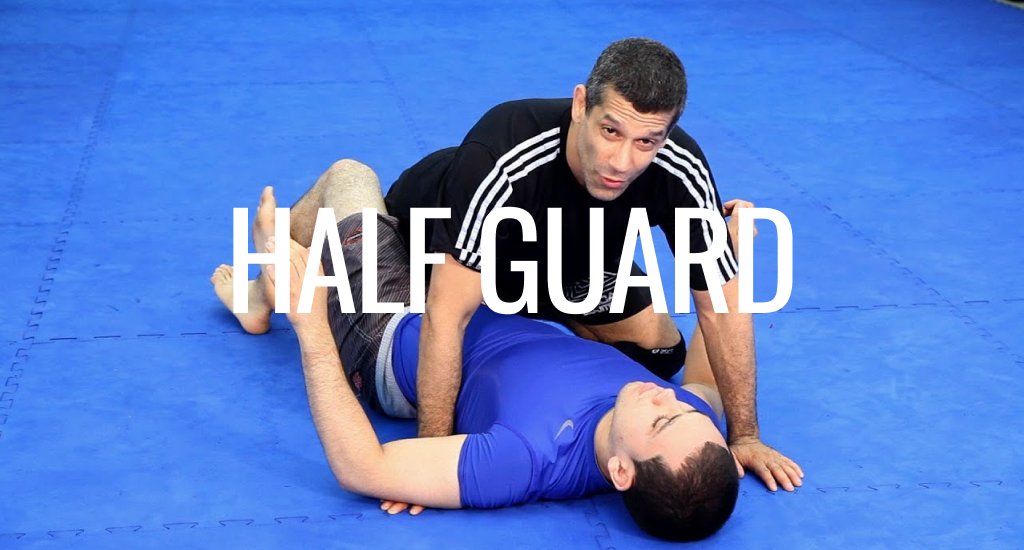
Table of Contents
What is the Half Guard?
In the Half Guard, you are on your back (or side), and you have one of your opponent’s legs trapped between your two legs. As Evolve MMA notes, the Half Guard is unique because it functions as both a pinning position and a sweeping position simultaneously.
Unlike the Closed Guard, where you control the opponent’s hips with your legs, the Half Guard focuses on controlling a single leg.
- The Goal: Prevent the opponent from freeing their leg (passing) while you work to off-balance them.
- The Advantage: It is easier to enter than Closed Guard and offers better mobility.
- The Risk: If you get flattened out, you are halfway to being crushed in Side Control.
The “Gordo” Evolution
We cannot talk about this position without mentioning Roberto “Gordo” Correa. In the early 90s, after a knee injury prevented him from playing Closed Guard, Gordo started playing from his side. He discovered that by trapping one leg and taking the underhook, he could sweep anyone. He turned a defensive position into an attacking one.
The 4 Main Variations of Half Guard
The “Half Guard” is not just one position. It is a family of positions. Here are the four versions you must know.
1. The Classic (Old School) Half Guard
This is the foundational style.
- Structure: You are on your side, hugging the opponent’s trapped leg (with your outside arm) and fighting for an underhook with your top arm.
- Best For: Sweeping heavy opponents using the “Dogfight” position.
- Key Concept: “Win the underhook, win the match.”
2. The Z-Guard (Knee Shield)
Also known as the “93 Guard,” this is a defensive fortress.
- Structure: You place your top knee across the opponent’s chest or hip, creating a strong frame (shield).
- Best For: Distance management and preventing the opponent from smashing you with the Cross Face.
- Weakness: It is harder to sweep directly from here; you usually transition to other guards first.
3. Deep Half Guard
Popularized by Jeff Glover and Bernardo Faria, this involves diving underneath the opponent.
- Structure: You hide your head under the opponent’s hips and control one of their legs with both of your arms.
- Best For: Hiding from pressure and off-balancing the opponent by manipulating their center of gravity.
- Risk: You are vulnerable to kimuras and chokes if you leave your arms exposed.
4. The Lockdown
Made famous by Eddie Bravo, this is a clinching style of Half Guard.
- Structure: You use both your legs to “lock” the opponent’s trapped leg in a figure-four extension.
- Best For: Stalling out explosive opponents and setting up the Electric Chair sweep.
Top 3 Half Guard Sweeps
If you are on the bottom, your goal is to get on top. These three sweeps are your primary weapons.
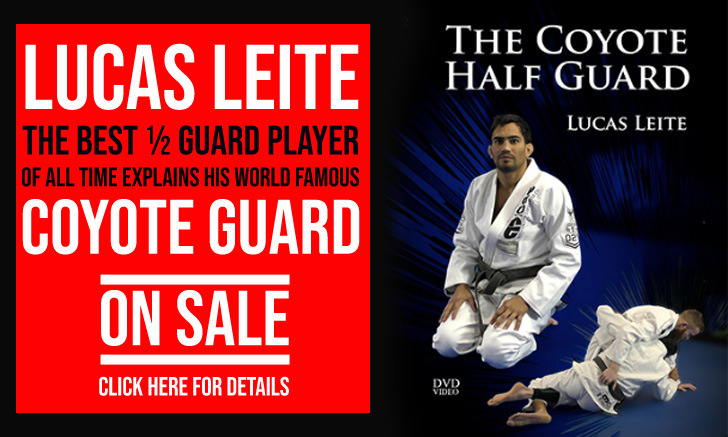
1. The Old School Sweep (Lucas Leite Style)
This is the classic “Underhook Sweep.”
- Get the Underhook: Shoot your top arm under the opponent’s armpit.
- Grab the Toe: Use your bottom hand to grab the opponent’s trapped foot (this prevents them from sprawling).
- Drive Forward: Get to your knees and drive into them. If they posture up, you take them down.
2. The Knee Lever Sweep (John Wayne Sweep)
Use this when the opponent is pressuring into you.
- Frame: Keep your knee shield (Z-Guard) strong.
- Jam the Knee: Instead of kicking away, use your top knee to jam their thigh outward.
- Twist: Simultaneously twist your hips and chop their arm. Their pressure will cause them to flip over your head.
3. The Waiter Sweep
This is a Deep Half classic.
- Undercook the Leg: Dive under their leg.
- Pendulum: Swing your legs to rock them back and forth.
- Carry the Weight: When they are light, lift them over your head and roll backward to come on top.
How to Pass the Half Guard
If you are on top, Half Guard is a dangerous trap. You need to pass it quickly.
1. The Knee Slice Pass
The most common pass in modern BJJ.
- Step 1: Secure an underhook and a cross-face grip.
- Step 2: Slide your free knee across their thigh, aiming for the mat.
- Step 3: Pull your trapped foot free and stabilize in Side Control. Read our full Knee Slice Pass Guide.
2. The Pressure Pass (Smash Pass)
Use gravity to crush their frames.
- Step 1: Sprawl your chest onto their upper body.
- Step 2: Walk your hips to the side to flatten their knees together.
- Step 3: Pass slowly around their legs while pinning them to the mat.
Troubleshooting: Common Mistakes
Mistake #1: Being Flattened Out
If your back is flat on the mat, you are losing.
The Fix: Always stay on your side. Use a “frame” (forearm) against their neck to keep distance.
Mistake #2: Losing the Underhook
If the opponent gets the underhook on you, they can crush your head.
The Fix: Fight for the underhook immediately. If you lose it, frame hard and recover your Z-Guard to reset.
Mistake #3: Lazy Legs
Don’t just squeeze their leg.
The Fix: Use your outside leg to hook, kick, and off-balance them constantly. An active Half Guard is a dangerous Half Guard.
Frequently Asked Questions
Is Half Guard good for beginners?
Yes. It is often the first guard beginners learn because it teaches you how to survive pressure. It is less complex than open guard variations like Spider Guard.
Can you get submitted in Half Guard?
Yes. The Darce Choke and Kimura are major threats. Always keep your elbows tight to your body.
What if they stand up?
If the opponent stands up while in your Half Guard, switch to the Single Leg X-Guard or De La Riva.
Conclusion
The Half Guard is a position you will use for the rest of your BJJ journey. It is your shield when you are tired, and your sword when you are ready to attack. Focus on staying on your side, winning the underhook war, and mastering the Old School Sweep. Once you do, you will never fear being on the bottom again.