
On This Page
Editorial Standards
Reviewed by the BJJ Sportswear Editorial Team for technical accuracy and kept current.
Japanese Necktie: BJJ No-Gi Choke Guide
The Japanese necktie finishes from a position most chokes never reach. Here is how the shoulder-riding grip works and where it shows up in a real roll.
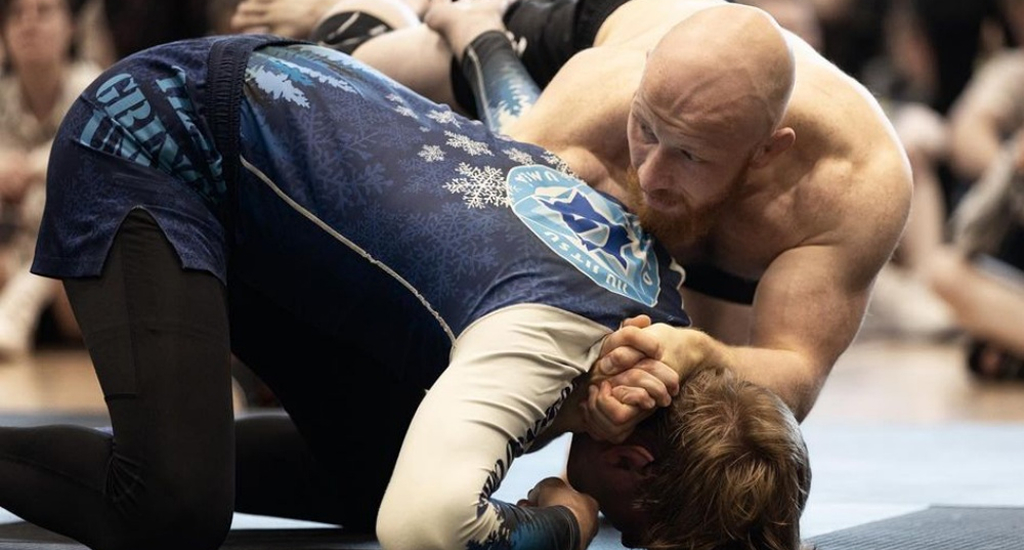
What the Japanese Necktie Is
The Japanese necktie is a choke applied from a shoulder-riding position, where you sit on top of your opponent's shoulder from behind while they turtle or turn away, wrapping one arm around their neck and using your own bodyweight and posture rather than a standard back-control grip to finish.
The Setup
- Ride on top of your opponent's shoulder from a turtle or scramble exchange, rather than settling into standard back mount.
- Wrap your near arm around the front of their neck, similar to a rear-naked choke grip, but from this higher, more angled position.
- Grab your own bicep or wrist to lock the loop, the same figure-four principle used in a rear naked choke.
- Sit your weight down and back, using your body position rather than pure arm strength to finish the choke.
Why It Thrives in Scrambles
Most chokes need a stable, established position before they can be attempted safely. The Japanese necktie is built for the opposite situation — a moving, unsettled scramble where your opponent is turning, turtling, or scrambling to escape a takedown or a pass. Because it works from a shoulder-riding position rather than requiring both hooks in, it is often available a beat earlier than a full back-control choke would be.
Common Setup Situations
- When an opponent turtles to defend a takedown and you end up riding high on one shoulder rather than settled behind them.
- Mid-scramble, when a partial back take stalls before both hooks land.
- As a transition off a failed guillotine or front headlock attempt, using the leftover angle instead of resetting the exchange.
Common Mistakes
- Trying to finish with the choking arm alone instead of sitting your weight down and back into the position.
- Chasing the finish before the shoulder-riding position is stable, giving your opponent an easy roll-through escape.
- Staying too upright instead of settling your weight low, losing the leverage the position depends on.
Defending the Japanese Necktie
The moment you feel an opponent riding your shoulder rather than settling behind you for a standard back take, turn into them rather than continuing to turtle or turn away — that denies the angle the choke needs before the loop closes. If the arm is already around your neck, tucking your chin and fighting the grip hand before it locks is the next window.
Where It Fits
The Japanese necktie shares its finishing mechanics with the rear naked choke but reaches them from a different, earlier position in a scramble — worth drilling as the shoulder-riding answer for exchanges that never quite settle into full back control.
Tagged with:#japanese necktie#no-gi#scrambles#submissions
Frequently Asked Questions
What is the Japanese necktie in BJJ?
A choke applied from a shoulder-riding position, where you sit on top of an opponent's shoulder from behind while they turtle or turn away, wrapping the neck and finishing with a figure-four grip and bodyweight rather than a standard back-control choke.
How is the Japanese necktie different from a rear naked choke?
They share the same figure-four grip mechanics, but the Japanese necktie is applied from a shoulder-riding position mid-scramble, often available before both hooks are in for a full back-control rear naked choke.
When does the Japanese necktie usually show up?
Most often when an opponent turtles to defend a takedown and you end up riding high on one shoulder, or when a partial back take stalls mid-scramble before both hooks land.
How do you defend the Japanese necktie?
Turn into an opponent who is riding your shoulder rather than continuing to turtle or turn away, which denies the angle the choke needs. If the arm is already around your neck, tuck your chin and fight the grip hand before it locks.
About the Author
Mohsin AyubBJJ practitioner, 6 years — Gracie Barra
Founder & Editor, BJJ Sportswear
Mohsin has trained Brazilian Jiu-Jitsu for six years at Gracie Barra and has competed at IBJJF-affiliated tournaments. He writes about competition, gear, and athlete careers, and founded BJJ Sportswear to help grapplers find equipment and information they can trust.
- Six years training Brazilian Jiu-Jitsu at Gracie Barra
- Competed at IBJJF-affiliated tournaments
- Writes on BJJ competition, gear testing, and athlete careers
This article was last reviewed and updated on 2026-08-18.