On This Page
Editorial Standards
Reviewed by the BJJ Sportswear Editorial Team for technical accuracy and kept current.
Turtle Position in BJJ: Attack & Defense Guide
Turtle position looks defensive, but it decides who gets the back next. Here is how to hold it, escape it, and attack it once you are on top.
What Turtle Position Is
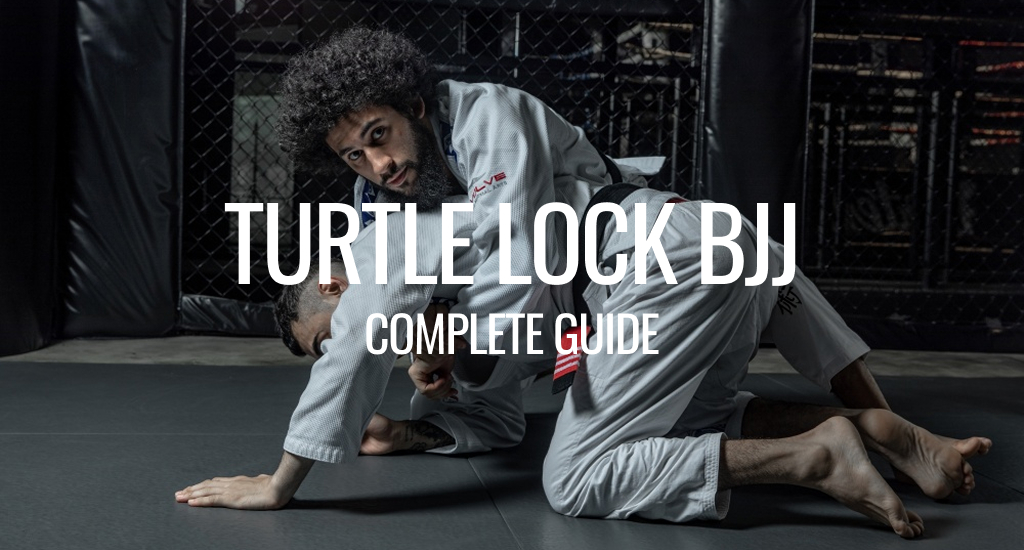
Turtle position is a defensive posture where you drop to your hands and knees, elbows tucked tight to your ribs and chin driven down toward your chest, presenting the smallest possible target while you look for an opening. It is rarely anyone's plan A, but it is one of the most common positions in BJJ, since almost every failed guard pass, stuffed takedown, or scrambled exchange passes through it on the way to somewhere else.
Why People End Up There
Turtle usually happens for one of two reasons: you gave up a takedown or a guard pass and are protecting your back on the way down, or you are deliberately using it as a transition, rolling through turtle on the way to recovering guard or scrambling to a leg entanglement. Which situation you are in changes everything about how you should hold the position.
Defending Turtle Correctly
- Keep your elbows glued to your ribs. Gaps between your arm and body are exactly where an opponent threads a choking arm through for a baseball bat choke or hooks in for back control.
- Drive your chin down and your head low, denying a clean angle on your neck.
- Cover, don't just curl. Actively block whichever side your opponent is working, rather than staying rounded and passive while they walk around you.
- Look for the moment to roll to your side or shoot for a leg, rather than sitting still and absorbing pressure indefinitely — turtle is a transition, not a place to live.
Attacking Turtle From the Top
- Break their base first. Post a hand on their far shoulder or hip and off-balance them before attacking a specific submission.
- Work for a seatbelt grip across their chest and insert a hook the moment they shift their weight, converting turtle control directly into back control.
- Watch for the collar. If your opponent is in a gi and turtled up, a baseball bat choke or a clock choke is often available the instant they push a hand against your knee or shin.
- Avoid overcommitting to one arm or one side. A patient top player who keeps both hooks available usually gets the back; an impatient one who dives for a single submission often gets scrambled and loses the position entirely.
Common Mistakes
- Sitting flat with your weight back on your heels, which makes you easy to flatten out completely.
- Leaving an arm extended or a gap under an armpit, handing your opponent a free choking arm.
- Staying in turtle passively for too long instead of actively looking for the moment to escape or scramble.
Where It Leads
Turtle sits at the center of several other positions in this library. From the top, it connects directly into a kneebar via the rolling entry, and into full back control once a hook lands. From the bottom, a well-timed roll out of turtle is often the fastest way back to a guard you can actually work from.
Tagged with:#turtle position#defense#fundamentals
Frequently Asked Questions
Is turtle position a bad place to be in BJJ?
It depends on why you are there. As a panic reaction to a lost position it is risky, since your back is exposed. As a deliberate transition on the way to a scramble or a leg entanglement, experienced grapplers use it on purpose.
How do I stop getting my back taken from turtle?
Keep your elbows tight to your ribs so there is no gap for a hook or a choking arm, and actively roll to a side or shoot for a leg rather than sitting still and absorbing pressure.
What is the best submission from top turtle?
It depends on the gear. In the gi, the baseball bat choke is one of the highest-percentage finishes once a collar grip lands. In no-gi, converting to a seatbelt grip and taking the back is usually the more reliable route.
Can you get injured staying in turtle position too long?
Extended time in turtle, with an opponent's weight pressing your ear against your own shoulder, is a known contributor to cauliflower ear over a training career, which is part of why coaches teach getting out of it promptly rather than stalling there.
About the Author
Mohsin AyubBJJ practitioner, 6 years — Gracie Barra
Founder & Editor, BJJ Sportswear
Mohsin has trained Brazilian Jiu-Jitsu for six years at Gracie Barra and has competed at IBJJF-affiliated tournaments. He writes about competition, gear, and athlete careers, and founded BJJ Sportswear to help grapplers find equipment and information they can trust.
- Six years training Brazilian Jiu-Jitsu at Gracie Barra
- Competed at IBJJF-affiliated tournaments
- Writes on BJJ competition, gear testing, and athlete careers
This article was last reviewed and updated on 2026-08-18.