
On This Page
Editorial Standards
Reviewed by the BJJ Sportswear Editorial Team for technical accuracy and kept current.
D'Arce Choke: The Complete No-Gi and MMA Guide
The D'Arce choke punishes a lazy underhook in seconds. Here is the thread, the figure-four grip, the roll, the flatten, and the escape that still works.
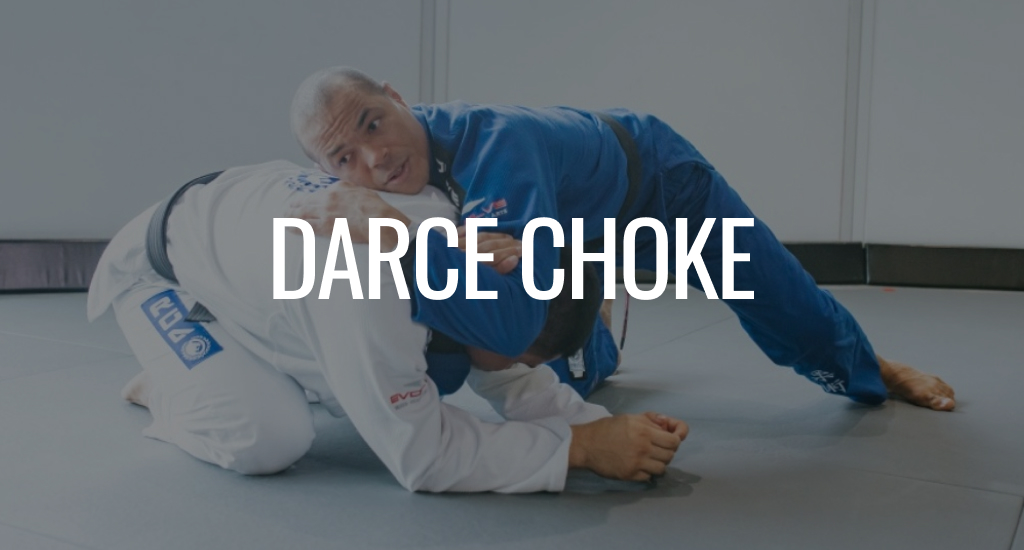
The D'Arce choke is the punishment for a lazy underhook. Your arm threads under your opponent's near armpit, crosses the front of their throat, and their own shoulder closes the other side of the neck.
Joe D'Arce gave the choke its name in the 2000s by finishing it on everyone he could reach. Kade and Tye Ruotolo, Tony Ferguson and Jeff Glover have kept it on highlight reels ever since. It is now one of the most common submissions in modern no-gi grappling and mixed martial arts competition.
What the D'Arce Choke Is
The D'Arce choke, also spelled Darce and often called the Brabo choke, is an arm-triangle strangle. You trap your opponent's head and one of their arms inside a figure-four grip, then close both carotid arteries at once.
Three parts do the work.
- The thread. Your choking arm enters under their near armpit and exits past the far side of their neck.
- The lock. That hand grabs your own bicep, which builds the figure-four grip. It is the same shape as a rear naked choke grip.
- The pressure. Your chest drops onto the side of their head and crunches their chin toward their chest.
Their trapped shoulder compresses one side of the neck while your bicep compresses the other. Blood stops reaching the brain, so a tight D'Arce finishes in seconds. It should never feel like a crank on the windpipe. If it does, your arm is sitting too low and you are choking the throat instead.
The name Brabo usually means the gi version, where you feed your opponent's own lapel across their neck instead of your arm. The squeeze is the same, but the lapel does the cutting.
D'Arce vs Anaconda: One Simple Rule
These two get mixed up every week in every academy. The entry direction is the only real difference.
- D'Arce choke: your arm enters under the armpit and exits under the neck.
- Anaconda choke: your arm enters under the neck and exits under the armpit.
Memory aid: the anaconda starts at the airway, and both words start with an A. Everything else is the D'Arce.
The finishes differ too. The anaconda usually ends with a rolling finish. The D'Arce usually ends flat, with your chest driving into their trapped shoulder. The guillotine choke is the third option from the same head control, and it traps the neck alone with no arm inside.
Where the D'Arce Comes From
You need one thing: your opponent's arm must be out in front of them, away from their ribs. Four moments hand you that.
- The sprawl. They shoot a single leg takedown, you sprawl, and their lead arm is already extended past your hip.
- The turtle. They post on their knees and elbows, so the near arm sits away from the body and the armpit is open.
- Half guard top. They dig an underhook from the bottom, and that underhook is the arm you are going to trap.
- The scramble. Anyone diving back to their knees after a failed shot gives you a front headlock.
This is why the choke appears so often in MMA and no-gi grappling. Both rulesets reward aggressive wrestling exchanges, and a failed takedown usually finishes with one arm hanging out in the open.
Step by Step: Locking the Grip
- Pin their head. Put your chest or your free hand on the back of their skull so they cannot posture up.
- Thread the choking arm under their near armpit, palm up, aiming across their body rather than down at the mat.
- Keep swimming until your hand clears the far side of their neck. Depth decides everything here.
- Grab your own bicep with the choking hand, so the figure-four locks the structure together.
- Lay your free hand flat on their back or on your own shoulder, and never lace your fingers.
- Drop your chest onto the side of their head and pinch your elbows together.
Do not grip early. A shallow arm gives your opponent an easy arm drag, and you lose the position instead of the match.
Three Ways to Finish It
Once the grip is locked, pick the finish that matches the position you are in.
The roll. Fall to the side of the trapped arm and take them with you. They land on their side, their base disappears, and the squeeze does the rest. This is the version most people learn first from the sprawl.
The flatten. From half guard top or side control, stay on top instead. Drive your chest into their trapped shoulder, walk your knees away from their hips, and let your bodyweight close the loop.
The vice, sometimes called the Marce after Marc Laimon. You cannot always roll them. Walk your legs toward their hips instead, square your shoulders, and squeeze your elbows together. It is pure leverage, and it works well against a heavy opponent who will not budge.
The Standing D'Arce
The Ruotolo brothers built their reputation on this one. You lock the same grip from a standing front headlock, then finish before either of you hits the mat.
- Snap their head down from a collar tie so their weight follows their head.
- Thread the arm under the armpit while they are still bent over.
- Lock the bicep grip and pull your elbows into your ribs.
- Sag your hips and drop your weight straight down instead of pulling up.
The standing version is fast and spectacular, but it surrenders the position every time it fails, which makes it a poor trade in a points match and an excellent one in a scramble.
Why Your D'Arce Fails
- The arm is too shallow, so your hand never reaches your bicep. Fix: push their head down with your free hand first, the same grip you would use for a Japanese necktie, then feed the choking arm deeper.
- They are flat on their belly. A flat opponent has nowhere to be squeezed into. Fix: hook their legs or bump their hip to tip them onto their side.
- Your elbows are wide. The loop only shrinks when the elbows pinch, so glue them to your ribs.
- You have short arms. Fix: swap the bicep grab for a gable grip, palm to palm, and keep the choking elbow high. The choke still closes.
- Their trapped arm slips out. No arm inside means no D'Arce, so re-thread before you squeeze again.
- You squeeze with arms alone. Your chest and hips supply the real pressure.
How to Escape the D'Arce Choke
The escape window opens before the grip closes. Once the figure-four is locked and your shoulder is buried, your options shrink fast.
- Hand fight early. Two hands on their choking wrist, and pull it down your chest to buy space.
- Free the trapped arm. Pull the elbow back toward your own ribs before they finish the thread.
- Turn in, never away. Turning toward them blocks the angle they need, while turning away simply feeds them more of your neck.
- Get your head up. Post on your free hand and drive your forehead toward their hip on the choking side.
- Hip out. If they are on top and flattening you, walk your hips away and rebuild a frame or a knee shield. Our half guard guide covers the frames that stop the flatten.
- Tap on time. This choke goes from loose to finished in about a second.
Rules and Safety
The D'Arce is legal at every belt level and age division under IBJJF rules, including white belt, because it strangles rather than attacking a joint or the spine. It is legal in no-gi rulesets and in MMA too.
Treat it with respect in training. Blood chokes work fast, and a partner whose shoulder is buried cannot always reach you to tap. Apply the squeeze slowly, watch their free hand, and release the moment they move.
Who to Study
- Kade and Tye Ruotolo, for the standing D'Arce and the scramble entries.
- Tony Ferguson, who built a UFC lightweight run partly on this choke.
- Jeff Glover, for the wild angles nobody else looks for.
What to Drill Next
Start from the sprawl, where the arm is already exposed and the roll finish is easiest to feel. Once the thread becomes automatic, move to half guard top and drill the flatten instead.
Then treat the front headlock as one system. From the same head control you can hit the D'Arce, the anaconda, the guillotine, or a Peruvian necktie instead, and your opponent's reaction picks the answer for you. Our side control escape guide shows the frames they will use against the flatten, and the single leg takedown guide shows what they were trying to do when they handed you the arm.
Tagged with:#darce choke#brabo choke#arm triangle#front headlock#no-gi#mma#submissions
Frequently Asked Questions
What is the difference between a D'Arce choke and an anaconda choke?
Both trap the head and one arm from a front headlock. In the D'Arce your arm enters under the armpit and exits under the neck. In the anaconda it enters under the neck and exits under the armpit.
Is the D'Arce choke legal in IBJJF competition?
Yes. It is a blood choke rather than a joint lock or a spinal attack, so it is legal at every belt level and age division, including white belt. It is also legal in no-gi rulesets and in MMA.
Can you hit a D'Arce choke with short arms?
Yes. Swap the bicep grab for a gable grip, palm to palm, and keep the choking elbow high. The trapped shoulder does most of the compressing, so you need depth and position rather than long arms.
Why is it called the D'Arce or Brabo choke?
The name D'Arce comes from Joe D'Arce, who popularised the finish in the 2000s. Brabo is the Brazilian name, and it usually refers to the gi version, where a lapel replaces your arm across the neck.
Why does my D'Arce choke keep slipping?
Almost always a shallow thread. If your hand does not clear the far side of the neck before you grip, the loop stays loose. Push their head down first, feed the arm deeper, then pinch your elbows.
Sources & Further Reading
About the Author
Mohsin AyubBJJ practitioner, 6 years — Gracie Barra
Founder & Editor, BJJ Sportswear
Mohsin has trained Brazilian Jiu-Jitsu for six years at Gracie Barra and has competed at IBJJF-affiliated tournaments. He writes about competition, gear, and athlete careers, and founded BJJ Sportswear to help grapplers find equipment and information they can trust.
- Six years training Brazilian Jiu-Jitsu at Gracie Barra
- Competed at IBJJF-affiliated tournaments
- Writes on BJJ competition, gear testing, and athlete careers
This article was last reviewed and updated on 2026-08-17.