
On This Page
Editorial Standards
Reviewed by the BJJ Sportswear Editorial Team for technical accuracy and kept current.
Over-Under Pass: Bernardo Faria's BJJ Guide
The over-under pass grinds through half guard rather than racing around it. Here is the grip, the hip switch, and the pressure that makes it work.
What the Over-Under Pass Is
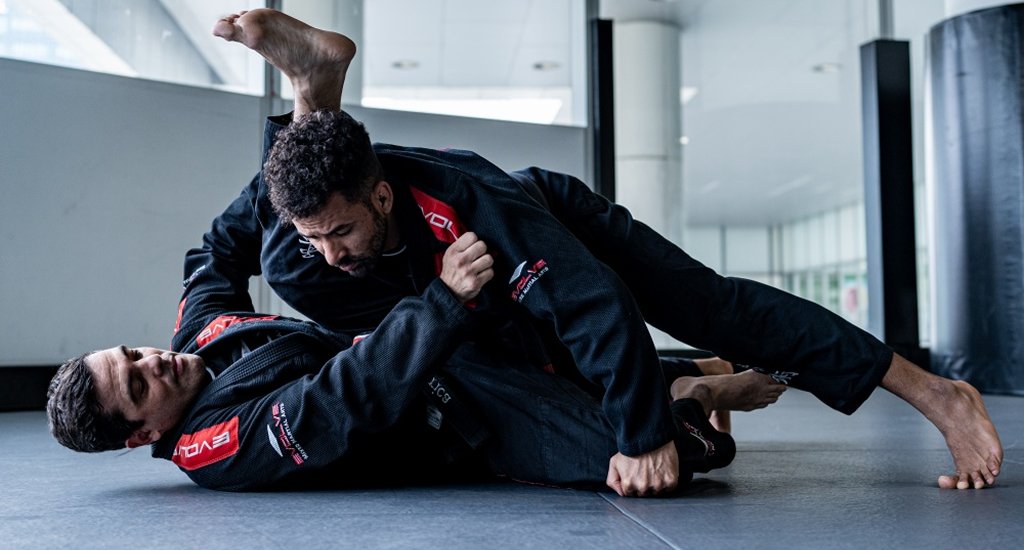
The over-under pass gets its name from the grip: one of your arms goes over your opponent's leg, the other goes under it, pinning their hips between your two arms from opposite directions. Bernardo Faria built much of his five-world-title career around exactly this pass from half guard, using patient pressure instead of speed to grind through opponents at every belt level.
The Grip
- From inside your opponent's half guard, thread one arm over their far leg, reaching around their hip.
- Slide your other arm underneath their near leg, the trapped one.
- Clasp your hands together behind their leg if possible, locking the over-under grip into a single connected frame.
- Keep your head heavy on their chest, denying them the underhook that would let them recover.
The Hip Switch
- With the grip locked, walk your hips away from your opponent's trapped leg, creating distance and an angle.
- Free your own trapped leg by sliding your knee out from their control as you switch your hips through.
- Once your leg is free, drive your weight forward and settle into side control, keeping the over-under connection until the position is fully secure.
Why Pressure Beats Speed Here
Faster, more athletic passes can get stuffed by a strong or flexible half guard player who simply out-scrambles you. The over-under pass instead relies on control that does not depend on speed — once the grip is locked and your head is heavy, your opponent has very little room to create the space a scramble needs. That is what makes it such a reliable pass against bigger, stronger opponents specifically.
Common Mistakes
- Losing head pressure mid-pass, which frees your opponent's far-side hip to reset their guard.
- Trying to hip-switch before the over-under grip is actually locked, giving them a gap to recover.
- Standing up out of the grip too early instead of walking your hips through while staying connected.
Defending the Over-Under Pass
Fight the underhook before the grip locks — the moment one of your opponent's arms threads over your leg, work to win the underhook on that same side rather than letting both control points land. Once the grip is fully secured, recovering Z-guard or shrimping to reset distance are the more realistic paths back to safety.
Where It Fits
The over-under pass pairs naturally with a brief stack to kill leg mobility before the grip locks in, and it is one of the standard answers to a stubborn half guard alongside the knee slice pass.
Tagged with:#over-under pass#guard passing#half guard
Frequently Asked Questions
What is the over-under pass in BJJ?
A half guard pass where one arm goes over your opponent's leg and the other goes under it, pinning their hips between the two arms while you walk your hips through to free your own trapped leg.
Who is associated with the over-under pass?
Bernardo Faria, who built much of his five-world-title career around this exact pass from half guard, using patient pressure rather than speed or athleticism.
Why does the over-under pass work well against bigger opponents?
Because it relies on locked control rather than speed. Once the grip and head pressure are established, the opponent has very little room to create the space a scramble or reversal needs.
How do you defend the over-under pass?
Fight for the underhook before the grip locks in, the moment an arm threads over your leg. If the grip is already secured, recovering Z-guard or shrimping to reset distance are the more realistic options.
About the Author
Mohsin AyubBJJ practitioner, 6 years — Gracie Barra
Founder & Editor, BJJ Sportswear
Mohsin has trained Brazilian Jiu-Jitsu for six years at Gracie Barra and has competed at IBJJF-affiliated tournaments. He writes about competition, gear, and athlete careers, and founded BJJ Sportswear to help grapplers find equipment and information they can trust.
- Six years training Brazilian Jiu-Jitsu at Gracie Barra
- Competed at IBJJF-affiliated tournaments
- Writes on BJJ competition, gear testing, and athlete careers
This article was last reviewed and updated on 2026-08-18.