
On This Page
Editorial Standards
Reviewed by the BJJ Sportswear Editorial Team for technical accuracy and kept current.
Stack Pass in BJJ: Pressure Passing Guide
The stack pass folds a guard closed instead of going around it. Here is how the pressure works, when to use it, and how to defend it from the bottom.
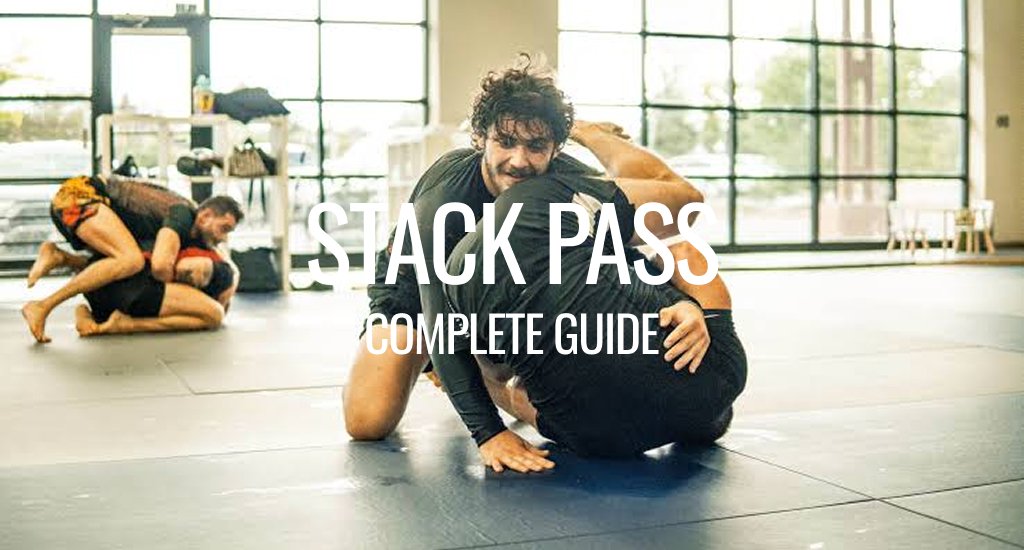
What the Stack Pass Does
The stack pass folds your opponent's hips up and over, toward their own shoulders, driving their legs out of the fight through sheer compression rather than angling around them. Where a toreando pass or a leg drag works by beating an opponent's legs to an angle, the stack pass simply removes the angle problem entirely by folding them out of the way.
Why It Works Against Flexible Guards
Guards built around fast leg movement — open guard, spider guard, certain X-guard variations — rely on the bottom player's legs staying mobile and threatening. Once you fold their hips past their own shoulders, that mobility disappears completely. This is exactly why the stack pass shows up so often against highly flexible guard players: it neutralizes flexibility rather than trying to out-move it.
How to Execute It
- Secure control of both of your opponent's ankles or lower legs, driving your weight forward into their hips.
- Step or walk forward, folding their hips up and back toward their own head.
- Keep your chest heavy and your base wide, since a stacked opponent will often try to roll or buck their way back down.
- Once their legs clear past your shoulders, step around to the side and settle into side control.
Common Mistakes
- Stacking with your back rounded instead of your chest driving forward, which sacrifices most of the pressure that makes the pass work.
- Standing too narrow, giving your opponent an easy angle to roll you over during the stack.
- Rushing the step-around before their legs have actually cleared your shoulders, getting your legs re-tangled in the process.
The Real Risk: Getting Rolled
A stack pass done with poor base is one of the easiest passes in BJJ to get reversed from. If your feet are too close together or your weight is too far forward, a strong bridge and roll from your opponent can flip the entire exchange and put you on your back. Wide feet and a low center of gravity are what actually make the stack safe to attempt.
Defending the Stack Pass
Fight the stack before it fully locks in — the moment your hips start folding toward your shoulders, that is your window. Bridge hard toward one side rather than straight up, since a diagonal bridge is far more likely to unbalance a narrow-footed passer than a straight vertical one.
Where It Fits
The stack pass pairs naturally with the over-under pass — many high-level passers combine the two, stacking briefly to kill leg mobility before transitioning into an over-under grip to finish. Our knee slice pass guide and leg drag guide cover the angle-based alternatives when stacking is not the right tool against a particular guard.
Tagged with:#stack pass#guard passing#pressure passing
Frequently Asked Questions
What is a stack pass in BJJ?
A pressure-based guard pass where you fold your opponent's hips up and back toward their own shoulders, removing their legs from the exchange through compression rather than passing around them at an angle.
Why is the stack pass effective against flexible guards?
Because it neutralizes leg mobility directly instead of trying to out-move it, which is why it works particularly well against open guard and spider guard players who rely on fast, threatening leg movement.
Is the stack pass risky to attempt?
Yes, if your base is narrow or your weight is too far forward — a strong opponent can bridge and roll a poorly based stack pass, reversing the entire exchange. Wide feet and a low center of gravity keep it safe.
How do you defend a stack pass?
Fight it before it locks in, the moment your hips start folding toward your shoulders. Bridge diagonally toward one side rather than straight up, since that is far more effective against a narrow-footed passer.
About the Author
Mohsin AyubBJJ practitioner, 6 years — Gracie Barra
Founder & Editor, BJJ Sportswear
Mohsin has trained Brazilian Jiu-Jitsu for six years at Gracie Barra and has competed at IBJJF-affiliated tournaments. He writes about competition, gear, and athlete careers, and founded BJJ Sportswear to help grapplers find equipment and information they can trust.
- Six years training Brazilian Jiu-Jitsu at Gracie Barra
- Competed at IBJJF-affiliated tournaments
- Writes on BJJ competition, gear testing, and athlete careers
This article was last reviewed and updated on 2026-08-18.