On This Page
Editorial Standards
Reviewed by the BJJ Sportswear Editorial Team for technical accuracy and kept current.
Kneebar BJJ: The Complete Leg Lock Submission Guide
The kneebar attacks the knee the same way an armbar attacks the elbow. Here is the mechanics breakdown, the best entries, the defence, and the rules on who can use it.
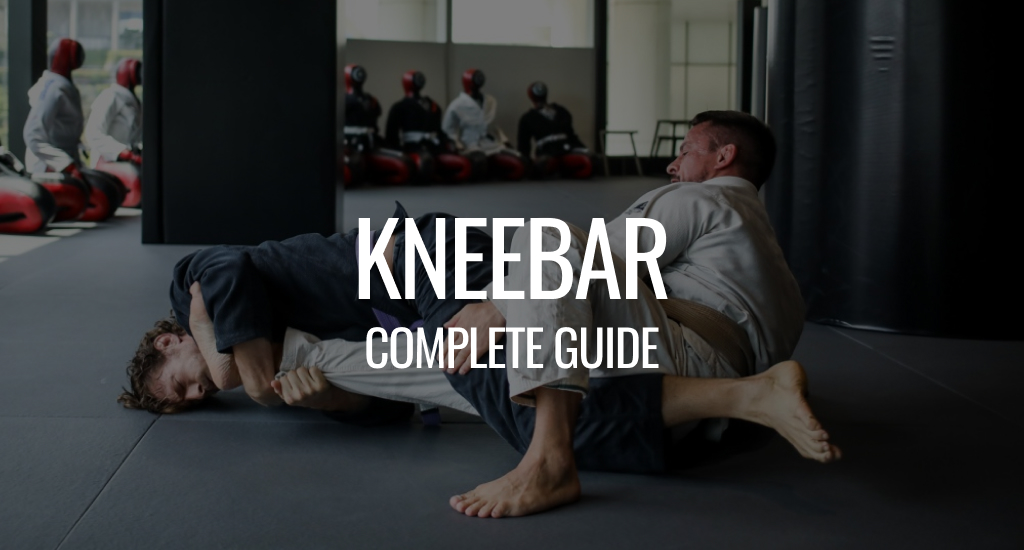
The kneebar is one of the most effective leg locks in jiu-jitsu. It hyperextends the knee, the same way an armbar hyperextends the elbow. Done correctly, it ends matches fast. Done carelessly, it injures training partners. This guide covers both sides.
Many grapplers skip leg locks and stay with upper body attacks. That leaves a blind spot. Even if you never hunt kneebars, you need to understand them to defend them.
What a Kneebar Is
You control your opponent’s leg between your thighs, place your hips behind their knee, and extend. Their toes point past your shoulder. Your hips act as the fulcrum. When you arch, the knee is forced straight and then beyond straight.
The kneebar is different from other leg attacks. The heel hook works by rotation. The straight ankle lock and the toe hold attack smaller joints. The kneebar is a linear attack on a large joint, which makes it both powerful and dangerous.
[IBJJF](https://ibjjf.com/rules/) Legality
Under IBJJF rules, the kneebar is legal for brown and black belts in gi and no-gi. Purple belts may use it in no-gi only. Blue and white belts may not use it in any IBJJF event. Many sub-only and no-gi promotions allow it earlier. Always check the ruleset before you compete.
Essential Mechanics
Hip Placement
Your hips must be perpendicular to their knee. Put your hip bone directly behind the joint. Your body should form a straight line from your chest through their knee. Bad hip placement is the number one reason kneebars fail.
Leg Pinch
Squeeze their leg between your thighs. Your knees pinch just below their knee, like a vice. This stops them rotating out. The tighter the pinch, the safer the position.
Grips
Most people hug the shin or ankle with both arms. A figure-four grip adds control. A palm-to-palm grip allows quick adjustments. Whichever grip you use, keep pulling toward your chest. Their toes should point over your shoulder, not sideways.
The Finish
Extend your hips forward while pulling the ankle back. Keep your back arched and your chest up. Do not curl. Apply pressure slowly. Give your partner time to tap.
High-Percentage Entries
From 50/50
When both legs are tangled in 50/50 guard, free your outside leg and swing it over their body. Grab the ankle and fall to your back. Your hips line up naturally. It works even against a partner who defends early.
From X-Guard
When they stand in your X-guard, release your bottom hook and swing that leg over their captured leg. Push their free leg away with your top foot and fall to your side with the ankle. This one needs timing, so drill it slowly first.
From Bottom Half Guard
Scoop behind their trapped knee, do a small forward roll, and bring them with you. You land with their leg between your thighs. Most people never expect a leg attack from bottom half guard, which is why it works.
From Top Half Guard or Turtle
When they go to turtle or clamp half guard, step over their body, hug the trapped leg, and roll into it. This is the classic “rolling kneebar” you will see in competition footage.
Common Mistakes
- Hips too far from the knee. You end up pulling with your arms.
- Knees apart. They spin out and escape.
- Toes pointed sideways. They can turn their knee and relieve pressure.
- Curling your body instead of arching.
- Cranking fast. That is how people get hurt.
Defending the Kneebar
Early defence is easy. Bend your knee hard and turn it toward the mat, so their hips are no longer behind the joint. Grab your own leg or their belt to slow the extension. Late defence is harder. If they have the pinch and the toes over the shoulder, tap. Knees do not heal fast.
Training Kneebars Safely
Drill slowly. Tap early. Agree with your partner before rolling that leg locks are on the table. Never yank a kneebar to finish before someone taps. Ligament damage from a rushed kneebar can take months to recover from.
Competition Strategy
Kneebars are strongest as a follow-up. Attack the heel hook, and when they defend by hiding the heel, switch to the kneebar. Or hunt the straight ankle lock and take the kneebar when they push their leg through. Chains beat single attacks — Dean Lister, one of the leg-lock game's most influential figures, built much of his career on exactly this kind of chained leg attack.
Tagged with:#kneebar#leg locks#submissions
Frequently Asked Questions
What is a kneebar in BJJ?
A leg lock that hyperextends the knee. You trap their leg between your thighs, put your hips behind the joint, and extend, the same way an armbar attacks the elbow.
Is the kneebar legal in IBJJF competition?
Yes for brown and black belts in gi and no-gi. Purple belts may use it in no-gi only. Blue and white belts may not use it in IBJJF events. Other rulesets vary, so always check.
How do you defend a kneebar?
Bend the knee early and turn it toward the mat so their hips are no longer behind the joint. If they already have the pinch and your toes are over their shoulder, tap. Knees do not recover fast.
What is the best entry to the kneebar?
The 50/50 entry is the most reliable because your leg control is already in place. X-guard, bottom half guard, and the rolling kneebar from top half or turtle are the other high-percentage options.
Sources & Further Reading
About the Author
Mohsin AyubBJJ practitioner, 6 years — Gracie Barra
Founder & Editor, BJJ Sportswear
Mohsin has trained Brazilian Jiu-Jitsu for six years at Gracie Barra and has competed at IBJJF-affiliated tournaments. He writes about competition, gear, and athlete careers, and founded BJJ Sportswear to help grapplers find equipment and information they can trust.
- Six years training Brazilian Jiu-Jitsu at Gracie Barra
- Competed at IBJJF-affiliated tournaments
- Writes on BJJ competition, gear testing, and athlete careers
This article was last reviewed and updated on 2026-08-16.