
On This Page
Editorial Standards
Reviewed by the BJJ Sportswear Editorial Team for technical accuracy and kept current.
BJJ Weight Classes: Complete IBJJF, ADCC & No-Gi Guide
IBJJF weighs you in your gi, about 30 minutes before your match — not the day before, not in your underwear. Get that one detail wrong and you show up overweight.
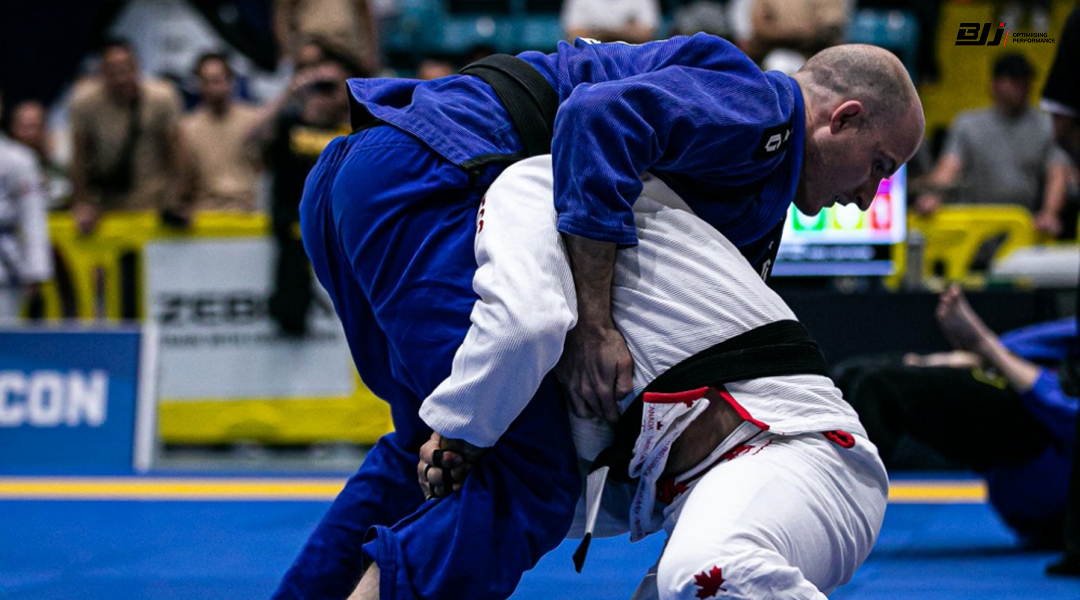
Here's the one fact most beginners get wrong about BJJ weight classes: IBJJF weighs you in your gi. That happens roughly 30 minutes before your first match. Not the day before. Not in your underwear. In your full competition uniform, on competition day.
That single detail changes how you should think about weight management. A standard pearl-weave competition gi adds 1.5–2.5 kg (3.3–5.5 lbs) to your body weight. A heavier double-weave can add up to 3 kg. Say you plan to compete at 79.5 kg in the Middle division. You need to weigh around 76–77 kg the morning of the event — before the gi even goes on. Most first-time competitors miss this and show up overweight. This guide covers every major weight class system so you don't.
Why Weight Classes Exist
Size and weight create real physical advantages in grappling. A technically sharper but much lighter competitor is often at a real disadvantage against someone heavier. Not always — but often enough that mixing large weight gaps would make competition unfair. Weight classes fix that. They create matchups where skill, strategy, and conditioning decide the outcome, not the accident of being born bigger.
IBJJF runs the most detailed system in the sport: nine divisions per gender for adults. ADCC uses just five. Knowing both matters if you plan to compete in either format, or just want to follow the sport.
IBJJF Weight Classes — Adult Men (Gi)
| Division | Weight Limit (kg) | Weight Limit (lbs) |
|---|---|---|
| Rooster | Up to 57.5 kg | Up to 126.5 lbs |
| Light Feather | Up to 64 kg | Up to 141 lbs |
| Feather | Up to 70 kg | Up to 154.5 lbs |
| Light | Up to 76 kg | Up to 167.5 lbs |
| Middle | Up to 82.3 kg | Up to 181.5 lbs |
| Medium Heavy | Up to 88.3 kg | Up to 194.5 lbs |
| Heavy | Up to 94.3 kg | Up to 207.9 lbs |
| Super Heavy | Up to 100.5 kg | Up to 221.6 lbs |
| Ultra Heavy | No upper limit | No upper limit |
These weights include your gi. The scale does not adjust for uniform weight. Ultra Heavy has no ceiling, so every competitor above 100.5 kg competes together — the most physically diverse division in the sport. Missing weight means immediate disqualification. No second chances, no switching divisions on the day.
Gi weight tip: weigh yourself at home in your full competition gi at least a week out. Check our gi size chart if you're unsure which size actually fits — a gi that's too large adds unnecessary weight along with the fit problems. Most competition gis from established brands run 1.5–2.0 kg. Double-weave gis can reach 2.5–3.0 kg. A lighter competition gi is a real edge — not just for mobility, but for weight management too.
IBJJF Weight Classes — Adult Men (No-Gi)
| Division | No-Gi Limit (kg) | No-Gi Limit (lbs) |
|---|---|---|
| Rooster | Up to 53.5 kg | Up to 118 lbs |
| Light Feather | Up to 58.5 kg | Up to 129 lbs |
| Feather | Up to 64.5 kg | Up to 142 lbs |
| Light | Up to 69 kg | Up to 152 lbs |
| Middle | Up to 74 kg | Up to 163 lbs |
| Medium Heavy | Up to 79 kg | Up to 174 lbs |
| Heavy | Up to 84 kg | Up to 185 lbs |
| Super Heavy | Up to 89 kg | Up to 196.5 lbs |
| Ultra Heavy | No upper limit | No upper limit |
No-gi limits sit roughly 4–6 kg lighter than gi limits at each division. Why? IBJJF weighs no-gi competitors in a rash guard and shorts, not a gi. A gi Middle competitor (82.3 kg) and a no-gi Middle competitor (74 kg) end up with roughly the same actual body weight — the gap just accounts for the gi itself.
This trips up a lot of competitors switching formats. Say you normally compete at gi Middle and sign up for a no-gi event under the same division name. You will likely be overweight. The no-gi Middle limit is nearly 9 kg lighter.
IBJJF Weight Classes — Adult Women
Women's divisions use different names and limits, with eight divisions instead of nine — there's no female Ultra Heavy, since Super Heavy already has no upper limit.
| Division | Weight Limit (kg) | Weight Limit (lbs) |
|---|---|---|
| Rooster | Up to 49 kg | Up to 108 lbs |
| Light Feather | Up to 55 kg | Up to 121.5 lbs |
| Feather | Up to 62 kg | Up to 136.5 lbs |
| Light | Up to 69 kg | Up to 152 lbs |
| Middle | Up to 76 kg | Up to 167.5 lbs |
| Medium Heavy | Up to 83 kg | Up to 183 lbs |
| Heavy | Up to 90 kg | Up to 198.5 lbs |
| Super Heavy | No upper limit | No upper limit |
Women's no-gi limits run roughly 3–5 kg lighter at each division, following the same weigh-in-what-you-compete-in logic.
IBJJF Masters Divisions
Masters divisions split by age, not extra weight rules — the weight limits match the adult divisions exactly.
| Masters Division | Age Requirement |
|---|---|
| Masters 1 | 30 and older |
| Masters 2 | 35 and older |
| Masters 3 | 40 and older |
| Masters 4 | 45 and older |
| Masters 5 | 50 and older |
| Masters 6 | 55 and older |
| Masters 7 | 60 and older |
A few practical notes: match times run shorter than adult black belt, typically 5–6 minutes versus 10. Smaller events sometimes merge brackets when there aren't enough competitors, like Rooster and Light Feather. You can compete in a younger masters bracket, but never an older one — registration goes by your age on day one of the event. Some events also relax certain technique restrictions for masters over 50. Always check the specific rulebook.
ADCC Weight Classes
ADCC (Abu Dhabi Combat Club) is the most prestigious no-gi organization in the world, and it runs a fundamentally different structure than IBJJF.
Men's:
| Division | Weight Limit |
|---|---|
| −66 kg | Under 66 kg (145.5 lbs) |
| −77 kg | Under 77 kg (169.8 lbs) |
| −88 kg | Under 88 kg (194 lbs) |
| −99 kg | Under 99 kg (218.3 lbs) |
| +99 kg | Above 99 kg (no limit) |
| Absolute | All classes compete together |
Women's:
| Division | Weight Limit |
|---|---|
| −60 kg | Under 60 kg (132.3 lbs) |
| −70 kg | Under 70 kg (154.3 lbs) |
| +70 kg | Above 70 kg (no limit) |
| Absolute | All classes compete together |
What Actually Differs Between ADCC and IBJJF
Far fewer divisions. ADCC uses five men's divisions to IBJJF's nine. That means the weight gaps inside each bracket are much bigger.
Day-before weigh-ins. ADCC weighs in the day before competition. That gives athletes roughly 24 hours to rehydrate. A −77 kg ADCC bracket often has competitors walking around at 80–85 kg on fight day — 10–15 lbs above their weigh-in number. That's a big part of why ADCC matches often look more physical than IBJJF bouts at a similar nominal weight.
Naming. ADCC uses numeric divisions (−66 kg, −77 kg). IBJJF uses names, Rooster through Ultra-Heavy. Never assume they match up by name alone — compare the actual limits.
Ruleset. ADCC allows heel hooks from the start. IBJJF restricts or bans them depending on belt and format. That shapes not just which submissions are live, but overall strategy.
Other Organizations Worth Knowing
NAGA uses day-before weigh-ins in underwear or minimal clothing. That's far less stressful than IBJJF's same-day-in-gi rule, which makes NAGA a popular entry point for beginners.
UAEJJF (Abu Dhabi World Pro, Abu Dhabi Grand Slam) broadly follows IBJJF limits with minor variations. Always confirm exact numbers against the specific event.
Grappling Industries runs round-robin formats with weight classes similar to IBJJF. You get more mat time per event than a single-elimination bracket gives you.
How to Choose Your Weight Class
Step 1 — find your walking weight. Weigh yourself every morning for two weeks, before any food or training. Note the average. That's your true baseline.
Step 2 — add your gear. If competing gi, add your gi's actual weight — roughly 1.5–2.0 kg for a lightweight competition gi — and see which division that lands you in.
Step 3 — decide whether to cut. For most recreational competitors and beginners, competing at your natural weight is the right call. Under IBJJF's same-day weigh-in, you compete within an hour of weighing in. There's no real time to rehydrate. A dehydrated competitor is slower and weaker on the mat. Cutting only makes sense when a modest adjustment — careful eating the week before, some water restriction the night before — gets you into a lower division without hurting performance. Cap any same-day water cut at 2–3% of body weight.
Step 4 — consider the absolute. Every IBJJF event includes an Absolute (open weight) division where every weight class competes together. Entering it alongside your regular division gets you more matches and broader experience. Heavier competitors hold a statistical edge in absolute. But technique regularly overcomes size — Marcelo Garcia won multiple ADCC Absolute titles against opponents 20–30 kg heavier than him.
Safe Weight Management
IBJJF weighs in right before competition. So the safe approach looks different from same-day-weigh-in sports like boxing, where fighters get a day to recover.
What works: manage carbs and sodium in the final week to cut water retention naturally. Eat a lighter dinner the night before. Train in your actual competition gi beforehand, so you know exactly how it affects the scale. Cut weight through food management over days, not dehydration in the final hours.
What causes problems: aggressive water restriction the day before. Hard training the day before that saps you with no time to recover. Buying a new gi the week of the event without knowing its exact weight.
The core principle is simple: your actual performance on the mat matters more than being the heaviest person in a lower bracket while running on empty. Compete at a weight you can comfortably walk around at, especially for your first few tournaments.
Frequently Asked Questions
What weight class am I in for IBJJF gi competition? Weigh yourself in your full competition gi. Then find the lowest division limit that number falls under. 80 kg in your gi puts you in Middle (up to 82.3 kg). 83 kg puts you in Medium Heavy (up to 88.3 kg).
Why are no-gi limits lower than gi limits? IBJJF weighs you in whatever you're competing in. A gi adds real weight that a rash guard and shorts don't. So the no-gi tables shift down to keep actual body weights roughly equivalent.
Can I switch weight classes after registering? No. Once registered, you compete in that division. Missing weight means disqualification, with no option to move up on the day.
How much can I safely cut for a BJJ tournament? Weigh-in happens minutes before your match, so any cut beyond about 2–3% of body weight will hurt your performance. Most competitors do better at their natural weight than cutting hard and competing depleted.
The Bottom Line
Know exactly which system you're competing under. Weigh yourself the way you'll actually be weighed — in gear, not underwear, for IBJJF. Build in a week or two of buffer before you commit to a division. Getting this right before you register avoids the single most common, and most avoidable, mistake in competition BJJ.
Tagged with:#competition#IBJJF#weight classes
Frequently Asked Questions
How do IBJJF weigh-ins work for gi competition?
IBJJF weighs competitors in their full competition gi, roughly 30 minutes before their first match — not the day before and not in underwear. A standard gi adds 1.5–2.5 kg, so factor that in before registering for a division.
Why are BJJ no-gi weight limits lower than gi limits?
No-gi competitors weigh in wearing a rash guard and shorts rather than a gi, so the limits shift roughly 4–6 kg lower at each division to keep actual body weights equivalent between the two formats.
What is the difference between ADCC and IBJJF weight classes?
ADCC uses five divisions per gender versus IBJJF's nine, weighs in the day before competition (allowing rehydration), and names divisions numerically rather than with IBJJF's Rooster-through-Ultra-Heavy system.
Does BJJ have weight classes?
Yes. Every major organization — IBJJF, ADCC, and most regional promotions — uses weight classes for both gi and no-gi competition, so athletes only compete against others in a similar weight range rather than across the board.
How many IBJJF no-gi weight classes are there?
Nine per gender for adult men (Rooster through Ultra Heavy) and eight for adult women, the same division count as gi — only the weight limits at each division shift lower to account for not wearing a gi.
Sources & Further Reading
About the Author
Mohsin AyubBJJ practitioner, 6 years — Gracie Barra
Founder & Editor, BJJ Sportswear
Mohsin has trained Brazilian Jiu-Jitsu for six years at Gracie Barra and has competed at IBJJF-affiliated tournaments. He writes about competition, gear, and athlete careers, and founded BJJ Sportswear to help grapplers find equipment and information they can trust.
- Six years training Brazilian Jiu-Jitsu at Gracie Barra
- Competed at IBJJF-affiliated tournaments
- Writes on BJJ competition, gear testing, and athlete careers
This article was last reviewed and updated on 2026-08-18.