

What is Brazilian Jiu Jitsu History? Complete Timeline (2026)
By BJJ Sportswear Editorial Team
Reviewed by BJJ historians and Gracie lineage black belts | Last Updated: January 14, 2026
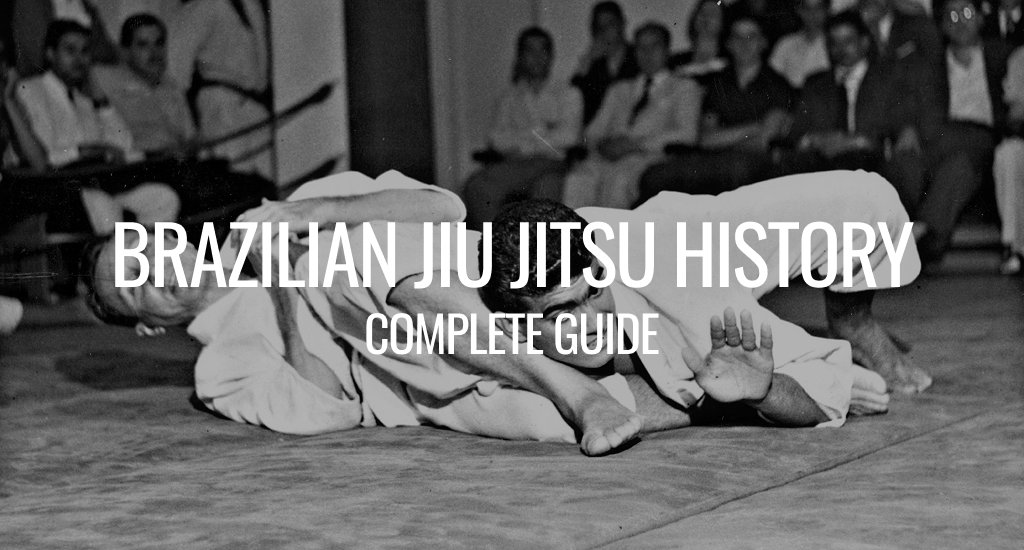
Brazilian Jiu-Jitsu history begins in 1914-1917 when Japanese judoka Mitsuyo Maeda arrived in Brazil and taught judo/jujutsu to Carlos Gracie (age 14-15), who along with his younger brother Helio Gracie adapted these techniques into a distinct martial art emphasizing ground fighting, leverage over strength, and the revolutionary guard position that allowed smaller practitioners to defeat larger opponents, officially founding the first Gracie Jiu-Jitsu academy in Rio de Janeiro in 1925 and proving effectiveness through brutal challenge matches (vale tudo) against practitioners of boxing, wrestling, capoeira, and other martial arts throughout the 1920s-1980s.
Wikipedia states: “Brazilian jiu-jitsu was first developed by the Brazilian brothers Carlos, Oswaldo, Gastão Jr., and Hélio Gracie around 1925, after Carlos was taught jujutsu and catch wrestling in 1917 by either Mitsuyo Maeda, a travelling Japanese judoka, or one of Maeda’s students Jacyntho Ferro—BJJ eventually became a distinct combat sport of its own through innovations and practices, and is considered essential for modern mixed martial arts”.
Gracie family origins: “The Gracie family is originally from Belém, state of Pará, Brazil, whose ancestors came from Paisley, Scotland—Gastão Gracie’s eldest son Carlos Gracie saw a demonstration by Maeda at the da Paz Theatre in 1917, prompting the start of his training by Maeda’s apprentice Jacintho Ferro, and in 1921 following financial hardship Gastão Gracie returned to Rio de Janeiro with his family where Carlos and Hélio became the founders of Brazilian Jiu-Jitsu”.
BJJ’s modern explosion began with the 1993 creation of the Ultimate Fighting Championship (UFC) where Royce Gracie—representing the smallest and least athletic-looking competitor—systematically defeated larger strikers and wrestlers using ground fighting and submissions, shocking the martial arts world and proving Brazilian Jiu-Jitsu’s effectiveness in real combat, leading to BJJ’s recognition as essential training for mixed martial arts and explosive global growth from a regional Brazilian art to an international phenomenon practiced by millions across 150+ countries with standardized competition through the International Brazilian Jiu-Jitsu Federation (IBJJF) founded in 1994.
The evolution continues into the 2020s with innovations in leg locks and no-gi techniques from teams like the Danaher Death Squad, technological integration through instructional videos and online coaching, increased professionalization with athletes earning six-figure incomes, and mainstream acceptance with BJJ featured in major media and adopted by military/law enforcement worldwide.
This comprehensive timeline traces BJJ’s complete history from ancient jujutsu roots through Maeda’s teachings to the Gracie family development, the UFC revolution, sport evolution, and modern innovations shaping contemporary Brazilian Jiu-Jitsu as practiced today in academies globally.
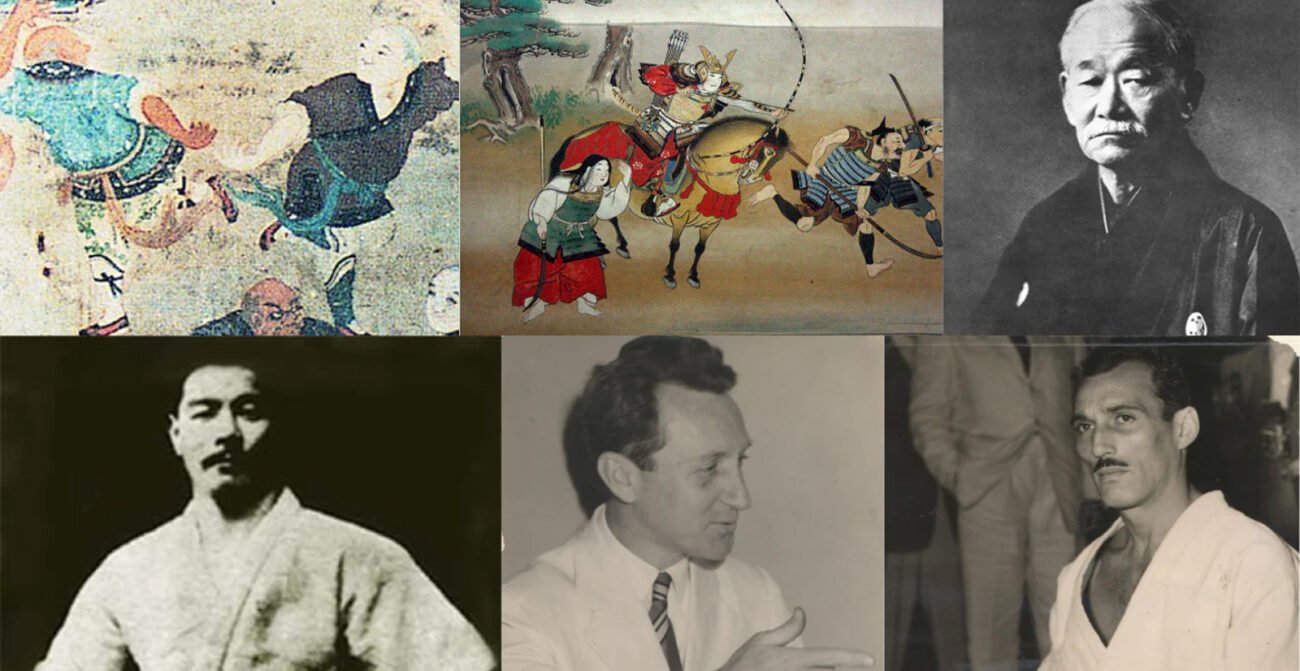
Table of Contents
Ancient Roots: Before Brazil (2000 BC – 1900s)
The Indian-Japanese Connection
Digitsu on ancient origins: “The origins of jiu-jitsu are said to date back thousands of years before they reached the shores of Brazil—various theories surround its origins, but most agree that it may be traced back to Buddhist monks roughly 4,000 years ago in India, as these monks needed a defense mechanism to protect themselves while traveling without hurting their attackers”.
Ancient timeline:
2000 BC – India:
- Buddhist monks develop unarmed self-defense
- Philosophy: Defend without causing harm
- Leverage and joint manipulation techniques
- Spread along with Buddhism to China/Japan
794-1185 AD – Feudal Japan:
- Samurai warriors develop jujutsu
- Battlefield combat for armored warriors
- Multiple schools (ryu) emerge
- Standing techniques, throws, joint locks
- Weapons integration
- Reference: Understanding Jujutsu vs BJJ divergence
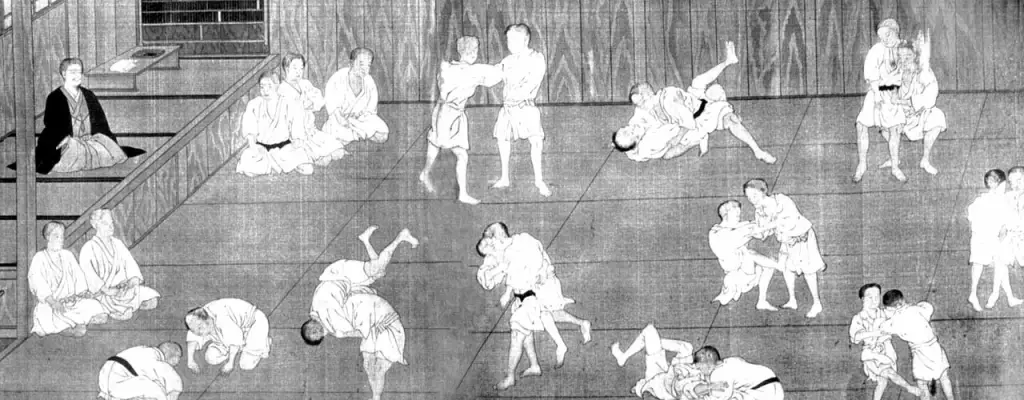
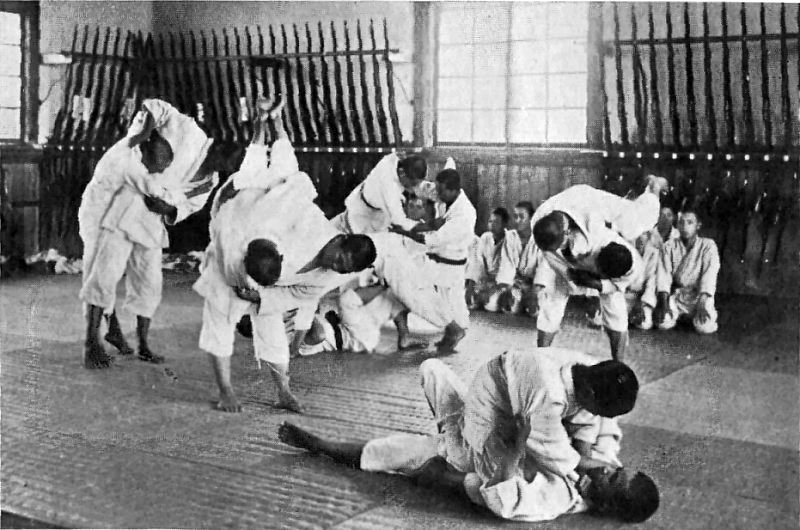
1882 – Jigoro Kano Creates Judo:
- Studied multiple jujutsu schools
- Synthesized techniques into “Judo” (gentle way)
- Emphasized throws and groundwork (newaza)
- Founded Kodokan in Tokyo
- Sport and education focus (not just combat)
- Judo becomes bridge to BJJ
Why Judo matters:
- Mitsuyo Maeda was Judo champion
- Judo newaza (groundwork) = BJJ foundation
- Kano’s philosophy influenced Gracies
- Live sparring (randori) proved effectiveness
1900-1925: Birth of Brazilian Jiu-Jitsu
Mitsuyo Maeda: The Conduit
Wikipedia on Maeda: “Maeda was fundamental to the development of Brazilian jiu-jitsu, including through his teaching of Carlos Gracie and others of the Gracie family—Maeda accepted Gracie and Luiz França as students, and the youth became a great exponent of the art and ultimately, with his younger brother Hélio Gracie, founded Gracie Jiu-Jitsu, modern Brazilian jiu-jitsu”.
Maeda’s background:
- Born: 1878, Japan
- Training: Judo champion under Jigoro Kano
- Nickname: “Conde Koma” (Count Combat)
- Career: Professional prizefighter
- Record: 2,000+ matches (claimed), rarely defeated
Why Maeda went to Brazil:
- 1904: Left Japan to spread Judo globally
- Traveled through Americas, Europe
- 1914: Arrived in Brazil (Belém)
- Helped establish Japanese immigrant community
- Gastão Gracie assisted Maeda’s immigration efforts
- Payment: Teach jiu-jitsu to Gracie family
Carlos Gracie: The First Student
Gracie family Wikipedia: “In 1917, Gastão’s eldest son Carlos Gracie, saw a demonstration by Maeda at the da Paz Theatre, prompting the start of his training by Maeda’s apprentice Jacintho Ferro”.
Carlos Gracie’s journey:
- Born: 1902, Belém, Brazil
- Age when started: 14-15 years old (1916-1917)
- Teacher: Jacintho Ferro (Maeda’s student)
- Training period: ~5 years in Belém
- 1921: Family moved to Rio de Janeiro
- Age 19: Began teaching brothers
Carlos’s contribution:
- Taught brothers: Oswaldo, Gastão Jr., Jorge, Hélio
- Opened first academy (1925)
- Developed challenge match culture
- Business-minded (grew academy)
- Established Gracie name
Hélio Gracie: The Revolutionary
The story:
- Born: 1913 (frail, weak child)
- Medical issues: Fainting spells, not athletic
- Early role: Watched classes, couldn’t participate
- Breakthrough: 1928 (age 15)
- Carlos late for class, Hélio taught student
- Discovered he could execute techniques despite weakness
- Realized: Technique > strength
Tap Nap Snap on Hélio’s innovation: “Hélio Gracie would tweak and refine the techniques, focusing more on leverage, positioning, and timing rather than brute strength—these adaptations made it possible for someone like him to control and submit much larger opponents, which would become the defining philosophy of Brazilian Jiu-Jitsu: that technique can overcome size and strength”.
Hélio’s innovations:
- Modified techniques for leverage (not strength)
- Developed guard position (revolutionary!)
- Extended ground fighting time
- Submission focus over throws
- Created distinct style = BJJ
1925: First Gracie Jiu-Jitsu Academy Opens
- Location: Rio de Janeiro
- Founders: Carlos and Hélio Gracie
- Students: Initially family and friends
- Method: Challenge matches to prove effectiveness
1925-1950: The Challenge Match Era
Vale Tudo: No Holds Barred
Jiu Jitsu Brotherhood on challenge matches: “In 1925, the Gracie brothers, led by Carlos, opened Brazil’s first jiu jitsu academy, and ‘Gracie jiu jitsu’ was born—over the years that followed, the Gracie brothers would continue to refine the art and pressure-tested it regularly with brutal public challenge matches that pitted themselves and their students against practitioners of other fighting arts such as boxing, luta livre, capoeira, and luta romana”.
Challenge match culture:
- Open invitation to fight Gracies
- Any martial art, any style
- Minimal rules (vale tudo = “anything goes”)
- Public spectacles (newspapers covered)
- Goal: Prove jiu-jitsu superiority
Typical opponents:
- Boxers (striking specialists)
- Luta Livre wrestlers (Brazilian catch wrestling)
- Capoeira practitioners
- Judo/Jujutsu stylists
- Street fighters
Results:
- Gracies rarely lost
- Submissions ended most fights
- Ground fighting advantage clear
- Built fearsome reputation
- Academy membership grew
Hélio’s Famous Matches
1932 – vs. Antonio Portugal (boxer):
- Portugal 20 kg heavier
- Hélio submitted him
- Proved leverage over strength
1951 – vs. Masahiko Kimura (Judo champion):
- Kimura: 7th dan, undefeated
- Hélio: Much smaller
- Result: Kimura won via shoulder lock
- Legacy: Lock named “Kimura” in BJJ
- Reference: Kimura submission
1955 – vs. Waldemar Santana (student):
- 3 hours 45 minutes (longest fight)
- Santana eventually won
- Hélio 42 years old
- Showed resilience and heart
Impact of these matches:
- Proved effectiveness against larger opponents
- Built mythology around Gracie name
- Attracted serious students
- Established BJJ as legitimate martial art
1950-1990: Evolution and Spread
Second Generation: Expanding the Art
Carlos Gracie’s children:
- Carlson Gracie (1932-2006): Fierce competitor, trained champions
- Carlos Gracie Jr. (1956-): Founded IBJJF (competition standardization)
- Numerous others spread globally
Hélio Gracie’s children:
- Rolls Gracie (1951-1982): Innovator, integrated wrestling
- Rickson Gracie (1958-): Considered greatest Gracie fighter
- Royler Gracie (1965-): Multiple-time world champion
- Royce Gracie (1966-): UFC legend
- Relson, Rorion, Robin: All spread BJJ globally
Key developments (1950-1990):
1. Technical refinement:
- Guard position sophistication
- Submission chains developed
- Positional hierarchy formalized
- Reference: Modern guard systems
2. Competition structure:
- Tournaments organized
- Weight classes introduced
- Point system developed
- Belt ranking standardized
- Reference: BJJ belt system
3. International spread:
- 1970s: Rorion Gracie moves to USA (California)
- Private lessons to Hollywood celebrities
- Garage academy (Torrance, CA)
- Building American interest
4. Cross-training:
- Rolls Gracie integrated wrestling
- Sambo techniques studied
- Judo newaza analyzed
- BJJ became more comprehensive
1993-2000: The UFC Revolution
UFC 1: Changing Everything
November 12, 1993 – Denver, Colorado:
- Concept: No-holds-barred tournament
- 8 fighters, different styles
- Minimal rules (no eye gouging, biting)
- Royce Gracie: 178 lbs, least intimidating
- Opponents: Boxers, kickboxers, wrestlers (all larger)
Royce’s UFC 1 performance:
- Fight 1: Submitted Art Jimmerson (boxer) – 2:18
- Fight 2: Submitted Ken Shamrock (wrestler/shooter) – 57 seconds
- Fight 3: Submitted Gerard Gordeau (kickboxer) – 1:44
- Total time: ~5 minutes to win tournament
- Method: Ground fighting and submissions
Impact on martial arts world:
- Shocked everyone (strikers thought they’d dominate)
- Proved ground fighting essential
- “Position before submission” validated
- Size/strength < technique proven
- BJJ exploded in popularity
UFC 2-4 (1994-1994):
- Royce won UFC 2 and 4
- Drew with Ken Shamrock (UFC 5)
- Established Gracie/BJJ dominance
- Every fighter needed ground game
MMA Integration
BJJ NC on MMA evolution: “As MMA grew in popularity, it had a profound effect on the evolution of BJJ—the foundation of BJJ was laid in the early 1900s by Mitsuyo Maeda, a Japanese Judo expert who passed on his knowledge to Carlos and Helio Gracie, and focusing on throws, pins, and groundwork, the Gracie family refined and modified these techniques to emphasize submissions, particularly from the guard position”.
How MMA changed BJJ:
1990s – Pure BJJ dominated:
- Royce Gracie submits everyone
- Ground fighting advantage clear
- Strikers helpless on ground
2000s – MMA fighters adapted:
- Everyone trains BJJ (baseline requirement)
- Wrestlers with BJJ = dominant
- Pure BJJ less effective (everyone knows it)
- Striking defense became crucial
- Reference: BJJ role in modern MMA
BJJ fighters in UFC/MMA:
- Royce Gracie (pioneer)
- Demian Maia (black belt, elite grappler)
- Fabricio Werdum (heavyweight champion)
- Ronaldo “Jacare” Souza (multiple-time champion)
- Charles Oliveira (lightweight champion, most submissions)
1994: IBJJF Founded
Carlos Gracie Jr. creates standardization:
- International Brazilian Jiu-Jitsu Federation
- Unified rules for sport competition
- Belt ranking standards
- Weight classes formalized
- Tournament structure worldwide
IBJJF impact:
- World Championships (annual)
- Pan-American Championships
- European Championships
- Standard competition format
- Sport BJJ evolution accelerates
Reference: Modern belt requirements standardized
2000-Present: Modern Evolution
Sport BJJ Sophistication
Tap Nap Snap on modern era: “With the rise of the IBJJF and organized competitions, BJJ began to evolve in new directions—practitioners started developing more sophisticated strategies, focusing on the sport-specific aspects of the art, such as points for positional dominance and clean sweeps, and this period saw the rise of many non-Gracie figures in BJJ”.
Modern champions (non-Gracie):
- Marcelo Garcia: Considered GOAT by many
- Roger Gracie: Most dominant competitor
- Marcus “Buchecha” Almeida: Heavyweight legend
- Gordon Ryan: No-gi king
- Leandro Lo, Felipe Pena, many others
Technical innovations (2000s-2020s):
1. Guard evolution:
- Butterfly guard refinement
- De La Riva variations
- Spider guard systems
- Berimbolo (inverted techniques)
- 50/50 guard (leg entanglements)
2. Leg lock revolution:
- Historically neglected (Gracies avoided)
- John Danaher: Systematized leg attacks
- Danaher Death Squad dominated
- Heel hooks, toe holds, knee bars
- Reference: Heel hook evolution
3. No-gi explosion:
- Submission-only formats (EBI, Polaris)
- ADCC (most prestigious no-gi tournament)
- Wrestling integration increased
- Faster-paced, dynamic
- Reference: Gi vs No-Gi
Global Expansion
BJJ in 2026:
- Practitioners: Millions worldwide
- Countries: 150+ with academies
- Black belts: Tens of thousands
- Major hubs: Brazil, USA, Europe, Asia, Australia
Professional opportunities:
- Competition circuits (monetary prizes)
- Professional fighters earning six figures
- Instructional videos (online coaching)
- Academy ownership
- Seminars and camps
Mainstream acceptance:
- Military training (special forces)
- Law enforcement (SWAT, police)
- Self-defense programs
- Youth programs (anti-bullying)
- Reference: Starting age considerations
Technology Integration
Modern BJJ innovations:
Online learning:
- BJJ Fanatics (instructionals)
- YouTube channels (free content)
- Virtual coaching
- Technique databases
Competition streaming:
- FloGrappling (live events)
- IBJJF broadcasts
- Global accessibility
- Growing fanbase
Training tools:
- BJJ dummies for solo drilling
- Reference: Are BJJ dummies worth it?
- Video analysis software
- Performance tracking
The Journey to Black Belt: Historical Perspective
How Long Has It Always Taken?
Carlos Gracie era (1925-1950s):
- No standardized timeline
- Promotion based purely on skill
- Challenge match performance mattered
- Could take 3-5 years or 15+ years
Hélio Gracie era (1950s-1990s):
- Still largely subjective
- Family members promoted faster
- Outsiders took longer
- Typical: 8-15 years
Modern era (1994-present):
- IBJJF minimum time requirements
- White → Blue: 1-2 years typical
- Blue → Purple: 2-4 years
- Purple → Brown: 2-3 years
- Brown → Black: 1-3 years
- Total: 8-12 years average
Reference: Complete belt system timeline
Factors affecting timeline:
- Training frequency (3-5x weekly = faster)
- Athletic background (wrestling/judo helps)
- Competition participation
- Teaching involvement
- Instructor discretion
Key Figures in BJJ History
The Founders
Mitsuyo Maeda (1878-1941):
- Brought judo/jujutsu to Brazil
- Teacher to Carlos Gracie
- Foundation of BJJ
- The conduit
Carlos Gracie (1902-1994):
- First Gracie student
- Opened first academy (1925)
- Business builder
- Taught brothers
- The organizer
Hélio Gracie (1913-2009):
- Adapted techniques for leverage
- Created guard position
- Challenge match warrior
- The innovator
Second Generation
Carlson Gracie (1932-2006):
- Fierce competitor
- Trained champions
- Spread BJJ globally
- Carlson Gracie Team legacy
Rolls Gracie (1951-1982):
- Integrated wrestling
- Technical innovator
- Influenced many champions
- Died young (hang gliding accident)
- “What if?” legend
Rickson Gracie (1958-):
- Undefeated record (claimed 400-0)
- Technical perfectionist
- Japan success
- Considered greatest Gracie fighter
Third Generation
Royce Gracie (1966-):
- UFC 1, 2, 4 champion
- Proved BJJ to world
- Changed martial arts forever
- The ambassador
Rorion Gracie (1952-):
- Brought BJJ to USA
- Co-founded UFC
- Gracie Academy (USA)
- The businessman
Carlos Gracie Jr. (1956-):
- Founded IBJJF
- Standardized competition
- Gracie Barra empire
- The systematizer
Modern Era Champions
Marcelo Garcia (1983-):
- 5x ADCC champion
- 4x World champion
- Pound-for-pound best (many say)
- Online academy pioneer
Roger Gracie (1981-):
- 10x World champion
- Most dominant gi competitor
- Basic techniques, perfect execution
- MMA career
Gordon Ryan (1995-):
- No-gi GOAT (current era)
- Undefeated in major competitions
- ADCC champion
- Social media presence
The Bottom Line: BJJ’s 100-Year Journey
Timeline summary:
| Period | Key Events |
|---|---|
| Ancient-1900 | Jujutsu in Japan → Judo (1882) |
| 1914-1917 | Maeda arrives Brazil, teaches Carlos Gracie |
| 1925 | First Gracie academy opens |
| 1925-1950 | Challenge matches prove effectiveness |
| 1950-1990 | Second generation spreads globally |
| 1993 | UFC 1 – Royce dominates, BJJ explodes |
| 1994 | IBJJF founded, sport standardized |
| 2000-2010 | Technical sophistication, global growth |
| 2010-2020 | Leg lock revolution, no-gi explosion |
| 2020-Present | Mainstream acceptance, professionalization |
What makes BJJ unique historically:
- ✅ Constantly evolving (never stagnant)
- ✅ Pressure-tested (competition/MMA validation)
- ✅ Accessible (technique > strength/size)
- ✅ Documented (video evidence of effectiveness)
- ✅ Global (transcends culture/nationality)
- ✅ Proven (UFC, self-defense, sport)
From Brazilian regional art to global phenomenon in 100 years.
What started with one frail teenager (Hélio) adapting techniques has become one of the world’s fastest-growing martial arts, practiced by millions, essential for MMA, proven effective for self-defense, and continuing to evolve with each generation.
The journey continues. 🥋
Related resources:
- What is BJJ? – Understanding the art today
- Gracie Family Tree – Complete lineage
- BJJ Belt System – Your journey ahead
- White Belt Guide – Starting your story
- BJJ Near Me – Find academy
- Is BJJ Good for Self-Defense? – Modern effectiveness
Honor the past. Train the present. Build the future. 💪
OSS! 🙏
How We Reviewed This Article
Editorial Standards: Historical documentation review, Gracie family records, competition archives, scholarly martial arts research, and firsthand accounts from BJJ pioneers.
Sources Referenced:
- Wikipedia (BJJ and Gracie family comprehensive history)
- Jiu Jitsu Brotherhood (timeline and development)
- Elite MMA (origins and Maeda connection)
- Pure Brazilian Jiu Jitsu (ancient roots to modern)
- Tap Nap Snap (complete timeline analysis)
- Digitsu (comprehensive historical overview)
- BJJ NC (evolution and MMA impact)
- JiuJitsu.com (historical documentation)
Last Updated: January 14, 2026