

Butterfly Sweep: The Complete BJJ Guide
By BJJ Sportswear Editorial Team
Reviewed by competitive black belts specializing in butterfly guard systems and Marcelo Garcia methodology | Last Updated: January 28, 2026
The butterfly sweep is BJJ’s most elevating sweep—a dynamic butterfly guard technique that uses hooks (feet inside opponent’s thighs) to lift and throw opponents overhead. What makes this sweep special is elevation: unlike the scissor sweep’s sideways cutting motion, the butterfly sweep lifts opponents upward first, creating spectacular overhead reversals that land you directly in mount or controlling positions.
According to BJJ Fanatics, the butterfly guard has evolved into one of the most exciting and useful platforms in all of BJJ. Its vast array of utilities and dynamic options has become a favorite for many practitioners of all levels, and it continues to evolve at a rapid pace. One of the butterfly guard’s best attributes is its ability to provide elevation when dealing with a guard passer.
Marcelo Garcia instructional emphasizes that tales of the incredible mastery of Garcia’s butterfly guard have preceded him for years. We often witnessed his amazing work with this position in his competitive endeavors and we continue to be amazed and inspired to this day by Garcia’s high level of proficiency with the butterfly guard.
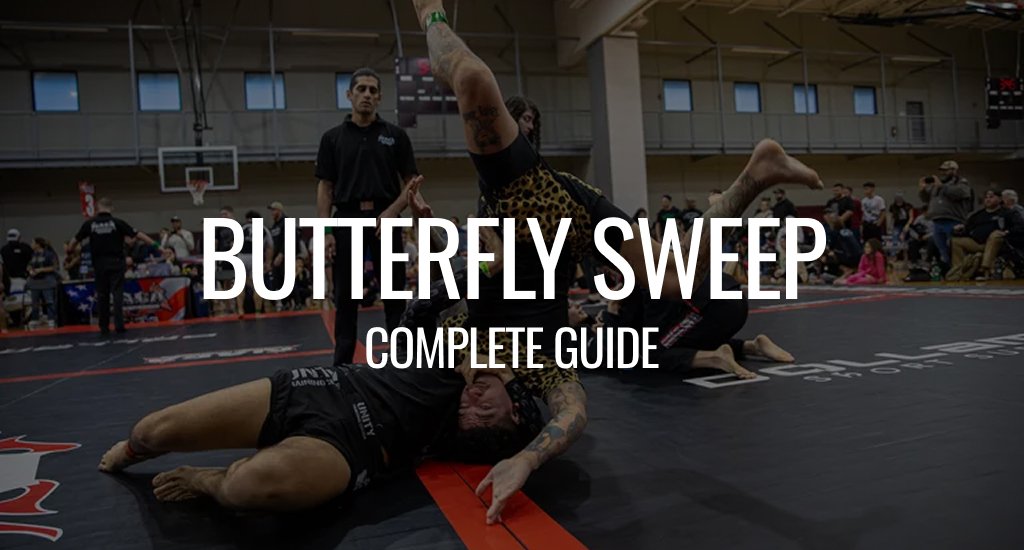
Table of Contents
What Is the Butterfly Sweep?
The butterfly sweep is a technique where you sit up with both feet inside your opponent’s thighs (butterfly hooks), establish grips, scoot deep underneath them, elevate using your hooks and hip movement, then sweep them overhead or sideways while following to mount or top position.
Core mechanics:
- Start from butterfly guard position
- Both hooks inside their thighs
- Sit up posture (never flat on back)
- Secure grips (underhook/overhook or collar ties)
- Scoot DEEP underneath opponent
- Elevate using hooks and hips
- Sweep overhead or sideways
- Follow to mount
BJJ Fanatics explains elevation: Getting underneath a top player can be done easily with efficiency if the right mechanics are in place. This elevation can be used to sweep, transition, and even enter into the leg lock realm, making the butterfly guard one of the most preferred methods of approaching the open guard game on the planet.
Understanding butterfly guard position helps because the sweep builds directly on guard mechanics—turning defensive control into offensive reversals.
Basic Butterfly Sweep Technique
Marcelo Garcia teaches the fundamentals through five essential steps:
1. Establish butterfly guard position
Start sitting up (NOT flat on your back), with both feet inside opponent’s thighs as hooks engaging behind their knees. Maintain chest-to-chest distance and good posture. Never lie flat on your back in butterfly guard—always sit up and forward.
2. Secure grips
For classic grips, use one underhook (deep under armpit) and one overhook (over their arm), then pull them close to control their posture. For Marcelo Garcia’s variation, BJJ Fanatics describes using a collar tie instead when the underhook space isn’t available. Many times the butterfly sweep utilizes an underhook and some form of control over the opposite arm, but it’s not always easy to claim that underhook space.
3. Scoot deep underneath
BJJ Fanatics emphasizes position: With controls in place, scoot deep under your partner and begin to elevate them upward. Move your hips forward to get UNDER your opponent, close the distance, and engage hooks deeply. The deeper you are, the easier elevation becomes.
4. Elevate using hooks and hips
Lift with both hooks, extend your legs upward, use hip drive to elevate your opponent OFF their base until they become weightless. BJJ Fanatics explains hook mechanics: This will help to elevate an opponent’s leg too high, so the opponent cannot free their leg from the hook, and in most cases this will make them easy to sweep.
5. Sweep and follow
Pull with your grips, lift with your hooks, sweep them overhead (or sideways), roll forward following them, and land in mount or side control. BJJ Fanatics describes that because the athlete has a good momentum happening they can easily follow the sweep movement, by rolling over their shoulder, and landing straight into the full mount.
The Scaffolding Concept
Reddit user explains advanced detail: The butterfly leg is just a scaffolding, keep it at 90 degrees, but don’t try to use it to leg-curl him into a sweep, just keep it rigid.
Your butterfly hook functions as rigid scaffolding at a 90-degree angle—DON’T try to leg-curl them with it. The power source comes from planting your shoulder and ear on the floor and using your OTHER leg to push off. This elevates your hips HIGH so the scaffolding moves in an arch that dumps your opponent on their back.
Create three contact points: your ear on the mat, your shoulder on the mat, and the toes of your pushing leg. Saulo Ribeiro demonstrates posture by staying on the toes of the non-butterfly leg and completely stretching it out (don’t keep the knee on the floor).
Marcelo Garcia’s Kick Sweep Variation
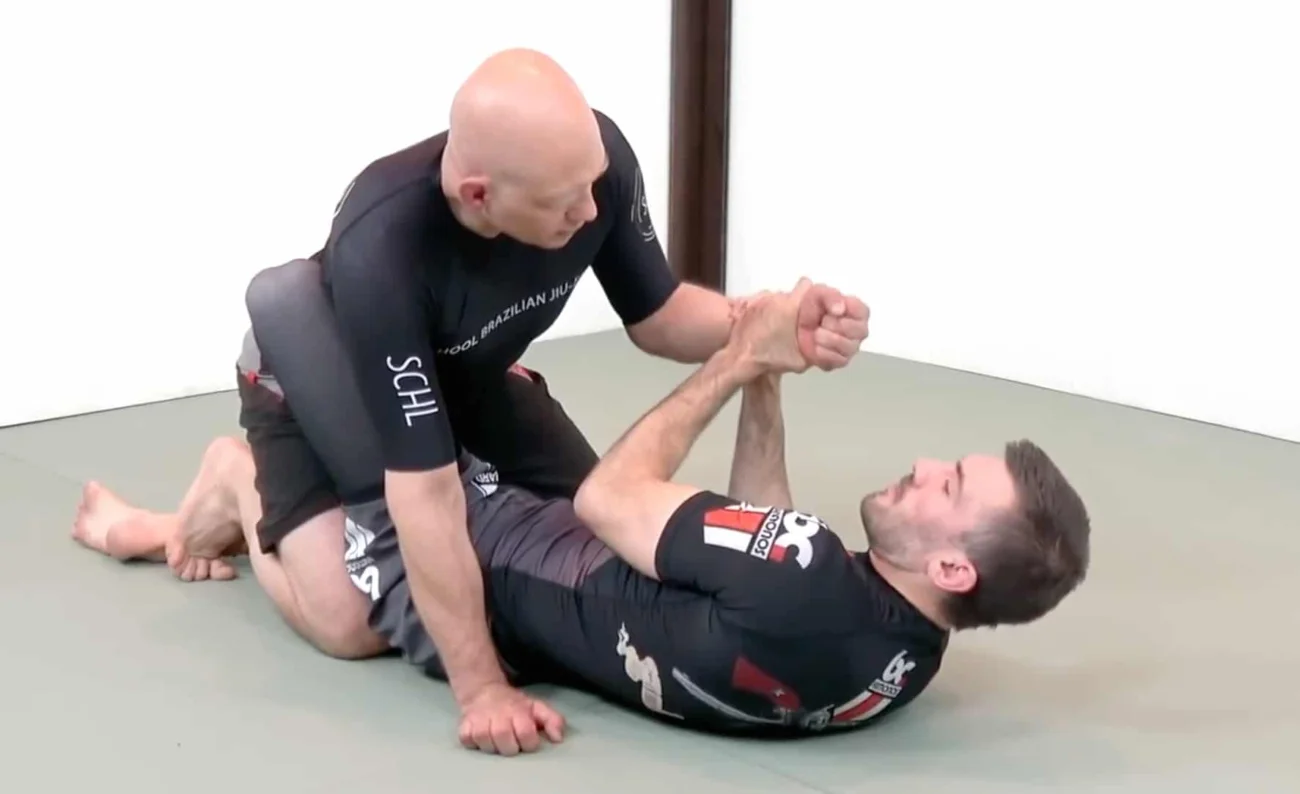
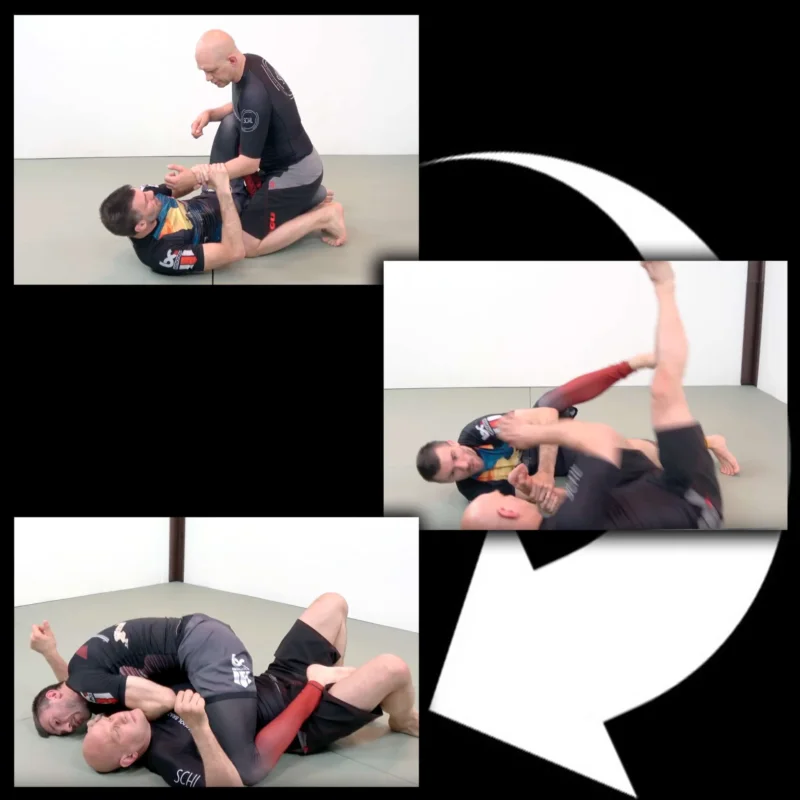
BJJ Fanatics teaches adaptation: In many cases this may be the end of the exchange but here his partner has used his left leg to catch his balance and prevent the reversal. Time is definitely of the essence here.
When your opponent posts their leg to catch balance and blocks your standard sweep, you need Marcelo’s solution. BJJ Fanatics describes: While his partner is hovering above him, Garcia’s free leg enters the fold. Creating a post on their thigh, you can remove their posted leg from underneath them, causing the sweep.
Kick sweep mechanics:
- Opponent is hovering (elevated but posted)
- Your free leg posts on their thigh
- Kick their posted leg out from under them
- Contact ABOVE the knee (critical detail)
- Completes the sweep
BJJ Fanatics emphasizes detail: Remember, your post must make contact with the guard passer’s leg above the knee line to get the most out of this one.
If you feel too crowded and unable to post your foot on their leg, BJJ Fanatics offers options: start at the ankle and work up incrementally, reach under their leg with your arm instead, transition to X-guard, or change to a different guard variation.
Grip Variations for Butterfly Sweep
Underhook/overhook (classic): The standard setup uses an underhook on one side and an overhook on the opposite side. Pull them close, then elevate and sweep. This is the most common variation taught to beginners.
Collar tie/elbow control (Marcelo Garcia): BJJ Fanatics describes that Garcia is famous for the two-on-one style grip but has plenty of options when it comes to controlling limbs. For this sequence he gains control over the elbow in addition to the collar tie, using this as an alternative when the underhook is unavailable.
Overhook/overhook (Tom DeBlass): Tom DeBlass variation uses both overhooks instead of underhook/overhook. He really likes overhooks and blocking from this position—it works well for some body types.
Two-on-one grip: Marcelo Garcia’s specialty controls one arm with both hands, creating a famous control that isolates their limb and removes their posting ability.
Tom DeBlass teaches the cylinder concept: making them into a cylinder—the two shapes that roll in nature: spheres, balls and cylinders. Pull your opponent forward to make them rounded into a cylindrical shape that rolls easily using natural physics.
Common Butterfly Sweep Mistakes
Lying flat on back: When you lie on your back instead of sitting up, you have no elevation possible, weak position, and become easy to pass. Always sit up with forward posture, chest to chest, never flat.
Not scooting deep enough: Staying too far away means you can’t elevate effectively, have no leverage, and the sweep fails. Scoot DEEP underneath, get under their center, and close distance completely—this is critical positioning.
Trying to leg-curl the sweep: Reddit warns not to use your hooks to curl your opponent. This uses the wrong power source with ineffective mechanics that waste energy. Your hooks are scaffolding (rigid), the power comes from your pushing leg and hip elevation.
Poor grip control: Weak grips mean you can’t control their posture, they escape, and the sweep fails. Maintain strong underhook, tight overhook, pull them close, and hold throughout.
Not taking away the post: Concepts video emphasizes that the big thing is making sure you take away the post. Identify their posting arm, control it with grips, don’t allow their hand on the mat, and remove their balance. If sweeping to your right, secure left side grips first to prevent posting.
Butterfly Sweep to Back Take
Paulo Amf teaches Marcelo Garcia’s signature sweep and back take. Known for his fluid transitions and control, Garcia used the butterfly guard to dominate opponents and create powerful sweeps.
When you execute the butterfly sweep and your opponent defends by turning, take their back with hooks and seatbelt control—the most dominant position in BJJ. This also chains naturally with the kimura lock and guillotine choke when sweeps are defended.
Training the Butterfly Sweep
Week 1-2 (Mechanics): Practice solo hip movements and hook placement. Do cooperative sweeps with your partner focusing on form. Complete 20 reps each side.
Week 3-4 (Resistance): Have your partner add 25% resistance while you practice grip variations. Build timing at moderate speed.
Week 5-6 (Live integration): Use positional sparring starting in butterfly guard. Go for sweeps or submissions with realistic resistance.
Tom DeBlass emphasizes that butterfly guard down with sweeps is predicated upon the fact that we’re also snapping them down into guillotines, pouncing on kimuras, and playing arm drags.
Combination training:
- Butterfly sweep → mount
- Failed sweep → guillotine
- Failed sweep → kimura
- Failed sweep → arm drag to back
- Multiple attacks = effective guard
Butterfly Sweep in Competition
Gordon Ryan and Marcelo Garcia comparison shows both used butterfly sweeps successfully at ADCC. Both elevate opponent first using the same sweeping concepts. Whether using a gable grip (Marcelo) or wrist grip (Gordon), with one more upright than the other, the core mechanics remain identical.
The butterfly sweep is highly effective in IBJJF competition because it ends in mount (4 points), works in gi and no-gi equally, creates immediate position improvement, and leads to submissions or back takes. In no-gi and ADCC formats, the elevation mechanics work even faster without gi friction.
Conclusion
From Marcelo Garcia’s championship dominance to Gordon Ryan’s ADCC success and countless competitors using butterfly sweeps worldwide, this technique represents BJJ’s most dynamic and elevating sweep. The butterfly sweep proves a fundamental grappling truth: elevation creates opportunity. While static guards hold position, dynamic butterfly players who elevate opponents off their base create the momentum that makes sweeps, transitions, and attacks inevitable—transforming defensive positions into explosive offensive platforms.
BJJ Fanatics concludes that this is a phenomenal option for continuing the butterfly guard sweep when there is more than average balance present from an opponent. Make sure that you work to get above the knee when you’re attacking your partner’s post, as this is the only way Garcia feels the reversal can take place.
Whether you’re learning basic elevation mechanics or refining Marcelo Garcia’s championship-level kick sweep variations, mastering the butterfly sweep gives you the elevating attack that makes your butterfly guard dangerous, dynamic, and devastatingly effective. For more techniques, check out our complete technique section and BJJ belt system guide.