
On This Page
Editorial Standards
Reviewed by the BJJ Sportswear Editorial Team for technical accuracy and kept current.
BJJ Techniques: The Complete Guide to Submissions, Sweeps & Guards
BJJ techniques break down into a handful of core categories — submissions, guards, passes, sweeps, and escapes. Here is how they fit together, with links to detailed guides for each.
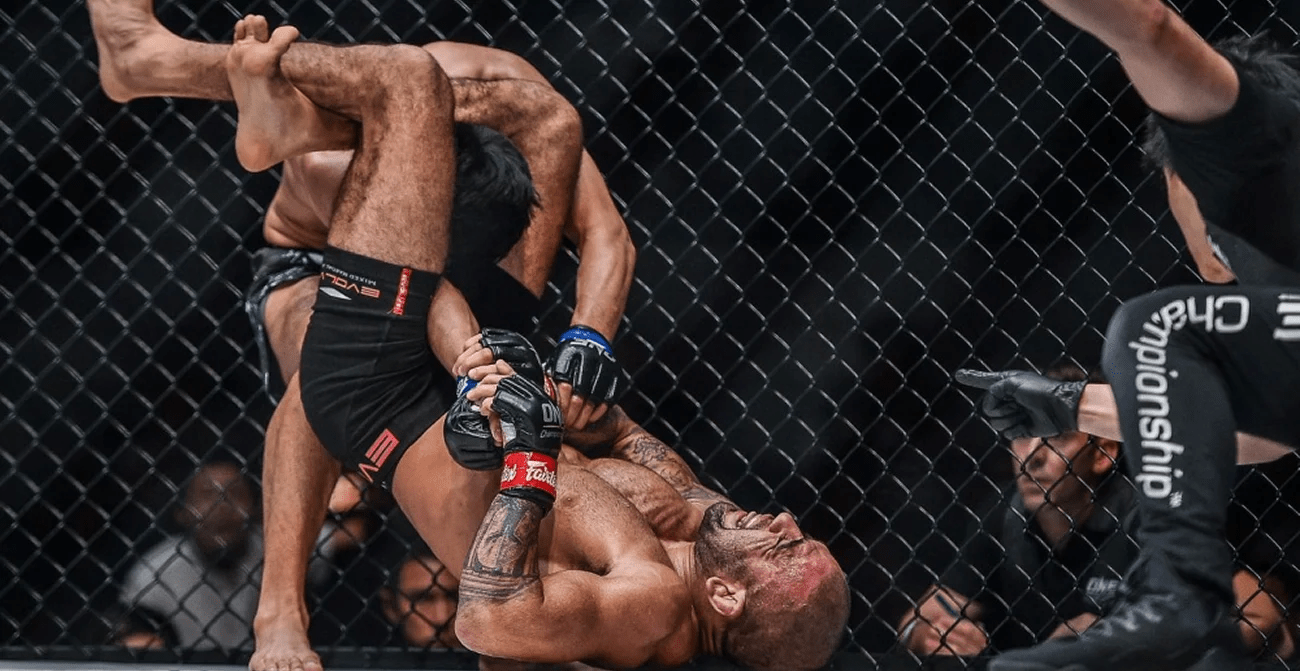
BJJ techniques can feel overwhelming from the outside — hundreds of named positions, submissions, and transitions. In practice, they organize into a small number of core categories that build on each other. This guide breaks down how those categories fit together, with links to detailed, step-by-step breakdowns for the specific techniques worth learning first.
The Core Categories
Submissions end the fight — chokes cut off blood or air, joint locks hyperextend a limb until the opponent taps. The rear naked choke and armbar are the two most fundamental submissions in the sport, taught to nearly every beginner in their first weeks. Once those are automatic, the category branches out further — small-joint attacks like the wristlock and toe hold, and specialist front-headlock chokes like the Peruvian necktie, Von Flue choke, and Japanese necktie, each suited to a specific scramble or grip exchange rather than a fixed starting position.
Guards are bottom positions where you use your legs to control a standing or kneeling opponent. Closed guard is the traditional starting point; half guard, butterfly guard, and De La Riva guard are the next layer most students learn once fundamentals are solid. Half guard itself splits into two major branches worth learning separately — deep half guard and Z-guard — and leg-entanglement guards like 50/50 guard sit in a category of their own, built around a symmetrical leg-lock battle rather than hip control. Rubber guard takes a completely different approach again, controlling posture with flexibility instead of grips.
Guard passes move you from your opponent's guard into a dominant top position. The knee slice pass and toreando pass are two of the most commonly taught passing methods, effective across skill levels. Pressure-based alternatives — the stack pass and the over-under pass — answer flexible guards that speed and angles alone can't beat.
Sweeps reverse position from the bottom, turning a defensive guard situation into top control. The scissor sweep and butterfly sweep are foundational examples every white belt eventually drills.
Escapes get you out of a bad position — pinned in mount, stuck in side control, or caught with back control against you. These matter as much as offense; a huge share of early BJJ progress comes from learning to survive and escape bad spots.
Control and transition positions don't finish a fight by themselves, but they decide what happens next. Knee on belly trades some pinning stability for mobility and open hands; the arm drag turns a stronger opponent's own arm against them to open the back; and turtle position sits at the center of more scrambles than any other single spot in the sport, feeding directly into back takes, the clock choke, and leg attacks alike.
What to Learn First
Most academies teach fundamentals in roughly this order: escapes from bad positions, closed guard basics, a small handful of core submissions (rear naked choke, armbar, triangle, kimura), and one or two reliable sweeps. Trying to learn advanced guard systems like berimbolo or leg lock entries before these fundamentals are solid usually slows progress rather than speeding it up.
Leg Locks: A Special Case
Leg attacks like the straight ankle lock, kneebar, toe hold, and heel hook deserve their own note. Under the IBJJF's competition rules, heel hooks and knee reaping are illegal at every gi belt level below black, and several leg attacks stay restricted even at black belt in gi competition specifically. Confirm your academy's and any tournament's current rule set before drilling these live — the injury risk on leg locks is real, and the legality varies more by rule set than any other technique category.
How Techniques Connect
No technique works in isolation. A sweep sets up a pass. A pass earns a dominant position that sets up a submission. An escape resets the exchange so you can attack again. Thinking in these chains — rather than memorizing moves individually — is what separates students who can actually use their technique live from students who only recognize it when a coach demonstrates it.
Browse the Full Library
This page covers the highlights. For the complete, continuously updated technique library — all submissions, sweeps, guards, and escapes with full step-by-step breakdowns — see the full Technique Library index.
Frequently Asked Questions
What BJJ technique should I learn first? Start with escapes (especially from mount and side control) and one reliable guard — most academies teach closed guard first — before moving on to submissions and sweeps. Surviving bad positions matters more early on than finishing fights.
Are leg locks legal in BJJ competition? It depends heavily on the rule set and belt level. Under IBJJF rules, heel hooks and knee reaping are illegal in gi competition below black belt, while other organizations and no-gi rule sets are often more permissive. Always confirm the specific event's rules before competing.
How many techniques does a BJJ black belt know? There's no fixed number — black belts typically have deep, functional knowledge of dozens of core techniques and their variations, built over years of live sparring, rather than surface familiarity with hundreds of named moves.
The Bottom Line
BJJ technique breaks down into a handful of connected categories — submissions, guards, passes, sweeps, escapes, and the control positions that link them together — that build on each other rather than existing as isolated moves. Learn the fundamentals in each category first, understand how they chain together, and check the full technique library as you're ready to go deeper into any specific position.
Tagged with:#pillar#technique#fundamentals
Frequently Asked Questions
What BJJ technique should I learn first?
Start with escapes (especially from mount and side control) and one reliable guard — most academies teach closed guard first — before moving on to submissions and sweeps. Surviving bad positions matters more early on than finishing fights.
Are leg locks legal in BJJ competition?
It depends heavily on the rule set and belt level. Under IBJJF rules, heel hooks and knee reaping are illegal in gi competition below black belt, while other organizations and no-gi rule sets are often more permissive. Always confirm the specific event's rules before competing.
How many techniques does a BJJ black belt know?
There's no fixed number — black belts typically have deep, functional knowledge of dozens of core techniques and their variations, built over years of live sparring, rather than surface familiarity with hundreds of named moves.
Sources & Further Reading
About the Author
Mohsin AyubBJJ practitioner, 6 years — Gracie Barra
Founder & Editor, BJJ Sportswear
Mohsin has trained Brazilian Jiu-Jitsu for six years at Gracie Barra and has competed at IBJJF-affiliated tournaments. He writes about competition, gear, and athlete careers, and founded BJJ Sportswear to help grapplers find equipment and information they can trust.
- Six years training Brazilian Jiu-Jitsu at Gracie Barra
- Competed at IBJJF-affiliated tournaments
- Writes on BJJ competition, gear testing, and athlete careers
This article was last reviewed and updated on 2026-08-18.