On This Page
Editorial Standards
Reviewed by the BJJ Sportswear Editorial Team for technical accuracy and kept current.
Butterfly Sweep: Complete BJJ Guide (Marcelo Garcia Method)
The butterfly sweep lifts your opponent off the mat and dumps them onto their back. Here is the full mechanics breakdown, plus the fixes that make it work against people who post and resist.
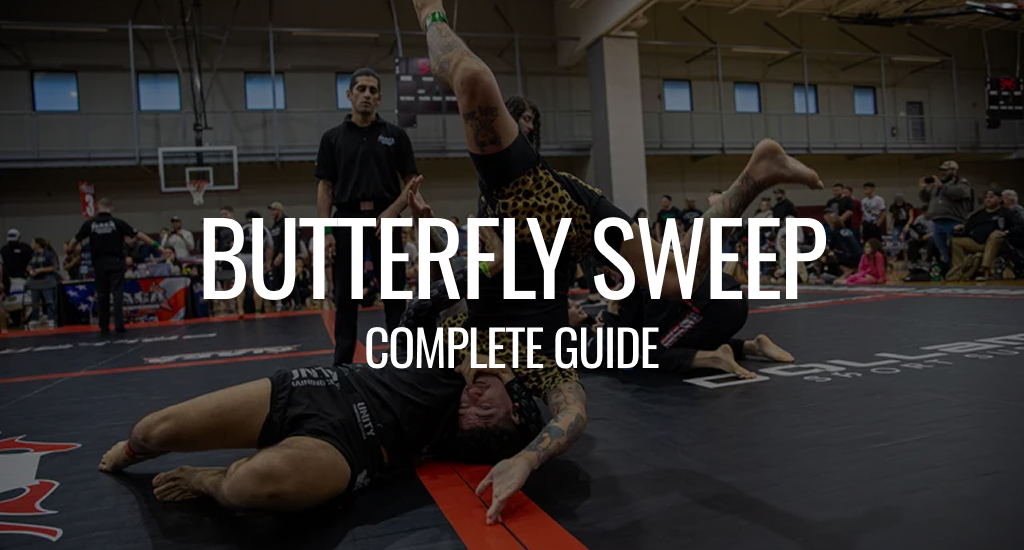
The butterfly sweep is the most reliable sweep from a seated guard. You sit up, hook your feet inside your opponent’s thighs, and lift them into the air, and when it lands you end up in mount or side control. It works in gi and no-gi against opponents of every size, and it only gets better as your timing improves.
Marcelo Garcia built a large part of his competition game on this one sweep and used it against bigger opponents for years, which is the reason it shows up in nearly every fundamentals class today.
What the Butterfly Sweep Is
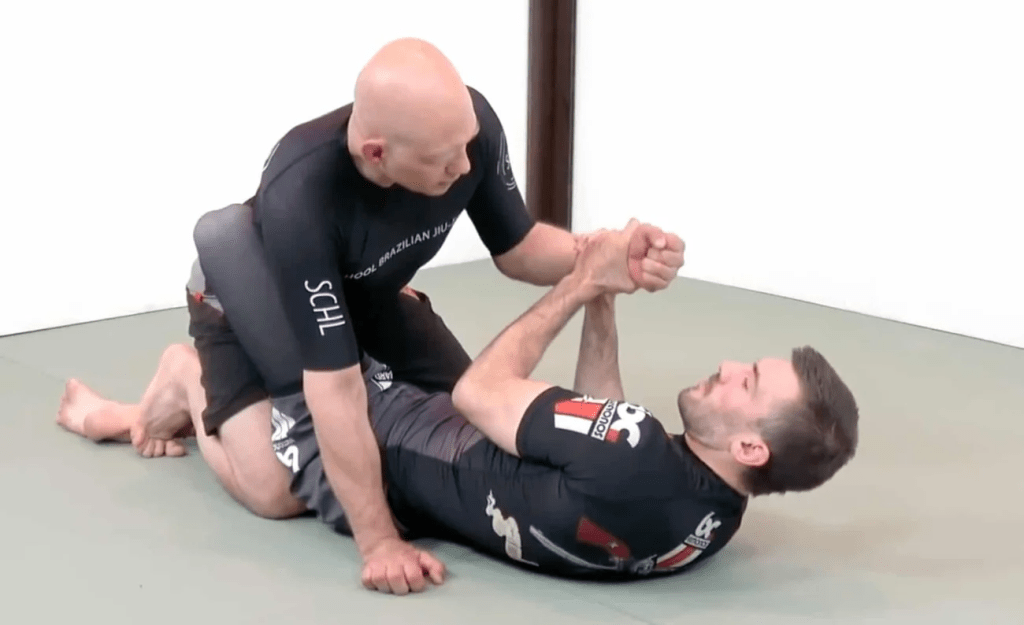
You start in butterfly guard: seated, both feet hooked behind your opponent’s knees, chest close to theirs. From there you take grips, scoot your hips underneath them, and lift with your hooks. They go up, then over. You follow them and land on top.
The key word is elevation: a scissor sweep cuts sideways, whereas the butterfly sweep lifts first. That vertical lift is what makes it work against heavy, low-based opponents, because once their weight is off the mat they have nothing to post with.
If the seated position is new to you, read our open guard concepts guide first. The butterfly sweep builds directly on those principles.
Step-by-Step Execution
- Sit up. Never lie flat in butterfly guard. Your chest should be forward and your back off the mat.
- Hook both feet inside their thighs. Your insteps sit behind their knees, toes flexed.
- Take grips. The classic setup is one underhook and one overhook. In the gi, a collar grip and a sleeve grip work just as well.
- Scoot underneath them. Pull your hips forward until you are almost under their chest. Depth is everything here.
- Fall to the side of your overhook, not straight back. Your ear and shoulder touch the mat.
- Lift with the hook on your underhook side. Extend your leg and drive your hips up.
- Follow them over. Roll through and land in mount.
The Scaffolding Concept
Most people try to leg-curl their opponent over, which does not work against anyone who resists. Think of your hook as scaffolding instead: keep the knee bent at ninety degrees and hold it rigid, because the power comes from somewhere else.
Plant your ear and shoulder on the mat. Then push off the toes of your free leg. That drives your hips high and swings the scaffolding in an arc. Your opponent rides that arc onto their back. Three points of contact make it work: ear, shoulder, and the toes of your pushing leg. Saulo Ribeiro teaches the same detail. He keeps the non-hooking leg fully stretched, up on the toes, and never rests that knee on the floor.
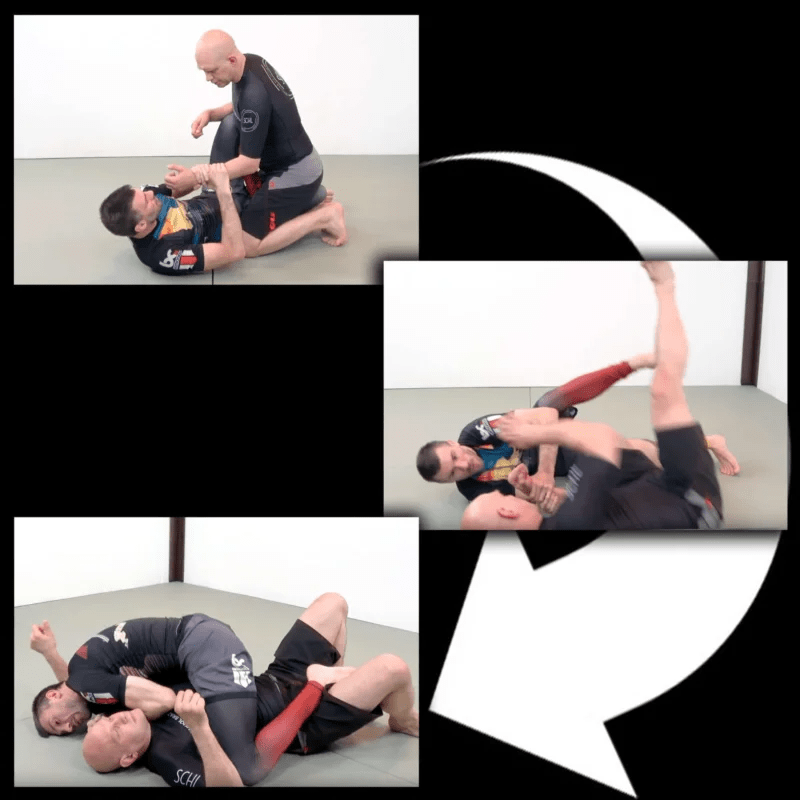
Marcelo Garcia’s Kick Sweep Variation
Good opponents post a leg out to stop the sweep and hover in the air, balanced on that one foot. Marcelo Garcia’s answer is simple: take your free foot and kick their posted leg out from under them.
- Their base leg is posted while they hover above you.
- Place your free foot on their thigh, above the knee.
- Push their leg away and finish the sweep.
Contact must be above the knee. Below the knee, the leg simply bends and they keep their base. If you feel too crowded to place your foot, start at their ankle and work upward, reach under the leg with your arm instead, or switch to X-guard.
Grip Options
- Underhook and overhook. The classic. Pull them tight, then lift.
- Collar tie. Useful in no-gi when the underhook is not available.
- Belt grip over the back. Strong in the gi. It pins their hips to you.
- Collar and sleeve. Controls posture and takes away their posting hand at the same time.
Whichever grip you use, the job is the same: pull their weight onto your hooks so their base disappears.
Common Mistakes
- Lying flat. You cannot lift anyone from your back. Stay seated and connected.
- Sweeping straight back. You will get stacked. Fall to the side of the overhook.
- Trying to lift with the leg alone. Use the shoulder, ear, and pushing toes.
- Being too far away. If your hips are not under theirs, the sweep dies at the start.
- Letting go of the grip mid-sweep. Hold it until you land in mount.
Butterfly Sweep to Back Take
Sometimes your opponent bases too well and you cannot get them fully over, and forcing it only wastes energy. When they post, their back is exposed. Keep the underhook, slide your hooking foot to their far hip, and climb to their back. This is a very common exchange in modern no-gi. Our back control guide covers what to do once you get there.
Training the Sweep
Drill it in three stages. Start with a partner who gives no resistance, so you can feel the hip position. Add posting resistance next, so you can practise the kick sweep. Then use it in positional sparring, starting seated with hooks in. Aim for hundreds of reps before expecting it to work in open rolling.
Gi vs No-Gi
In no-gi, the sweep is faster and more common. Underhooks and collar ties are your grips. In the gi, you have more control through the collar, sleeve, and belt, but your opponent also has more to hold when they defend. Both versions rely on the same lift.
Once you own this sweep, the scissor sweep and the half butterfly become natural next steps.
Tagged with:#butterfly sweep#butterfly guard#sweeps#marcelo garcia
Frequently Asked Questions
What is the butterfly sweep in BJJ?
A sweep from seated butterfly guard. You hook your feet inside your opponent’s thighs, take grips, lift them off the mat with your hooks and hips, and roll them onto their back to land in mount or side control.
Why does my butterfly sweep not work against bigger people?
Usually because you are lifting with the leg alone or falling straight back. Fall to the side, plant your ear and shoulder, push off the toes of your free leg, and keep the hook rigid like scaffolding. Depth under their hips matters more than strength.
What is the Marcelo Garcia kick sweep?
When an opponent posts a leg to stop the sweep, you place your free foot on their thigh above the knee and kick the posted leg out from under them. It removes their last base point and finishes the sweep.
Is the butterfly sweep good for no-gi?
Yes. It is one of the most common sweeps in no-gi because it needs no cloth grips. Underhooks and collar ties are enough. It works in the gi too, with collar, sleeve, or belt grips.
Sources & Further Reading
About the Author
Mohsin AyubBJJ practitioner, 6 years — Gracie Barra
Founder & Editor, BJJ Sportswear
Mohsin has trained Brazilian Jiu-Jitsu for six years at Gracie Barra and has competed at IBJJF-affiliated tournaments. He writes about competition, gear, and athlete careers, and founded BJJ Sportswear to help grapplers find equipment and information they can trust.
- Six years training Brazilian Jiu-Jitsu at Gracie Barra
- Competed at IBJJF-affiliated tournaments
- Writes on BJJ competition, gear testing, and athlete careers
This article was last reviewed and updated on 2026-08-16.
Related Reading
Technique Library
Open Guard Concepts: A Complete Guide to BJJ’s Most Dynamic Position
Technique LibraryButterfly Guard: Sweeps, Hooks & the Marcelo System
Technique LibraryScissor Sweep: Complete Closed Guard Guide
Technique LibraryHalf Guard BJJ: Sweeps, Variations & Passing Guide
Technique LibraryBack Control: The Complete BJJ Dominance Guide
Related Reading
Technique Library