
On This Page
Editorial Standards
Reviewed by the BJJ Sportswear Editorial Team for technical accuracy and kept current.
What Is Guard in BJJ? A Complete Beginner's Guide
In wrestling, being on your back means you lost. In BJJ, it can mean you are winning. Here is what guard actually means, and the five guards every beginner should learn first.
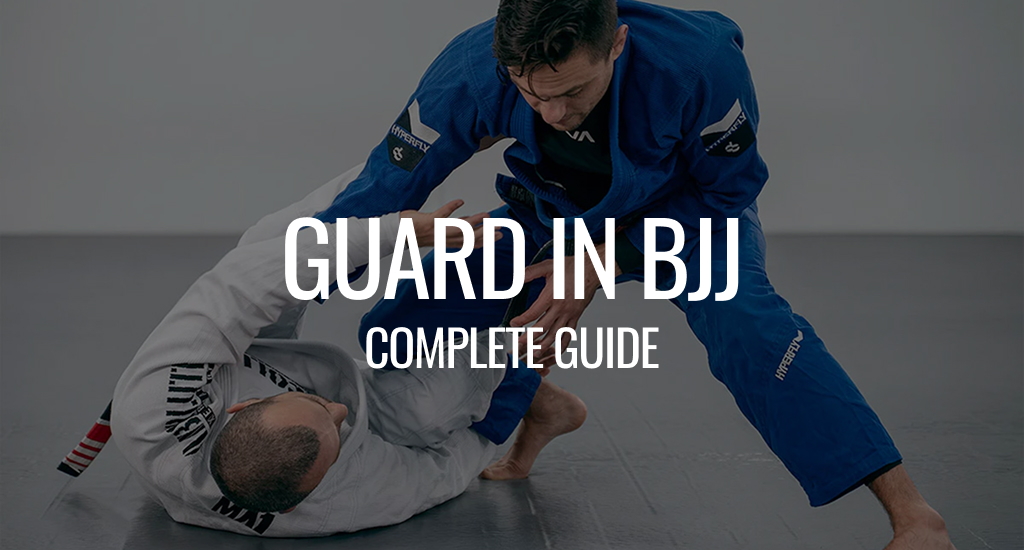
If you're new to Brazilian Jiu-Jitsu, one term will confuse you more than any other: guard. In wrestling or judo, being on your back means you're losing. Pinned. Done. In BJJ, being on your back can be a weapon. Guard is a position where you use your legs to control an opponent, stopping them from passing while you set up attacks of your own.
This guide covers exactly what guard means, the two main categories, the five guards every beginner should learn first, and the mistakes that get new students passed constantly.
What Exactly Is "The Guard"?
At its simplest, guard is any position where your legs sit between you and your opponent. Think of your legs as a shield. As long as they're in the way, your opponent can't pin you or pass to a dominant position. And it's not just defense — from guard, you can off-balance your opponent, sweep them over, or attack with chokes and armlocks. Guard is the starting point for almost all bottom-game scoring in competitive BJJ.
Closed Guard vs. Open Guard
There are dozens of guard variations, but they all fall into two main categories.
Closed guard has your legs wrapped around your opponent's torso with your ankles crossed. It's high-control and very safe, and it limits how much your opponent can move — but it's harder to attack from once your opponent has good posture.
Open guard has your ankles unlocked, using your feet to push, hook, or tangle your opponent's body instead. It's far more dynamic and essential for sweeps, but it's also easier for your opponent to pass if you get lazy with your framing.
5 Essential Guards Every Beginner Should Know
You don't need to learn fancy inversions like the berimbolo yet. Start with these five.
1. Closed guard — the foundation. This is where everyone starts. It teaches you how to break your opponent's posture and control distance, and it's the launching point for classic attacks like the armbar and triangle choke.
2. Half guard — the savior. When an opponent almost passes your guard, you often end up trapping one of their legs. This gritty, close-range position is genuinely useful for sweeping opponents bigger than you.
3. Butterfly guard — dynamic sweeps. Sitting up with your feet hooked inside your opponent's thighs, butterfly guard is powerful for lifting and sweeping aggressively.
4. Spider guard — gi control. A classic gi-only guard where you grab your opponent's sleeves and place your feet on their biceps, giving you real control over their posture from a distance.
5. De La Riva — modern open guard. Named after Ricardo De La Riva, this guard hooks your outside leg around your opponent's lead leg. It's the gateway into modern open-guard systems, and worth learning once the basics feel solid — see our De La Riva guide for the details.
Why Guard Retention Matters More Than Attacks
Before you try to submit anyone, you need to learn to keep them from passing in the first place — that skill is called guard retention. If your opponent pushes your legs aside, they've passed your guard, and the position is over. The core habit: keep your knees close to your chest, frame against your opponent, and stay facing them constantly. Without solid retention, none of your attacks matter, because you never get the chance to use them.
Common Beginner Mistakes
Lying flat. Never lie flat on your back like a dead fish — stay on your side or sit up, so you can react and move.
Reaching with your arms. Don't reach up to grab your opponent's head or collar from a distance. Use your legs to bring them to you instead — arms that reach too far get controlled or attacked.
Crossing your ankles in bottom mount. This isn't guard. If your opponent is already past your legs, crossing your feet does nothing but limit your own escape options.
Frequently Asked Questions
What is pulling guard? Sitting down on purpose to start a match on your back, going straight to your attacking game instead of engaging standing.
Is guard better than top position? Top positions like mount and side control generally score more points in competition. But plenty of BJJ players prefer guard because it opens up more submission options than most top positions do.
Which guard is best for self-defense? Closed guard is widely considered the strongest choice for self-defense, since it limits an attacker's ability to strike you effectively.
Conclusion
Understanding guard is the first real step toward understanding BJJ itself — it's both your shield and your sword. Start by mastering closed guard, then branch into open guard variations as you get comfortable. A strong guard makes you hard to pass and dangerous to attack, from a position most other combat sports treat as a loss — and it's exactly why the IBJJF's scoring system rewards passing it so heavily.
Tagged with:#fundamentals#guard#beginners
Frequently Asked Questions
What is guard in BJJ?
Guard is any position where your legs sit between you and your opponent, letting you control them, prevent them from passing to a dominant position, and set up sweeps or submissions from your back.
What is the difference between closed guard and open guard?
Closed guard has your ankles locked around your opponent's torso for high control and safety. Open guard has your ankles unlocked, using your feet to hook and push instead, which is more dynamic and better for sweeps but easier to pass if your framing lapses.
Which guard should a white belt learn first?
Closed guard is the standard starting point, since it teaches posture control and distance management and sets up fundamental attacks like the armbar and triangle choke before moving on to open guard variations.
Why is guard considered a strong position in jiu jitsu, not a losing one?
Because your legs act as a shield and a weapon at the same time — they stop your opponent from passing to a dominant position while giving you the tools to off-balance them, sweep them over, or attack with chokes and joint locks. In most other combat sports, being on your back means losing; in BJJ it can mean you are winning.
What is the point of playing guard instead of just getting on top?
Guard gives you offense from a position other grappling styles treat as purely defensive. A skilled guard player can sweep to top position, submit an opponent directly from the bottom, or simply frustrate a much stronger opponent's attempts to pass — options that don't exist if you avoid the position entirely.
Sources & Further Reading
About the Author
Mohsin AyubBJJ practitioner, 6 years — Gracie Barra
Founder & Editor, BJJ Sportswear
Mohsin has trained Brazilian Jiu-Jitsu for six years at Gracie Barra and has competed at IBJJF-affiliated tournaments. He writes about competition, gear, and athlete careers, and founded BJJ Sportswear to help grapplers find equipment and information they can trust.
- Six years training Brazilian Jiu-Jitsu at Gracie Barra
- Competed at IBJJF-affiliated tournaments
- Writes on BJJ competition, gear testing, and athlete careers
This article was last reviewed and updated on 2026-08-18.