By BJJ Sportswear Editorial Team
Reviewed by competitive black belts specializing in modern guard systems | Last Updated: January 9, 2026
No technique in Brazilian Jiu-Jitsu history has sparked more debate, innovation, and controversy than the berimbolo. This inverted back-taking movement transformed modern competition BJJ, created world champions, forced rule changes, and divided practitioners into devoted followers and vocal critics.
The berimbolo emerged from the De La Riva guard as a solution to aggressive passing, evolved into the most dominant lightweight technique of the 2010s, and fundamentally altered how elite competitors approach the guard game. According to BJJ Heroes’ berimbolo documentation, this position became one of the most popular trends in BJJ since its mainstream debut in the mid-2000s.
After coaching hundreds of students through berimbolo progressions and competing with the technique extensively, I’ve witnessed both its devastating effectiveness and the limitations that make it controversial. Some practitioners build entire games around it. Others refuse to learn it at all.
Whether you’re a competitor seeking championship-level techniques or a recreational practitioner curious about modern BJJ evolution, understanding the berimbolo provides insight into sport jiu-jitsu’s technical development and ongoing debates about practical versus point-focused training.

Table of Contents
What Is the Berimbolo?
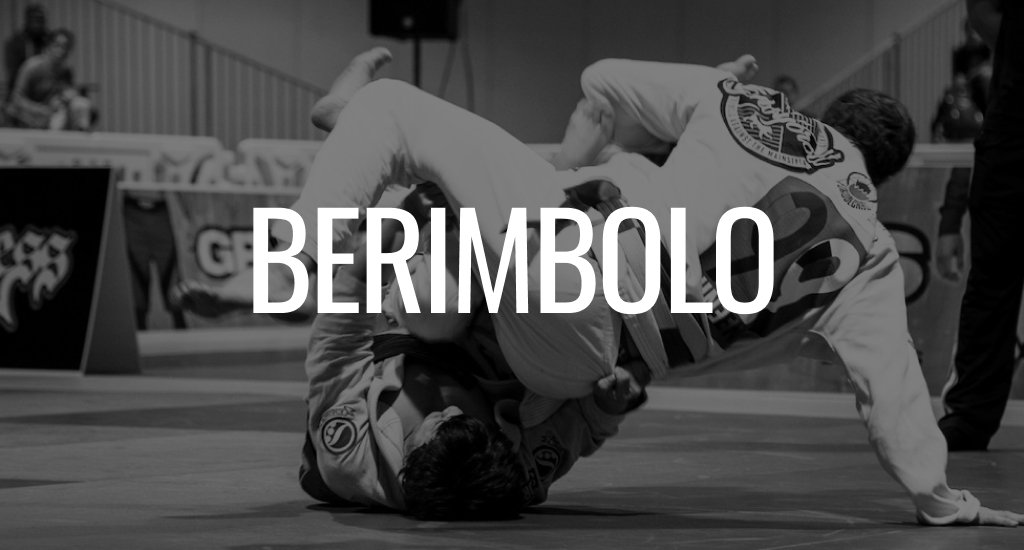
The berimbolo is a back-taking technique where the guard player inverts and spins underneath their opponent’s hips, emerging on their back with hooks establishing. The name comes from Brazilian Portuguese meaning “scramble,” coined by Andre Galvao who recognized the chaotic nature of the movement.
Core Berimbolo Elements:
- Starts from De La Riva guard position
- Requires inversion (shoulder to mat, hips elevated)
- Spinning motion underneath opponent’s body
- Results in back control or sweep (called “helicopter” when sweeping)
- Bypasses traditional guard passing entirely
The berimbolo doesn’t beat the guard pass—it makes passing irrelevant by going directly from bottom position to the most dominant position in BJJ: back control with hooks.
Understanding what is guard in BJJ provides context for why the berimbolo was so revolutionary—it created a pathway from defensive position to maximum offense without ever engaging in traditional guard retention battles.
The Controversial Origins: Who Actually Invented It?
The 1990s: Marcel Ferreira’s Helicopter
According to BJJ Heroes’ historical research, the technique’s earliest documented practitioner was Marcel Ferreira, a purple belt training at Carlson Gracie Academy around 1993.
The Problem Marcel Faced:
- Training partner Eduardo consistently passed his DLR guard
- Eduardo would backstep away from the hook, killing DLR effectiveness
- Traditional DLR responses didn’t work against this counter
- Marcel needed a new solution
Marcel’s Innovation:
Ferreira started inverting on the hook when his opponent backstepped, developing both a sweep and back-take. He used these positions in competition throughout the 1990s, including at the first IBJJF World Championship in 1996.
However, Marcel primarily used what became known as the “helicopter”—the sweeping variation rather than the back-taking version we now call the berimbolo.
Andre Galvao’s Perspective: “An Impoverished Child”
When interviewed by BJJ Heroes, Andre Galvao—the man who named the position—disputed the 1990s origin story:
“Don’t think the position was created in the 90s. Marcel did the helicopter, but it is very different. The Berimbolo starts when the opponent puts his butt on the mat, like in a double guard pull position… I think the berimbolo only started a few years back.”
Galvao famously stated:
“The berimbolo doesn’t have a father, it’s an impoverished child born without a dad. Now the kid became rich and famous and everyone wants to assume paternity.”
This perfectly captures the controversy—multiple practitioners developed similar movements independently, and “credit” became disputed once the technique proved championship-winning.

2005: Samuel Braga’s Competition Debut
Evolve MMA’s berimbolo history credits Samuel Braga as the first black belt to use the modern berimbolo in high-level competition.
Braga’s Breakthrough:
- Competed at 2005 IBJJF World Championships as a black belt
- Claimed he developed the technique during his colored belt years
- Used berimbolo from double guard pull positions
- Faced technical roosterweight opponents who excelled at guard
- Concluded that going straight to the back bypassed impossible guard passing
Samuel Braga’s innovation came from strategic necessity: when opponents are too technical to pass, why try? Just take their back instead.
After Braga’s 2005 debut, the berimbolo stayed relatively underground for several years. It existed. Elite lightweights knew about it. But it hadn’t yet exploded into mainstream consciousness.
That was about to change.
2010-2012: The Mendes Brothers Revolution
The game changed completely when Rafael and Guilherme Mendes started using the berimbolo relentlessly to win tournament after tournament in the black belt division.
What Made the Mendes Brothers Different:
- Didn’t just use berimbolo—they systematized it
- Added leg drag combinations to the finish
- Created chains where every movement flowed to berimbolo entry
- Won multiple world championships using berimbolo as primary weapon
- Taught the position methodically at their academy (Art of Jiu-Jitsu)
Rafael Mendes in particular became synonymous with berimbolo mastery. His timing, precision, and ability to hit the technique against the world’s best competitors made it impossible to ignore.
The Position Exploded:
Following the Mendes brothers’ dominance (2010-2014), every lightweight competitor needed berimbolo answers. You either learned to do it, learned to defend it, or accepted you’d lose to it.
Understanding closed guard mastery helps appreciate why the berimbolo was so revolutionary—it abandoned traditional closed guard entirely in favor of dynamic, movement-based attacks.
The Miyao Brothers: Taking It Further
Paulo and Joao Miyao entered the scene during 2011-2012, building entire competitive identities around berimbolo-based guard play.
Miyao Innovations:
- Extreme flexibility allowing deeper inversions
- Willingness to berimbolo from seemingly impossible positions
- 50/50 guard to berimbolo combinations
- Berimbolo answers to every passing attempt
- Non-stop spinning that frustrated even elite passers
The Miyao brothers proved the berimbolo wasn’t just a lightweight trick—it was a complete philosophical approach to guard play.
Modern champions who adopted berimbolo systems include Gianni Grippo, Mickey Musumeci, Levi Jones-Leary, and countless others, particularly in lower weight divisions where flexibility and speed advantages maximize effectiveness.

Why the Berimbolo Works: Strategic Advantages
Bypassing Guard Passing Entirely
Traditional BJJ progression: Guard player tries to sweep or submit → Top player tries to pass → Winner emerges after extended battle.
Berimbolo changes the equation:
- Guard player inverts under opponent’s hips
- Emerges directly on their back (4 points in IBJJF)
- Never engages in guard passing battle
- Forces opponent to defend highest-value position immediately
I tell students: the berimbolo is like teleporting from defense to offense. You don’t fight for sweeps. You don’t worry about guard retention. You just appear on their back.
Point Optimization in Sport BJJ
In IBJJF scoring:
- Back control with hooks = 4 points (highest non-submission score)
- Guard pass = 3 points
- Sweep = 2 points
- Advantages accumulate for submission attempts and dominant positions
Berimbolo Strategic Value:
A successful berimbolo scores 4 points immediately, places you in submission-ready position, and puts opponent in panic mode—all from a single movement.
For point-focused competition, berimbolo provides maximum return on investment. This explains its dominance in sport BJJ despite limited MMA or self-defense application.
Exploiting the Double Guard Pull Meta
Evolve MMA’s analysis explains that berimbolo development accelerated specifically because of double guard pull situations.
The Competitive Reality:
- Many lightweight matches start with both competitors pulling guard
- Neither wants to play top because guard is stronger
- Seated guard vs. seated guard becomes starting position
- Berimbolo provides offensive weapon from this configuration
Samuel Braga specifically noted that roosterweights in the mid-2000s always pulled guard because everyone’s guard was too technical to pass. The berimbolo solved this problem by making passing irrelevant.
Physical Demands Favor Certain Body Types
Berimbolo success requires:
Essential Attributes:
- Flexibility for deep inversions without neck injury
- Hip mobility allowing smooth spinning transitions
- Core strength maintaining control while inverted
- Speed executing before opponent establishes defensive grips
- Balance controlling positions while upside down
This explains why berimbolo dominates lightweight divisions (rooster through featherweight) but appears less frequently at heavier weights where physical attributes shift.
Understanding how the crab ride and the truck connect to berimbolo finishing systems shows the modern evolution of back attack chains.
The 3 Stages of Berimbolo Execution
Grapplearts’ berimbolo breakdown identifies three distinct phases:
Stage 1: Establish De La Riva and Knock Opponent Down
Setup Requirements
- De La Riva hook on opponent’s lead leg (shoelaces on far hip)
- Ankle control with same-side hand (absolutely critical)
- Belt, lapel, or collar grip with opposite hand
- Free leg posted on opponent’s hip or thigh
Critical Detail: You cannot berimbolo effectively without controlling the ankle or lower leg. This grip prevents them from creating distance and provides the leverage needed for spinning.
Getting Opponent to Sit
Most berimbolo entries require opponent’s butt on or near the mat:
Methods to Achieve:
- Push their waist with free leg while maintaining DLR hook
- Pull them forward with belt grip while extending hook
- Create angle and use scissor pressure to off-balance
- Take advantage of double guard pull situations
The classic berimbolo won’t work if opponent stays standing—you need their weight low to invert underneath their hips successfully.
Stage 2: The Inversion and Spin
This is the “trigger position”—once opponent sits and you have proper grips, you must move immediately.
Spinning Mechanics
- Drop shoulder to mat and elevate hips
- Pull their belt/lapel grip toward you
- Kick DLR hook leg over your body (toward their far side)
- Begin spinning underneath their hips
- Maintain ankle control throughout rotation
- Switch to controlling far leg as you emerge
Timing Is Everything:
Hesitation kills berimbolo attempts. The window exists for 1-2 seconds after opponent sits. Move decisively or the position disappears.
Many beginners fail berimbolo because they’re uncomfortable inverting or hesitant about the spin. The technique requires committing fully to the movement.
Stage 3: The Finish
Multiple finishing options exist depending on opponent’s reaction:
Standard Back Take
- Switch hand from near ankle to far leg control
- Kick legs to floor, rolling opponent forward
- Establish first hook as they roll
- Insert second hook and secure seatbelt grip
- Attack rear naked choke
Alternative Finishes
- Mount:Â If opponent posts hands, drive over them into mount
- Side control:Â If they turn away, take side control
- Armbar:Â If arm is exposed during roll, attack immediately
- Leg drag: Mendes brothers’ signature—pass to leg drag position then take back
Babybolo Variation:
The “babybolo” allows back takes even when opponent stays standing by modifying the inversion angle and finish mechanics.
I’ve found that purple belts often nail stages 1 and 2 but struggle with stage 3 because they don’t adjust to opponent reactions. The berimbolo isn’t a single technique—it’s a family of responses based on what your opponent does.

Berimbolo Variations and Entry Systems
From Double Guard Pull
The original berimbolo context—both competitors sitting:
Setup Process
- Establish seated DLR guard
- Opponent mirrors with their guard
- Create angle slightly to one side
- Use collar or belt grip to pull them forward
- Execute berimbolo as they post hands
This remains the highest-percentage berimbolo entry in sport competition because both competitors start low and neither has significant base advantage.
From Standing DLR
When opponent stands and you’re playing DLR guard:
Entry Sequence
- Establish standing DLR position
- Off-balance opponent with hook and free leg push
- Force them to sit or post hands to mat
- Immediately transition to berimbolo inversion
- Complete technique as they struggle to recover base
This requires excellent timing—the moment between standing and sitting is your entry window.
From X-Guard
Guilherme Mendes developed berimbolo entries from X-guard:
X-Guard to Berimbolo
- Establish X-guard position
- Opponent defends by sitting back
- Immediately convert to DLR hook
- Execute berimbolo as defensive reaction
- Secure back control
This shows how elite competitors chain positions—every defensive reaction opens new offensive pathways.
Reverse Berimbolo
Spinning the opposite direction:
When to Use
- Opponent defends standard berimbolo direction
- Their posture blocks conventional spinning path
- You need to surprise experienced berimbolo defenders
The reverse berimbolo uses same principles but inverts to opposite side, creating different finishing mechanics.
The IBJJF Rule Controversy
The berimbolo’s effectiveness created serious problems for competition organizers.
The Knee Reaping Issue
BJJ Heroes documents how berimbolo raised knee reaping concerns:
The Problem:
- Berimbolo begins by applying pressure on opponent’s knee with DLR hook
- To resist, opponent sits down
- If opponent turns away instead, different back take becomes available
- Some competitors gripped far sleeve, preventing the turn
- This put sustained knee pressure with no relief option
- Deep underhook on shin added more knee torque
IBJJF’s Response (2012):
The federation updated rules making certain berimbolo entries potentially disqualifiable offenses if deemed to create dangerous knee pressure.
The Adaptation:
Berimbolo enthusiasts removed the deep shin underhook, making the position less effective but still worthwhile. The technique survived the rule change but required technical modifications.
The Sport vs. Self-Defense Debate
Critics argue berimbolo represents everything wrong with sport BJJ:
Anti-Berimbolo Arguments:
- No practical self-defense application
- Doesn’t work in MMA (striking changes everything)
- Only effective because of point-gaming
- Requires rule-specific positioning (double guard pull)
- Teaches bad habits (inverting in street fight is suicide)
Pro-Berimbolo Counterarguments:
- Sport BJJ and self-defense BJJ are different applications
- Technique develops timing, flexibility, and scrambling ability
- Creates world champions and proves effectiveness in its context
- Athletic development from berimbolo training transfers to other areas
- Not every technique needs street application
ADCC champion Kron Gracie famously stated the berimbolo is “a mess” of a move, representing the traditionalist perspective that rejects sport-specific innovations.
I’ve used berimbolo extensively in gi competition and would never attempt it in no-gi or MMA. Both perspectives have validity—the technique is simultaneously brilliant sport jiu-jitsu and tactically questionable for other contexts.
Training Berimbolo by Skill Level
Prerequisites Before Learning Berimbolo
Essential Foundations
- Solid De La Riva guard understanding and execution
- Comfort inverting (shoulder to mat without neck strain)
- Basic back control and rear naked choke proficiency
- Grip fighting fundamentals
- Body awareness while upside down
Recommendation: Blue belts should build DLR proficiency before adding berimbolo complexity. White belts attempting berimbolo usually develop bad habits.
Resources about first BJJ class expectations help beginners understand technique progression timelines.
For Blue Belts: Basic Mechanics
Focus on berimbolo fundamentals without advanced variations:
Training Priorities
- Practice inversion safely (protect your neck)
- Drill standard berimbolo from double guard pull
- Develop timing for the “trigger position”
- Study back take finishing mechanics
- Learn to recognize when berimbolo won’t work
Safety Note: Many practitioners injure necks learning berimbolo. Start slowly, use crash pads if available, and build neck strength progressively.
For Purple Belts: System Development
Build complete berimbolo-based guard systems:
Development Goals
- Master multiple berimbolo entries (standing DLR, seated, X-guard)
- Chain berimbolo with leg drag finishes (Mendes style)
- Study berimbolo defense to understand counters
- Develop reverse berimbolo options
- Practice competition-specific timing and setups
Exploring blue belt development goals helps structure berimbolo integration during this growth phase.

For Brown/Black Belts: Specialization and Counters
Advanced practitioners refine details or develop anti-berimbolo games:
Advanced Focus
- Perfect timing against elite-level opponents
- Create signature berimbolo variations
- Develop passing systems that shut down berimbolo
- Study Mendes brothers and Miyao brothers extensively
- Understand when NOT to berimbolo (tactical decision-making)
- Master transitions when berimbolo fails
At this level, some competitors become berimbolo specialists (Miyaos, Musumeci) while others become berimbolo killers who shut it down entirely. Both paths are legitimate.
Competition Applications and Limitations
IBJJF Gi Competition
Berimbolo’s natural environment:
Strategic Advantages
- 4 points for back control (maximum non-submission score)
- Works perfectly in double guard pull meta
- Gi grips enhance control during spin
- Lightweight divisions favor berimbolo body types
- Rules allow the positions needed for setup
Competition Reality: At lightweight black belt gi worlds, you must have berimbolo answers—either using it or defending it at high level.
No-Gi and ADCC
Berimbolo appears less frequently but still exists:
No-Gi Modifications
- Faster pace requires quicker execution
- Ankle/wrist control replaces gi grips
- More difficult to maintain control during spin
- Works better with wrestling-style leg attacks
- Less dominant than in gi competition
Some no-gi specialists use berimbolo successfully, but the technique’s effectiveness decreases significantly without gi grips.
MMA and Self-Defense
Berimbolo virtually disappears in striking contexts:
Why MMA Eliminates Berimbolo
- Inverting exposes you to strikes (especially knees)
- No gi grips for control
- Guard pulling itself is tactically questionable
- Top position more valuable in MMA than BJJ
- Scrambling invites ground-and-pound
Self-Defense Application: Essentially zero. Inverting during a street confrontation violates every tactical principle of self-defense.
This doesn’t make berimbolo “bad”—it makes it context-specific. A Formula 1 car doesn’t work off-road, but that doesn’t invalidate racing.
Common Berimbolo Mistakes
Attempting Without Ankle Control
The #1 beginner error:
The Problem
- Opponent creates distance when you invert
- Can’t maintain connection during spin
- Berimbolo fails before you complete rotation
The Solution
- Grip ankle/lower leg BEFORE inverting
- Maintain grip throughout entire technique
- If grip breaks, abort berimbolo and recover guard
Poor Neck Positioning
Dangerous mistake that causes injuries:
The Issue
- Putting weight on head/neck instead of shoulder
- Rolling over neck vertebrae
- Lack of core strength forcing neck compensation
The Fix
- Weight on shoulder blade, NOT on neck
- Build core strength to support inverted positions
- Use progressive drilling with crash pads
- Stop immediately if neck hurts
I’ve seen multiple students injure necks learning berimbolo. This isn’t a technique to rush.
Hesitating on the Spin
Timing failure that kills the technique:
Why It Fails
- Opponent recovers base during hesitation
- Window of opportunity closes (1-2 seconds max)
- They establish defensive grips
- Position becomes static instead of dynamic
Correction
- Recognize trigger position instantly
- Commit fully to inversion
- Trust your mechanics and spin decisively
- Accept that some attempts will fail—hesitation guarantees failure
Ignoring Opponent’s Reaction
Finishing the wrong way for the situation:
The Problem
- Forcing standard back take when opponent gives mount
- Missing armbar opportunities
- Not adjusting to their defensive movement
Better Approach
- Read opponent’s reaction as you emerge from spin
- Flow to whatever position they expose
- Chain multiple finishing options
- Accept sweep if back take isn’t available
Elite berimbolo players succeed because they adjust mid-technique based on real-time feedback.
The Berimbolo’s Enduring Legacy
From Marcel Ferreira’s 1990s experimentation to the Mendes brothers’ championship dominance to ongoing rule debates, the berimbolo represents modern sport BJJ’s most significant technical innovation and its most divisive controversy.
The technique created world champions, forced rule changes, divided practitioners into opposing camps, and fundamentally altered how lightweight competitors approach guard play. Whether you view berimbolo as brilliant innovation or sport-specific gimmick reveals your philosophy about BJJ’s evolution and purpose.
What’s undeniable: the berimbolo works. Rafael Mendes, Guilherme Mendes, Paulo Miyao, Joao Miyao, Mickey Musumeci, and countless others built championship careers on berimbolo systems. The technique dominated elite-level competition for over a decade and continues influencing modern guard development.
For sport BJJ competitors, especially at lighter weights, understanding berimbolo mechanics provides either a powerful weapon or essential defensive knowledge. For traditional practitioners focused on self-defense or MMA, the berimbolo offers lessons about movement, timing, and back attacks even if the technique itself doesn’t transfer.
The berimbolo didn’t just add a technique to BJJ’s arsenal—it sparked ongoing conversations about what jiu-jitsu should be, who it serves, and where the art is heading in the 21st century.
How We Reviewed This Article
Editorial Standards: Historical information verified against BJJ Heroes archives, interviews with Andre Galvao, and competition footage from 1990s-present. Technical descriptions reviewed by black belt competitors who specialize in berimbolo-based guard systems. Strategic analysis based on IBJJF world championship performances at lightweight divisions (2010-2025).
Sources Referenced:
- BJJ Heroes berimbolo technique documentation and historical research
- Andre Galvao interviews on berimbolo naming and development
- Samuel Braga competition footage and instructional content
- Mendes brothers (Rafael and Guilherme) competitive records and instruction
- Miyao brothers (Paulo and Joao) berimbolo innovations
- IBJJF rule changes (2012) regarding knee reaping and berimbolo
- Contemporary instructional content from credentialed black belts
Last Updated: January 9, 2026