

What is Guard in BJJ? The Ultimate Guide for Beginners
By BJJ Sportswear Editorial Team
Reviewed by competitive black belts and fundamental instruction specialists | Last Updated: January 14, 2026
If you are new to Brazilian Jiu-Jitsu, one term will confuse you more than any other: The Guard.
In wrestling or judo, being on your back means you are losing. You are pinned. You are done. However, in BJJ, being on your back is a weapon. Specifically, the guard is a position where you use your legs to control an opponent, preventing them from passing while you set up attacks.
This guide will explain exactly what is guard in BJJ, the different types you need to know, and how to start building your defense today.
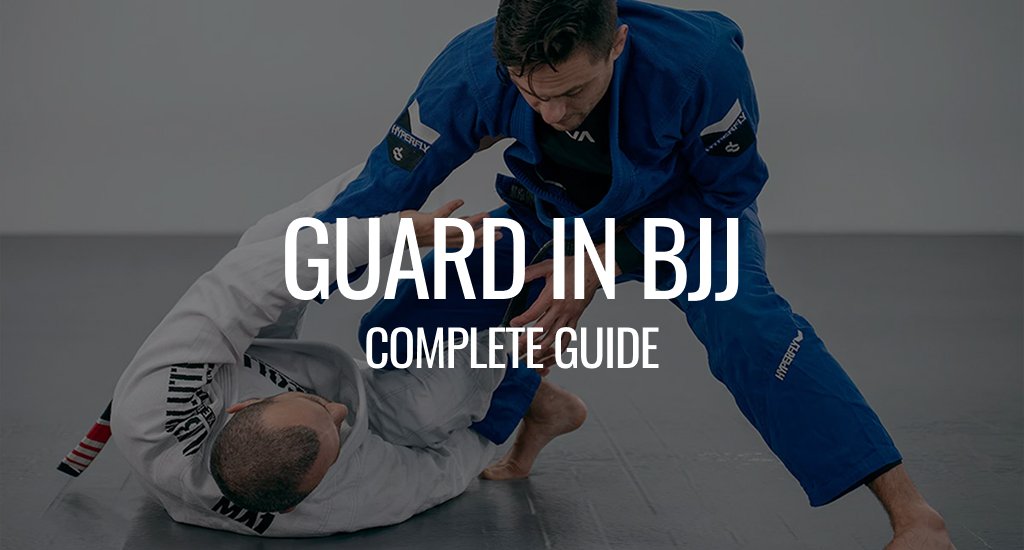
Table of Contents
Definition: What Exactly is “The Guard”?
At its simplest level, the guard is any position where your legs are between you and your opponent.
Think of your legs as a shield. As long as your legs are in the way, your opponent cannot pin you (pass your guard). Consequently, you are safe. Moreover, you can use your legs to off-balance them, sweep them over, or submit them with chokes and armlocks.
According to the IBJJF Rule Book, the guard is the starting point for almost all bottom-game scoring.
The Two Main Categories: Closed vs. Open
While there are dozens of variations, they all fall into two main buckets.
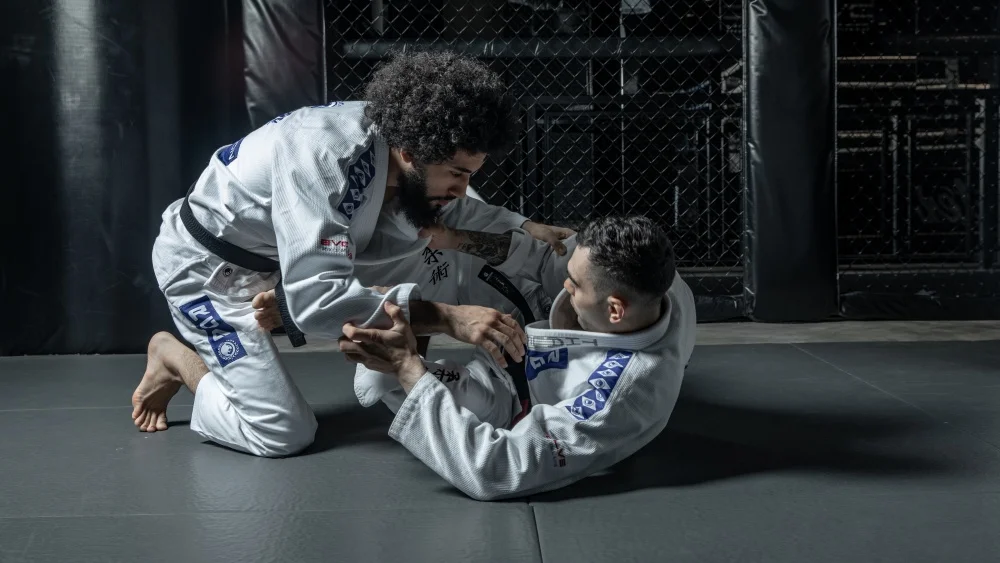
1. Closed Guard
In the Closed Guard, your legs are wrapped around your opponent’s torso and your ankles are crossed.
- Pros: High control, very safe, limits opponent’s movement.
- Cons: Hard to attack if the opponent has good posture.
2. Open Guard
In Open Guard, your ankles are unlocked. You use your feet to push, hook, or tangle the opponent’s body.
- Pros: Dynamic, allows for more movement, essential for sweeps.
- Cons: Easier for the opponent to pass if you are lazy.
5 Essential Guards Every White Belt Must Know
You do not need to learn every fancy inversion like the Berimbolo yet. Instead, focus on these five foundational guards.
1. Closed Guard (The Foundation)
This is where everyone starts. It teaches you how to break posture and control distance. From here, you can launch classic attacks like the Armbar or Triangle Choke.
2. Half Guard (The Savior)
When an opponent almost passes your guard, you often catch one of their legs. This is the Half Guard. It is a gritty, close-range position that is excellent for sweeping larger opponents.
3. Butterfly Guard (Dynamic Sweeps)
In the Butterfly Guard, you sit up and hook your feet inside the opponent’s thighs. It is powerful for lifting and sweeping aggressively.
4. Spider Guard (Gi Control)
This is a classic “Gi-only” guard. In the Spider Guard, you grab the opponent’s sleeves and put your feet on their biceps. It gives you incredible control over their posture.
5. De La Riva (Modern Open Guard)
Named after the legendary Ricardo De La Riva, this guard involves hooking your outside leg around the opponent’s lead leg. The De La Riva Guard is the gateway to modern BJJ.
Why Guard Retention Matters More Than Attacks
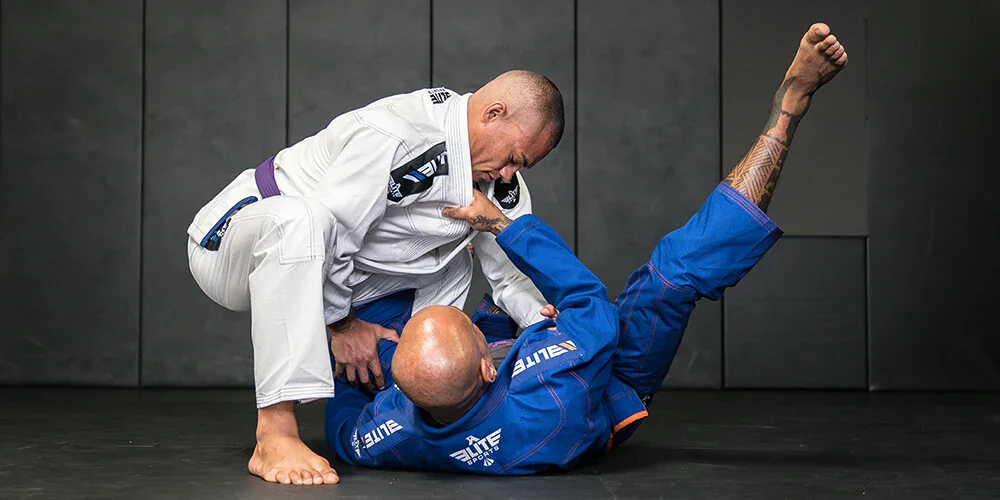
Before you try to submit anyone, you must learn to keep them away. This is called Guard Retention.
If your opponent pushes your legs aside, they pass your guard. Therefore, your primary goal is to keep your knees close to your chest (framing) and constantly face your opponent. As John Danaher explains, if you cannot retain your guard, you cannot attack.
Common Mistakes Beginners Make
- Lying Flat: Never lie flat on your back like a dead fish. Stay on your side or sit up.
- Reaching with Arms: Do not reach up to grab their head. Use your legs to bring them to you.
- Crossing Ankles in Bottom Mount: This is not a guard! If they are past your legs, do not cross your feet.
Frequently Asked Questions
What is pulling guard?
Pulling guard means sitting down on purpose to start the match on your back. It is a strategic choice to get straight to your attacks.
Is guard better than top position?
Generally, top position (Mount, Side Control) is better for scoring points. However, many BJJ players prefer the guard because it offers more submission options.
Which guard is best for self-defense?
The Closed Guard is widely considered the best for self-defense because it prevents the attacker from striking you effectively.
Conclusion
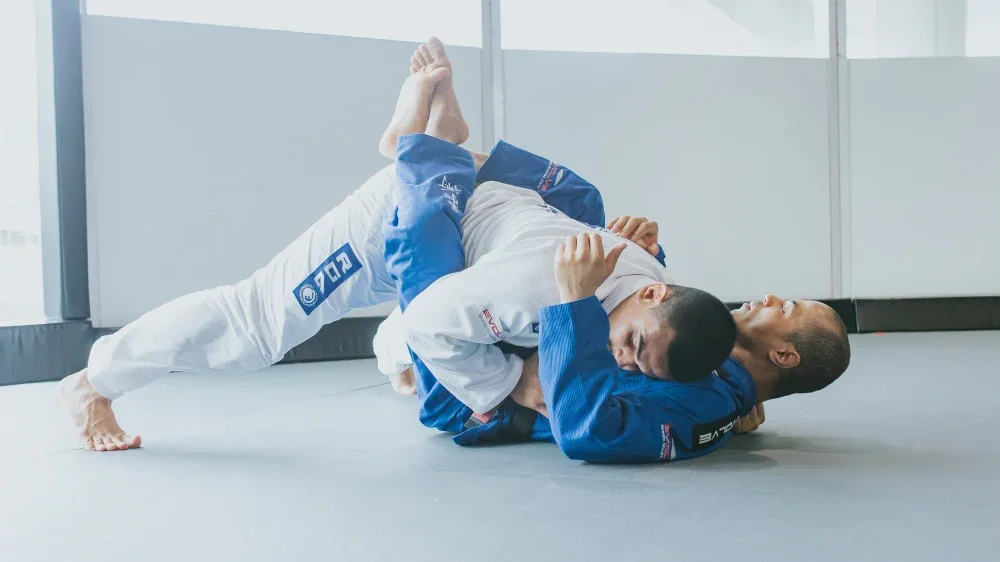
Understanding what is guard in BJJ is the first step to mastering the art. It is your shield and your sword.
Start by mastering the Closed Guard. Then, as you get comfortable, explore the Open Guard variations. Remember, a strong guard makes you unpassable and dangerous from anywhere.